Best Powder Skis of 2025
When the snow is deep and fluffy, you need the right skis to enjoy it fully. Powder skis are made for soft snow. They are wider, float better, and feel smoother in deep powder. Whether you’re dropping into bowls or gliding through trees, the right pair helps you stay in control. Choosing the best skis depends on your skill, style, and terrain. Some are light and playful. Others are strong and stable at speed. In this guide, we’ve picked the best powder skis for every type of rider. We looked at float, flex, and performance. These skis will help you make the most of every powder day.
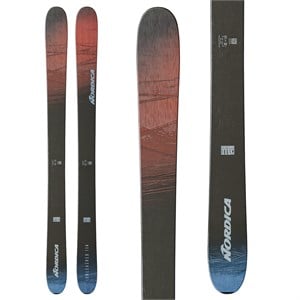
1. Nordica Unleashed 114
-
Core: Full Performance Woodcore with True Tip technology
-
Laminates: GR400 Carbon Glass and Single Terrain Specific Titanal Layer
-
Sidewalls/Base: ABS Sidewalls with a Sintered Base
-
Rocker Profile: Powder Rocker (early-rise tip, turned-up tail), Rocker/Camber/Rocker design
The Nordica Unleashed 114 is a standout in the big-mountain powder category, designed for expert skiers who crave deep snow performance without sacrificing agility. Built with a lighter core and more surface area in the tip than its 108mm sibling, the 114 delivers impressive float in soft snow while still feeling playful and responsive in tighter terrain like trees and chutes. Its Powder Rocker profile, with an early-rise tip and turned-up tail, allows effortless turn initiation and easy release, making it one of the most intuitive skis in this width range. The True Tip technology reduces swing weight, enhancing maneuverability even in demanding conditions.
What makes the Unleashed 114 particularly versatile is its surprising capability on groomed snow. The terrain-specific Titanal layer delivers great edge grip and torsional stiffness, giving the ski enough backbone to rail medium-radius GS turns with power and control. It’s not just a pow ski — it’s a confidence machine for the Pacific Northwest and beyond, able to crush late-day crud or carve up firm groomers with the same ease it floats in fresh snow. If you’re looking for a ski that lets you get creative in variable conditions without ever feeling sluggish or squirrelly, this is your weapon.
Pros
- Excellent float and agility in deep powder
- Surprising edge hold and stability on groomers
- Lightweight yet powerful construction
- Very maneuverable in tight terrain
Cons
- May overpower lighter or less aggressive skiers
- Not ideal for icy or hardpack-only days
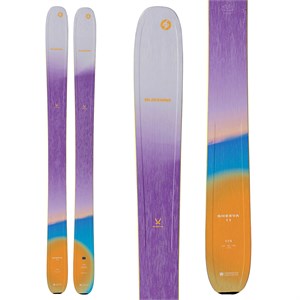
2. Blizzard Sheeva 11
-
Core: TrueBlend Freeride Core (Beech, Poplar, and Paulownia wood blend)
-
Laminates: FluxForm W.S.D. Titanal construction with composite plate underfoot
-
Sidewalls/Base: Sandwich Compound Sidewall with Sintered Graphite Base
-
Rocker Profile: Rocker/Camber/Rocker for improved flotation and grip
The Blizzard Sheeva 11 is the queen of wide powder skis that doesn’t lose her composure on the groomers. Updated for 2025 with a refined TrueBlend Freeride Core and the new FluxForm W.S.D. construction, this ski blends power and playfulness in a way few others in the 110mm+ category can. The lightweight yet sturdy core offers flex tuned perfectly for freeride needs, while the strategically placed Titanal gives you the grip and dampening you need to charge hard without losing control. Whether you’re surfing fresh Sinaloa powder or navigating chopped-up late-day crud, the Sheeva 11 handles it with smooth confidence and intuitive control.
Despite its generous waist, the Sheeva 11 surprises with its carving prowess. Thanks to the Rocker/Camber/Rocker profile and the tapered Titanal construction, it feels stable underfoot but allows the tips and tails to move freely—perfect for playful lines, big mountain drops, and fast laps back to the lift. It holds an edge better than most skis this wide, which makes it a reliable tool for advanced skiers who want something that rips in the deep but doesn’t fall flat when the powder is gone. The Sheeva 11 proves that big and bold doesn’t have to mean clumsy or heavy—it means versatile and fearless.
Pros
- Excellent float and surfy feel in deep snow
- Surprisingly good edge hold and carving ability
- Smooth, damp ride with Titanal reinforcement
- Lightweight yet powerful construction
Cons
- Not ideal for icy hardpack conditions
- Requires strong skier input to unlock full performance
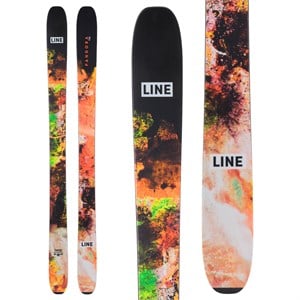
3. Line Skis Pandora 106
-
Core: Aspen Veneer Core – lightweight and responsive
-
Laminates: Bio-Resin for stronger bonding and eco-friendly construction
-
Sidewalls: Thick-Cut Sidewalls for durability and precise edge control
-
Rocker Profile: 12mm Tip / 3mm Camber / 10mm Tail (Rocker/Camber/Rocker)
The Line Skis Pandora 106 is an incredibly fun and versatile ski built for freeride-minded skiers who demand performance across conditions. This updated version features a slightly wider waist, a snappier Aspen Veneer Core, and enhanced durability from its Thick-Cut Sidewalls. The Bio-Resin layup strengthens bonding while keeping things eco-conscious, and the overall package feels much more planted and confident than the previous iteration. It’s light enough to stay playful in powder and off side hits, but now has the stiffness and edge control to charge down steeps and rail through mixed snow with more confidence.
On groomers, the Pandora 106 is surprisingly fast and stable, holding an edge even on firmer patches without washing out. The combination of camber underfoot and rocker at the tip and tail makes it easy to initiate turns while still offering enough grip to push the pace. It’s a perfect daily driver for skiers in areas with consistent snowfall, like the Rockies or the West Coast, where you want something that performs in powder but won’t let you down when the snow gets chopped or compacted. Whether you’re tackling steep terrain or just lapping groomers with speed and style, the Pandora 106 delivers a ride that’s as reliable as it is fun.
Pros
- Excellent stability at speed for a lightweight ski
- Handles powder, groomers, and mixed conditions well
- Durable construction with powerful edge control
- Light and poppy feel for playful skiing
Cons
- Less effective on icy, hardpack conditions
- May be too wide for daily use in low-snow regions
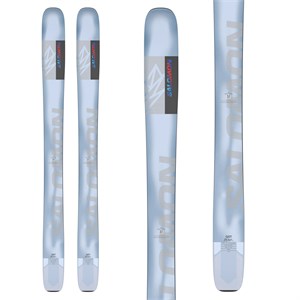
4. Salomon QST Blank
-
Core: Full Poplar Woodcore for stability and powerful rebound
-
Laminates: C/FX Carbon and Flax Weave for strength and dampening
-
Rocker Profile: Freeride Rocker – 28% Tip Rocker / Camber / 25% Tail Rocker
-
Sidewalls: Double Sidewalls Technology for enhanced edge grip and power transfer
The Salomon QST Blank is a powerhouse freeride ski that’s earned its place at the top of the big mountain category. Originally hard to find due to high demand, it has since become a go-to weapon for skiers looking to tackle deep powder, heavy chop, and everything in between. The 112mm waist offers more float than expected, and thanks to the Full Poplar Woodcore and C/FX carbon-flax laminate, the ski feels solid underfoot while still being nimble when you need it to be. The addition of the Cork Damplifier in the tips and tails cuts chatter and soaks up vibration, allowing for a calm, planted feel even when plowing through crust or leftovers.
Where the QST Blank truly excels is in its ability to handle a wide variety of snow conditions without missing a beat. Despite its freeride focus, it holds a solid edge on groomers thanks to the Double Sidewalls and a well-balanced rocker-camber-rocker profile. It’s responsive enough to carve on the way back to the lift, yet burly enough to charge down big, steep lines. At 2220g per ski (186cm), it’s not the lightest out there, but the weight works in its favor for dampness and stability. The only drawback? The top sheet durability leaves something to be desired. Still, for performance and versatility, the QST Blank is a top-tier pick.
Pros
- Excellent float and stability in deep or variable snow
- Smooth, damp ride with great vibration control
- Versatile enough for powder and groomers alike
- Powerful edge grip and carving ability
Cons
- Top sheet durability could be improved
- Slightly heavy for touring or lightweight setups
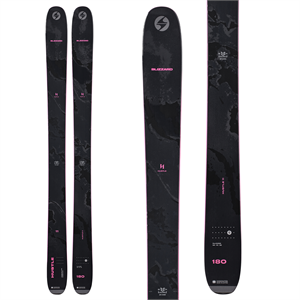
5. Blizzard Hustle 11
-
Core: TrueBlend Free Core – blend of Beech, Poplar, and Paulownia woods
-
Laminates: Carbon D.R.T. (Dynamic Release Technology) for strength and reduced weight
-
Rocker Profile: Rocker/Camber/Rocker for flotation and edge grip
-
Sidewalls/Base: Sandwich Compound Sidewall with Sintered Graphite Base
The Blizzard Hustle 11 is the lightweight freeride evolution skiers have long hoped for—a powder-focused charger with backcountry capability. Built in the same mold as the Rustler 11, the Hustle trades Titanal for a carbon laminate and uses a lighter TrueBlend Free Core to reduce uphill fatigue without compromising downhill confidence. The Carbon D.R.T. insert helps maintain stability and energy at speed, making it perfect for riders who want to transition from skin track to steep lines without changing skis. Its rocker/camber/rocker profile and early rise tail deliver strong float and maneuverability in soft snow while still offering reliable edge hold when conditions are firm.
On the descent, the Hustle 11 feels playful yet planted. It excels in deep snow and chopped conditions, staying predictable and damp despite the lighter build. With the Carbon Flipcore Technology adding to its smooth ride, the ski handles variable terrain with ease and agility. However, it’s worth noting that the actual weight of the ski may be heavier than listed—some users report around 2150g per ski (188cm), which could affect uphill efficiency for strict backcountry purists. For hybrid touring-resort setups, though, the Hustle 11 is a powerful and versatile tool for expert-level skiers who don’t want to compromise.
Pros
- Excellent float and power in soft snow
- Light enough for backcountry use with hybrid bindings
- Strong edge grip and stability for a carbon ski
- Playful yet controlled through variable terrain
Cons
- Heavier than advertised, may limit appeal for long tours
- Advanced-to-expert skiers will get the most out of its design
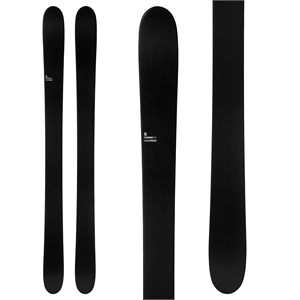
6. CANDIDE BC 111
-
Core: C-Light Core – laminated Poplar and Paulownia wood, FSC certified
-
Laminates: Carbon Fiber and Triaxial Fiberglass with Bio-Based Epoxy
-
Rocker Profile: Rocker-Camber-Rocker (505mm tip / 1mm camber / 485mm tail)
-
Sidecut: Triple Radius Sidecut – 20m tip, 26m waist, 22m tail
The CANDIDE BC 111 strikes an impressive balance between freestyle freedom and all-mountain capability, making it the most versatile ski in the CANDIDE lineup. Designed with a nearly symmetrical shape and long rocker lines in both tip and tail, it’s a playful yet composed option for those who ski powder often but still need control in variable terrain. The triple-radius sidecut delivers solid carving ability for a ski this wide, while the subtle camber underfoot offers just enough edge engagement when the conditions demand it. Despite its lightweight build—thanks to the Poplar-Paulownia C-Light Core and carbon/fiberglass laminate—the BC 111 doesn’t get knocked around easily and remains impressively stable at speed.
This ski excels in soft snow and spring conditions, thriving in everything from powder to slush without missing a beat. It’s light enough for short tours or bootpacks, yet burly enough to charge steeps or drop cliffs. The edge hold is a noticeable upgrade from previous Faction models, making it a reliable choice for carving groomers on the way back to the lift. Add in durability features like the textured Corund topsheet and heat-treated steel edges, and you’ve got a ski that feels dialed for big mountain lines, freestyle hits, and creative freeride missions alike. Whether you ski switch, slash, or stomp, the BC 111 keeps up.
Pros
- Lightweight but stable construction
- Great float and maneuverability in soft snow
- Strong edge hold for a 111mm waist ski
- Versatile shape for both freestyle and directional skiing
Cons
- Limited performance on firm or icy terrain
- Slightly long turning radius may not suit tight trees or moguls
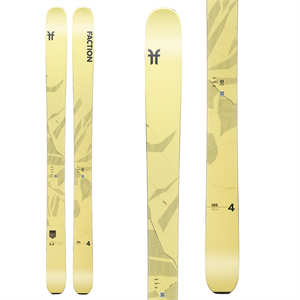
7. Faction Agent 4
-
Core: Lightweight Karuba Wood Core for optimal strength-to-weight ratio
-
Laminates: Full Carbon Weave with Titanal Binding Plate for power without added bulk
-
Rocker Profile: Rocker-Camber-Rocker (430mm tip / 2mm camber / 260mm tail for 185cm)
-
Sidecut: Elliptical Sidecut for adaptable turn shapes and responsive handling
The Faction Agent 4 is the definition of a no-compromise powder touring ski, built for skiers who demand performance both on the climb and on the descent. With its ultra-fat profile and long rocker lines, this ski floats effortlessly in deep, untracked snow. The lightweight Karuba core keeps uphill travel manageable, while the full carbon weave and Titanal binding plate provide a surprising level of strength and downhill muscle. A flatter tail not only improves skin compatibility but also adds control on steep terrain. The ski’s moustache flex pattern gives it a stable platform underfoot while remaining playful in the tip and tail for effortless turn initiation and recovery.
On the descent, the Agent 4 delivers an impressively smooth and confidence-inspiring ride. Its elliptical sidecut allows for fast pivoting in tight couloirs and a variety of turn shapes in open terrain. The flex absorbs crud and variable snow with ease, while still holding a line when charging. Whether you’re navigating choppy backcountry conditions or slashing pow in interior B.C., this ski has your back. Durability is also top-notch, with beefed-up 2.5mm edges and a micro-cap sidewall design that guards against chips. For anyone chasing powder before the lifts spin—or far from them altogether—the Agent 4 is a dream setup that truly earns its praise.
Pros
- Excellent float and responsiveness in deep snow
- Lightweight yet powerful for touring and freeride descents
- Great edge hold and durability with reinforced sidewalls and edges
- Eco-friendly construction using recycled and renewable materials
Cons
- Long turning radius less ideal for tight moguls or trees
- May overpower beginner or lighter skiers due to its stiffness
How to Choose Powder Skis: A Guide for Deep Snow Lovers
If you’ve ever found yourself knee-deep in fluffy snow, only to watch your tips sink and your legs burn as you try to stay afloat, you know that not all skis are created equal. Powder skiing is a magical experience—fast, smooth, and weightless—but it demands the right gear. Choosing the best skis can transform a frustrating day into one of the best runs of your life. In this guide, we’ll break down everything you need to know about picking the perfect pair of powder skis, whether you’re chasing face shots in Japan or floating through trees in the Rockies.
1. Waist Width: The First Thing to Know
When it comes to powder skiing, waist width is king. This measurement—the width of the ski underfoot—is what helps keep you afloat in deep snow.
-
100–105 mm: These skis can handle a powder day but are still versatile enough for groomers. Ideal for skiers in areas with variable conditions or those who want a one-ski quiver.
-
106–115 mm: The sweet spot for most dedicated powder skis. Great for deep days and soft snow, but still capable of carving when needed.
-
116 mm and up: These are your full-blown powder slayers, best reserved for truly deep snow, heli trips, or back bowls after a storm.
If you ski somewhere with frequent snowfall—like Utah, British Columbia, or Hokkaido—a wider ski in the 110mm+ range will give you better float and a more surfy experience.
2. Rocker Profile: Float and Fun
Rocker, also called reverse camber, refers to the way the ski curves up at the tip and tail. Most skis use some combination of rocker and camber to blend float with control.
-
Tip Rocker: Almost essential in powder skis. Helps the ski plane over soft snow and makes turn initiation easier.
-
Tail Rocker: Adds maneuverability and makes it easier to release the ski at the end of a turn. Great for playful, freestyle-inspired skiing.
-
Camber Underfoot: Offers edge grip and stability, especially when traversing or skiing variable snow.
The most common profile is rocker-camber-rocker, which gives you flotation in powder and control when things get choppy or firm.
3. Length: Go Long (Usually)
Powder skis are generally longer than your all-mountain setup. Why? Because more surface area means more float. A longer ski also offers better stability at speed and improved performance in deeper snow.
That said, don’t go too long if:
-
You’re a lighter skier.
-
You spend time in tight trees.
-
You want a more playful, trick-oriented ski.
As a general rule of thumb, pick a powder ski that’s at least 5–10cm longer than your standard all-mountain ski.
4. Shape: Taper, Sidecut, and Playfulness
The shape of the ski affects how it behaves in deep snow and how easy it is to control.
-
Tapered Tips and Tails: A more tapered shape reduces drag and helps the ski release smoothly in soft snow. Great for surfy turns.
-
Wide Tip and Narrow Tail: Directional skis often use this shape for stability and float in the front, with quicker release at the back.
-
Symmetrical or Twin Tip: Better for freestyle skiers who ride switch or want a playful ride.
Also, pay attention to sidecut—the radius of the arc the ski will naturally carve. Skis with a long turning radius (e.g., 20m+) are better for fast, open terrain, while shorter radii are better for trees and tight lines.
5. Flex: Soft, Stiff, or Balanced?
Flex affects how a ski feels underfoot. For powder skis, flex is usually softer in the tip for better float and a more forgiving ride.
-
Soft flex: More playful and easier to maneuver. Ideal for lighter skiers or those who love tricks and trees.
-
Stiff flex: More stable at high speeds and better in chop, but harder to control in tight spots.
-
Medium flex: The best of both worlds. Offers decent stability while remaining maneuverable.
Think about your skiing style. Are you aggressive and fast? Go stiffer. Like to butter and play? Stick with softer skis.
6. Construction: Materials Matter
Powder skis use different core materials and laminates to achieve specific performance goals.
-
Wood Cores: Poplar, Paulownia, and Bamboo are common. Light and lively, often mixed for flex tuning.
-
Carbon: Used for strength and reduced weight. Great for backcountry skis where every gram counts.
-
Titanal (Metal): Adds dampness and power but also weight. Ideal for resort chargers who plow through crud.
-
Flax or Cork: Found in some premium skis to dampen vibrations without extra weight.
If you’re heading into the backcountry, prioritize lightweight materials. For inbounds powder skiing, a bit of extra heft can help cut through variable snow.
7. Touring vs. Resort Use
Are you earning your turns or taking the chairlift? Your intended use dramatically affects which ski to buy.
-
Touring Skis: Prioritize low weight for uphill efficiency. Look for Karuba or Paulownia cores, carbon layups, and minimalist construction.
-
Resort Powder Skis: Can be heavier and more damp. More metal = better for charging through chopped-up snow.
-
Hybrid Skis: Lighter than pure alpine skis but strong enough to handle some resort use. Pair them with hybrid tech bindings for a do-it-all setup.
8. Mounting Point and Binding Compatibility
Mounting point refers to where the bindings are placed in relation to the center of the ski.
-
Traditional Mount (back of center): Better for directional skiing, more float in powder.
-
Center or Freestyle Mount: Easier for tricks and skiing switch.
Make sure your bindings match your intended use (tech for touring, alpine for resort) and that the brake width fits the ski waist.
9. Brand and Model Matters
Some powder skis are legends for a reason. Here are a few tried-and-true options:
-
Salomon QST Blank – Big-mountain ready and versatile.
-
Faction Agent 4 – Ideal for powder touring.
-
Line Pandora 110 / Sick Day 114 – Playful, floaty fun.
-
Blizzard Rustler 11 / Hustle 11 – Power meets versatility.
-
Nordica Unleashed 114 – Excellent for creative, off-piste lines.
Each brand has its signature feel, so demoing skis when possible is highly recommended.
10. Final Thoughts: Know Thyself
The best powder ski isn’t necessarily the fattest or flashiest—it’s the one that matches your skiing style, terrain, and goals. If you ski deep snow just a few times a season, go for a versatile mid-fat model. If you chase storms, invest in a wider, surfier ski. And if you’re heading beyond the resort boundaries, make sure your skis won’t hold you back on the skin track.