Best Ski Boots for Expert Skiers of 2025
Skiing at an expert level means your boots need to keep up. You need precision, response, and zero compromise. The wrong boots can ruin your day. The right ones feel like an extension of your body. This list isn’t for casual skiers. It’s for those who charge hard, carve deep, and expect performance in every turn. We’ve picked boots that handle speed, power, and tough terrain. Whether you’re ripping groomers or hitting steep powder lines, these boots deliver. They’re stiff, tech-packed, and built for serious skiing. If you’re ready to upgrade your gear, keep reading. These are the best ski boots for expert skiers.
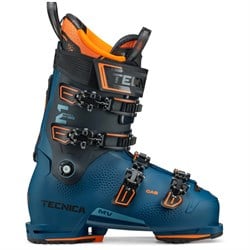
1. Tecnica Mach1 MV 120
-
Last: 98, 100, or 103mm (narrow, medium, wide widths)
-
Flex: 120 (advanced/expert skiers)
-
Weight (per boot): Approx. 1840g
-
Walk Mode: No
The Tecnica Mach1 MV 120 is a high-performance alpine boot built for expert skiers who want all-day comfort without sacrificing precision. What sets the Mach1 apart is its focus on fit customization. Tecnica offers it in three different lasts—98, 100, and 103mm—to accommodate a wide range of foot shapes. The liner is heat-moldable, and the polyether shell can be punched and shaped by a bootfitter. This flexibility, combined with a carbon spine for increased stiffness and lateral precision, gives the Mach1 a responsive and powerful feel across all terrain.
On the slopes, the Mach1 holds up beautifully in both on-piste and off-trail conditions. The stance feels natural, the power transfer is consistent, and the comfort remains high through long days. Compared to competitors like the Lange Shadow, the Mach1 is slightly more forgiving while still retaining excellent edge control and responsiveness. It is a significant investment, and at around $800, it’s not the most budget-friendly option. Still, for advanced all-mountain skiers looking for a dialed-in fit and serious performance, the Mach1 MV 120 remains one of the best all-around resort boots available. Read the full review here.
Pros:
- Excellent shell and liner customization
- Available in three different widths
- Carbon spine boosts power transfer
- Versatile performance across terrain types
Cons:
- Expensive
- Lacks walk/hike mode for sidecountry use
See the Tecnica Mach1 MV 120 See the Women’s Mach1 MV 105
2. Scarpa 4-Quattro XT – Women’s
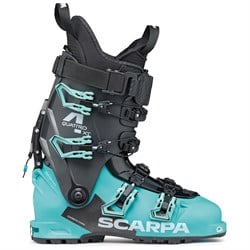
-
Last: 100mm
-
Flex: 115 (advanced/expert skiers)
-
Weight (per boot): 1345g
-
Walk Mode: Yes
The Scarpa 4-Quattro XT is a top-tier hybrid boot for women that strikes a great balance between uphill mobility and downhill power. Designed with both tech and GripWalk alpine binding compatibility, it’s one of the most versatile boots available. It features a stiff 115 flex, 61-degree range of motion, and weighs just 1345 grams, making it a strong performer for long tours and inbounds skiing alike. Scarpa’s construction feels solid and efficient, and when locked in, the boot skis impressively like a full alpine model.
While it performs very well overall, the fit feels narrower than expected for a 100mm last, which could be an issue for wider feet. Additionally, the non-replaceable GripWalk Vibram soles may limit longevity if you’re hard on gear. But these are minor trade-offs considering the overall performance and versatility. For experienced female skiers who want a true do-it-all boot without feeling underpowered on descents, the 4-Quattro XT is one of the most complete options available today.
Pros:
- Excellent touring and alpine performance
- Compatible with both tech and alpine bindings
- Lightweight with a wide range of motion
- Stiff enough for aggressive skiing
Cons:
- Narrower fit than listed
- Non-replaceable soles reduce lifespan
See the Scarpa 4-Quattro XT See the Scarpa 4-Quattro SL
3. Atomic Hawx Ultra XTD 120 BOA GW
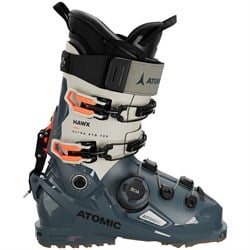
-
Last: 98mm (narrow width)
-
Flex: 120 (advanced/expert skiers)
-
Weight (per boot): Approx. 1580g
-
Walk Mode: Yes
The Atomic Hawx Ultra XTD 120 BOA GW is a versatile hybrid boot that expertly blends backcountry performance with resort-ready power. It’s built for skiers who split time between inbounds laps and touring missions. The sleek shell and tech-compatible inserts signal its uphill credentials, while the updated BOA system replaces traditional buckles for a more precise, micro-adjustable fit around the foot. Atomic also introduced a polyurethane shell for better flex and shock absorption, creating a boot that feels responsive yet forgiving in varied terrain. Whether you’re navigating tight trees or carving groomers, it handles both with ease.
Despite being a jack-of-all-trades, it’s not a master of one. Dedicated downhillers might find the ride less planted than a full alpine boot, and it’s not the lightest for pure touring. However, the Ultra XTD is a top pick for anyone seeking one boot that can confidently tackle both realms. It’s especially well-suited to skiers with narrow feet, though Atomic also offers the Hawx Prime XTD for medium-volume options. If you don’t mind the BOA system replacing traditional buckles, you’ll love the fine-tuned fit. Overall, the Ultra XTD 120 BOA GW is a serious contender for anyone looking to bridge the gap between backcountry freedom and resort control.
Pros:
- Smooth, predictable flex
- BOA system offers precise, comfortable fit
- Lightweight enough for longer tours
- Tech-compatible for backcountry use
Cons:
- Not as stiff as dedicated alpine boots
- BOA system may not suit all preferences
See the Atomic Hawx Ultra XTD 120 See the Women’s Hawx Ultra XTD 115
4. Tecnica Zero G Tour Pro W – Women’s
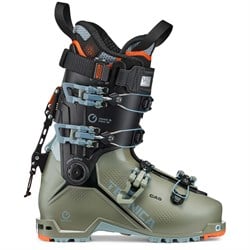
-
Last: 99mm
-
Flex: 125 (advanced/expert skiers)
-
Weight (per boot): 1128g
-
Walk Mode: Yes
Tecnica finally answered the call with a women’s-specific version of their legendary Zero G Tour Pro, and it doesn’t disappoint. The new women’s model retains all the mountain-tested features of the original, including an ultra-light Grilamid shell and a class-leading 60-degree range of motion for uphill efficiency. This version is a game-changer for expert female backcountry skiers who want real downhill performance without sacrificing comfort or mobility. Tecnica also fine-tuned the fit, adding a slightly higher instep and better forward lean for more control and comfort on steep descents.
While it shines in big terrain, the Zero G Tour Pro W is still a bit narrow for those with wider feet, and the high $900 price point will make some skiers hesitate. Still, if you’re looking for a truly capable boot that tours well and can hold its own in aggressive descents, it’s one of the best options out there. Tecnica also offers a softer, more forgiving 105-flex version for those who want a slightly more relaxed ride. For serious women skiers ready to push their limits, the Zero G Tour Pro W stands out as a top-tier one-quiver boot.
Pros:
- Lightweight but powerful on descents
- Excellent range of motion for uphill travel
- Stiffest women’s-specific touring boot available
- Improved fit and instep over earlier versions
Cons:
- Expensive
- Narrow fit may require shell work for wider feet
See the Tecnica Zero G Tour Pro W See the Tecnica Zero G Tour W
5. K2 Recon 120
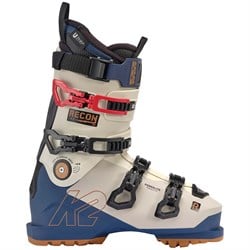
-
Last: 98 or 100mm (narrow or medium width)
-
Flex: 120 (advanced skiers)
-
Weight (per boot): Approx. 1650g
-
Walk Mode: No
The K2 Recon 120 is a lightweight all-mountain boot that hits a sweet spot for advanced skiers who value control and agility. K2’s goal with the Recon was clear: cut weight without cutting performance. The result is a boot that feels nimble underfoot but still provides plenty of support for high-speed carving and varied terrain. Its 120 flex is strong enough for most advanced skiers, and the boot’s forgiving nature makes it an approachable option for those progressing toward expert levels.
Priced at around $600, the Recon 120 is a great value compared to more premium options like the Tecnica Mach1 or Lange Shadow. It’s not quite as damp or precise, and it lacks a walk mode, which might limit sidecountry missions. But if you want a no-nonsense alpine boot that feels light, skis well, and doesn’t break the bank, the Recon deserves a serious look. The BOA version is also available for those seeking even more fit precision, though it adds cost. Overall, the Recon is ideal for skiers who spend their time inbounds and like to keep things light and lively.
Pros:
- Light for a true alpine boot
- Strong and stable at speed
- Great value for the performance
- Available in two width options
Cons:
- No walk/hike mode
- Less damp and powerful than premium competitors
See the K2 Recon 120 See the Women’s Anthem 105 MV
6. Atomic Hawx Prime 115 S BOA – Women’s
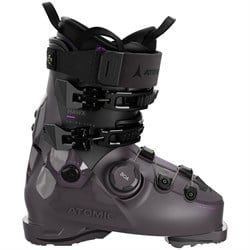
-
Last: 100mm
-
Flex: 115 (advanced/expert skiers)
-
Weight (per boot): 1739g
-
Walk Mode: No
The Atomic Hawx Prime 115 S BOA is a strong, supportive resort boot built for female skiers who demand comfort and performance. With the addition of a BOA dial closure this season, it offers a more secure, customizable fit across the forefoot. Paired with Atomic’s Memory Fit liner, adaptive cuff system, and warm 3M Thinsulate insulation, this boot keeps feet comfortable and toasty even during long days in freezing temps. Atomic’s lightweight Prolite shell keeps things nimble while still offering a powerful ride, especially on choppy snow or harder conditions.
While it performs exceptionally well for medium-volume feet, the Prime isn’t ideal for high-volume skiers or those needing extra width. And despite the improved fit and features, there’s no walk mode, which limits its versatility beyond the resort. Still, if you want a responsive boot that won’t punish your feet, the Prime 115 S BOA is a top pick for all-mountain performance. Plus, Atomic offers several flex versions for skiers who prefer a softer feel. With impressive downhill performance and thoughtful comfort features, this boot is a standout for hard-charging women.
Pros:
- BOA dial offers a precise, glove-like fit
- Warm and comfortable for long days
- Responsive but forgiving flex
- Great out-of-box fit for medium-width feet
Cons:
- No walk/hike mode
- Not ideal for skiers with wide feet
See the Atomic Hawx Prime 115 S BOA W See the Atomic Hawx Prime 85 W GW
7. Lange Shadow 130 LV GW
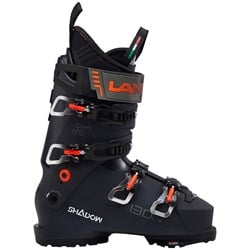
-
Last: 97 or 100mm (narrow or medium width)
-
Flex: 130 (advanced/expert skiers)
-
Weight (per boot): Approx. 1890g
-
Walk Mode: No
The Lange Shadow 130 LV GW is a powerhouse alpine boot designed for expert skiers who demand precision, control, and innovation. Lange took a big swing by redesigning their classic RX series and introduced the Suspension Blade and Dual Pivot technology. These changes dramatically improve energy transfer, making the Shadow one of the most efficient boots on the market. The low-volume 97mm version offers a race-ready fit that hugs the foot securely, while the 130 flex handles high speeds and aggressive terrain with ease.
On snow, the Shadow feels incredibly stable and precise—ideal for carving hardpack or charging steep terrain. The liner molds well and provides great heel hold, and the shell is easily customized by a fitter. Our main concern is long-term durability, as this boot’s design is still relatively new and untested across multiple seasons. It’s also pricey, but the level of performance and innovation justifies the cost for serious skiers. If you’re looking for a powerful, race-inspired boot that delivers top-end responsiveness, the Shadow 130 LV GW is one of the most exciting options out there.
Pros:
- Exceptional power transfer and precision
- Highly responsive on hardpack and steep terrain
- Moldable liner offers great fit and heel hold
- Innovative tech improves skiing efficiency
Cons:
- Expensive
- Long-term durability still unknown
See the Lange Shadow 130 LV See the Women’s Shadow 115 LV
8. Dynafit Radical Pro – Women’s
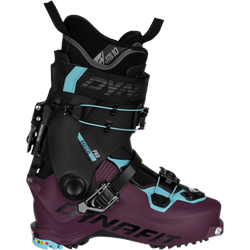
-
Last: 103.5mm (wide)
-
Flex: 110 (advanced/expert skiers)
-
Weight (per boot): 1270g
-
Walk Mode: Yes
The Dynafit Radical Pro stands out as one of the most downhill-capable touring boots available for women. Built with Dynafit’s Hoji Lock System, the Radical Pro transitions seamlessly between uphill and downhill modes with a single lever, although in practice it may require a quick top buckle adjustment. The 110 flex is impressively stiff for a boot this light, offering excellent control and responsiveness on the descent. The roomy 103.5mm last makes it especially appealing for wider feet—something not often found in performance backcountry boots.
While it’s not the lightest touring boot on the market, the extra grams are well-spent on warmth, power transfer, and all-day comfort. The Radical Pro excels in cold weather and variable conditions and has proven itself among mountain guides and pros who spend long days on snow. The biggest downside is the stock liner, which packs out faster than expected and may require an upgrade for multi-season use. Still, for skiers who want a high-performing touring boot that doesn’t sacrifice the downhill fun, the Radical Pro remains a favorite in the backcountry scene.
Pros:
- Excellent downhill control for a touring boot
- Wide fit is great for high-volume feet
- Warm and solid in frigid conditions
- Efficient transitions with Hoji Lock System
Cons:
- Stock liner wears out quickly
- Slightly heavy for long backcountry missions
See the Dynafit Radical Pro See the Dynafit Radical
How to Choose Ski Boots for Expert Skiers?
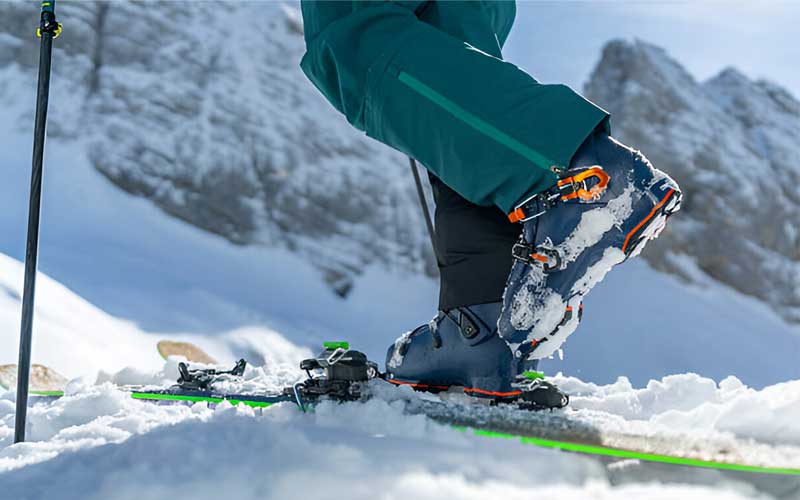
For expert skiers, ski boots are more than just footwear—they are a vital tool for control, power, and connection to the mountain. Unlike beginners or intermediates who may prioritize comfort and warmth above all else, experts need boots that transfer energy precisely, hold up at high speeds, and respond immediately to changes in terrain and technique. Choosing the right ski boots at this level can make or break your performance.
This guide breaks down everything advanced and expert skiers should consider when buying ski boots—from fit and flex to customization and intended terrain.
1. Understand Flex Ratings and What They Really Mean
Flex rating is one of the most critical factors in choosing a ski boot. Flex measures how stiff the boot is when you press forward into the cuff. For expert skiers, you’ll typically want a flex rating between 110 and 140, depending on your skiing style and body type.
-
Lighter or more finesse-oriented skiers (including many women) may prefer a flex around 110–120, which allows for more sensitivity and natural movement.
-
Aggressive skiers who charge hard or race may lean toward 130 or even 140 for maximum control and stability at high speeds.
However, keep in mind that flex is not standardized across brands—a 120 flex in one brand may feel stiffer or softer than a 120 in another. Trying boots on or reading in-depth reviews can help you judge the real-world performance.
2. Choose the Right Last (Boot Width)
The last refers to the width of the boot at its widest point, typically across the forefoot. Expert boots are usually narrower than beginner models to enhance precision and reduce foot movement inside the boot.
-
Narrow last: 97–98mm
-
Medium last: 100mm
-
Wide last: 102–104mm
Most expert-level boots come in multiple last options to match different foot shapes. Don’t assume you need a narrow boot just because you’re an advanced skier—if your foot is wide, a 98mm last could cause pain and compromise performance. Always match the last to your actual foot width and volume.
3. Prioritize Fit and Foot Volume
Fit is everything when it comes to ski boots, especially at the expert level. A boot that’s too big will lack precision; a boot that’s too tight will cause discomfort or even circulation issues.
Here are a few important tips for dialing in the fit:
-
Length (Mondopoint size): Start with your true mondopoint size, but expect a snug fit. Many expert skiers go a half-size down for better responsiveness.
-
Volume: Consider not just width but the overall volume—this includes instep height, heel hold, and ankle fit.
-
Shell fit check: Remove the liner, insert your foot into the shell, and slide forward until your toes touch the front. You should have about 1.5–2cm of space behind your heel for a performance fit.
Many boots now offer customizable liners and shells, which can be heat-molded or punched by a bootfitter. Investing in professional bootfitting can turn a good boot into a perfect one.
4. Match Your Boot to Your Skiing Style
There’s no single best boot for all expert skiers. Think about how and where you ski:
All-Mountain Expert
If you ski the whole mountain—groomers, trees, powder, steeps—look for a stiff but comfortable boot with a natural stance and good shock absorption. A flex of 120–130 with a medium last is a popular all-mountain combo.
Resort-Race Hybrid
If you’re hammering groomers or like the feel of a race boot, look for something stiffer and lower-volume. Race-oriented boots often have 130–140 flex and narrow 97mm lasts.
Freeride/Big-Mountain
For big lines, cliffs, or powder, you’ll want something powerful and laterally stiff. Some freeride boots also have walk modes and GripWalk soles to make bootpacks easier.
Touring & Hybrid Skiers
If you spend time in the backcountry as well as the resort, go for a freeride-touring hybrid boot. These offer tech fittings, lighter shells, and walk modes with generous range of motion, while still maintaining downhill performance.
5. Evaluate Customization Features
Customization makes a good boot great. Many expert boots come with features designed for precision fitting:
-
Heat-moldable liners: These liners conform to your foot’s shape when heated.
-
Custom shells: High-end boots allow bootfitters to stretch or grind the shell.
-
Adjustable forward lean & canting: Fine-tune stance and alignment.
-
BOA closure systems: Some newer boots replace buckles with BOA dials for a uniform, secure wrap across the forefoot.
Custom fitting is especially important for skiers who have odd foot shapes, bone spurs, or chronic pressure points.
6. Don’t Ignore Comfort
Yes, expert boots are tight and performance-focused—but they shouldn’t be painful. Long days on the hill mean your boots need to balance responsiveness with wearability.
-
Liners: Look for dual-density liners that offer good cushion without being too soft.
-
Insulation: Some models use 3M Thinsulate or similar to keep toes warm in frigid weather.
-
Calf fit: Women’s boots typically have a lower cuff and more room for wider calves.
Pain, numbness, or poor circulation isn’t something you should “just deal with.” A properly fit expert boot will be snug but supportive, not painful.
7. Consider Weight and Construction
While weight isn’t as important for resort-only skiers, it matters for touring and agility. Many high-performance boots now use advanced plastics (like Grilamid or polyurethane) to reduce weight without sacrificing stiffness.
-
Lighter boots feel more playful and maneuverable.
-
Heavier boots offer more dampness and stability at speed.
Also consider construction methods like overlap shells (common in alpine boots) vs. cabrio designs (common in freeride and touring boots) that can affect flex pattern and feel.
8. Budget Realistically
Expect to spend $600 to $900 for a high-quality expert boot. Premium models with BOA systems, carbon reinforcements, or hybrid touring features may cost more.
It’s tempting to go for the most expensive boot assuming it’s the best—but that’s only true if it fits your foot and style. A $650 boot that fits perfectly will ski far better than a $900 boot that pinches your toes or causes hot spots.
Final Thoughts
Choosing ski boots as an expert isn’t about what’s trending or what your friends wear—it’s about fit, performance, and your personal skiing style. Take the time to try on several pairs, get a proper bootfitting if possible, and prioritize the boot that feels like an extension of your body.
At this level, the right ski boot won’t just support your skiing—it will elevate it.