Best Ski Boots for Heavy Skiers of 2025
Finding the right ski boots can be hard if you’re a heavier skier. You need support, comfort, and the right fit. Many boots feel too soft or tight, which causes pain or poor control. That’s why choosing the right boot matters. Stiffer flex, wide fit, and strong liners are key features to look for. These help balance your weight and keep your feet happy. The right boots will improve your turns and reduce fatigue. In this guide, we’ve picked the best ski boots for heavy guys. These boots offer strength, space, and comfort. Whether you’re a beginner or advanced, there’s something here for you. Let’s get started.
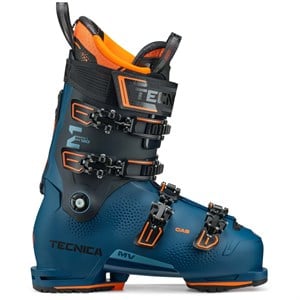
1. Tecnica Mach1 MV 120
-
Flex Index: 120 (stiff, designed for advanced to expert skiers)
-
Last Width: 100 mm (medium-volume fit)
-
Liner: C.A.S. Performance liner with Celliant® insulation
-
Sole Type: GripWalk ISO 23223
The Tecnica Mach1 MV 120 remains a top choice for aggressive skiers seeking a powerful yet comfortable boot. Its 120 flex offers crystal‑clear response for fast, technical skiing, while the anatomically shaped C.A.S. shell and liner deliver excellent heel stability and custom comfort right from the start. The Celliant® layer in the liner adds warmth and boosts recovery, converting body heat into infrared energy. The shell’s heat-moldable zones make it especially easy for a bootfitter to fine-tune the fit for precise foot, ankle, and shin comfort.
On the mountain, the Mach1 MV 120 shines with its quick rebound and power transfer. The T‑Drive rear spine keeps flex consistent across temperatures, while the Quick Instep material ensures easy on/off, even in cold weather. Four micro-adjust buckles, double canting, and a robust 45 mm power strap let you refine your fit for both performance and comfort. The replaceable GripWalk soles improve traction off-snow, making this boot practical for long days at the lodge. All told, it’s a perfect balance of power and fit—ideal for skiers who want race-level performance with all-day comfort.
Pros
- Powerful, expert-level performance
- Customizable, heat-moldable shell and liner
- Warm liner with Celliant® for better circulation
- Walk-friendly GripWalk soles
Cons
- Too stiff for casual or beginner skiers
- Requires professional fitting to maximize comfort
See the Tecnica Mach1 MV 120 See the Women’s Mach1 MV 105
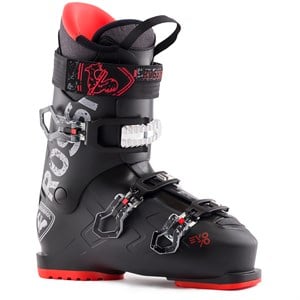
2. Rossignol Evo 70
-
Flex Index: 70 (soft, forgiving flex)
-
Last Width: 104 mm (wide fit)
-
Liner: Custom T4 liner with sock-like wrap
-
Sole Type: Replaceable ISO 5355 alpine soles
The Rossignol Evo 70 is the ultimate comfort boot for wide-footed beginners and intermediates. Its generous 104 mm last ensures room for wider feet and high-volume builds, while the soft 70 flex offers a forgiving feel that won’t punish early errors. The internal overlapping shell and Easy Entry insert make slipping in and out painless—even in cold conditions. Out of the box, the Custom T4 liner delivers a snug but cushy fit that quickly adapts to your foot shape, delivering surprising support for a value boot.
On-snow, the Evo 70 feels relaxed yet reliable thanks to its Sensor Matrix shell, which cuts weight without sacrificing rigidity. The three micro-adjust buckles and 35 mm power strap allow basic fit tweaks, while the replaceable soles add long-term practicality. Ideal for skiers ditching rentals, this boot makes progression easy and enjoyable—no pain, no fuss, just soft boarding and comfort.
Pros
- Roomy last for comfortable fit
- Soft, forgiving flex fosters confidence
- Custom-feel liner straight away
- Easy to enter/exit and affordable price
Cons
- Too soft for aggressive skiing
- Limited adjustment options for advanced fit
See the Rossignol Evo 70 See the Women’s Kelia 50
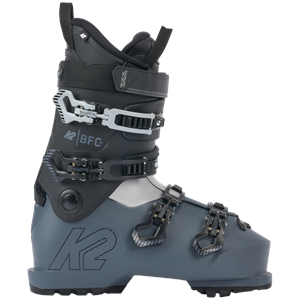
3. K2 BFC 80
-
Flex Index: 80 (soft flex for beginners)
-
Last Width: 103 mm (wide fit)
-
Liner: CushFit Comfort liner with open-cell and EVA foam
-
Sole Type: GripWalk ISO 23223 outsoles
The K2 BFC 80 focuses squarely on comfort and ease—an excellent choice for entry-level skiers with wider feet. With its generous 103 mm last, feet won’t feel cramped, and a soft 80 flex provides smooth, forgiving turns ideal for building confidence. The CushFit Comfort liner blends open-cell and EVA foam into a snug, plush package that supports the foot without breaking in. A FastFIT instep zone of softer TPU makes on/off frictionless—thankfully avoiding the struggle of stiff boots.
Performance-wise, the boot offers enough control for beginners thanks to its four micro-adjust buckles and pragmatic GripWalk soles. The polypropylene shell and cuff give light support without feeling heavy or cumbersome. Top it off with a 30 mm velcro strap and you’re set for easy personalization. It’s perfect for skiers seeking comfort, warmth, and straightforward handling without flashy performance claims.
Pros
- Comfortable wide-fit right away
- Effortless entry and exit
- Great for beginners, casual use
- Excellent traction off-slope with GripWalk soles
Cons
- Flex too soft for aggressive skiing
- Shell is basic, lacking advanced features
See the K2 BFC 80 See the Women’s BFC 75
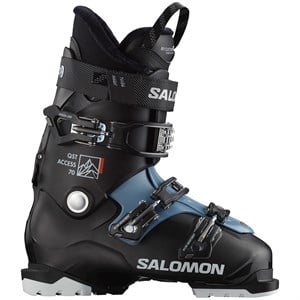
4. Salomon QST Access 70
-
Flex Index: 70 (soft, forgiving)
-
Last Width: 104 mm (wide/high-volume fit)
-
Liner: My Custom Fit Comfort with Woolmetal insulation
-
Walk Mode: Hike & Ride system with V‑cut shell
The Salomon QST Access 70 is the mascot of comfort for beginner to intermediate skiers with wider feet. The most notable feature is its 104 mm last, ready to accommodate high-volume foot shapes effortlessly. With its soft 70 flex, it encourages proper stance without resistance. The My Custom Fit Comfort liner molds to your foot, and the Woolmetal insulation delivers day-long warmth—a fantastic combination for ski days in cold weather. Easy Step-In overlap reduces struggle when donning boots.
Its Hike & Ride system sets this boot apart. Flip the back spine, and the V-cut shell adds enough articulation for easy walking—ideal for navigating lodge stairs or terrain. The oversized pivot and ratcheting cuff buckle ensure power transmission when skiing, while the 360° strap improves security. On snow, this boot feels stable, predictable, and unexpectedly responsive for its class. It allows newer skiers to focus on turns—not aching feet.
Pros
- Roomy and warm with Woolmetal liner
- Easy-walk mode boosts mobility
- Stable skiing response
- Effortless entry with overlap shell
Cons
- Too mellow for seasoned skiers
- Limited fine-tuning options beyond three buckles
See the Salomon QST Access 70 See the Women’s QST Access 60
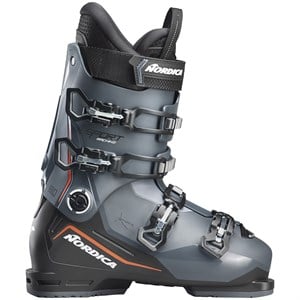
5. Nordica Sportmachine 3 80
-
Flex Index: 80 (soft, approachable flex)
-
Last Width: 102 mm (medium-wide for high-volume feet)
-
Liner: 3D Cork Fit Primaloft with Infrared Tri-Fit system
-
Sole Type: ISO 5355 Alpine Extra Grip soles
The Nordica Sportmachine 3 80 strikes an ideal balance between comfort and customization for progressing skiers with wider feet. Its 102 mm last offers immediate relief for high-volume foot profiles, complemented by a forgiving 80 flex to ease learning turns. The standout feature is the Tri-Fit infrared customization system, which allows shell and liner heat molding exactly where needed. Cork-infused liners keep your feet warm and plush, while the Easy Entry Instep allows straightforward entry—even as your flexibility wanes.
The boot’s cuff is fully adjustable via the ACP system, ensuring snug fit for different calf sizes. Nordica’s Tri-Force construction, with a firm spine and softer foot wrap, boosts shell rigidity while keeping comfort. Four micro-adjust buckles and a 35 mm velcro strap help refine fit. Its grip soles excel when walking around the resort. This boot is ideal for those graduating from rentals, seeking more support, warmth, and fit flexibility—without jumping into stiff, performance-driven models.
Pros
- Custom out-of-box fit
- Easy to use with warm, cork liner
- Adjustable cuff suits many leg shapes
- Reliable grip soles for walking
Cons
- Not suited to aggressive skiing
- Bulky compared to race-oriented boots
See the Nordica Sportmachine 3 80 See the Women’s Sportmachine 3 65
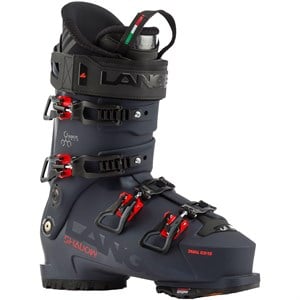
6. Lange Shadow 130 LV GW
-
Flex Index: 130 (very stiff for expert skiers)
-
Last Width: 97 mm (narrow, low-volume fit)
-
Liner: Core Custom 1 with Auxetic and Reactive Boost Tongue
-
Sole Type: GripWalk ISO 23223
Lange’s Shadow 130 LV GW is a breakthrough in freeride boot design, engineered for elite skiers with low-volume feet. The 97 mm last tightly wraps narrow feet, and the 130 flex delivers razor-sharp response. The shell’s Suspension Blade dual pivot system is a game-changer—by eliminating rear rivets and using a flexible blade system above the heel, Lange achieves a progressive flex that combines power with smoother compression at the extremes of motion. The Auxetic liner adapts dynamically to foot movement, and the dual-core construction adds stiffness where needed while cushioning the rest of the foot.
These boots feel race-ready yet freeride-capable, with slick design and lightweight materials. The 45 mm strap and four buckles let you lock in control, while GripWalk soles help you walk with stability. Though the shell feels firm out of the box, a proper fitting session can alleviate pressure points. For expert skiers with narrow feet craving precision, snow feel, and innovation, the Shadow takes things to the next level.
Pros
- Disruptive freeride design with smooth flex
- High-performance precision for expert skiers
- Adaptive liner adds comfort and fit
- Walkable with GripWalk soles
Cons
- Very narrow and stiff, unsuitable for wider-footed or casual users
- Shell may need careful inspection for fragility
See the Lange Shadow 130 LV See the Women’s Shadow 115 MV
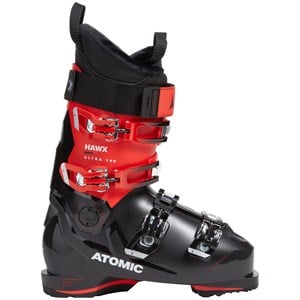
7. Atomic Hawx Ultra 100 GW
-
Flex Index: 100 (medium flex for balanced performance)
-
Last Width: 98 mm (narrow fit, heat-customizable)
-
Liner: 3D Silver Liner with asymmetric shaping
-
Sole Type: Cantable GripWalk Grip Pads (ISO 23223)
The Atomic Hawx Ultra 100 GW is a standout boot for intermediate to advanced skiers with narrower feet. The 98 mm last fits snugly in the midfoot and ankle while accommodating the forefoot, and the Memory Fit heat-molding system allows up to 6 mm forefoot and 10 mm ankle expansion—ideal if you need heel lockdown and a roomier instep. The Adaptive Fit Cuff System adds quick calf-volume adjustment without tools, and the Prolite construction keeps weight down while reinforcing critical areas with Energy Backbone technology.
On snow, the boot delivers excellent edge control and responsiveness thanks to its medium 100 flex and stiff spine. The four buckles and 40 mm strap provide secure closure. The Cantable GripWalk soles allow easy walking and slope-side mobility. These boots feel everything a performance boot should: agile, locked-in, and comfortable. With Atomic’s signature fit, they’re great for skiers seeking both precision and comfort—just don’t choose them if your feet run wide or you ski casually.
Pros
- Adjustable heat-mold fit for narrow to average feet
- Light, supportive, and performance-oriented
- Walkable GripWalk soles
- Calf fit adjustability adds comfort
Cons
- Not suited to wide-footed skiers
- Requires bootfitter for perfect heat-mold comfort
See the Atomic Hawx Ultra 100 See the Women’s Hawx Ultra 95
How to Choose Ski Boots for Heavy Skiers?
Finding the right ski boots is essential for any skier—but it’s especially important if you’re heavier. Ski boots are the connection between your body and your skis. They control how power is transferred and how stable you feel. For heavy guys, poorly fitted or undersupported boots can mean pain, poor performance, and even injury. Whether you’re new to skiing or a seasoned pro, choosing the right boots tailored to your weight and build can make all the difference on the slopes.
1. Understand Why Weight Matters
Ski boot flex is one of the most critical features in any boot. It refers to how stiff the boot is when you bend your ankle forward. The higher the flex rating, the stiffer the boot. For heavier men, too soft a boot won’t provide enough support. You’ll likely overpower the flex, causing sloppy turns, reduced control, and increased fatigue.
Heavier adults need boots with stiffer flex ratings to properly channel their energy into their skis. A stiffer boot ensures stability at higher speeds and during aggressive carving. Even intermediate heavy skiers will benefit from boots with a flex of at least 100–110, while advanced skiers may need 120 or more.
2. Choose the Right Flex Rating
Flex ratings vary by brand but follow a general scale:
-
Beginner skiers (lighter weight): 60–80 flex
-
Intermediate skiers (heavier weight): 90–110 flex
-
Advanced skiers (heavier weight): 120–130+ flex
Heavy beginners may still benefit from a boot with a slightly stiffer flex than recommended for their skill level, to compensate for their weight. Don’t assume softer equals more comfortable—it can lead to worse control and faster fatigue.
3. Consider Boot Width (Last)
Your weight often correlates with your foot size and shape. Heavier people tend to have wider or higher-volume feet. Ski boots come in a variety of “last” widths, which refer to the width of the forefoot (typically measured in millimeters).
-
Narrow fit (97–98 mm): For low-volume feet
-
Medium fit (100–102 mm): For average feet
-
Wide fit (103–106 mm): For wide or high-volume feet
If you have a wider foot or high instep, choose boots specifically designed for wide feet. Trying to squeeze into a narrow boot will cause discomfort and poor blood circulation.
4. Prioritize Comfort and Fit
A heavy person should never sacrifice comfort. Pressure points, numb toes, or heel lift can ruin your day. Pay attention to:
-
Liners: Look for heat-moldable liners that adapt to your foot shape over time. Some brands offer liners that mold instantly using heat.
-
Instep height: Higher insteps need more volume in the midfoot area. Some boots feature special designs to reduce pressure on the top of the foot.
-
Ankle and heel hold: You’ll want a snug fit around the ankle to prevent unwanted movement or heel lift.
Always try on boots with the socks you intend to ski in. A custom boot fitting at a ski shop is highly recommended—especially for heavier skiers who need personalized support.
5. Don’t Overlook Boot Features
Some ski boots come with features that make life easier and skiing more enjoyable, particularly for heavy skiers:
-
Walk modes: These allow for easier walking or hiking to the lift. Great for reducing fatigue off the slopes.
-
GripWalk soles: Offer better traction when walking on slippery surfaces.
-
Micro-adjustable buckles: Help fine-tune your fit without pressure points.
-
Custom insoles: Heavier skiers benefit greatly from custom insoles for added arch support and alignment.
6. Know the Importance of Boot Customization
Customization is a game-changer. A standard off-the-shelf boot may not offer enough support or comfort for a heavier man. Most high-quality boots today allow for shell modifications, custom liners, and aftermarket insoles. Visiting a professional boot fitter allows you to:
-
Adjust shell shape to relieve hot spots
-
Mold liners to your specific foot shape
-
Add supportive footbeds or heel lifts for better alignment
These tweaks can significantly improve both performance and comfort.
7. Boot Brands to Consider for Heavy Guys
Some ski boot models are especially well-suited to heavier skiers due to their stiffer flex, wider fit, and supportive liners. Here are a few worth checking out:
-
Tecnica Mach1 MV 120 or 130: Excellent stiffness, custom fit liners, great for strong intermediate or advanced skiers.
-
Nordica Sportmachine 3 100 or 120: Wide last and high-volume fit—great for heavier skiers with large feet.
-
Lange Shadow 130 LV GW: Designed with progressive flex and power transfer in mind. Stiff, responsive, and comfortable.
-
K2 BFC 100 or 120: “Built for comfort” boots with a wide last and a generous fit. Great for heavier beginner or intermediate skiers.
8. Get a Professional Fit
While online shopping is convenient, visiting a ski shop is the best option for boot selection. Boot fitters measure your foot, assess your stance and shape, and recommend models based on your weight and skiing style. Some shops offer boot fitting guarantees—meaning they’ll keep working on your boots until you’re satisfied.
Final Thoughts
For heavy skiers, ski boots are more than just gear—they’re the foundation of your performance and comfort on the slopes. Choosing the wrong boots can lead to instability, discomfort, and frustration. Choosing the right ones can mean longer days on the mountain, better turns, and far more enjoyment.
Look for a stiff flex, wide fit if needed, moldable liners, and supportive features like custom footbeds and solid ankle hold. Don’t be afraid to invest in a good pair and get them properly fitted. Your body—and your skiing—will thank you.