Best Snowboard Boots for Wide Feet 2026
Finding snowboard boots if you have wider feet can be tough. Most boots are too narrow and cause pain. If your feet hurt or feel numb while riding, you need the right pair. This article lists the best snowboard boots for wide feet. We picked options that offer more room, comfort, and support. Whether you are a beginner or a pro, you will find a boot that fits well. Say goodbye to sore feet and enjoy your time on the mountain.
1. DC Phase Boa

- Closure: BOA Fit System with H4 Coiler
- Outsole: Foundation UniLite Outsole
- Liner: Response Liner I
- Insole: IMPACT ALG Insole
The DC Phase Boa is built for riders who want an easy, dependable closure without sacrificing comfort on long days. The H4 Coiler BOA dial delivers precise micro-adjustments across the entire boot, so you can fine-tune tension on the lift without ever untying a lace. Its 4/10 flex rating makes it forgiving for beginners while still offering enough support for intermediate riders working on their carving technique.
Underneath, the Foundation UniLite outsole keeps things lightweight while maintaining solid board feel, and the waterproof synthetic upper keeps moisture out during wet park days. The Response Liner I and IMPACT ALG insole work together to cushion impacts and support the arch, making these a comfortable all-day option for casual to intermediate riders looking for reliable, low-maintenance performance.
Pros:
- Fast, precise BOA tightening
- Lightweight and comfortable
- Fully waterproof construction
Cons:
- Soft flex not ideal for advanced riders
- Single BOA zone limits customization
2. DC Women’s Phase BOA

- Closure: BOA and Lace-Up combo
- Outsole: Foundation UniLite Outsole
- Liner: Response Liner I
- Insole: IMPACT-ALG Insole
The DC Women’s Phase BOA takes the reliable performance of the standard Phase and tailors it to a women’s-specific fit. The hybrid BOA and lace-up closure system gives riders more control over how snug each zone feels, which is especially helpful for narrower heels and lower-volume feet. At a soft 4/10 flex, it’s an easy boot to break in and wear comfortably from the first run.
The UniLite outsole keeps the boot light on your feet without compromising grip on icy walkways, and the waterproof textile lining keeps feet dry through slushy conditions. Combined with the IMPACT-ALG insole’s arch support and the Response Liner I’s cushioning, this boot suits beginner to intermediate women riders who want comfort, warmth, and dependable adjustability without a steep learning curve.
Pros:
- Customizable BOA plus lace combo
- Women’s-specific comfortable fit
- Waterproof and warm
Cons:
- Soft flex limits aggressive riding
- Lace-up element adds setup time
3. System APX
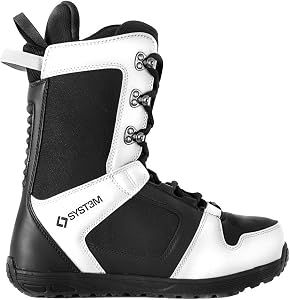
- Closure: Traditional Lace-Up with Twist
- Liner: Thermofit Heat Moldable
- Lace Hardware: Metal Lace Loops
- Design: Low Profile
The System APX is a favorite among riders who prefer traditional lacing over dial systems, letting you tighten individual sections of the boot for a truly personalized fit. The smoothed metal lace hooks resist abrasion so laces last longer, and the low-profile design keeps the boot feeling nimble underfoot without adding bulk around the ankle.
Its standout feature is the Thermofit heat-moldable liner, which conforms precisely to your foot shape and virtually eliminates pressure points after a proper molding session. The rubber sole and PU outer material offer solid durability, while the EVA insole and water-resistant construction round out a boot built for all-day comfort. It’s an excellent pick for riders who want a highly customizable, long-lasting fit and don’t mind the extra time spent lacing up before each run.
Pros:
- Exceptional custom fit via heat molding
- Durable metal lace hardware
- Sectional tightening control
Cons:
- Slower to lace than BOA boots
- Only water-resistant, not fully waterproof
4. Burton Moto BOA

- Closure: Single-Zone BOA Fit System
- Outsole: DynoLITE Outsole
- Liner: Imprint 1+ Heat-Moldable
- Tongue: 1:1 Soft Flex PowerUp Tongue
The Burton Moto BOA is one of the most popular entry-level boots on the market, and it’s easy to see why. The single-zone BOA system routes laces through an inner spool for quick, even tightening, while the PowerUp tongue creates a snug connection between boot and tongue for improved responsiveness. The Total Comfort Construction gives it a broken-in feel right out of the box, which is rare for a new boot.
Inside, the Imprint 1+ heat-moldable liner wraps the foot securely and includes reflective foil underfoot for added warmth. A snow-proof internal gusset seals out moisture at the ankle, and the durable polyurethane backstay adds structure without stiffness. This is a great choice for beginner to intermediate riders who want comfort and warmth without a complicated setup process.
Pros:
- Comfortable straight out of the box
- Warm, heat-moldable liner
- Simple single-BOA tightening
Cons:
- Single zone offers less precision
- Not suited to aggressive riding
5. DC Lotus BOA – Women’s

- Closure: Dual BOA with H4 Coiler Dials
- Outsole: Unilite Outsole
- Liner: Response Liner II
- Insole: Molded IMPACT-ALG Insole
The DC Lotus BOA is a women’s favorite thanks to its dual-zone BOA system, which lets riders independently tighten the upper cuff and lower foot for a truly dialed-in fit. The lightweight Unilite outsole improves board feel while keeping the boot feathery on your feet, and the medium flex of 4/10 balances playful comfort with enough structure for progressing riders.
The Response Liner II adds real stability with its multi-layer build, 360-degree power strap, and latex J-bars that lock the heel in place. Combined with the molded IMPACT-ALG insole’s arch support and heel cup, the boot delivers excellent responsiveness across varied terrain. Fully waterproof and articulated for natural movement, the Lotus BOA suits women riders who want precision fit and all-day support without excessive stiffness.
Pros:
- Dual BOA zones for precise fit
- Strong heel lock and stability
- Lightweight, waterproof build
Cons:
- Bungee closure feels unconventional at first
- Medium flex may feel soft for park riders
See the DC Lotus BOA – Women’s
6. thirtytwo Shifty BOA

- Sole: Rubber Outsole
- Closure: Hook & Loop with BOA Lacing
- Liner: Heat-Moldable Foam Liner
- Construction: Snowboard-Specific Last with Reinforced Heel
The thirtytwo Shifty BOA is engineered around a locked-in heel and efficient energy transfer, making it a solid pick for riders who want a responsive, balanced flex. The articulated spine and reinforced heel counter give the boot structure where it counts, while the anatomical heat-moldable foam liner adapts to your foot for a comfortable, snug fit over time.
The tuned rubber outsole strikes a good balance between board feel and off-snow walkability, which is handy for street sessions or navigating the resort base. Its water-resistant shell keeps out light moisture, and the quick, even lace tension system makes getting in and out of the boot straightforward. Backed by thirtytwo’s mountain-tested design heritage, the Shifty BOA is a dependable all-mountain option for intermediate riders seeking confident, stable turns.
Pros:
- Secure heel hold
- Comfortable heat-moldable liner
- Good outsole for walkability
Cons:
- Only water-resistant, not waterproof
- Limited technical specs listed
7. K2 Raider BOA
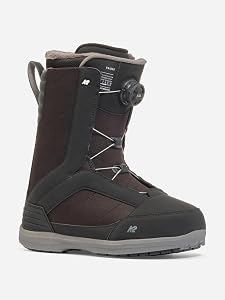
- Closure: H4 Coiler BOA with TX3 Rope Lacing
- Upper Cuff: Flex Zone Upper Cuff
- Liner: Intuition Comfort Foam 3D Liner
- Support: Internal J Bars
The K2 Raider BOA blends dependable BOA convenience with premium liner technology to deliver strong all-around performance. The H4 Coiler dial paired with TX3 rope lacing distributes tension evenly across the boot, giving a secure, wrap-around fit that holds up through long days on varied terrain. The Flex Zone upper cuff allows for natural forward flex without feeling sloppy.
Inside, the Intuition Comfort Foam 3D liner is a standout, offering plush warmth and a moldable fit that improves with wear. Internal J bars around the ankle add lateral support and help lock the heel down, reducing heel lift during hard turns. With a water-resistant PU outer and EVA components throughout for cushioning, the Raider BOA suits intermediate riders looking for a comfortable, supportive, do-it-all boot.
Pros:
- Premium Intuition liner comfort
- Even, secure BOA lacing
- Good ankle support via J bars
Cons:
- Only water-resistant, not fully waterproof
- May run narrow for wide feet
8. K2 Market BOA

- Closure: H4 BOA Fit System
- Cuff: Articulating Cuff Upper
- Liner: Comfort EVA Foam Liner
- Footbed: Die-Cut EVA Footbed
The K2 Market BOA is designed for riders who value out-of-the-box comfort and dependable everyday performance. The H4 BOA dial is impact-resistant and designed to eject on hard impact, popping back in easily so a hard fall doesn’t end your day. The articulating cuff upper allows the ankle to flex naturally without the distortion you sometimes get from stiffer boots.
The Comfort EVA foam liner is soft and warm, offering a forgiving flex and a good fit from the first wear, while the die-cut EVA footbed adds cushioned support underfoot. Fast-in liner lacing keeps things simple, staying snug through a full day at the resort without needing constant readjustment. With a water-repellent synthetic upper, the Market BOA works well as a comfortable, low-fuss boot for casual and everyday resort riders.
Pros:
- Impact-resistant BOA dial
- Comfortable from first use
- Natural cuff articulation
Cons:
- Only water-repellent, not waterproof
- Less support for aggressive riders
9. 5th Element Snowboard Boots

- Closure: ATOP Dial with Lace-Up
- Sole: EVA Sole Material
- Insole: EVA Insole
- Lining: Synthetic Fabric or Fleece
The 5th Element Snowboard Boots offer an affordable entry point for new riders, built around the ATOP Dial lacing system. Turning the dial tightens and wraps the entire foot for consistent, all-day support, while turning it the opposite way releases the lock instantly so you can slip the boot off without wrestling with laces. It’s a straightforward system that’s easy to learn on the first trip out.
Constructed with an EVA sole and insole for lightweight cushioning, these boots keep things comfortable across a full day at the resort. The waterproof synthetic upper and fleece or synthetic fabric lining help keep feet warm and dry in changing conditions. While it lacks some of the premium liner technology found in pricier boots, the 5th Element boots are a solid, budget-friendly choice for beginners testing the sport.
Pros:
- Budget-friendly price point
- Easy ATOP dial closure
- Fully waterproof construction
Cons:
- Basic liner compared to premium boots
- Less refined support for advanced riders
See the 5th Element Snowboard Boots
10. K2 Haven BOA – Women’s

- Closure: H4 Coiler BOA Fit System
- Cuff: Flex Zone Upper Cuff
- Liner: Intuition Control Foam 3D Liner
- Lacing: 3-Point Harness Liner Lacing
The K2 Haven BOA is a women’s-specific boot built around comfort and control, with the H4 Coiler BOA system providing quick, even tightening across the whole foot. The Flex Zone upper cuff allows natural forward lean while still supporting the ankle during turns, making it a versatile choice for riders progressing from beginner to intermediate levels.
The Intuition Control Foam 3D liner is a genuine highlight, molding to the foot over time for a personalized, warm fit, while the 3-point harness liner lacing secures the foot inside the shell for improved responsiveness. Internal J bars add extra ankle support, helping minimize heel lift on hard carves. With a water-resistant synthetic and nylon upper, the Haven BOA is a well-rounded option for women who want reliable comfort and support all season.
Pros:
- Excellent Intuition liner fit
- Secure 3-point liner lacing
- Good ankle support
Cons:
- Water-resistant, not fully waterproof
- Break-in period needed for liner
See the K2 Haven BOA – Women’s
11. K2 Kinsley Double BOA – Women’s

- Closure: H4 Coiler/M+2 Zonal BOA
- Lacing: TX3 BOA Rope Lacing
- Cuff: Flex Zone Upper Cuff
- Liner: Intuition Control Foam 3D Liner
The K2 Kinsley Double BOA is designed for women riders who want zonal precision in their fit. The combined H4 Coiler and M+2 Zonal BOA system lets you independently adjust the lower foot and upper cuff, delivering a responsive, wrap-around hold that adapts to different terrain and riding styles throughout the day. TX3 rope lacing spreads tension evenly to avoid pressure hot spots.
HDR premium synthetics on the upper add durability while keeping the boot water-resistant against wet snow. Inside, the Intuition Control Foam 3D liner offers a plush, moldable fit that improves with use, adding warmth and support for long resort days. The Flex Zone upper cuff allows natural articulation without sacrificing control, making the Kinsley a strong choice for adventure-ready women who want a responsive, adaptable boot.
Pros:
- Dual-zone BOA precision
- Durable HDR synthetic upper
- Comfortable Intuition liner
Cons:
- Only water-resistant, not waterproof
- Premium price for a BOA boot
See the K2 Kinsley Double BOA – Women’s
12. Alpine Swiss Snowboard Boots

- Closure: Traditional Lace-Up with Double Posted Hooks
- Outer Material: Vegan Leather
- Liner: Removable Moldable EVA Liner with J-Bars
- Outsole: Rubber Anti-Grinding with Ice Spikes
The Alpine Swiss Snowboard Boots are a versatile pick for riders at any experience level, built around a traditional lace-up system with double posted lace hooks for a secure hold. The rubber anti-grinding outsole includes ice spikes for reliable grip on icy walkways, and convenient carrying straps make transporting the boots between car and lift easier.
Inside, the removable moldable liner uses body heat to gradually conform to your foot shape, while internal 3D J-bars around the ankle add stability and comfort. A removable 5mm EVA insole provides extra cushioning, and the quick-pull liner lacing system stays easy to adjust even with gloves on. Made from waterproof synthetic leather and durable nylon, these boots hold up well over multiple seasons, making them a solid all-around option for beginners through advanced riders.
Pros:
- Custom heat-moldable liner fit
- Ice spikes for better traction
- Durable, waterproof construction
Cons:
- Traditional lacing takes longer to adjust
- Vegan leather may feel stiffer initially
See the Alpine Swiss Snowboard Boots
How to Choose Snowboard Boots for Wide Feet
Finding snowboard boots that fit well is one of the most important parts of enjoying your time on the mountain. If you have wide feet, this task can feel impossible. Most boots are made for average or narrow feet, which means your toes get squeezed, your arches ache, and your whole day can be ruined. But you do not have to suffer. With the right knowledge, you can find boots that are comfortable, supportive, and fun to ride. This guide will walk you through everything you need to know about choosing snowboard boots for wide feet. We will cover how to measure your feet, what features to look for, which brands are best, and how to get the perfect fit. By the end, you will know exactly how to find a boot that feels great from the first chair to the last.
Why Regular Snowboard Boots Hurt Wide Feet
Snowboard boots are not all built the same. Most brands design their boots around a standard width, which is often too narrow for people with wider feet. When you squeeze a wide foot into a narrow boot, several bad things happen. First, your toes get compressed, which causes pain and numbness. Second, your foot cannot sit flat, so your arch collapses and your ankles roll inward. Third, your heel lifts up because the boot is too tight in the wrong places. This leads to blisters, cold feet, and poor control on the board. The good news is that many brands now make boots specifically for wide feet. These boots have a wider toe box, a higher instep, and a more generous overall shape. Once you know what to look for, you can avoid the pain and ride with confidence.
Step 1: Measure Your Feet Correctly
Before you buy anything, you need to know your true size and width. Many people wear the wrong size boot because they guess or use their shoe size from everyday shoes. Snowboard boots should fit snug but not tight, and your toes should lightly touch the front when you stand up straight. To measure your feet properly, follow these steps:
- Measure at the end of the day. Your feet swell during the day, so measure in the afternoon or evening.
- Wear the socks you will ride in. Thin or thick socks change the fit, so use the same ones you plan to wear on the mountain.
- Stand on a piece of paper. Trace the outline of your foot while standing.
- Measure the length. From the heel to the longest toe, measure in centimeters or inches.
- Measure the width. At the widest part of your foot, usually just below the toes, measure across.
- Measure both feet. Most people have one foot slightly larger, so always fit the bigger foot.
Once you have these numbers, compare them to the brand’s size chart. Do not rely on your street shoe size. Snowboard boots often run differently, and a wide boot from one brand may fit like a regular boot from another. Write down your measurements and keep them handy when you shop online or in a store.
Step 2: Understand Boot Width and Volume
Width is not the only thing that matters. You also need to think about volume. Volume is how much space is inside the boot from top to bottom and side to side. A boot can be wide but still have low volume, which means your foot feels cramped on top. For wide feet, you want both a wider shape and a higher volume. Many brands label their boots as “wide” or “high volume.” These are the ones you should start with. Some brands also offer a “wide” version of their most popular models. If you cannot find a wide-specific boot, look for models that are known to run wide. Reading reviews from other riders with wide feet can save you a lot of time.
Key Measurements to Compare
When you look at boot specs, pay attention to these numbers:
- Last width: The width of the boot’s internal shape. A wider last means more room.
- Instep height: How much room is above your foot. High insteps need more volume.
- Toe box shape: Some boots have a rounder, wider toe box. This helps prevent toe pinch.
- Heel pocket: Even in a wide boot, you want a snug heel so your foot does not slide.
Step 3: Choose the Right Lacing System
The lacing system might seem like a small detail, but it makes a big difference for wide feet. Different systems let you adjust the fit in different zones. Here are the main types:
Traditional Laces
Traditional laces are simple and reliable. They let you customize the tightness all the way up the boot. For wide feet, this is great because you can keep the lower part loose for your toes and tighten the upper part for ankle support. The downside is that they take longer to put on and adjust.
Boa System
Boa uses a dial and steel wires instead of laces. It is fast and easy to adjust. Many Boa boots have two dials, which lets you tighten the upper and lower zones separately. This is excellent for wide feet because you can keep the toe area comfortable while locking down the heel. However, some Boa systems can create pressure points if they are too tight.
Speed Lace and Hybrid Systems
Speed lace systems use a pull cord and a locking mechanism. They are faster than traditional laces but offer less fine-tuning. Hybrid systems combine laces and Boa or speed lace in different zones. These can work well for wide feet if you can adjust the lower zone independently.
Step 4: Look for These Features in Wide Boots
Not all wide boots are created equal. Some are just a little wider, while others are built from the ground up for high-volume feet. When you try on boots, check for these features:
- Wide toe box: Your toes should wiggle freely. They should not touch the sides or the top.
- High instep: The top of the boot should not press down on your foot. You should be able to slide a finger under the tongue.
- Molded footbed: A footbed with arch support helps your foot sit correctly. Some footbeds are removable, so you can replace them with custom orthotics.
- Heat-moldable liner: Many high-end boots have liners that you can heat up and mold to your foot. This is a game-changer for wide feet because the liner expands where you need it.
- Flexible upper: A stiff upper can dig into your ankle. Look for a boot with a flexible cuff that does not create pressure points.
- Wide heel pocket: Even wide feet need a secure heel. If your heel lifts, you will get blisters. Look for a boot with a narrow heel pocket and a wide forefoot.
Step 5: Best Brands and Models for Wide Feet
Some brands are known for making great boots for wide feet. Here is a quick comparison table of popular options. Remember that fit is personal, so always try before you buy if you can.
| Brand | Model | Width Option | Lacing | Best For |
|---|---|---|---|---|
| Burton | Ruler Wide | Wide-specific | Traditional | Beginners to intermediate |
| K2 | Maysis Wide | Wide-specific | Double Boa | All-mountain riders |
| Salomon | Dialogue Wide | Wide-specific | Boa | Comfort and convenience |
| Ride | Lasso Wide | Wide-specific | Traditional | Park and freestyle |
| ThirtyTwo | Lashed Double Wide | Wide-specific | Traditional | High volume feet |
| Nitro | Team Wide | Wide-specific | Traditional | Advanced riders |
These are just a few examples. Many other brands also offer wide options, so do not limit yourself. Read reviews from riders with wide feet and see what they recommend. Some brands, like Burton and K2, have a reputation for running wider even in their standard models. Others, like Salomon and Ride, have specific wide versions that are very popular.
Step 6: How to Try On Boots for Wide Feet
Trying on boots is the most important step. Even if you measure your feet perfectly, every boot fits differently. Here is a simple process to follow:
- Wear your riding socks. Do not try on boots with thin dress socks. Use the socks you will actually wear on the mountain.
- Loosen the laces completely. Pull the tongue forward and slide your foot in. If you have to force it, the boot is too narrow.
- Stand up straight. Your toes should lightly touch the front. When you bend your knees, your toes should pull back slightly.
- Check the width. Your toes should not be pinched on the sides. You should be able to wiggle them.
- Check the instep. The top of the boot should not press down on your foot. If it does, the boot has low volume.
- Check the heel. Lift your heel up. If it moves more than a little, the boot is too big or the heel pocket is too wide.
- Walk around. Walk for a few minutes. Do you feel any pressure points? Do your feet go numb? If yes, try another size or model.
- Try different brands. Do not settle for the first pair. Different brands have different shapes. What works for one person may not work for you.
If you are buying online, make sure the store has a good return policy. Order two or three sizes or models, try them at home, and return the ones that do not fit. It is better to pay for return shipping than to be stuck with painful boots.
Step 7: Custom Fit Tips for Wide Feet
Even with wide boots, you might need a little extra help. Here are some tips to get a perfect fit:
- Replace the footbed. The stock footbed is often thin and flat. A custom footbed or a high-quality aftermarket footbed can support your arch and keep your foot from spreading.
- Heat mold the liner. Many shops will heat mold your liners for free or for a small fee. This lets the liner expand exactly where your wide feet need it.
- Use a boot stretcher. If a boot is almost perfect but has one tight spot, a boot stretcher can push out the material. Ask a shop to do this for you.
- Wear thinner socks. Sometimes a thick sock takes up too much room. Try a thin, merino wool sock that wicks moisture and keeps your feet warm without adding bulk.
- Adjust your lacing. Keep the lower laces loose over your instep and tighten the upper laces for ankle support. This is easier with traditional laces or a double Boa system.
Step 8: Common Mistakes to Avoid
Many people with wide feet make the same mistakes. Avoid these to save time, money, and pain:
- Buying boots that are too big. A bigger size does not fix width. It makes the boot too long, which causes heel lift and poor control.
- Assuming all wide boots fit the same. Every brand has a different idea of what “wide” means. Always try before you buy.
- Ignoring the heel pocket. A wide boot with a loose heel is still a bad fit. You need a snug heel and a wide forefoot.
- Skipping the footbed. The stock footbed is often useless. Upgrading it can make a huge difference.
- Not breaking in the boots. Even the best boots need a few days to break in. Wear them around the house first to soften them up.
- Choosing style over fit. A cool-looking boot that hurts is not worth it. Comfort comes first.
Step 9: How to Break In Wide Snowboard Boots
Once you find the right pair, you need to break them in. This process helps the liner mold to your foot and reduces pressure points. Here is a simple break-in routine:
- Wear the boots around the house for 20 to 30 minutes a day for a few days.
- Do some squats and lean forward to mimic snowboarding movements.
- Tighten the laces a little more each day as the liner packs out.
- If you have heat-moldable liners, get them molded at a shop before you ride.
- For the first few days on the mountain, take breaks and loosen your boots if your feet hurt.
Most boots take about 5 to 10 days of riding to fully break in. After that, they should feel like a custom fit. If they still hurt after that, they are probably the wrong boot for you.
Step 10: When to Replace Your Boots
Snowboard boots do not last forever. If you ride a lot, you will need new boots every few years. Here are signs it is time to replace them:
- The liner is packed out and no longer holds your foot snugly.
- The sole is worn down or separating from the boot.
- The laces or Boa system is broken and cannot be repaired.
- You feel pain or pressure points that were not there before.
- The boot is more than 5 to 7 years old, even if it looks fine.
When you replace them, use what you learned from your old boots. If a certain brand or model worked well for your wide feet, start there. If not, try a different brand. Your feet will thank you.
Final Thoughts
Choosing snowboard boots for wide feet takes a little more effort, but it is worth it. Start by measuring your feet correctly. Look for boots with a wide toe box, high volume, and a snug heel. Try different brands and lacing systems. Do not be afraid to upgrade the footbed or heat mold the liner. Avoid the common mistakes of buying too big or ignoring the heel pocket. With the right boots, your feet will stay comfortable, warm, and happy all day. You will ride better, have more fun, and never want to go back to painful boots again. So take your time, do your research, and find the perfect pair for your wide feet. The mountain is waiting.