
Best Ski Boots for Wide Feet of 2026
Finding the right ski boots is crucial for a comfortable and enjoyable day on the slopes. If you have wide feet, it can be even more challenging to find a pair that fits properly. The wrong fit can lead to pain, blisters, and even reduced performance. In this article, we’ll guide you through the process of finding the perfect ski boots for your wide feet, considering factors like flex, last width, and customization options. We’ll also review some of the top-rated ski boots on the market that are specifically designed to accommodate wider feet.
1. Tecnica Mach BOA HV 120
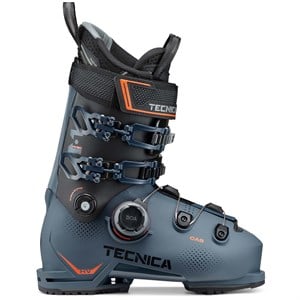
- Flex Index: 120 (Stiff)
- Last Width: 103 mm (High Volume)
- Closure System: BOA® Fit System Lower
- Shell Material: C.A.S. Polyurethane
The Tecnica Mach BOA HV 120 is a game-changer for expert skiers who require a high-volume fit without sacrificing elite performance. By integrating the BOA Fit System into a 103mm last, Tecnica ensures that pressure is distributed evenly across the top of the foot, eliminating the biting points often found in traditional four-buckle wide boots. The C.A.S. shell and tongue provide a highly customizable anatomical shape that matches the foot’s natural contours right out of the box.
On the snow, the 120 flex delivers the quick rebound and precision response needed for aggressive carving and technical terrain. It features Celliant insulation which uses thermoreactive minerals to convert body heat into infrared energy, keeping feet warm while improving circulation. This boot successfully bridges the gap between high-performance stiffness and the expansive comfort required by skiers with wider or higher-volume feet.
Pros: Excellent pressure distribution, highly customizable shell, superior warmth.
Cons: 120 flex may be too demanding for lighter intermediate skiers.
See the Tecnica Mach BOA HV 120 See the Women’s Mach BOA HV 95
2. K2 BFC 100 BOA
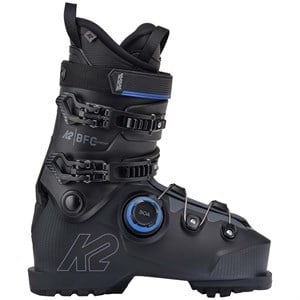
- Flex Index: 100 (Medium)
- Last Width: 100 – 103 mm (MultiFIT)
- Liner: CushFit Plus
- Sole Type: GripWalk ISO 23223
The K2 BFC 100 BOA is designed for the advanced skier who prioritizes comfort but still wants a responsive connection to their skis. Featuring the innovative MultiFIT last, these boots can accommodate foot shapes ranging from 100mm to 103mm, effectively eliminating the need for separate volume options. The BOA closure over the lower shell provides a superior wrap around the forefoot, allowing for micro-adjustments that traditional buckles simply cannot match.
The fully heat-moldable TPU shell and cuff allow for a truly custom fit, while the CushFit Plus liner uses a blend of open cell and EVA foam for a supportive feel. The H+i1 dial is engineered with a breakaway design for durability on the mountain, ensuring the system remains functional even after impacts. It is an ideal choice for those who want a painless skiing experience without losing the ability to drive through turns with confidence.
Pros: Versatile MultiFIT last, easy micro-adjustments, very easy to walk in.
Cons: 100 flex might feel soft for very heavy or aggressive expert riders.
See the K2 BFC 100 BOA See the Women’s BFC 95 BOA
3. Rossignol Alltrack 90 HV
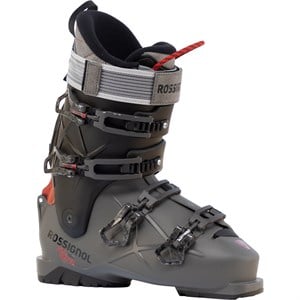
- Flex Index: 90 (Medium)
- Last Width: 102 mm (Wide)
- Feature: Hike Mode Walk Lever
- Sole Type: Alpine DIN (ISO 5355)
The Rossignol Alltrack 90 HV is a versatile hybrid boot that caters to intermediate skiers looking for all-day comfort and utility. With a 102mm last, it provides ample room for wider feet, preventing the numbness often associated with narrower performance boots. The standout feature is the integrated hike mode on the rear of the cuff, which makes walking through the parking lot or hitting short inbound bootpacks significantly easier.
Utilizing Rossignol’s Dual Core technology, the shell offers a progressive flex that stays smooth and consistent across various temperatures. The 90 flex is approachable and forgiving, making it perfect for those developing their skills or seeking a more relaxed ride. The Comfort Fit liner is built with soft materials and a welded sole to ensure feet stay warm and cushioned from the first chair to the final run of the day.
Pros: Convenient walk mode, forgiving flex, great thermal insulation.
Cons: Uses traditional Alpine soles rather than GripWalk; not for experts.
See the Rossignol Alltrack 90 HV See the Women’s Alltrack 80
4. Head Edge 100 HV BOA
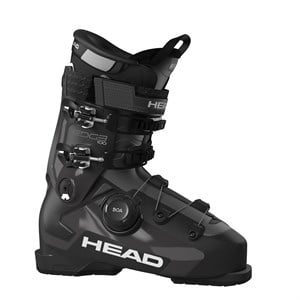
- Flex Index: 100 (Medium)
- Last Width: 102 mm (High Volume)
- Closure: BOA® Fit System Lower
- Shell Design: Bi-Injected Frame
Head brings high-performance control to the wide-footed community with the Edge 100 HV. This boot addresses the needs of intermediate to advanced skiers who struggle with standard fits by offering a generous 102mm last. The integration of the BOA lower closure system is a significant upgrade, as it smooths out tension over the instep and allows for precise tightening without the “clamping” sensation typical of traditional steel buckles.
The Bi-Injected frame construction optimizes power transfer to the skis, ensuring that the comfort-oriented fit doesn’t lead to a sluggish feel on the snow. A Form Fit liner with an extended toebox provides extra wiggle room where it is needed most, preventing cold toes during long lift rides. Overall, it is a well-balanced boot that provides a sophisticated fit for skiers who need a higher volume shell but still want to carve with precision.
Pros: Very precise lower shell fit, comfortable toebox, sleek design.
Cons: Alpine soles are standard (GripWalk is optional/extra).
See the Head Edge 100 HV BOA See the Women’s Edge 85 HV BOA
5. K2 BFC 90
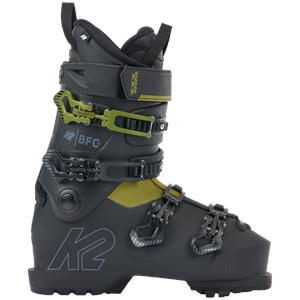
- Flex Index: 90 (Medium)
- Last Width: 103 mm (Wide)
- Entry: FastFIT Instep
- Liner: CushFit Plus
The K2 BFC 90 is an iconic “comfort-first” boot designed specifically for beginner to intermediate riders. BFC stands for “Built For Comfort,” and this model lives up to the name with a roomy 103mm last and a FastFIT instep that uses softer TPU to make sliding the boots on and off completely effortless. This is an ideal solution for skiers who have historically struggled with the “ski boot struggle” every morning in the lodge.
While it focuses on ease of use, it doesn’t skimp on modern tech, featuring a fully heat-moldable TPU shell and GripWalk outsoles for safer walking on icy surfaces. The 90 flex is mellow enough to allow for easy knee driving and skill progression without being overly stiff or punishing. It is a straightforward, reliable four-buckle overlap boot that provides immediate relief for those with very wide or high-volume feet.
Pros: Extremely easy to put on, heat-moldable shell, very affordable entry point.
Cons: Lacks the precise micro-adjustment found in BOA models.
See the K2 BFC 90 See the Women’s BFC 85
6. Salomon QST Access 60 – Women’s
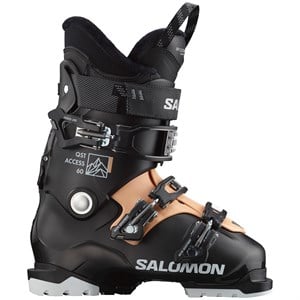
- Flex Index: 60 (Soft)
- Last Width: 104 mm (Relaxed)
- Liner: My Custom Fit Comfort + Woolmetal
- Feature: Hike and Ride Walk Mode
The Salomon QST Access 60 W is the ultimate introductory boot for women who prioritize warmth and walkability. As the softest and widest boot in Salomon’s range, its 104mm last provides a relaxed fit that prevents the foot cramping common among new skiers. The inclusion of Woolmetal insulation in the liner ensures that toes stay warm even in frigid conditions, while the women-specific cuff accommodates lower calf muscles for a more ergonomic fit.
The Hike and Ride walk mode is a standout feature at this price point, allowing for natural movement while walking to the slopes. With a three-buckle design and an Easy Step-In overlap, getting these boots on is a breeze. The 60 flex is intentionally soft, providing a forgiving experience that helps beginners find their balance and gain confidence on groomed runs without the boot feeling stiff or intimidating.
Pros: Exceptional warmth with Woolmetal, very wide fit, easy walk mode.
Cons: Too soft for advanced skiers; limited power transmission.
See the Salomon QST Access 60 W
7. Lange LX 95 HV GW
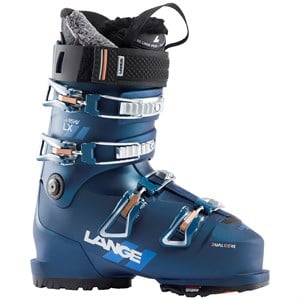
- Flex Index: 95 (Stiff)
- Last Width: 102 mm (High Volume)
- Liner: Dual 3D Performance with Thinsulate™
- Sole Type: GripWalk®
Lange has long been known for high-performance, narrow-fitting boots, but the LX 95 HV GW brings that legendary “Lange feel” to those with wider feet. This boot is a fantastic choice for advanced female skiers who need a 102mm last but refuse to give up precision. The 95 flex provides enough stiffness for powerful turns while maintaining a smooth, progressive feel thanks to the high-quality Polyurethane shell construction.
The Dual 3D Performance liner is 80% customizable and features Shin Control to prevent painful pressure on the shins during aggressive skiing. Added Thinsulate insulation keeps the warmth in, making it a great choice for cold mid-winter days. With GripWalk soles as standard, this boot offers a complete package of performance, comfort, and safety for the dedicated all-mountain skier who demands the best of both worlds.
Pros: High-performance feel in a wide fit, excellent heel hold, Thinsulate warmth.
Cons: Might be too stiff for relaxed intermediate skiers.
8. Phaenom Footwear fr 01 130
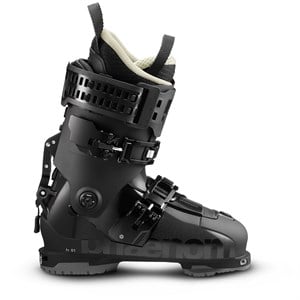
- Flex Index: 130 (Very Stiff)
- Last Width: 102 mm (Wide)
- Sustainability: Up to 30% Recycled TPU
- Features: Tech Fittings & 58° Walk Mode
Phaenom Footwear makes a bold debut with the fr 01 130, a boot that merges sustainability with high-octane performance. This “2.5 piece” hybrid design combines the edge control of an overlap boot with the progressive flex of a cabrio. Built on a 102mm last, it offers a comfortable fit for average to wider feet. The construction is unique, using screws instead of rivets to allow for easy repairs and parts replacement, supporting a “right to repair” philosophy.
This is a burly boot for expert skiers, featuring a very stiff 130 flex and integrated tech fittings for alpine touring. It boasts a massive 58-degree range of motion in walk mode, making it exceptionally capable for backcountry climbs. The vibration-absorbing outer sole and bio-based materials show a deep commitment to modern engineering. It is a sleek, all-black powerhouse that performs as well on the descent as it does during the ascent.
Pros: Highly sustainable, repairable design, excellent walk mode range.
Cons: Only available in one color; very stiff flex isn’t for everyone.
See the Phaenom Footwear fr 01 130
9. Salomon S/Pro Delta BOA 100
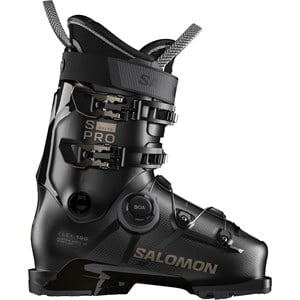
- Flex Index: 100 (Medium)
- Last Width: 102 mm (Wide)
- Closure: BOA® Fit System Lower
- Liner: My Customfit 3D Performance
The Salomon S/Pro Delta BOA 100 is tailored for intermediate to advanced skiers who want the latest closure technology in a wide-fitting chassis. The 102mm last provides immediate relief for those with higher-volume feet, while the BOA system ensures a precise, micro-adjustable fit that improves heel hold and edge-to-edge control. Unlike traditional buckles, the BOA cable system wraps the shell around the foot more uniformly, reducing localized pressure points.
Equipped with a My Customfit 3D Performance liner, the boot offers great out-of-the-box comfort that can be further refined through heat molding. The 100 flex is the “sweet spot” for many skiers, providing enough resistance for carved turns on hardpack while remaining flexible enough for bumps and varied terrain. With GripWalk soles included, it’s a modern, convenient, and high-performing option for the “sasquatch-footed” skier who wants zero compromises on the hill.
Pros: Superior heel hold via BOA, comfortable 3D liner, great all-around flex.
Cons: Left boot BOA turns counter-clockwise, which can be confusing at first.
See the Salomon S/Pro Delta BOA 100
10. Lange Shadow 120 HV GW
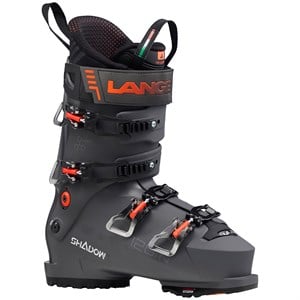
- Flex Index: 120 (Stiff)
- Last Width: 102 mm (High Volume)
- Technology: Suspension Blade Dual Pivot
- Liner: Auxetic Technology
The Lange Shadow 120 HV GW represents a revolution in boot design, now finally available for high-volume feet. The heart of this boot is the Suspension Blade Dual Pivot, which uses mechanical leverage to provide more power with less physical effort. This results in incredible snow feedback and energy transfer, allowing expert skiers to drive their skis harder without feeling fatigued. The 102mm last ensures those with wider feet can finally enjoy Lange’s pinnacle performance tech.
The liner features Auxetic Technology, which allows the material to expand and contract in three dimensions to follow the natural contours of your foot. Combined with Dual Core plastic injection, the boot offers a stiff “spine” for control and a softer “wrap” for comfort. The 120 flex is stout and reliable, making it an elite choice for aggressive chargers who need a wider fit but don’t want to settle for a lower-performing “comfort” model.
Pros: Innovative mechanical advantage, highly technical liner, incredible power transfer.
Cons: Very high price point; the tech may be overkill for casual skiers.
See the Lange Shadow 120 HV GW
How to Choose Ski Boots: A Complete Guide

Ski boots are essential to your skiing experience. Choosing the right pair can mean the difference between an enjoyable day on the slopes and a painful struggle. But with so many options, picking the right ski boots can feel overwhelming. Here’s a straightforward guide to help you make the best choice for your skiing needs.
Understanding the Importance of Fit
The fit is the most important factor to consider. A well-fitting boot will give you control, comfort, and confidence on the slopes. If your boots are too tight, they’ll cause pain and cut off circulation. If they’re too loose, you’ll lack control and stability.
When trying on ski boots, they should feel snug without being overly tight. Your toes should just brush the front of the boot when you’re standing up. When you bend your knees, your toes should move back slightly. This fit ensures that you have enough room to flex while maintaining control.
Know Your Skiing Style and Ability Level
Your skiing style and ability level will influence the type of boot you need. Beginners often need a softer boot because it’s more forgiving. Softer boots allow you to make mistakes without harsh consequences. They are also more comfortable for people who aren’t used to wearing ski boots.
Intermediate and advanced skiers usually prefer stiffer boots. Stiffer boots provide more control, especially at higher speeds. They give experienced skiers the responsiveness they need for quick turns and steeper terrain. Knowing your skiing style helps you pick a boot that matches your experience and goals.
Flex Rating: What It Is and Why It Matters
The flex rating of a ski boot describes its stiffness. This rating typically ranges from around 50 (soft) to 130 (very stiff). Flex rating is crucial because it affects how much control you have.
For beginners, a flex rating between 50 and 80 is ideal. This range allows you to learn and grow without too much resistance. Intermediate skiers might look for a flex between 80 and 100, providing more control without being too demanding. Advanced skiers often choose boots with a flex rating above 100 for maximum responsiveness and control.
Keep in mind that flex ratings vary slightly between brands, so one brand’s 90 might feel different from another’s. Also, men’s and women’s boots are rated differently, with women’s boots typically having a lower flex rating for the same level of stiffness.
Choose the Right Boot Width (Last)
Ski boots come in different widths, or “lasts.” The last measurement is the width of the boot at its widest point, measured in millimeters. It generally ranges from 98mm (narrow) to 104mm (wide).
If you have narrow feet, a narrower last will give you better control and a closer fit. For wider feet, a wider last provides comfort and reduces pressure points. Many boot models are now available in various widths, so finding the right fit is easier than it used to be.
Liner Type: Custom vs. Stock Liners
The liner inside your ski boot affects comfort, warmth, and support. Most ski boots come with stock liners, which break in over time and conform slightly to your foot shape. However, they’re not as precise as custom-fit options.
Custom liners, made from materials that mold to your foot, provide the best fit and support. They help with comfort, especially for long skiing days, and they keep your feet warmer by reducing empty spaces that let in cold air. While custom liners are more expensive, they can significantly improve your experience if you ski often.
Types of Closures: Buckles and Power Straps
Most ski boots use a system of buckles and a power strap to secure the foot. The buckles help you adjust the tightness around the foot, ankle, and lower leg. Most adult boots have three or four buckles, with four providing better distribution of pressure and security.
The power strap, located at the top of the boot, helps keep your lower leg stable. Tightening the power strap improves your control and reduces the chances of your foot moving inside the boot. Make sure you’re comfortable with how the closures work, as you’ll need to adjust them throughout the day.
Sole Type: Alpine, Touring, and GripWalk
The sole of a ski boot affects compatibility with different types of bindings. Alpine soles are standard for downhill skiing. They’re flat and work with most ski bindings found at resorts. Touring boots, on the other hand, have rockered soles, which make walking easier and are used with specialized bindings for backcountry skiing.
GripWalk soles are a hybrid option. They have a slightly rockered profile, like touring soles, but can be used with certain alpine bindings. They’re popular among skiers who want both resort and touring capabilities. Be sure to check that your boot’s sole is compatible with your bindings before making a purchase.
Boot Size and Mondo Point Sizing
Ski boots use a unique sizing system called Mondo Point. Mondo sizing measures the length of your foot in centimeters. For example, if your foot measures 27 cm, you’ll likely wear a Mondo 27 ski boot.
When choosing your size, don’t assume it will match your usual shoe size. Many people end up in boots that are too big, which leads to discomfort and poor control. Use a size chart or consult with a boot fitter to ensure a proper fit. Remember, ski boots often feel tighter than regular shoes, which is normal.
Trying on Boots and Getting the Right Fit
Trying on ski boots in person is the best way to ensure a good fit. Visit a store where you can get advice from a professional boot fitter. They can measure your foot, recommend appropriate boots, and help you try on different models.
When trying on boots, wear ski socks similar to what you’ll use on the slopes. Avoid thick socks, as they can cause friction and discomfort. After putting on the boot, stand up, bend your knees, and flex forward. Your toes should have a bit of room, but your heel should stay in place without lifting.
Customizing and Breaking In Your Boots
Even with the best fit, ski boots often require a break-in period. Wearing them at home for short periods can help you adjust before your first day on the slopes. This practice also helps identify any pressure points or areas that need adjustment.
Many ski shops offer boot fitting services that include heat-molding liners, adding custom footbeds, or adjusting shell size. Custom footbeds are a great addition if you have high arches or specific foot issues. They provide better support and reduce foot fatigue, making long ski days more enjoyable.
Considerations for Women’s and Kids’ Ski Boots
Women’s ski boots are designed with different shapes and flex options to match the anatomy of the female foot and leg. They typically have narrower heels, lower cuffs, and softer flex ratings. If you’re a female skier, choosing a women-specific model will likely result in a better fit.
For kids, comfort and ease of use are key. Choose boots with a softer flex, as kids don’t need stiff boots. Look for adjustable boots that can accommodate growth, so you don’t have to replace them every season. Some kids’ boots also have easy-entry designs to make putting them on and taking them off simpler.
Conclusion
Choosing the right ski boots takes time and patience, but the effort is worth it. A comfortable, well-fitting boot enhances your performance and enjoyment. Remember to focus on fit, flex, and customization options to ensure a great experience on the slopes. With the right pair, you’re ready to enjoy every moment of your skiing adventure.