Best Ski Boots with Walk Mode of 2027
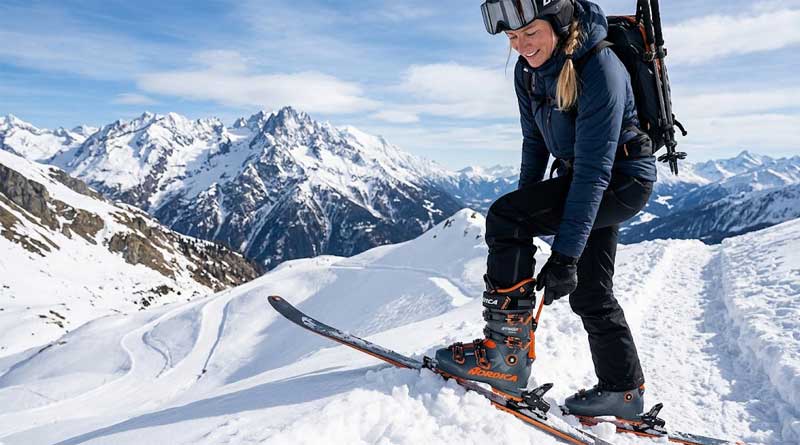
If you love skiing but hate walking in stiff boots, you need a pair with walk mode. This feature lets you switch to a comfortable walking position, making it easier to move around the lodge or parking lot. In this article, we’ll show you the best ski boots with walk mode. We’ll look at comfort, warmth, and performance to help you find the perfect pair for your next adventure on the slopes.
1. Rossignol Alltrack 90 HV BOA GW

- Best Use: Downhill Skiing
- Skill Level: Intermediate
- Flex Index: 90
- Last Width: 102 mm
Built for comfort on varied terrain, these Rossignol ski boots deliver reliable all-mountain performance for intermediate riders. STEP IN technology combined with BOA dials makes getting into your boots effortless, letting you spend less time adjusting gear and more time on the snow.
The medium 90 flex offers a forgiving yet responsive feel on downhill slopes. With a 102mm last width and insulated thermoformable liner, your feet stay warm and supported all day long.
Pros:
- Easy entry with BOA dial
- Comfortable high-volume fit
- Walk mode included
Cons:
- Too soft for aggressive skiers
- Wide last may lack heel hold for narrow feet
2. Scarpa Maestrale RS

- Best Use: Backcountry Skiing
- Skill Level: Advanced
- Flex Index: 130
- Boot Sole Type: Touring (ISO 9523) with Tech Inserts
These Scarpa alpine touring boots deliver expert-level backcountry performance when navigating technical ascents and steep descents. The stiff 130 flex rating provides excellent energy transfer, while the updated four-buckle closure ensures a uniform, secure fit for total control on rugged mountain terrain.
Equipped with an Intuition thermomoldable liner, a Vibram Cayman LT outsole, and an integrated RECCO reflector, these boots prioritize safety, comfort, and traction during high-alpine adventures.
Pros:
- Powerful 130 flex for steep descents
- Durable Vibram outsole
- Built-in RECCO reflector
Cons:
- Stiff flex is unforgiving for lighter skiers
- Higher weight than pure minimalist touring boots
3. K2 Mindbender 120 BOA

- Best Use: Downhill and Backcountry Skiing
- Skill Level: Advanced
- Flex Index: 120
- Last Width: 100 mm
Enjoy top performance at the resort and in the backcountry with these versatile K2 ski boots. Combining lightweight touring features with a stiff 120 flex shell, they offer precision control whether you are charging groomers or trekking off-piste.
The integrated BOA Fit System allows for effortless microadjustments across the shell, securing your foot evenly. Paired with tech inserts and an Ultralon heat-moldable liner, these boots balance touring versatility with alpine driving power.
Pros:
- Micro-adjustable BOA closure system
- Tech inserts for touring compatibility
- Stiff, responsive power transfer
Cons:
- Only features two traditional buckles
- 100mm last may feel snug for high-volume feet
4. Rossignol Alltrack 80 W BOA GW

- Best Use: Downhill Skiing
- Skill Level: Intermediate
- Flex Index: 80
- Last Width: 102 mm
Designed specifically for women seeking all-mountain performance, these Rossignol boots blend comfort and response. STEP IN technology makes entry completely hassle-free, allowing you to quickly secure your boots and head straight to the slopes without struggling at the lodge.
Featuring a forgiving 80 flex rating and a 102mm last, they cater well to intermediate skiers who prefer a roomier fit. The inclusion of a walk mode adds convenience when navigating base areas.
Pros:
- Easy entry thanks to BOA dial
- Comfortable high-volume footbed
- Walk mode for easier parking lot strides
Cons:
- Soft flex limits high-speed stability
- May lack precision control for narrow feet
5. Dynafit Seven Summits 2.0

- Best Use: Backcountry Skiing
- Skill Level: Intermediate
- Flex Index: 100
- Outsole: Pomoca rubber
These redesigned Dynafit touring boots offer an ideal balance for women embarking on classic backcountry trips. An upgraded ski/walk mechanism yields smooth ankle mobility during ascents, making long tours significantly less taxing on your legs.
The progressive flex shell delivers predictable control when skiing down. Combined with a warm thermal-formable liner, Pomoca rubber outsoles, and a forgiving 103.5mm last, these boots provide exceptional comfort across all backcountry terrain.
Pros:
- Lightweight construction for efficient climbing
- Generous 103.5mm wide fit
- Grippy Pomoca outsoles
Cons:
- Not designed for hard resort skiing
- Medium 100 flex may feel soft to aggressive skiers
View Men’s at REI View Women’s at REI
6. Rossignol Alltrack 70 W

- Best Use: Downhill Skiing
- Skill Level: Beginner
- Flex Index: 70
- Last Width: 102 mm
Created to give novice skiers the confidence to explore new trails, these Rossignol boots offer forgiving support. STEP IN technology allows your foot to slide smoothly inside, eliminating the usual struggle associated with putting on rigid downhill ski boots.
A soft 70 flex and a generous 102mm last width keep your feet comfortable throughout long learning sessions. The thermoformable liner adapts to your foot shape over time, helping prevent uncomfortable pressure points.
Pros:
- Forgiving flex ideal for beginners
- Very easy step-in design
- Includes a practical walk mode
Cons:
- Lacks responsiveness for fast skiing
- Too soft for intermediate or heavy skiers
7. Scarpa 4-Quattro Pro

- Best Use: Backcountry and Downhill Skiing
- Skill Level: Advanced
- Flex Index: 130+
- RECCO Reflector: Yes
Tackle big uphills and charge down steep lines with these high-performance Scarpa boots. Featuring reinforced cuffs and the advanced Speedlock 4 ski/walk mechanism, they transition rapidly between climbing efficiency and downhill power.
With an ultra-stiff 130+ flex rating and custom-moldable Intuition liners, these boots offer exceptional energy transfer and precise control. The PRESA SKI-01 outsoles ensure strong traction when booting up icy ridges.
Pros:
- Maximum power transmission with 130+ flex
- Reliable Speedlock 4 mechanism
- GripWalk Tour outsoles for traction
Cons:
- Extremely stiff shell demands expert technique
- Higher price point for specialized users
8. K2 BFC 100 BOA

- Best Use: Downhill Skiing
- Skill Level: Intermediate
- Flex Index: 100
- Last Width: 103 mm
Blending out-of-the-box comfort with true on-snow performance, these K2 boots cater to intermediate skiers with wider feet. The high-volume 103mm last provides plenty of room without feeling sloppy or restricting overall control.
Featuring the micro-adjustable BOA Fit System, you can easily dial in lower-boot pressure with precision. A medium 100 flex combined with walk mode makes these boots great for all-day resort cruising.
Pros:
- Spacious 103mm high-volume last
- Even tension from BOA closure
- Walk mode for resort navigation
Cons:
- Too roomy for narrow feet
- Flex may soften up on warm spring days
9. Scarpa Maestrale

- Best Use: Backcountry Skiing
- Skill Level: Intermediate
- Flex Index: 115
- Outsole: Vibram Cayman LT
From rapid dawn patrols to multiday mountain traverses, these Scarpa boots deliver a fine balance of uphill ease and downhill response. The three-buckle configuration keeps the total weight low while preserving a secure closure around your feet.
Custom-moldable Intuition liners keep feet warm and eliminate hotspots during long ascents. Compatible with both Tech and AT bindings, these boots feature a Vibram Cayman LT sole for confidence on exposed terrain.
Pros:
- Versatile 115 flex rating
- Proven Vibram outsoles for rocky hikes
- Integrated RECCO reflector for safety
Cons:
- Three-buckle layout offers slightly less drive than four buckles
- Not meant for heavy resort use
10. Tecnica Cochise HV 120

- Best Use: Downhill Skiing
- Skill Level: Advanced
- Flex Index: 120
- Last Width: 102 mm
Access demanding terrain without sacrificing down-bound driving power using these Tecnica ski boots. Built with a stiff 120 flex shell, they offer precise response when carving hard packed snow or tackling steep off-piste bowls.
Designed with a high-volume 102mm last, these boots comfortably accommodate wider feet while retaining firm heel retention. Tech inserts and an efficient walk mode ensure smooth transitions whenever you decide to tour beyond resort boundaries.
Pros:
- Stiff 120 flex for powerful charging
- High-volume 102mm last fits wider feet
- GripWalk soles with integrated tech inserts
Cons:
- Heavier than traditional pure touring boots
- Flex is too demanding for casual intermediate skiers
How to Choose Ski Boots with Walk Mode
Ski boots with walk mode have changed the way skiers move around the mountain. In the past, ski boots were stiff and painful to walk in. You had to waddle awkwardly across the parking lot or struggle up a set of stairs at the lodge. Walk mode solves this problem. With a simple flip of a lever, the boot switches from a rigid skiing position to a softer walking position. This makes walking, standing, and even hiking much easier.
But choosing the right pair is not always simple. There are many brands, flex ratings, widths, and features to consider. This guide will walk you through everything you need to know to pick the best ski boots with walk mode for your needs.
What Is Walk Mode?
Walk mode is a feature built into the back of the ski boot. It works through a mechanism that unlocks the upper cuff of the boot. When locked, the boot is stiff and supports your leg for downhill skiing. When unlocked, the cuff can move backward and forward. This gives you a natural walking motion.
Most walk mode boots offer a range of motion between 40 and 60 degrees. Some touring boots offer even more. The more range of motion, the easier it is to walk. However, more range often means a softer boot, which can affect downhill performance.
Key Factors to Consider
1. Flex Rating
The flex rating tells you how stiff the boot is. A higher number means a stiffer boot. Here is a simple guide:
- 60-80 flex: Soft. Best for beginners and lightweight skiers.
- 80-100 flex: Medium. Good for intermediate skiers.
- 100-120 flex: Stiff. For advanced skiers and aggressive skiing.
- 120+ flex: Very stiff. For expert skiers and racing.
If you want a comfortable walk mode, a softer flex is usually better. But if you ski fast and hard, you may need a stiffer boot. Many walk mode boots have a flex rating between 100 and 120.
2. Last Width
The “last” is the width of the boot at the widest part of your foot. Ski boots come in different widths:
- Narrow (98mm or less): For people with narrow feet.
- Medium (100mm): The most common width.
- Wide (102mm or more): For people with wide feet.
Getting the right width is important for comfort. A boot that is too narrow will cause pain. A boot that is too wide will let your foot move around, which reduces control.
3. Walk Mode Mechanism
Different brands use different walk mode systems. Some common types include:
- Lever on the back: A simple lever you flip with your hand or ski pole.
- Dial system: A dial you turn to lock and unlock.
- Automatic system: Some boots switch modes automatically when you step in or out.
Look for a mechanism that is easy to use with gloves on. You do not want to struggle with a small lever in cold weather.
4. Range of Motion
The range of motion is how far the boot can flex forward and backward in walk mode. More range means easier walking. If you plan to hike or walk long distances, look for a boot with at least 50 degrees of motion. If you only walk short distances, 40 degrees is fine.
5. Weight
Lighter boots are easier to walk in. But lighter boots are often less durable and less powerful on the downhill. If you want a good balance, look for a boot that weighs between 1,500 and 1,800 grams per boot. Touring boots can be even lighter.
6. Liner and Comfort
The liner is the soft inner part of the boot. A good liner will keep your feet warm and comfortable. Many walk mode boots come with heat-moldable liners. These liners can be heated and shaped to fit your feet perfectly. Look for a liner with good insulation if you ski in cold conditions.
7. Buckles and Straps
Most ski boots have two to four buckles. Walk mode boots often have three or four buckles. Some also have a power strap at the top. The buckles should be easy to adjust and should hold your foot securely. Make sure the buckles do not get in the way when you walk.
8. Sole and Grip
The sole of the boot affects how well you can walk on snow and ice. Many walk mode boots have rubber soles with good tread. Some have special grips for hiking. If you plan to walk on rocky terrain, look for a boot with a rockered sole, which rolls forward as you walk.
Comparison Table
| Feature | Best For Walking | Best For Skiing |
|---|---|---|
| Flex Rating | 60-90 | 100-130 |
| Range of Motion | 50-60 degrees | 40 degrees or less |
| Weight | 1,400-1,600g | 1,800-2,200g |
| Last Width | 100-102mm | 98-100mm |
| Sole Type | Rubber with tread | Hard plastic |
Types of Ski Boots with Walk Mode
All-Mountain Boots
These boots are designed for skiing on groomed runs and some off-piste terrain. They offer a good balance of comfort and performance. Most all-mountain boots have a walk mode with 40 to 50 degrees of motion.
Touring Boots
Touring boots are made for skiing uphill and then skiing down. They are lightweight and have a large range of motion. They often have tech inserts for pin bindings. If you plan to do a lot of walking or hiking, touring boots are a great choice.
Freeride Boots
Freeride boots are for aggressive skiers who ski steep terrain and jumps. They are stiffer and heavier than touring boots. They still have walk mode, but the range of motion is usually smaller.
How to Try On Ski Boots with Walk Mode
When you try on boots, follow these steps:
- Wear thin ski socks.
- Put the boot on and buckle it loosely.
- Stand up and flex forward. Your heel should stay in place.
- Flip the walk mode lever and walk around the shop.
- Check for pressure points or pain.
- Make sure your toes can wiggle slightly.
If the boot feels too tight or too loose, try a different size or width. A good fit is the most important thing.
Final Tips
- Buy boots from a shop with a good return policy.
- Consider custom insoles for better comfort.
- Read reviews before you buy.
- Do not choose a boot based on color or brand alone.
- Ask a boot fitter for help if you are unsure.
Choosing the right ski boots with walk mode takes some time, but it is worth it. The right pair will keep your feet comfortable all day. You will walk easily and ski better. Use this guide to find the perfect boots for your next adventure on the mountain.