Best Ski Goggles with Interchangeable Lenses of 2026
Choosing the right ski goggles can make a big difference on the slopes, especially when weather and light conditions change quickly. Ski goggles with interchangeable lenses give you the flexibility to swap lenses for bright sun, low light, or snowy days. This means better visibility, improved safety, and more comfort while skiing or snowboarding. Whether you are a beginner or an experienced skier, having the right lens at the right time helps you see clearly and enjoy your day on the mountain without distractions or eye strain.
1. Oakley Flight Deck L
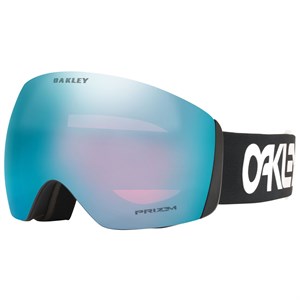
- Frame Size: Large, OTG compatible
- Lens Type: Spherical Plutonite
- Lens Change: Ridgelock quick-change
- UV Protection: 100% UVA/UVB/UVC
The Oakley Flight Deck L is built for skiers who want maximum vision without distractions. Its rimless design opens up an enormous field of view, making it easy to track terrain, riders, and changing snow conditions. Oakley’s Plutonite lens material delivers excellent impact resistance while maintaining crisp clarity, and HDO technology ensures distortion-free vision across the entire lens.
Comfort is a major strength here. The triple-layer fleece-lined foam seals well against wind while staying soft during long days on the mountain. Anti-fog performance is reliable thanks to dual venting and the F3 coating, even when riding hard or dealing with temperature swings. The Flight Deck L also works seamlessly with helmets and prescription glasses, making it a versatile choice for advanced and recreational riders alike.
- Pros: Huge field of view, excellent optics, easy lens changes
- Cons: Premium price, large fit may overwhelm smaller faces
2. OutdoorMaster PRO

- Frame Design: Frameless spherical
- Lens System: Interchangeable
- UV Protection: UV400
- OTG: Yes
The OutdoorMaster PRO is designed to deliver solid performance at a very accessible price point. Its large frameless spherical lens provides a wide, unobstructed view that feels confidence-inspiring on groomers and in mixed conditions. Anti-fog coating and full UV400 protection ensure your eyes stay comfortable and protected throughout the day.
This model stands out for its flexibility. With more than 20 optional lenses available, it’s easy to adapt the goggles to different light and weather conditions. The OTG design works well for prescription glasses, while the long elastic strap fits securely over most helmets. While it lacks the premium lens tech of higher-end brands, the OutdoorMaster PRO offers excellent value for casual skiers and snowboarders.
- Pros: Affordable, wide view, helmet friendly
- Cons: Lenses sold separately, basic optics
3. Smith Squad
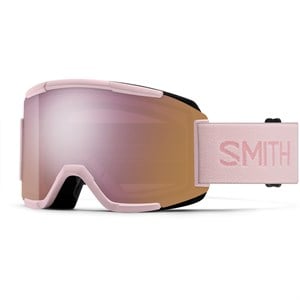
- Frame Size: Medium
- Lens Type: Cylindrical Carbonic-X
- Anti-Fog: Fog-X technology
- Helmet Compatible: Yes
The Smith Squad goggles balance simplicity, style, and performance. Their semi-rimless design keeps bulk to a minimum while maintaining a clean, modern look. Smith’s Carbonic-X lenses are highly impact resistant and pair well with TLT optics to reduce distortion across the lens.
Visibility is excellent in a wide range of conditions, especially with ChromaPop lens options that enhance contrast and color definition. The Fog-X inner lens does an impressive job managing moisture during long sessions. While the cylindrical lens doesn’t wrap as much as spherical options, it delivers dependable clarity and comfort for all-mountain riders.
- Pros: Clean design, strong anti-fog, great value
- Cons: Smaller field of view than spherical goggles
4. Oakley Line Miner L
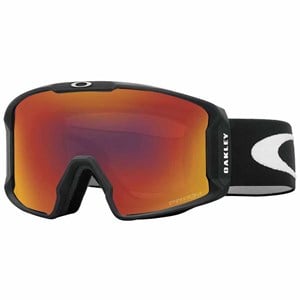
- Frame Size: Large, OTG
- Lens Type: Cylindrical Plutonite
- Lens Tech: HDO with Prizm options
- Ventilation: Dual vented
The Oakley Line Miner L is engineered to sit closer to the face, dramatically improving downward and peripheral vision. This design is especially helpful in technical terrain where awareness of your skis or board is crucial. Oakley’s HDO lenses provide sharp, distortion-free optics and excellent impact resistance.
Comfort and fit are well sorted thanks to the flexible O Matter frame and triple-layer foam. The goggles integrate smoothly with most helmets and accommodate glasses with discreet frame notches. Prizm lens options enhance contrast in changing light, making the Line Miner L a strong choice for riders who value precision and clarity.
- Pros: Excellent peripheral vision, strong optics
- Cons: Cylindrical lens feel isn’t for everyone
5. Smith 4D MAG
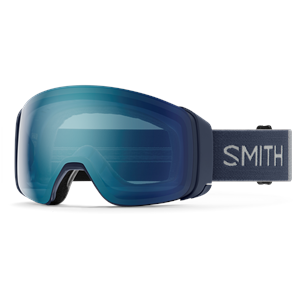
- Frame Size: Medium
- Lens Type: Spherical
- Lens Change: MAG magnetic system
- Anti-Fog: 5X inner lens
The Smith 4D MAG sets the benchmark for high-end ski goggles. Its BirdsEye Vision technology expands the field of view by 25%, giving unparalleled awareness in your periphery. ChromaPop lenses deliver exceptional contrast and color accuracy, making terrain changes easier to read.
The MAG system allows fast, secure lens changes even with gloves on, and the included bright and low-light lenses cover most conditions. Ventilation integrates seamlessly with Smith helmets to manage fog effectively. While expensive, the 4D MAG offers elite-level performance for serious skiers.
- Pros: Outstanding vision, fast lens swaps
- Cons: High price
6. OutdoorMaster Heron

- Lens Type: Toric dual-layer
- Lens System: Magnetic interchangeable
- UV Protection: UV400
- OTG: Yes
The OutdoorMaster Heron focuses on wide vision and everyday usability. Its toric lens shape enhances depth perception while maintaining a frameless look. Anti-fog coating and dual-layer construction keep visibility clear during variable conditions.
The MagKlick magnetic system makes lens changes quick and secure, and the included yellow lens is ideal for low light. OTG compatibility and plush foam improve comfort for glasses wearers. It’s a strong budget-friendly option with modern features.
- Pros: Good value, magnetic lenses
- Cons: Optics not as refined as premium brands
7. Smith I/O MAG
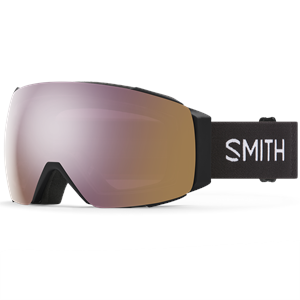
- Frame Size: Medium
- Lens Type: Spherical Carbonic-X
- Lens Change: MAG system
- Anti-Fog: 5X technology
The Smith I/O MAG is a proven all-mountain favorite. Its spherical lenses provide excellent peripheral vision, while ChromaPop technology enhances contrast in flat or variable light. The MAG lens system makes swapping lenses fast and secure.
Comfort is excellent thanks to the Responsive Fit frame and plush DriWix foam. With two lenses included, the I/O MAG adapts easily to changing weather. It’s a versatile, high-performance goggle that suits most riders.
- Pros: Versatile, great optics
- Cons: Premium cost
8. Snowalva Ski Goggles
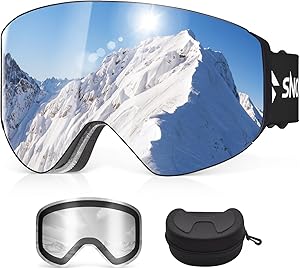
- Lens Type: Cylindrical
- Lens System: Magnetic interchangeable
- Construction: Dual-layer PC
- Foam: Triple-layer
The Snowalva Ski Goggles focus on practicality and comfort. Cylindrical lenses provide natural vision with minimal distortion, helping skiers judge terrain accurately. The dual-layer lens construction balances scratch resistance and fog control.
Magnetic lens swapping is quick and secure, and the frameless design improves peripheral awareness. With multiple lens options available, these goggles adapt well to changing conditions. They’re a solid gift-friendly option for casual winter sports enthusiasts.
- Pros: Simple optics, easy lens swaps
- Cons: Brand recognition is limited
9. EverSport Ski Goggles
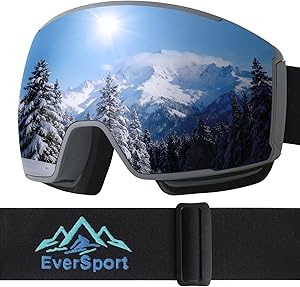
- Lens Type: Spherical dual-lens
- UV Protection: 100% UV
- Lens System: Magnetic
- OTG: Yes
The EverSport Ski Goggles deliver impressive panoramic vision with a spherical dual-lens design. Expanded peripheral coverage reduces blind spots, while anti-fog coatings and ventilation keep visibility clear in harsh conditions.
Strong magnets allow fast one-handed lens changes, and the OTG frame comfortably fits glasses. Helmet compatibility and a secure strap make these goggles suitable for aggressive riding at a reasonable price.
- Pros: Wide vision, strong magnets
- Cons: Bulkier frame
10. Odoland Ski Goggles

- Lens Type: Spherical frameless
- Lens System: Magnetic interchangeable
- UV Protection: UV400
- OTG: Yes
The Odoland Ski Goggles are designed for versatility and value. The frameless spherical lens offers wide peripheral vision, while magnetic lens swapping allows quick adaptation to weather changes. Anti-fog performance is reliable for casual riding.
OTG compatibility and helmet-friendly straps make these goggles easy to wear for most skiers. With an extra lens included, Odoland delivers strong functionality at an approachable price.
- Pros: Affordable, extra lens included
- Cons: Mid-range optical clarity
How to Choose Ski Goggles with Interchangeable Lenses
Ski goggles with interchangeable lenses have become a must-have piece of gear for skiers and snowboarders of all levels. Weather in the mountains can change quickly, and light conditions often vary between morning, midday, and late afternoon. Interchangeable lens systems allow you to adapt your vision to these changes, improving safety, comfort, and overall performance. Choosing the right pair, however, involves more than just picking a popular brand or stylish design.
Why Interchangeable Lenses Matter
The primary advantage of interchangeable lenses is versatility. Bright sunshine, flat light, snowfall, and night skiing all require different lens characteristics. A lens that works perfectly in bluebird conditions may feel unusable during a snowstorm. Being able to swap lenses means you can maintain clear vision and proper contrast throughout the day without changing goggles.
Understanding Lens Types
Spherical vs Cylindrical Lenses
Spherical lenses curve both horizontally and vertically, mimicking the natural shape of the eye. They tend to offer better peripheral vision and reduced distortion, especially at the edges. Cylindrical lenses curve only horizontally, sitting flatter against the face. While they usually provide a slightly narrower field of view, they often look sleeker and are more affordable.
Toric and Hybrid Lenses
Toric lenses blend aspects of spherical and cylindrical designs. They aim to reduce distortion while keeping a low-profile fit. Hybrid designs vary by brand, but the goal is typically to balance optical clarity, comfort, and aesthetics.
Lens Tint and Visible Light Transmission
Visible Light Transmission, or VLT, describes how much light passes through a lens. Lower VLT percentages are ideal for bright, sunny days, while higher VLT lenses perform better in low-light or snowy conditions.
- Low VLT (5–20%): Best for sunny, high-glare days
- Medium VLT (20–50%): Ideal for mixed or variable conditions
- High VLT (50%+): Designed for overcast weather or night skiing
When choosing interchangeable lenses, look for goggles that include both a low-light and a bright-light lens. This combination covers most on-mountain scenarios.
Lens Change Systems
Magnetic Systems
Magnetic lens systems are popular for their speed and convenience. Strong magnets guide the lens into place, often paired with mechanical locks for added security. These systems allow lens changes in seconds, even with gloves on.
Mechanical and Frame-Based Systems
Some goggles use clips, levers, or frame slots to secure lenses. While these systems can take slightly longer to operate, they are often very secure and may feel more confidence-inspiring to some users.
Anti-Fog Performance
Fogging is one of the most common frustrations with ski goggles. Dual-pane lenses are essential, as they create a thermal barrier that reduces condensation. Look for goggles with high-quality anti-fog coatings and proper ventilation systems that allow warm air to escape.
Helmet integration also plays a role in fog prevention. Goggles designed to work seamlessly with helmets allow air to flow naturally, reducing moisture buildup inside the lens.
Fit and Face Shape
No lens technology can compensate for a poor fit. Ski goggles generally come in small, medium, and large frame sizes. The goggles should seal evenly around your face without pressure points, especially on the nose and cheeks.
If you wear prescription glasses, look for OTG (over-the-glasses) goggles. These models provide extra internal volume and discreet frame cutouts that accommodate eyewear without compromising comfort.
Field of View and Peripheral Vision
A wide field of view improves awareness of other skiers, obstacles, and terrain features. Frameless and semi-rimless designs typically offer better peripheral vision by reducing visual obstructions around the lens edges. When combined with spherical or toric lenses, these designs can significantly enhance overall visibility.
Lens Quality and Optical Technology
High-quality lenses enhance contrast, depth perception, and color accuracy. Many premium goggles use proprietary lens technologies that filter specific wavelengths of light to reduce glare and improve terrain definition. While not strictly necessary for beginners, advanced optics can make a noticeable difference in challenging conditions such as flat light or heavy snowfall.
Helmet Compatibility
Interchangeable lens goggles should fit seamlessly with your helmet. Poor compatibility can lead to gaps between the helmet and goggles, exposing your forehead to cold air and snow. Most modern goggles are designed with helmet integration in mind, but it’s still wise to test the combination if possible.
Durability and Build Quality
Frequent lens changes put extra stress on the goggle frame and attachment points. Look for solid construction, reinforced lens mounts, and flexible frame materials that maintain performance in cold temperatures. A protective case for spare lenses is also important to prevent scratches during transport.
Budget Considerations
Interchangeable lens goggles are available across a wide price range. Premium models offer superior optics, faster lens changes, and advanced anti-fog performance. Mid-range and budget options often provide excellent functionality with slightly less refined lenses. Consider how often you ski, the conditions you ride in, and how much you value optical clarity when deciding where to invest.
Final Thoughts
Choosing ski goggles with interchangeable lenses is about balancing vision, comfort, and convenience. Focus on lens versatility, reliable change systems, strong anti-fog performance, and a proper fit. With the right pair, you’ll be prepared for changing light and weather, allowing you to focus on enjoying every run on the mountain.