

Best Ski Tuning Kits of 2026
Keeping your skis in top shape makes a huge difference on the slopes, and that’s where a good ski tuning kit comes in. These kits include the essential tools you need to clean, sharpen, and wax your skis at home. Instead of relying on expensive shop services, you can easily maintain your own gear and enjoy smoother rides, better control, and longer-lasting equipment. In this article, we’ll look at the best ski tuning kits to help you find the right one.
1. DAKINE Deluxe

- Case: Multipocket zippered case, 100% recycled polyester
- Dimensions: 11.42 x 6.3 x 2.36 inches
- Weight: 1 lb. 9 oz.
- Tools: 10 in. file, edge tuner, scrapers, 2 P-Tex sticks, Octane Bar wax
The DAKINE Deluxe is a compact, grab-and-go kit built for riders who want essential tuning tools without hauling a full workshop. Its recycled polyester case keeps everything organized, and the included tuning manual helps beginners learn edge work and waxing basics with confidence. Weighing just over a pound and a half, it slips easily into a backpack or carry-on.
You get a 10-inch file, edge tuner, scrapers, P-Tex sticks and all-temperature wax. Note that it lacks an iron, so you will need to buy one separately before you can wax properly. For light maintenance and travel, it remains a tidy, dependable choice for most riders.
Pros:
- Lightweight and easy to carry
- Includes a helpful tuning manual
- Durable recycled polyester case
Cons:
- No wax iron included
- Limited brush selection
2. OutdoorMaster Tuning Kit

- Iron: 110V/800W, adjustable from 212°F to 338°F
- Wax: 100g fluorine-free, for -25°C to -12°C
- Edge Tuner: 86°/87°/88°/89° side angles with 7/20 cm files
- Extras: 4 P-Tex sticks, wax apron, binding screw set, storage bag
The OutdoorMaster kit is a complete waxing package that includes an adjustable 800W iron, 100g of fluorine-free wax and a full set of brushes and scrapers. It is aimed at beginners who want everything in one box without piecing together separate tools.
The edge tuner offers four precise side angles, and the four P-Tex sticks handle base repairs in any color. Extras like a wax apron, binding screws and a storage bag add value. The included wax suits colder conditions only, so warm-weather riders may want a second bar, and the 110V iron needs an adapter abroad. It is a strong value for the price.
Pros:
- Includes iron, wax and cleaning tools
- Fluorine-free wax is safer for the environment
- Extra binding screws and apron included
Cons:
- Wax range suits cold conditions only
- 110V iron needs an adapter overseas
3. DAKINE Super

- Case: Large multipocket zippered case, 100% recycled polyester
- Dimensions: 12.01 x 8.27 x 5.12 inches
- Weight: 3 lbs. 3.81 oz.
- Tools: Adjustable iron, 10 in. file, pocket and gummy stones, Octane Bar wax
The DAKINE Super takes the Deluxe formula and adds an adjustable temperature iron, a gummy stone and a larger case, making it a genuine all-in-one tuning station. Everything sits in a roomy recycled polyester bag with plenty of pockets for organized storage.
With a 10-inch file, edge tuner, scrapers, P-Tex sticks and all-temperature Octane Bar wax, you can handle waxing, edge sharpening and minor base repairs at home. At over three pounds it is heavier and pricier than the Deluxe, but the iron alone makes it worthwhile for riders tuning regularly. The included manual also guides newcomers through every step clearly and simply.
Pros:
- Adjustable temperature iron included
- Roomy case with plenty of pockets
- Extra gummy stone for edge prep
Cons:
- Heavier than the Deluxe
- Higher price point
4. Demon Complete Tune Kit

- Iron: Adjustable Slide Iron, 149°F to 445°F, switches 110V to 220V
- Wax: 133g all-season, made in the USA
- Brushes: 10 mm brass, 10 mm nylon, 8 mm horsehair
- Tools: Flat file, edge tuner, tuning stone, polish pad, P-Tex
The Demon Complete Tune Kit packs a flat file, edge tuner, scraper, tuning stone, adjustable iron and American-made all-season wax into a durable case that can hang vertically for easy access. It feels thoughtfully assembled for regular home tuning.
The standout extras are three brushes in brass, nylon and horsehair, which let you open the base structure, remove bulk wax and polish the finish. The Slide Iron switches between 110V and 220V, and its dial reaches 230°C, so frequent travelers benefit too. Remember to use the lowest setting that melts the wax to protect your base, and expect a very solid all-round kit.
Pros:
- Three-brush set for complete base care
- Dual-voltage iron suits travel
- Case can be hung for easy access
Cons:
- Only one wax included
- Iron needs careful heat control
5. Skifavs Ski Wax Kit (Upgraded)

- Contents: 16 items in a compact, lightweight storage bag
- Edge Tuner: 6 angles (86°/87°/88°/89°/0.5°/1°) with file
- Iron: Adjustable 176°F to 356°F, thick grooved soleplate
- Wax: 130g all-temperature, about 10 sessions
The upgraded Skifavs kit delivers sixteen items, including an adjustable iron, 130g of all-temperature wax and a six-angle edge tuner that covers both base and side edges. Everything fits inside a compact, lightweight bag that travels well. It works for skis and snowboards alike.
The grooved, thick soleplate holds a steady temperature, and the wax remover, brass brush, nylon brush and polish pad make base prep straightforward. Black and white P-Tex sticks handle repairs on any base color. The included wax covers roughly ten sessions, so you will eventually restock, and the brake retainers are unnecessary for snowboarders, but the package is generous and beginner-friendly.
Pros:
- Six-angle edge tuner for precise work
- Stable, adjustable iron
- Compact bag for travel
Cons:
- Brake retainers useless for snowboards
- Wax supply lasts only about ten sessions
6. Demon Basic Tune Kit
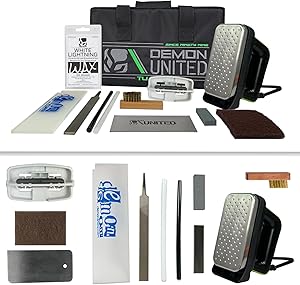
- Iron: Adjustable Slide Iron, switches from 110V to 220V
- Wax: 133g all-season, made in the USA
- Tools: Flat file, edge tuner, wax scraper, tuning stone, wire brush
- Bag: Durable case with carry handle and hanging strap
The Demon Basic Tune Kit is a straightforward starter package with a flat file, edge tuner, wax scraper, tuning stone, wire brush, polish pad, P-Tex and 133g of all-season wax. An adjustable Slide Iron rounds out the set.
The carry bag is built to last, with handles, plenty of pockets and a strap for hanging storage. The iron can switch between 110V and 220V, which suits travel, and the wax is made in the USA using quality polymers. It offers fewer brushes and stones than the Complete version, so advanced tuners may outgrow it, though casual riders will find it dependable and easy to use.
Pros:
- Dual-voltage iron for travel
- Sturdy bag with plenty of pockets
- American-made all-season wax
Cons:
- Fewer brushes than the Complete kit
- Only one wax included
7. Skifavs Ski Wax Kit (Basic)

- Iron: Adjustable dial with grooved thick base plate
- Edge Tuner: 86°/87°/88°/89° side angles, 0.5° to 1° base
- Wax: 130g all-temperature, over 10 waxings
- Repair: 2 P-Tex candles (black and white), 2 brake retainers
The Skifavs Basic kit covers the fundamentals with a wax iron, base wax remover, bastard file, edge tuner, brushes, scraper, 130g all-temperature wax and two P-Tex candles. Two brake retainers and a storage bag complete a tidy package.
The dial-controlled iron with a thick grooved plate melts wax evenly and reduces the risk of overheating your base. The ergonomic edge tuner offers four side angles plus two base angles, giving accurate results even for beginners. The wax lasts more than ten sessions, though the kit is lighter on brushes and stones than premium options, making it a budget-friendly way to start tuning at home.
Pros:
- Affordable complete starter kit
- Ergonomic multi-angle edge tuner
- Even-heating grooved iron
Cons:
- Few brushes and stones
- Brake retainers unneeded for snowboards
8. XCMAN Ski Tuning Kit

- Bag: 1680D Oxford fabric, waterproof rigid box with wide zip opening
- Dimensions: 9.25 x 5.35 x 3.35 inches (open)
- Wax: 100g universal, for any snow type
- Tools: Scraper, nylon, horsehair and brass brushes, P-Tex, coarse metal file
The XCMAN kit is a no-frills option built around a rigid, waterproof 1680D Oxford bag with a wide zippered opening. It includes 100g of universal wax, a scraper, nylon, horsehair and brass brushes, P-Tex and a coarse metal file.
An elastic board inside holds tools securely and prevents scratches in transit, and there is spare room for extra wax or a file guide. There is no iron or edge tuner, so you must supply your own, and the bag is small at roughly nine inches wide. For riders who already own key tools, it is a practical, affordable way to round out their setup.
Pros:
- Rigid waterproof bag protects tools
- Full three-brush set included
- Space to add extra tools
Cons:
- No iron included
- No edge tuner or stones
9. RaceWax Elite

- Iron: 176°F to 338°F, 5/8-inch dimpled base plate, 120V
- Wax: Toko Base Performance Red, 120g
- Edge Tool: 2-in-1 tool, side 0° to 5°, base 0.5° to 1°
- Stones: Diamond stone and Racewax Gummi Stone
The RaceWax Elite is a high-end kit for serious riders, packed into a large Cordura tool bag. It pairs a metal cutting file, diamond stone and gummi stone with brass, nylon and horsehair brushes, plus clear and metal scrapers for complete base care. Brake retainer bands and P-Tex rods are included as well.
The 120g Toko Base Performance Red wax and heavy 5/8-inch grooved iron deliver even results, while the two-in-one multi-edge tool dials nine angles precisely. It is the most capable kit here for edge work. The iron is 120V only, so overseas travelers need a converter, and the price is steep, but experienced tuners will appreciate the professional-grade quality.
Pros:
- Precise nine-angle edge tool
- Toko wax and premium brushes
- Heavy, even-heating iron
Cons:
- Premium price
- 120V iron only
10. Demon Charger

- Iron: Dual-voltage 110V to 220V, approx. 140°F to 350°F
- Edge Tools: Elite X side edge tool (85° to 90°), steel file, gummy stone
- Diamond Stones: 240, 500 and 1000 grit
- Wax: 1.06 lb Hyper Wax block plus four 133g waxes
The Demon Charger is an extensive Demon kit, built around a dual-voltage travel iron that switches between 110V and 220V. Its bag secures the iron with an internal strap and offers several pockets for organized transport.
Edge tools are excellent, with an adjustable side edge tool, steel file, gummy stone and diamond stones in 240, 500 and 1000 grits. You also get four 133g waxes, a large Hyper Wax block, citrus base cleaner, P-Tex, scrapers and an apron. Wax choices cover most snow conditions. It is bulky and costs more than entry kits, but its variety of waxes and tuning tools suits enthusiasts who tune often.
Pros:
- Huge wax selection with 50+ waxings
- Three diamond stone grits
- Dual-voltage iron for travel
Cons:
- Bulky to carry
- Costs more than entry kits
How to Choose Ski Tuning Kits?
Skiing on fresh powder or ice-carved slopes is an exhilarating experience, but your equipment’s performance directly affects your safety, speed, and overall enjoyment. Dull edges, damaged bases, or dry p-tex can transform a smooth run into a frustrating struggle. While taking your equipment to a professional ski shop is always an option, tuning your skis at home saves money over time, ensures custom performance tuned specifically to your riding style, and gives you complete control over your gear.
Selecting the right ski tuning kit can be overwhelming due to the wide variety of tools, waxes, file guides, and accessories available on the market. Whether you are a casual weekend skier looking to keep your edges rust-free or a dedicated racer demanding precision bevels, this guide will walk you through everything you need to know to choose the perfect ski tuning kit.
Understanding Ski Tuning Basics
Before diving into specific tuning kits, it is essential to understand what ski tuning actually involves. A comprehensive ski tune-up generally consists of three core components:
- Base and Edge Repair: Fixing gouges and scratches in the ski base using P-Tex material, and removing rust or burrs from metal edges.
- Edge Sharpening and Beveling: Filing and polishing the side and base edges to specific angles to enhance edge hold and turn initiation.
- Waxing and Structure: Applying hot wax to hydrate the polyethylene base, improving speed, glide, and protection against abrasion.
Depending on your experience level and how frequently you ride, your tuning requirements will vary. Tuning kits generally range from basic pocket kits to complete technician-level bench setups.
Key Factors to Consider When Selecting a Tuning Kit
To choose the right ski tuning kit, evaluate your needs based on several critical criteria:
Skill Level and Experience
If you have never tuned a pair of skis before, purchasing an aggressive professional race kit with advanced diamond stones and specific file angle guides can lead to accidental damage to your ski edges. Beginners should start with forgiving, user-friendly kits that focus primarily on waxing, deburring, and basic edge maintenance. Intermediate and advanced skiers can opt for kits that allow custom edge angle adjustments and precise base repair.
Frequency of Skiing
How often you hit the slopes directly impacts the type of gear you need:
- 1–5 Days Per Season: A basic wax kit and a simple multi-angle pocket tool are usually sufficient.
- 5–20 Days Per Season: An all-in-one intermediate kit with a dedicated iron, multiple waxes, file guides, and scraping tools will keep your skis in optimal condition.
- 20+ Days Per Season or Racing: A high-end kit with precise single-angle file guides, multiple diamond stones, temperature-specific waxes, and base repair equipment is necessary.
Portability vs. Workshop Setup
Do you plan to tune your skis at home in your garage or basement, or do you need something compact to pack into your travel bag for ski trips? Travel-friendly kits feature compact irons, multi-angle pocket edge tools, and lightweight cases. Home workshop kits include full-sized wax irons, fixed-angle file guides, heavy-duty vices, and specialized brushes.
Essential Components of a Quality Ski Tuning Kit
A good ski tuning kit should include specific core tools. When evaluating kits, inspect the product listings to verify that the following essential items are included:
1. Tuning Iron
Never use a standard household clothes iron to wax your skis. Household irons fluctuate wildly in temperature and have steam holes that trap wax and ruin ski bases. Look for a dedicated ski tuning iron with a thick metal base plate (which holds heat evenly) and precise adjustable temperature controls. Higher-end irons offer digital thermostat readouts for exact heat management.
2. Edge Files and Angle Guides
Edge tuning requires precision. Pocket tools offer adjustable angles (usually between 87 and 90 degrees), which are convenient for travel. However, dedicated metal file guides (fixed single-angle guides) offer much higher accuracy and durability for home workshops. A solid kit includes both side-edge and base-edge guides along with high-quality steel files.
3. Diamond Stones and Gummy Stones
Sharpening with a metal file removes edge material, which shortens the lifespan of your ski if done too frequently. Diamond stones are used to hone, polish, and touch up edges without stripping away excess metal. A gummy stone is essential for deburring, detuning tip and tail sections, and removing light rust spots.
4. Wax Types and Scrapers
Look for kits that include a good base wax. All-temperature wax is ideal for everyday conditions, while cold-temp or warm-temp waxes are formulated for specific snow conditions. A sturdy plastic wax scraper (usually acrylic, 3mm to 5mm thick) is crucial for removing excess wax after cooling. Never use metal scrapers on ski bases unless removing old repair material.
5. Tuning Brushes
Brushing uncovers the base structure and textures the wax, allowing water droplets to disperse effectively under your ski for maximum speed. A standard three-brush setup includes:
- Brass/Bronze Brush: Used before waxing to clean out dirt, oxidation, and old wax from base pores.
- Nylon Brush: Used after scraping to remove wax from the fine base structure.
- Horsehair Brush: Used as a final polishing step to remove microscopic wax particles and static build-up.
6. Base Repair Tools
Scratches happen when you hit rocks or debris. A complete tuning kit should include P-Tex candles (black for dark bases, clear for light or colored bases), a metal scraper or rasp, and sandpaper to smooth down repairs.
Comparing Tuning Kit Categories
To help narrow down your options, the table below compares the features, pros, and ideal users for different categories of ski tuning kits available on the market:
| Kit Level | Core Included Tools | Pros | Cons | Target User |
|---|---|---|---|---|
| Entry-Level / Travel Kit | Pocket edge tool, all-temp wax, iron or rub-on wax, plastic scraper, gummy stone, nylon brush. | Affordable, compact, lightweight, easy to use on quick trips. | Lacks precision edge guides, basic iron quality, limited wax options. | Beginners, casual skiers, travelers who need quick touch-ups. |
| Intermediate Complete Kit | Adjustable iron, multi-angle edge guide, steel file, diamond stone, gummy stone, P-tex candles, scrapers, 2-3 brushes, zippered bag. | Great value, covers 90% of maintenance needs, solid durability. | May lack specialized high-fluorocarbon or temperature-specific waxes. | Regular recreational skiers tuning 1–3 pairs of skis regularly. |
| Advanced / Race Tuning Kit | Digital heavy-plate iron, fixed-angle precision guides, multiple grit diamond stones, bronze/nylon/horsehair brushes, temperature waxes, vice grips, full P-tex repair gear. | Maximum precision, professional-grade tools, extends ski lifespan, unmatched speed/edge performance. | Expensive, heavy, steep learning curve for proper usage. | Racers, freestyle enthusiasts, gear nerds, ski technicians. |
How to Select Edge Angles for Your Ski Tuning Needs
Edge beveling allows you to customize how your ski engages with the snow. When picking a tuning kit, ensure the file guides match the target angles for your preferred style of skiing.
Base Bevel Angles
The base bevel lifts the metal edge slightly off the flat snow plane, preventing the ski from feeling “catchy.”
- 0.5 Degrees: Used by racers and aggressive carvers looking for instantaneous edge response on hardpack or ice.
- 1.0 Degree: The standard industry bevel for most all-mountain skiers, offering a great balance between edge hold and forgiveness.
- 1.5 to 2.0 Degrees: Ideal for park and pipe skiers who want to avoid catching edges on rails and features.
Side Bevel Angles
The side bevel determines how sharply the edge bites into the snow when the ski is tipped on angle.
- 1.0 Degree (90° total angle): Entry-level, gentle carving, soft snow focus.
- 2.0 Degrees (88° or 89° total angle): standard for all-mountain cruising, freeride, and advanced carving.
- 3.0 to 4.0 Degrees (86° to 87° total angle): Highly aggressive edge bite designed for slalom racing, hardpack, and steep ice.
Additional Accessories to Consider
While a kit may contain the primary tools for edge and base work, you may need to supplement your setup with a few extra workshop items:
Ski Vices
Proper tuning requires keeping the ski stable. A set of three-piece ski vices clamps onto your workbench or table and holds the ski securely in both horizontal (for waxing and base work) and vertical (for side edge filing) positions. If your kit does not include vices, consider purchasing a set separately.
Brake Retainers
Ski brakes get in the way of filing and scraping. Strong rubber bands or dedicated brake retainers hold the brake arms out of the way while you work. Most quality tuning kits include a couple of brake retainers.
Safety Equipment
Filing metal edges generates tiny shards, and melting wax emits fumes. Always tune in a well-ventilated area. Consider using safety glasses, a dust mask when brushing dry wax, and heat-resistant gloves when handling hot irons and burning P-Tex candles.
Tips for Maintaining Your Ski Tuning Kit
Once you select and invest in a ski tuning kit, keeping your tools in good condition ensures consistent performance over many seasons:
- Clean Your Files: Use a wire file card (file brush) to remove clogged metal filings from file teeth after every session.
- Dry Diamond Stones: Always dry diamond stones completely after using them with water or alcohol solutions to prevent rusting.
- Store Wax Cleanly: Keep unused wax in sealed bags so it does not collect dust, dirt, or metal shavings from your workbench.
- Scraper Care: Sharpen your plastic wax scrapers regularly using a scraper sharpener or sandpaper laid on a flat surface to maintain a clean edge.
Final Summary
Investing in a high-quality ski tuning kit pays for itself quickly while keeping your gear performing at its absolute peak. For most recreational skiers, a mid-range complete tuning kit featuring a solid temperature-controlled iron, a multi-angle file guide, diamond and gummy stones, base repair P-Tex, and a multi-brush system offers the ideal balance of functionality and value. Take the time to assess your skiing frequency, skill level, and workspace, and choose a kit that empowers you to keep your edges sharp, bases fast, and days on the mountain effortless.