Cyber Monday Ski Jacket Deals of 2025
Cyber Monday is the perfect time to grab a high-quality ski jacket at a great price. With so many brands and styles on sale, it’s easy to find one that keeps you warm, dry, and comfortable on the slopes. Whether you’re looking for a lightweight shell or an insulated jacket, planning ahead helps you get the best deal before stocks run out. This guide will show you how to compare features, find real discounts, and make the most of Cyber Monday ski jacket deals.
1. REI Co-op Powderbound Insulated

- Type: Insulated
- Insulation: 80g & 60g polyester
- Waterproofing: 2-Layer Peak
- Best use: Resort
The Powderbound Insulated from REI Co-op is a practical, budget-friendly ski jacket that focuses on value and essential features. The shell sheds light storms and the hood fits over a helmet, making it reliable for most resort days. The jacket’s interior is soft and comfortable, and fleece-lined hand pockets feel nice on chilly lift rides. The fit is boxier than performance-cut jackets, so expect extra fabric and a less tailored silhouette. Venting is present but short, so active skiers might find airflow limited on warmer runs.
This jacket performs well as an economical option for casual skiers who want weather protection without a high price tag. It’s labeled insulated but runs lean compared with heavier insulated options, so plan a good mid-layer when temperatures drop. The powder skirt and practical pocket layout add everyday usability. If you want a warm, technical bomber for extended cold days, look higher up the price ladder; if you want a dependable, inexpensive jacket for resort skiing and occasional storms, the Powderbound delivers sensible performance for the money.
Pros: Affordable, decent weather resistance, comfortable lining, helmet-compatible hood.
Cons: Not very warm solo, boxy fit, limited ventilation.
View Men’s at REI View Women’s at REI
2. Columbia Whirlibird V

- Type: 3-in-1
- Insulation: Synthetic (Thermarator)
- Waterproofing: Omni-Tech
- Best use: Resort
The Columbia Whirlibird V Interchange is built for riders who want one jacket for many conditions. The zip-in liner and waterproof shell work separately or together, so you can shed layers as temperatures change. The shell’s Omni-Tech membrane and critically sealed seams keep snow and slush out, while the inner liner adds warmth and uses recycled fill plus Omni-Heat reflective lining to retain body heat efficiently. Practical pockets, a pass sleeve and a goggle pocket make it convenient for lift-line life.
Where the Whirlibird stands out is sheer practicality: adjustable hood, underarm vents for airing out, and an adjustable powder skirt. It skews a bit bulky when all layers are worn and the non-removable hood can feel tight with some helmets, but the tradeoff is a versatile, year-round jacket that gives excellent features for the price. If you value a single do-it-all solution for resort workhorse use, this Columbia is a smart, wallet-friendly pick.
Pros: Extremely versatile 3-in-1 design, strong feature set, good value, recycled insulation.
Cons: Bulky with all layers, hood can feel tight with helmets.
View Men’s at REI View Women’s at REI
3. Helly Hansen Alpha LifaLoft (Men’s)

- Type: Hardshell
- Insulation: 80g LifaLoft
- Waterproofing: Helly Tech Professional
- Best use: Resort
Helly Hansen’s Alpha LifaLoft blends performance fabrics with targeted insulation to keep you comfortable on long days. The Helly Tech Professional shell is both waterproof and breathable, with fully taped seams for secure weather protection. LifaLoft insulation provides warmth without excessive bulk, and the four-way stretch and articulated sleeves preserve freedom of movement for aggressive turns. Venting options help temper the jacket during aerobic laps.
The jacket also packs thoughtful details: a helmet-compatible removable hood, thumb-hole wrist gaiters, a powder skirt and RECCO reflectors for added safety. Internal phone protection with Aerogel and roomy pockets add practicality. Fit is on the snug, performance side—great for on-piste agility but less ideal if you prefer roomy layering. Overall, Alpha LifaLoft is a well-priced performance jacket that balances warmth, mobility, and technical features for resort skiers who want modern fabrication and sensible details.
Pros: Lightweight warmth, breathable shell, stretchy fit for movement, smart pocketing.
Cons: Snug fit may not suit all, not the warmest in extreme cold.
View at Backcountry View at EVO View at Amazon
4. Columbia Bugaboo III Interchange

- Type: 3-in-1
- Insulation: Omni-Heat reflective lining
- Waterproofing: 2-Layer Omni-Tech
- Best use: Resort
The Bugaboo III Interchange is Columbia’s long-running, go-anywhere jacket for people who want flexibility. Its zip-apart construction converts from insulated fleece to waterproof shell, or both together for cold, wet days. The updated inner fleece uses Omni-Heat reflective tech for extra warmth without bulk, and the improved outer fabric breathes better than older versions—so sweat doesn’t linger like it used to.
It’s a sound value choice: removable hood, zippered hand pockets, and a lightweight fleece liner that doubles as an everyday jacket off the hill. Construction feels budget-oriented and the fit is fairly generic, but for many recreational skiers this is exactly the package they need—an affordable, adaptable jacket that performs on resort days and handles typical winter storms without fuss.
Pros: Versatile 3-in-1, warm fleece liner, good breathability for the price, removable hood.
Cons: Generic fit, materials feel less premium than high-end rivals.
See the Men’s Bugaboo III See the Women’s Bugaboo III
5. CAMEL CROWN Mountain Snow

- Type: 3-in-1
- Insulation: 240g
- Waterproofing: 10000mm
- Best use: Backcountry & Resort
The CAMEL CROWN Mountain Snow jacket is an economical option for buyers who want heavy-feeling warmth and lots of pockets without spending big. The 240g insulation and fuzzy fleece lining deliver plush heat retention, and the detachable hood and thumbholes add everyday comfort. Large pockets provide storage and a practical place to stash the hood when it’s not in use. Its waterproof rating is competitive for the price, keeping slush and snow at bay on typical resort days.
Expect tradeoffs: materials and zippers aren’t top-tier and the double zipper can be fiddly, but the overall package does what it promises—warmth and comfort. This jacket suits casual skiers, commuters, and anyone seeking a warm, comfortable outer layer for cold, wet conditions without premium technical features. It’s not a lightweight or highly technical backcountry shell, but for the money it’s a warm, functional choice.
Pros: Very warm, comfortable fleece lining, lots of pockets, great value.
Cons: Heavier construction, zippers can be stiff or awkward.
View Men’s at Amazon View Women’s at Amazon
6. REI Co-op Powderbound 3-in-1

- Type: 3-in-1
- Insulation: 80g MidLoft synthetic
- Waterproofing: 10000mm HydroWall™
- Best use: Resort
REI’s Powderbound 3-in-1 is aimed at skiers who want a single flexible system for changing mountain conditions. The HydroWall shell is windproof and seam-sealed, and the PFAS-free DWR helps light moisture bead off. The insulated liner offers useful warmth with 80g in the torso and lighter fill in sleeves to balance mobility and heat. A long back length and a powder skirt add practical coverage when things get deep.
Functionally the jacket ticks many boxes: pit zips for venting, internal pockets for phone and essentials, and adjustable cuffs/hem for a tailored fit. Wearing both layers can feel bulky, so if you prefer a slim, performance-cut feel you may find it less athletic. For the vast majority looking for a dependable, mid-range 3-in-1 that won’t break the bank, the Powderbound is a smart, versatile choice.
Pros: Versatile layering system, warm but lightweight insulation, solid coverage, PFAS-free DWR.
Cons: Can feel bulky with both layers, not ultra-technical for heavy backcountry use.
View Men’s at REI View Women’s at REI
7. Outdoor Research Carbide

- Type: Shell
- Insulation: None
- Waterproofing: 3-Layer Pertex Shield
- Best use: Backcountry
The Outdoor Research Carbide is a lightweight, breathable three-layer shell built for backcountry movement. The Pertex Shield membrane stretches and breathes well during aerobic ascending, and fully taped seams keep weather out. At roughly 1.3 pounds it’s an easy carry for long tours and gives room for insulating mid-layers underneath. Ski-specific features like pit zips, a two-way front zip and a powder skirt add functionality while keeping weight low.
This jacket isn’t built for hard, all-day resort abuse—the 40D shell is a bit thin and less abrasion-resistant than heavier shells—so plan to treat it as a technical piece for focused use rather than an every-day bomber. If you want a light, breathable shell for uphill performance with good waterproofing, the Carbide is an attractive, cost-conscious option.
Pros: Lightweight, breathable, stretchy 3-layer membrane, good for uphill travel.
Cons: Thin shell, no built-in insulation, not ideal for heavy inbounds abuse.
View Men’s OR Carbide View Women’s OR Carbide
8. Outdoor Research Snowcrew

- Type: Insulated
- Insulation: 60g & 80g synthetic
- Waterproofing: 2-Layer Ventia
- Best use: Downhill skiing
The Snowcrew combines stretch weatherproof fabric with body-mapped synthetic insulation to create a comfortable, alpine-oriented jacket. VerticalX ECO insulation places 80g in the torso and lighter fill in sleeves to reduce bulk where you want mobility. The shell offers windproof, breathable protection and a helmet-compatible hood with a wire brim to fine-tune coverage. Plenty of pockets, an insulated electronics pocket and internal media routing make this a technically thoughtful jacket for groomers and park laps alike.
Underarm zippers provide excellent venting and the overall fit is modern without being constricting. Zippers can be a little stiff and the price sits above basic options, but you get a premium set of details that skiers will use. If you want a well-insulated, feature-rich jacket that balances warmth and mobility for downhill days, the Snowcrew is a strong contender.
Pros: Great tailored fit, adaptive insulation, smart pockets, helmet-compatible hood.
Cons: Stiff zippers, higher price point.
View Men’s OR Snowcrew View Women’s OR Snowcrew
9. Trew Gear Jefferson
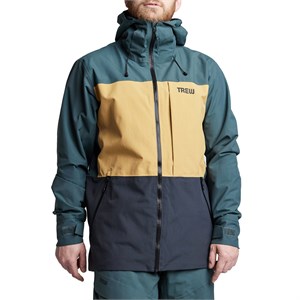
- Type: Shell
- Insulation: None
- Waterproofing: 2-Layer PNW
- Best use: Resort
The Trew Gear Jefferson is a thoughtfully designed, durable shell with a clean aesthetic and robust weather protection. Built with a 2-layer PNW fabric, it resists water and stands up to resort abuse while offering extended coverage for on-hill movement. The lining is smooth and comfortable, and pocket organization is sensible for a day on the mountain. Because it is a shell, you’ll want to pair it with a dedicated insulating mid-layer for cold days.
The Jefferson’s weight is noticeable for a shell, so it’s better suited to lift-served resort use than long sidecountry missions. If you want a hard-wearing jacket with a classic look and reliable waterproofing for inbounds days, the Jefferson is a great pick—durable, well-built, and practical, with the trade-off of a bit more heft than ultralight shells.
Pros: Durable shell, good coverage, practical pocketing, stylish design.
Cons: Heavier than many shells, not insulated.
View Men’s Jefferson View Women’s Astoria
10. Patagonia Powder Town
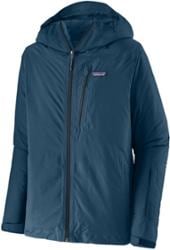
- Type: Hardshell with insulation
- Insulation: 80g Thermogreen (core) / 40g (sleeves)
- Waterproofing: H2No
- Best use: Resort
Patagonia’s Powder Town is a comfortable, well-thought insulated jacket for resort skiers who want built-in warmth without overheating. The quilted Thermogreen insulation concentrates more fill in the torso and less in the sleeves, keeping core warmth efficient while preserving mobility. The H2No shell is soft and supple, providing waterproofing without feeling stiff—an easy move for everyday winter use.
Features are streamlined but functional: insulated hood, fleece-lined hand pockets, pass pocket and a powder skirt for storm days. The jacket runs slightly large and lacks collar insulation, so size accordingly and consider a warm neck layer if single-layer warmth is important. For skiers who want a comfortable insulated jacket from a reputable brand with good on-hill features, Powder Town is a dependable option.
Pros: Comfortable insulation, soft shell feel, insulated hood, quality construction.
Cons: No collar insulation, runs a bit large.
View Men’s Powder Town View Women’s Powder Town
11. REI Co-op First Chair GTX

- Type: Shell
- Insulation: None
- Waterproofing: 2-Layer Gore-Tex
- Best use: Resort
The First Chair GTX is REI’s affordable entry to Gore-Tex performance. As a shell it focuses squarely on keeping weather out: a 2-layer Gore-Tex membrane, waterproof front zipper and a durable DWR finish make it an effective barrier against snow and wind. The jacket includes practical resort features—pit zips for venting, a powder skirt and seven well-placed pockets—which help it feel like a serious mountain jacket despite the approachable price.
Warmth comes from layering rather than built-in insulation, so pair it with your preferred mid-layer depending on conditions. The fit provides long coverage and freedom of movement. Cuffs skew a little oversized, but overall this jacket is a great value for riders who want Gore-Tex reliability without a premium price tag—ideal for skiers focused on weather protection first and warmth second.
Pros: Gore-Tex waterproofing, good ventilation, lots of pockets, affordable for performance shell.
Cons: Needs mid-layers for warmth, cuffs feel oversized.
View Men’s at REI View Women’s at REI
12. Columbia Last Tracks (Men’s)

- Type: Hardshell
- Insulation: 80g synthetic
- Waterproofing: Omni-Tech
- Best use: Resort
Columbia’s Last Tracks is a budget-minded hardshell that mixes classic styling with practical winter tech. It uses Omni-Tech waterproofing and an Omni-Heat reflective liner to trap warmth without excessive bulk, and the 80g synthetic fill keeps you comfortable on typical cold days. The jacket is streamlined enough for everyday wear as well as on-hill use, making it a versatile winter staple for new skiers or anyone seeking good value.
Limitations include the absence of pit zips—so ventilation is limited on spring days—and Columbia’s waterproofing, while effective for the price, won’t match high-end Gore-Tex levels. Construction and materials reflect the price point, but the Last Tracks gets the fundamentals right: warmth, essential storm features, and a wearable cut for downhill and town use.
Pros: Great value, warm for the price, comfortable liner, versatile styling.
Cons: No pit zips, not premium waterproofing compared to Gore-Tex.
13. The North Face Freedom Insulated

- Type: Hardshell with insulation
- Insulation: 80g Heatseeker™ Eco
- Waterproofing: 2-Layer DryVent
- Best use: Resort
The North Face Freedom Insulated blends a waterproof DryVent shell with Heatseeker Eco synthetic insulation to create a reliable resort jacket. It’s designed to keep you dry and warm while remaining breathable; mesh-lined underarm vents help with temperature control during active laps. The jacket includes common resort features—adjustable helmet-compatible hood, powder skirt, goggle-wipe wrist pocket and a secure chest pocket—making it practical for full days on the mountain.
Fit leans toward a roomier, comfortable cut rather than a race-fit, which some will favor for layering and après ease. The DWR treatment is non-PFC, which is a plus for environmental concerns. Overall, Freedom Insulated is a solid mid-range choice for skiers who want dependable warmth, waterproofing, and a well-rounded feature set from a trusted brand.
Pros: Reliable waterproofing, warm insulation, useful pockets, eco-minded DWR.
Cons: Slightly bulky fit for those seeking a slim profile.
View Men’s North Face Freedom View Women’s North Face Freedom
How to Shop for a Ski Jacket on Cyber Monday?
Cyber Monday is one of the best times to score a high-quality ski jacket for a fraction of the usual price. Retailers roll out steep discounts, limited-time bundles, and exclusive online-only models. But the frenzy can also make it easy to buy the wrong jacket, get stuck with poor returns, or miss a better deal that appears an hour later. This guide walks you through the practical steps to prepare, shop smart, and buy a ski jacket you’ll actually love — without buyer’s remorse.
Prepare Before Cyber Monday
Know what you need
Start by defining where and how you ski. Are you hitting cold, high-altitude resorts, touring backcountry, or spending most days at groomed trails? Your environment determines the right insulation, shell rating, and fit. Make a short checklist of essential features: waterproof rating, breathability, insulation type, length, hood style, and the number/type of pockets you want.
Measure and check sizing charts
Sizing varies widely between brands. Before Cyber Monday, measure your chest, waist, hip, and sleeve length. Compare those measurements to each brand’s size chart and read fit notes from reviewers. If possible, try on similar brands in a store beforehand so you know whether you prefer a snug, athletic cut or a roomier, layering-friendly fit.
Understand Technical Specs
Waterproofing and breathability
Look for a waterproof membrane (Gore-Tex, eVent, proprietary membranes) and a stated hydrostatic head rating if available. Higher ratings indicate better water resistance. Breathability matters if you generate heat climbing or skiing hard; look for jackets that advertise high breathability or include pit zips for ventilation.
Insulation: down vs synthetic
Down offers the best warmth-to-weight ratio but loses insulating power when wet unless treated with a water-resistant finish. Synthetic insulation performs better in damp conditions and dries faster, though it can be slightly heavier. Consider hybrid jackets that combine down in the core and synthetic in wetter zones.
Seams, zippers, and ventilation
Fully taped seams prevent water entry, and high-quality waterproof zippers reduce leak risk. Look for pit zips or mesh-lined vents for quick temperature control. A helmet-compatible hood and adjustable cuffs/hems increase comfort and weather protection.
Cyber Monday Strategies
Make a prioritized shortlist
Identify 3–5 jackets that meet your needs and fit your budget. Bookmark product pages, add them to wish lists, and note SKU numbers. Narrowing options saves time when sales go live and helps you spot real discounts versus small markdowns.
Use price-tracking tools
Install browser extensions or use websites that track historical prices. These tools reveal whether a Cyber Monday “discount” is actually a genuine drop or just marketing. Set alerts for target prices so you can act fast when the jacket hits your ideal price point.
Sign up for newsletters and loyalty programs
Many retailers send exclusive promo codes, early access links, or member-only bundles to subscribers. Join loyalty programs for additional discounts, free shipping thresholds, or extended return windows — these perks are often active during Cyber Monday events.
Compare across retailers
Don’t assume the first sale you see is the best. Check brand sites, major outdoor retailers, department stores, and specialty shops. Sometimes smaller retailers bundle gloves or base layers with jackets to create a higher perceived value, which can be a better deal depending on the bundle contents.
Checkout and Payment Tips
Save payment and shipping info in advance
Speed matters when limited-stock colors or sizes are on sale. Pre-fill shipping addresses and payment methods in accounts you already trust. Use secure payment methods like credit cards or trusted digital wallets, which often provide better fraud protection than direct debit.
Watch return policies and warranty
Cyber Monday deals sometimes come with stricter return windows or restocking fees. Confirm the return policy, who pays return shipping, and whether the item is final sale. Also check the manufacturer’s warranty in case the jacket develops a defect later — warranty coverage is independent of promotional sales.
Practical Considerations After Purchase
Inspect and test the jacket quickly
When your jacket arrives, try it on with the layers you plan to wear and test zippers, seams, hoods, and pockets. If you can, simulate movement you’ll use on the slopes. The sooner you spot fit or defect issues, the easier it is to return or exchange within the retailer’s window.
Keep tags and documentation
Hold onto receipts, original tags, and packaging until you’re certain you’ll keep the jacket. Many refunds require the item in like-new condition with its original tags attached.
What to Avoid
Impulse buys on unknown brands
Cyber Monday pressure can push shoppers toward unfamiliar labels with steep discounts. If you can’t find trustworthy reviews or tech breakdowns, think twice. A cheap jacket without reliable insulation or waterproofing can be false economy.
Ignoring shipping cutoffs for winter travel
If you need the jacket for an upcoming trip, check shipping times and possible delays. Some deep-discount items ship from third-party warehouses and take longer. If you’re buying a gift, ensure return options are clear in case the recipient needs a different size.
Final Checklist for Cyber Monday Ski Jacket Shopping
- Measure yourself and consult brand size charts.
- Choose between down, synthetic, or hybrid insulation.
- Confirm waterproof and breathability ratings, taped seams, and vents.
- Shortlist 3–5 jackets and set price alerts.
- Sign into retailer accounts and save payment/shipping info.
- Verify return policy, warranty, and shipping timelines.
- Inspect jacket immediately upon arrival and keep tags.
Cyber Monday can deliver exceptional value on ski jackets if you prepare ahead, compare offers, and focus on the features that matter for your skiing style and climate. With a clear checklist, a shortlist of trusted models, and a few price-tracking tools in your pocket, you’ll be able to grab a great jacket quickly — and head to the slopes confident that you made a smart purchase.
Happy shopping and see you on the mountain!