Best Walkie Talkies for Skiing of 2026
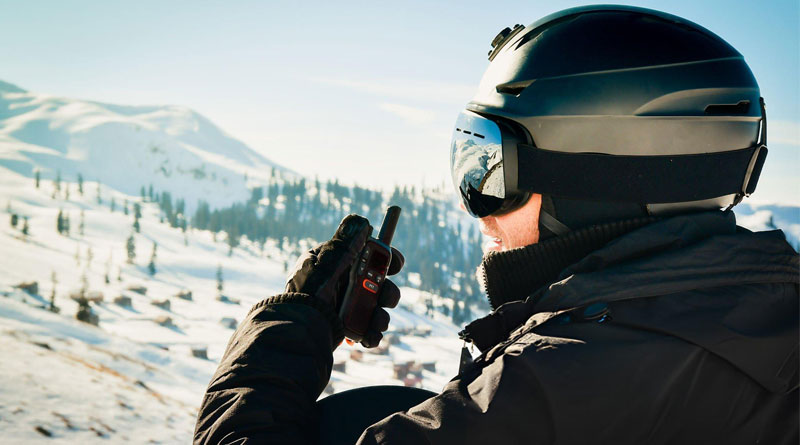
Staying connected on the slopes is important, especially when skiing in groups or exploring wide mountain areas. Walkie talkies make it easy to keep in touch without relying on mobile signals, which can be weak or unavailable in snowy regions. The best walkie talkies for skiing are built to handle cold weather, offer long battery life, and have a strong range for clear communication. In this guide, we’ll share the top walkie talkies that combine reliability, durability, and great performance for your next ski trip.
1. Cobra RX680

- Number of Channels: 60
- Talking Range (max): 38 Mile
- Special Features: Headphone jack, integrated flashlight, VOX, weather alert
- Water Resistance / Power: IP54 water resistant; 2 lithium-polymer batteries (included)
The Cobra RX680 delivers a compelling mix of features skiers want: a long advertised 38-mile range, water resistance, and useful extras like an integrated flashlight and headphone jack. The radios feel solid in-hand, with intuitive buttons and an easy-to-read display. Battery life from the included lithium-polymer packs is reliable through a day of heavy use, and the VOX (voice-activated transmission) is handy when you need hands-free communication while managing poles or adjusting layers.
On the slopes the RX680 performs well for mid-distance team coordination, though real-world range will be shorter in mountainous terrain. The frequency range (30–300 MHz) gives flexibility but requires checking local regulations. The flashlight is brighter than expected and the headphone jack keeps comms discreet. Downsides: it’s not fully submersible and bulky dimensions make it less pocket-friendly under heavy layering.
Pros:
- Long advertised range and VOX hands-free operation
- Integrated flashlight and headphone jack for discreet use
- Good battery runtime with included lithium-polymer cells
Cons:
- Bulky dimensions make pocket carry less tidy under layers
- Advertised range is optimistic in real alpine terrain
2. Rocky Talkie Expedition 5 Watt Radio

- Power Output: 5 Watt GMRS max handheld power
- Battery Life: 5 days (1800 mAH) even at -20°F
- Durability: IP67 waterproof and shatterproof screen
- Range: 35+ miles max (2-8 miles in backcountry)
The Rocky Talkie Expedition is a powerhouse designed specifically for the rigors of mountain environments. By utilizing the maximum 5-watt GMRS limit, it pushes signals further through dense terrain than standard radios. The inclusion of repeater channel support is a major advantage for professionals who need to extend their reach over vast distances.
The hardware is impressively rugged, featuring an IP67 rating and a battery that defies extreme cold. Having two antenna options in the box allows users to prioritize either portability or signal strength. It is a reliable lifeline for backcountry skiers and climbers who require clear communication and real-time NOAA weather alerts during multi-day expeditions.
Pros:
- Exceptional cold-weather battery performance
- Submersible waterproof and shatterproof build
- Includes backup leashes and dual antenna options
Cons:
- Higher price point than entry-level sets
- GMRS license required for legal operation
See the Rocky Talkie Expedition 5 Watt Radio
3. Midland GMRS Two-Way Radio

- Number of Channels: 50
- Frequency Range: 462.5500–467.7125 MHz (GMRS)
- Talking Range (max): 36 Mile
- Power: Uses 8 AA batteries (included) for easy field swaps
The Midland GMRS Two-Way Radio blends lightweight ergonomics with long-range capability aimed at outdoor use. With 50 channels and a GMRS frequency set (462.55–467.7125 MHz), it offers robust signal options and weather alerts for storm-prone days. The keypad lock prevents accidental changes while wearing gloves, and silent operation is handy when you need quiet comms on a crowded lift. AA battery compatibility means easy swaps and wide availability in the field.
On the mountain it balances size and performance: the 36-mile claim won’t survive steep, tree-lined canyons, but for resort ski patrol coordination and party communication it’s more than adequate. The physical build is compact and fits glove-friendly controls. Downsides include the bulk and weight of AA batteries compared with lithium packs, and the unit isn’t fully waterproof. Overall, Midland’s GMRS radio is a sensible pick for skiers who prize signal robustness and user-friendly features over minimal size.
Pros:
- GMRS band yields strong signal options
- Weather alerts and keypad lock for safe operation
- AA battery use makes swaps easy in the field
- Good balance of size and performance
Cons:
- AA battery bulk and weight compared with lithium packs
- Not fully waterproof for heavy-snow exposure
See the Midland GMRS Two-Way Radio
4. Retevis Waterproof Walkie Talkies

- Number of Channels: 22
- Special Feature: Waterproof with emergency alarm
- Power: 2 lithium-ion batteries included (replaceable)
- Use Case: License-free FRS operation for simple group comms
Retevis Waterproof Walkie Talkies focus on straightforward, rugged communication with true waterproofing and license-free FRS operation. The included lithium-ion batteries and emergency alarm function add value for alpine users; the radios are built to withstand snow, splashes, and sudden weather changes. They’re relatively lightweight and have a clean button layout that’s manageable with gloves.
In real use, the Retevis units are reliable for short-to-medium range party coordination. Their waterproof rating makes them ideal for wet spring conditions or heavy snowfall. They won’t offer the extended mileages of GMRS units, but for ski groups moving together they provide clear audio and dependable performance. The primary compromises are fewer channels (22) and a simpler feature set compared with premium models, but for teams prioritizing weatherproofing and simplicity these radios deliver excellent value.
Pros:
- True waterproofing suitable for snowy conditions
- Emergency alarm and simple FRS operation
- Included lithium-ion batteries and glove-friendly layout
- Lightweight and easy to attach to gear
Cons:
- Fewer channels and feature set than higher-end units
- Not designed for long, cross-valley range
See the Retevis Waterproof Walkie Talkies
5. Midland FRS Walkie Talkies

- Number of Channels: 22
- Talking Range (max): 2 Mile (realistic for on-piste use)
- Special Feature: Weather alert for storm warnings
- Power: 3 AAA batteries required (simple and replaceable)
The Midland FRS Walkie Talkies are compact, entry-level units designed for casual slopeside use. With 22 channels and built-in weather alerts, they keep things simple and lightweight. The small dimensions and AAA battery power make them easy to stash in a jacket pocket or ski boot bag. Controls are basic but effective for quick calls and coordination on groomed runs.
Expect modest range: the advertised 2-mile range is realistic in resort settings with open lines of sight, but will drop significantly in trees or behind terrain. These are best for families, beginners, or day-trippers who need inexpensive, no-fuss comms without dealing with licensing or complicated setups. They aren’t a backcountry safety tool, but on-piste they’re affordable, easy-to-use radios that cover everyday needs without excess features.
Pros:
- Compact and pocket-friendly for resort use
- Weather alert provides basic storm awareness
- Uses common AAA batteries for easy replacement
- Simple operation—good for families and beginners
Cons:
- Limited range—unsuitable for extended backcountry use
- Basic feature set compared with more capable radios
See the Midland FRS Walkie Talkies
6. Motorola Solutions Talkabout

- Number of Channels: 22
- Talking Range (max): 20 Mile
- Special Feature: Call alert and weather alert
- Power: 2 AA batteries included for light and convenient operation
Motorola Solutions Talkabout radios are veteran performers for outdoor recreation, offering a balance between features and portability. The 22 channels, call alert, and weather alert functions are staples that help manage group calls and storm warnings. With a claimed 20-mile range, the unit is useful for medium-distance coordination on larger ski areas. The build feels durable and the ergonomics suit gloved use.
The Talkabout is a practical choice for ski groups and patrol-style teams who want reliable, brand-trusted communication. Battery options (2 AA) are convenient and lightweight, though power-hungry use can require swaps on multi-day outings. It won’t match GMRS for raw range but wins on ease-of-use and solid, everyday performance. If you want trusted functionality and straightforward operation without unnecessary complexity, Motorola’s Talkabout is a safe bet.
Pros:
- Trusted brand with dependable performance
- Call alert and weather alert add safety
- Lightweight AA battery power
- Ergonomic design for gloved handling
Cons:
- Range and feature set are modest compared with higher-end GMRS units
- Not fully waterproof for heavy-snow use
See the Motorola Solutions Talkabout
7. pxton Walkie Talkies
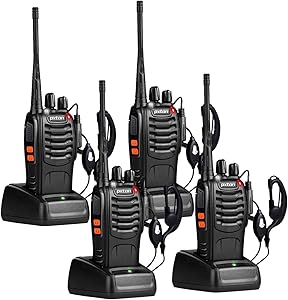
- Number of Channels: 16
- Frequency Type: UHF, better penetration in wooded areas
- Talking Range (max): 3 Miles (practical short-range use)
- Power: 4 lithium-ion batteries included for light weight
Pxton Walkie Talkies advertise long-range performance in a compact UHF design with a three-mile practical range for everyday outdoor use. The units are slim and pocketable, and included lithium-ion batteries keep weight down while offering consistent runtime. UHF frequencies penetrate tree cover better than VHF in many conditions, which helps in wooded ski areas or tree runs.
These radios work best for small groups skiing in tightly-knit areas or for coordinating helpers at a ski school. They aren’t optimized for extended backcountry range, but their light footprint and straightforward operation make them attractive for users who prioritize low weight and simplicity. Build quality is adequate; the main limitations are channel count (16) and lack of advanced weather alerting, so they fit best as lightweight, short-range communicators for resort tasks.
Pros:
- Compact, lightweight and pocketable
- UHF helps signal through tree cover
- Included lithium-ion batteries reduce weight
- Simple operation for group coordination
Cons:
- Limited channels and modest range compared with GMRS radios
- Not ideal for long-distance backcountry comms
8. Wishouse Walkie Talkies

- Number of Channels: 22
- Talking Range (max): 5 Mile
- Special Features: VOX, adjustable receiver sensitivity, emergency alarm, weather alert
- Frequency Range / Power: 462.5500–462.7250 & 467.5625–467.7125 MHz; 12 A batteries (included)
Wishouse Walkie Talkies pack several useful features—VOX, adjustable receiver sensitivity, emergency alarm, and weather alert—into a consumer-friendly package. They operate on standard FRS/GMRS-adjacent frequencies and offer a quoted five-mile maximum range in open terrain. The units are compact and include long-life battery options, although the specification lists non-water-resistant construction which is a key consideration for snowy use.
In practice these radios are versatile for on-piste coordination where moisture exposure is limited: ski instructors, families, and event volunteers will appreciate the VOX hands-free option and adjustable sensitivity for noisy environments. However, lack of water resistance and the plastic feel place them below purpose-built alpine radios. They’re a budget-friendly, feature-rich option for dry-snow days and casual resort use, but I’d hesitate to take them on wet, heavy-snow outings without extra protection.
Pros:
- Feature-rich for the price (VOX, alarm, adjustable sensitivity)
- Compact and easy to operate for casual users
- Good channel selection for crowded slopes
- Decent advertised range in open conditions
Cons:
- Not water resistant—needs protection in heavy snow
- Uses many A batteries which can be bulky long-term
See the Wishouse Walkie Talkies
How to Choose Walkie Talkies for Skiing
When you’re skiing in the mountains, reliable communication can make the difference between a smooth day on the slopes and a frustrating—or even dangerous—situation. Mobile signals are often unreliable in ski resorts or backcountry areas, which is why many skiers and snowboarders carry walkie talkies. Whether you’re coordinating with friends, staying in touch with family, or guiding a group, having the right two-way radios ensures clear communication in all weather conditions. This guide covers the key factors to consider when choosing walkie talkies for skiing.
Why Walkie Talkies Matter on the Slopes
Walkie talkies are invaluable tools for staying connected when mobile coverage fails. In mountainous terrain, cell signals are often blocked by ridges and valleys, while cold temperatures can quickly drain phone batteries. Two-way radios provide instant, push-to-talk communication without relying on mobile networks. They’re ideal for group coordination, emergency situations, or even just keeping track of family members in large ski areas.
Beyond safety, walkie talkies make skiing more enjoyable. You can warn friends about changing weather, arrange meeting points, or simply share excitement from different runs. Modern models are compact, durable, and packed with features tailored for outdoor sports.
Key Factors to Consider
1. Range and Frequency
The most important feature in a ski walkie talkie is its communication range. Manufacturers often advertise maximum ranges of 20 to 40 miles, but real-world performance is usually much shorter due to terrain and weather conditions. In open areas with few obstacles, you might get close to the advertised range, but in mountainous or forested regions, expect 1–5 miles at most.
Most walkie talkies operate on either FRS (Family Radio Service) or GMRS (General Mobile Radio Service) frequencies. FRS radios are license-free and sufficient for most resort or day-trip users, while GMRS radios offer higher power and extended range but require a simple license in some countries. If you often ski in backcountry terrain, GMRS radios are worth the extra effort.
2. Durability and Weather Resistance
Skiing exposes your equipment to cold temperatures, snow, and moisture, so durability and waterproofing are critical. Look for radios rated at least IP54 or higher, which means they’re resistant to snow and light splashes. Fully waterproof units (IP67) are ideal for backcountry skiing where conditions are harsher.
Rugged housings with anti-slip grips are also helpful, especially when wearing gloves. Many high-quality models feature reinforced casings and textured buttons for easy operation in freezing conditions.
3. Battery Life and Power Options
Cold weather can severely reduce battery performance, so you’ll want a model that offers long battery life and flexible power options. Lithium-ion batteries are preferred for their cold resistance and rechargeability. Some walkie talkies also support AA or AAA batteries, allowing easy swaps if rechargeable cells die mid-day.
For multi-day ski trips or expeditions, consider radios with replaceable batteries or USB-C charging. This way, you can recharge them overnight in a lodge or car using standard power banks. Always keep spare batteries warm in an inside pocket to maintain performance.
4. Hands-Free Operation (VOX)
Voice Operated Transmission (VOX) allows hands-free communication, automatically transmitting your voice when you start speaking. This feature is extremely useful when you’re holding ski poles or navigating steep terrain. Make sure the VOX sensitivity can be adjusted, so background noise doesn’t trigger unwanted transmissions.
Some models also support headset or earpiece connections, making communication even easier while keeping your hands free and the device protected inside your jacket.
5. Channel Selection and Privacy Codes
Busy ski resorts can have many people using radios, leading to interference and crossed signals. Choosing a walkie talkie with multiple channels and privacy codes helps minimize unwanted chatter. FRS and GMRS radios typically offer between 22 and 128 channels, often paired with sub-channels or CTCSS/DCS codes for extra privacy.
If you’re skiing with a large group or need to communicate separately with different teams (for example, instructors and students), having multiple programmable channels can be very convenient.
6. Weight and Size
Walkie talkies need to be lightweight and easy to carry, especially if you’re skiing all day. Compact models can fit in a jacket pocket or clip onto your pack harness without adding bulk. However, smaller units may have smaller batteries and shorter range, so it’s a trade-off between convenience and performance.
Ideally, your walkie talkie should be easy to operate with gloves. Large buttons, a simple interface, and a backlit screen are all important for usability on cold, bright slopes.
7. Weather Alerts and Emergency Features
Many premium walkie talkies include NOAA weather alerts or similar emergency broadcast capabilities. These are especially useful in mountain environments where conditions can change rapidly. Radios with an emergency alarm function can send a distress signal to your group in case of injury or separation.
If you often ski off-piste or in remote backcountry areas, an emergency alert and flashlight are highly recommended. Some radios also feature built-in SOS beacons or sirens for added safety.
8. Audio Quality and Volume Control
Wind, snow, and background noise can make communication difficult. Look for radios with adjustable volume, noise suppression, and clear audio output. Models with external headset ports allow you to use earpieces or microphones, which improve clarity and protect your device from snow exposure.
Additional Tips for Using Walkie Talkies on the Slopes
1. Test Your Radios Before You Ski
Always test your walkie talkies before hitting the slopes. Check battery levels, channel settings, and range performance. This ensures you won’t waste time troubleshooting when conditions are cold and visibility is low.
2. Assign Channels and Call Signs
Before setting off, agree on a specific channel and backup channel for your group. Assign simple call signs or names to avoid confusion. This helps prevent miscommunication, especially if multiple groups are nearby using similar devices.
3. Protect Against Cold and Moisture
Keep your radios in an inner jacket pocket to protect them from freezing temperatures. If possible, use a case or pouch to shield against snow. Avoid exposing the radio directly to melting snow or water, even if it’s rated as water-resistant.
4. Conserve Battery Life
To extend battery life, turn down the display brightness, limit constant chatter, and switch off extra features like backlighting when not needed. In cold conditions, rotate between warm spare batteries and active ones to maintain power efficiency.
5. Know the Local Regulations
Different countries have different laws governing radio frequencies. In the United States and Canada, GMRS radios may require a license, while FRS radios are generally license-free. In Europe, PMR446 radios are standard and don’t require licensing. Always check before purchasing or traveling abroad with your radios.
Recommended Features for Different Types of Skiers
For Families and Beginners
Simple, affordable FRS radios with 2–5 mile range and basic weather alerts are usually enough. Look for models with clear displays, durable build, and easy-to-replace batteries. These are perfect for staying in touch on resort slopes.
For Backcountry and Advanced Skiers
Opt for rugged, waterproof GMRS radios with 20–35 mile advertised range, long-lasting lithium batteries, and emergency functions. VOX and headset support will make hands-free operation easier, while weather alerts keep you informed about incoming storms.
For Ski Patrol or Instructors
Choose professional-grade radios with programmable channels, privacy codes, and extended battery life. Models that integrate with accessories such as shoulder mics or helmet-mounted earpieces are ideal for efficient team coordination in demanding conditions.
Conclusion
Choosing the right walkie talkies for skiing depends on where and how you ski. For casual family trips or resort days, lightweight FRS models with simple controls are perfect. For serious backcountry or alpine tours, go for waterproof GMRS radios with strong range, replaceable batteries, and safety features like weather alerts and emergency alarms. Whatever your choice, ensure your devices are fully charged, tested, and properly secured before heading out. With reliable communication on hand, you can ski with confidence, safety, and peace of mind.