Best All-Mountain Snowboard Bindings of 2026
Finding the ideal snowboard bindings can transform your mountain experience, directly bridging your boots to the board for optimal control, comfort, and performance. Whether you are a beginner learning to carve or an advanced rider hitting high-speed lines, choosing bindings tailored to your skill level and riding style is essential. Our comprehensive guide highlights top-rated snowboard bindings, analyzing their key specifications, flex levels, mounting compatibility, and overall performance on the snow to help you make an informed decision for your next winter adventure.
1. Burton Step On
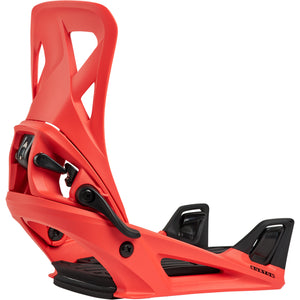
- Binding Style: Step-On, All Quick Entry
- Mount Pattern: 2×4, Channel, 4×4
- Ability Level: Intermediate-Advanced
- Flex Rating: Medium
The Burton Step On bindings revolutionize ease of use without sacrificing high-end performance. Designed for intermediate to advanced riders, these bindings eliminate traditional straps in favor of a fast, intuitive locking mechanism that gets you moving down the slope immediately.
With a balanced medium flex, they provide excellent responsiveness for carving across diverse terrain. The versatile mounting options ensure seamless setup across almost any modern snowboard deck, making them a top contender for convenience-seeking enthusiasts.
Pros:
- Lightning-fast entry and exit
- Consistent medium flex for versatility
- Broad mount pattern compatibility
Cons:
- Requires Step On compatible boots
- Higher initial investment
View at evo View Women’s at evo
2. Burton Scribe – Women’s
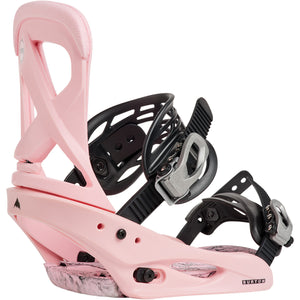
- Binding Style: Strap
- Mount Pattern: Channel, 2×4, 4×4
- Ability Level: Intermediate-Advanced
- Flex Rating: Medium
Tailored specifically for female riders, the Burton Scribe delivers all-mountain versatility paired with smooth cushioning. Its medium flex offers the right balance of forgiveness and control, allowing progressing snowboarders to tackle steeper slopes with confidence.
The traditional strap design ensures a customized, snug fit around the boot, minimizing pressure points. Compatible with Channel and multi-disc systems, these bindings offer straightforward setup and long-lasting durability for season-after-season riding across various resort terrains.
Pros:
- Ergonomic women-specific design
- Versatile all-mountain medium flex
- Highly comfortable strap system
Cons:
- Traditional strapping takes more time
- May feel soft for aggressive carvers
3. Burton Mission
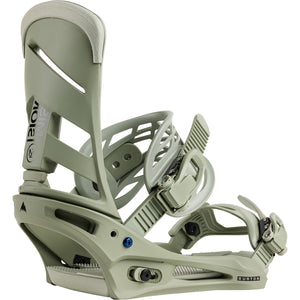
- Binding Style: Strap
- Mount Pattern: Channel, 2×4, 4×4
- Ability Level: Intermediate-Advanced
- Flex Rating: Medium
A mainstay in snowboard gear, the Burton Mission binding offers reliable performance and sturdy construction. Engineered for intermediate to advanced boarders, it provides a balanced response suitable for everything from groomers to sidecountry explorations.
The medium flex rating delivers enough stiffness for high-speed stability while remaining comfortable for park laps. Its universal mounting compatibility ensures easy installation, making it an excellent workhorse binding for everyday resort riders looking for dependable quality.
Pros:
- Time-tested reliability and strength
- Comfortable pressure-free straps
- Great value for intermediate riders
Cons:
- Standard strap setup lacks quick entry
- Plain design aesthetics
4. Union Force
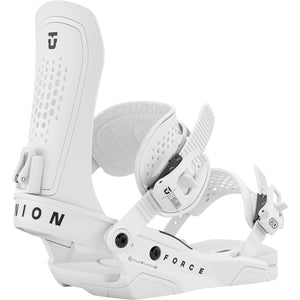
- Binding Style: Strap
- Mount Pattern: Channel, 2×4, 4×4
- Ability Level: Intermediate-Advanced
- Flex Rating: Stiff
Built for hard-charging riders, the Union Force binding delivers exceptional power transmission and rigid stability. The stiff flex profile gives intermediate to advanced snowboarders immediate edge control when carving aggressive lines or riding technical terrain.
Trusted by professional athletes, the Force features ultra-durable components backed by a lifetime warranty on baseplates and heelcups. Its robust build handles intense impacts easily, making it an outstanding selection for demanding all-mountain riders.
Pros:
- Lifetime warranty on baseplates and heelcups
- Exceptional response and high-speed stability
- Durable construction built to last
Cons:
- Stiff flex is unforgiving for beginners
- Slightly heavier than minimalist options
5. K2 Sonic
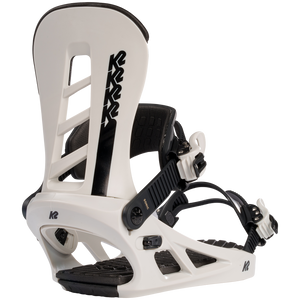
- Binding Style: Strap
- Mount Pattern: 2×4, 4×4, Channel
- Ability Level: Beginner-Intermediate
- Flex Rating: Soft
Designed with progression in mind, the K2 Sonic binding provides a forgiving feel that helps newer riders master fundamental turns. Its soft flex profile reduces fatigue and allows for easy maneuverability during low-speed learning sessions.
Featuring a lightweight frame and straightforward strap adjustments, this binding makes dialling in your fit simple. It connects effortlessly to standard mounting systems, offering great entry-level performance and accessible comfort for budget-conscious snow sports enthusiasts.
Pros:
- Forgiving soft flex for easy learning
- Lightweight design reduces leg fatigue
- Affordable choice for beginners
Cons:
- Lacks high-speed carving support
- Basic feature set
6. Burton Cartel
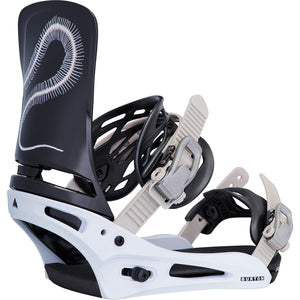
- Binding Style: Strap
- Mount Pattern: 4×4, 2×4, Channel
- Ability Level: Intermediate-Advanced
- Flex Rating: Medium
The Burton Cartel stands out as a high-performance benchmark for all-terrain riders. Balancing comfort and drive, its medium flex delivers precise edge control without sacrificing the flexibility required for playful freestyle maneuvers.
Advanced strap tech locks your boots firmly in place while minimizing pressure points across your feet. With wide mounting compatibility, the Cartel adapts easily to almost any board, giving intermediate and advanced riders the confidence to push their limits anywhere on the mountain.
Pros:
- Excellent balance of response and comfort
- Durable ratchets and strap construction
- Versatile performance across all snow conditions
Cons:
- Price point sits higher than basic strap models
- Requires break-in time for maximum comfort
7. Burton Step On Genesis
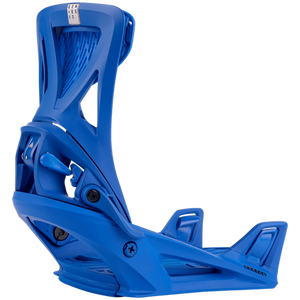
- Binding Style: Step-On, All Quick Entry
- Mount Pattern: 2×4, 4×4, Channel
- Ability Level: Intermediate-Advanced
- Flex Rating: Medium
Combining maximum comfort with quick-entry performance, the Burton Step On Genesis binding is built for riders seeking high-end convenience. It features an innovative highback suspension harness that cradles the boot for smooth dampening and reduced vibration.
The medium flex supports agile turning across all resort slopes, while the step-in mechanism allows effortless entry without bending down. It pairs seamlessly with modern mounting systems, making it a top tier choice for experienced boarders wanting premium gear.
Pros:
- Advanced highback suspension for extra comfort
- Fast step-in entry system
- Smooth, responsive medium flex profile
Cons:
- High-end price point
- Exclusive compatibility with Step On boots
8. Salomon Rhythm
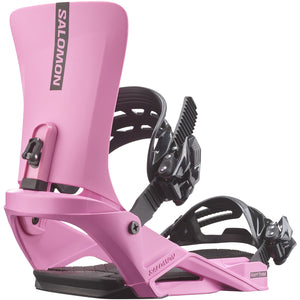
- Binding Style: Strap
- Mount Pattern: 4×4, Channel, 2×4
- Ability Level: Beginner-Intermediate
- Flex Rating: Soft
The Salomon Rhythm binding is engineered to offer smooth progression and reliable comfort at an accessible price point. Its soft flex profile is forgiving on mistakes, allowing novice riders to build confidence and refine turning mechanics easily.
Equipped with comfortable asymmetrical straps and backed by a 2-year warranty, the Rhythm delivers durable support on the mountain. Compatible with major mounting standards, it serves as an ideal entry binding for riders stepping away from rental lines.
Pros:
- Forgiving flex ideal for learning
- Comfortable ergonomic straps
- Backed by a 2-year manufacturer warranty
Cons:
- Soft flex limits high-speed performance
- Basic ratcheting hardware
How to Choose Snowboard Bindings
Selecting the right snowboard bindings is one of the most critical decisions you will make when building your winter setup. Your bindings act as the primary communication bridge between your body, boots, and board. They transfer the energy from your legs directly into the board’s edges, determining how quickly, smoothly, and precisely your snowboard responds to your movements. Riding with an ill-fitting or mismatched set of bindings can lead to foot fatigue, reduced control, and a frustrating day on the mountain.
To ensure you get the absolute best performance, comfort, and fun out of your snowboard equipment, you must evaluate several factors before buying. This detailed guide walks through ability levels, flex ratings, binding entry styles, mounting patterns, and boot compatibility so you can select your ideal setup with confidence.
Matching Bindings to Your Ability Level
Snowboard bindings are engineered with specific rider skill sets in mind. Manufacturers adjust materials, frame stiffness, and highback designs to accommodate the vastly different needs of beginners versus seasoned experts.
| Ability Level | Typical Flex | Key Characteristics | Primary Focus |
|---|---|---|---|
| Beginner – Intermediate | Soft to Medium-Soft | Forgiving, flexible highbacks, lightweight construction | Ease of turn initiation and comfort |
| Intermediate – Advanced | Medium to Stiff | Balanced drive, enhanced dampening, supportive straps | Versatility across diverse terrain |
| Advanced – Expert | Stiff to Very Stiff | Carbon or rigid composite frames, high power transfer | Precision edge control at high speeds |
Beginner to Intermediate Riders
If you are new to snowboarding or currently working on linking smooth turns down groomers, forgiving gear is your best friend. Beginner-intermediate bindings, such as the K2 Sonic or Salomon Rhythm, generally feature softer materials. Soft-flexing bindings allow room for error; if you make a subtle weight mistake or lose balance, a softer binding will not instantly kick the board onto an edge, preventing harsh catches and unnecessary falls. Furthermore, softer bindings require less physical effort to steer, helping newer riders stay out on the slopes longer without experiencing leg fatigue.
Intermediate to Advanced Riders
The vast majority of snowboarders fall into the intermediate-to-advanced category. Riders at this level feel confident exploring varied terrains, including powder, steep groomers, park features, and trees. Products like the Burton Cartel, Burton Mission, and Burton Step On fall squarely into this bracket. These bindings feature medium flex ratings that deliver a harmonious blend of quick turn response and playful flexibility. They provide structural support for high-speed riding while retaining enough yield for buttering, jumping, or maneuvering through tight glades.
Advanced to Expert Riders
Riders who spend their days carving at high velocities, charging down steep chutes, or dropping large park features require stiff, rigid bindings. Bindings like the Union Force utilize stiffer highbacks and reinforced baseplates. When you shift your weight on a stiff binding, the power transfers almost instantaneously to the edge of the snowboard. This immediate energy transmission provides the maximum control needed when carving on hardpack ice or navigating dangerous terrain, though it leaves very little room for rider error.
Understanding Binding Flex Ratings
Flex rating is one of the most vital specifications to review when choosing bindings. While flex numbers (ranging from 1 to 10) are not standardized across all manufacturers, snow gear can generally be categorized into soft, medium, and stiff feels.
- Soft Flex (Rating 1 – 3): Soft bindings are built for maneuverability, comfort, and forgiveness. They are favored by beginners learning basic control and freestyle terrain park riders who want freedom of motion for presses, grabs, and rails.
- Medium Flex (Rating 4 – 7): Medium flex is the standard for all-mountain performance. It offers enough stiffness for responsive carving on groomers while remaining flexible enough for freestyle tricks and casual riding.
- Stiff Flex (Rating 8 – 10): Stiff bindings prioritize raw power, instantaneous response, and high-speed stability. Big-mountain riders, freeriders, and carvers lean toward stiff options to maintain control in demanding conditions.
Comparing Binding Entry Styles
Modern snowboard bindings primarily feature two entry mechanisms: traditional strap-in systems and quick-entry/step-on systems. Each style comes with clear advantages depending on your riding priorities.
Traditional Strap Bindings
Traditional strap bindings remain the industry standard. They utilize an ankle strap to secure the foot back into the heelcup and a toe strap (often worn as a toe-cap) to pull the boot back and down. Strap bindings offer maximum adjustability, allowing riders to fine-tune strap tension based on terrain or preference. They work seamlessly with virtually any standard snowboard boot brand on the market today.
Quick-Entry and Step-On Systems
Quick-entry options, such as the Burton Step On and Burton Step On Genesis series, eliminate traditional ratchets and straps altogether. These systems use dedicated mechanical locking points between the binding frame and specialized boot outer shells. The main advantage is unmatched speed—riders can step directly out of the chairlift, click their boot into the binding while standing, and ride off without sitting down in the snow. However, they require purchasing compatible Step On boots, restricting your footwear choices.
Evaluating Binding Mount Patterns
Before purchasing bindings, you must verify that they are compatible with the mounting hole pattern on your specific snowboard. Fortunately, most modern bindings feature universal discs or multiple mounting plates to accommodate major mounting standards.
- 2×4 Pattern: Features two rows of holes spaced 2 centimeters apart vertically and 4 centimeters apart horizontally. Highly common on modern boards.
- 4×4 Pattern: Uses holes spaced 4 centimeters apart both vertically and horizontally. Common on older or traditional board constructions.
- The Channel System: A continuous slot mounting system developed by Burton that allows micro-adjustable stance widths and angles. Most modern bindings include baseplates compatible with The Channel.
Sizing and Boot Compatibility
Lastly, ensure your binding size correctly matches your boot size. Binding manufacturers list size charts (typically Small, Medium, Large) corresponding to boot sizes. Your boot should fit snugly inside the binding heelcup without excessive force, and the straps should center across your boot without reaching the end of the ratchet ladder. A proper fit ensures optimal leverage and prevents heel lift, guaranteeing smooth control every time you hit the snow.