Best All-Mountain Snowboards of 2026
Choosing the right snowboard can make or break your day on the mountain, and all-mountain boards are built to handle everything from groomed runs to powder stashes and park laps. Whether you are a beginner building confidence or an intermediate rider looking to progress, the right board offers versatility, control, and fun in every condition. Below we review eight of the best all-mountain snowboards available today, followed by a detailed guide to help you pick the perfect one for your riding style.
1. Lib Tech Skate Banana BTX
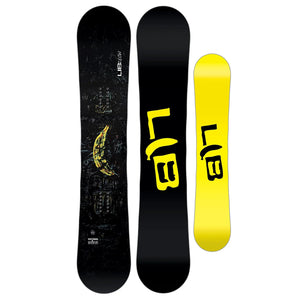
Rocker Type: Original Banana (rocker between feet, camber at tip/tail)
Flex: Soft
Shape: True Twin
Base: Sintered Knife Cut Base with Magne-Traction edges
The Skate Banana BTX is a legendary shape that pioneered the rocker-camber blend still used across the industry today. Its soft flex and true twin shape make it playful, forgiving, and easy to maneuver, whether you are riding switch or carving groomers. The Magne-Traction edges bite reliably even on firmer snow, giving riders confidence in variable conditions.
Built at the Mervin factory with an Aspen and Paulownia core, this board balances durability with a lightweight feel. It suits beginners and intermediates who want a forgiving ride without sacrificing edge hold.
Pros:
- Extremely forgiving and beginner friendly
- Strong edge hold thanks to Magne-Traction
- Playful true twin shape great for jibbing
Cons:
- Soft flex limits high speed stability
- Less precise for advanced carving
2. Arbor Formula
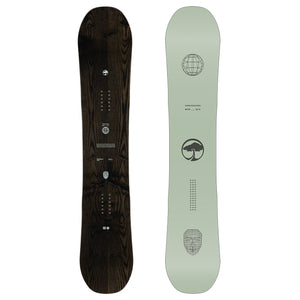
Rocker Type: System Camber
Flex: Medium (6-7 of 10)
Shape: Directional Twin
Core: Highland II Poplar/Paulownia blend
The Arbor Formula delivers a crisp, responsive ride with excellent pop thanks to its System Camber profile. The directional twin shape and tri-radial Grip Tech sidecut give riders precise edge control, making it a great choice for carving groomers while still holding its own in powder and park settings.
Sustainably built with a bio-plastic topsheet and bio-resin, the Formula is durable and environmentally conscious. Its medium flex suits beginner to intermediate riders looking to progress toward more aggressive terrain.
Pros:
- Responsive camber with strong pop
- Versatile directional twin shape
- Eco-friendly construction
Cons:
- Camber can feel less forgiving for true beginners
- Not ideal for deep powder days
3. Nidecker Merc
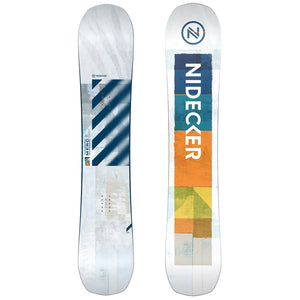
Rocker Type: Rocker/Camber/Rocker
Flex: Medium
Shape: Directional Twin
Core: Carbon and Wood blend
The Nidecker Merc combines hard-snow edge hold with soft-snow float, thanks to its Rocker/Camber/Rocker profile. This makes it a strong all-around performer, equally comfortable carving icy groomers or floating through fresh powder, a versatility freeride-focused riders will appreciate.
The carbon and wood core construction adds a lively, responsive feel without excessive weight. With a medium flex, the Merc suits beginner to intermediate riders wanting a dependable board that can grow with their skill level.
Pros:
- Great blend of edge hold and float
- Carbon construction adds responsiveness
- Versatile for varied snow conditions
Cons:
- Limited detailed technical documentation
- Wide size range may confuse first-time buyers
4. Arbor Formula Decon
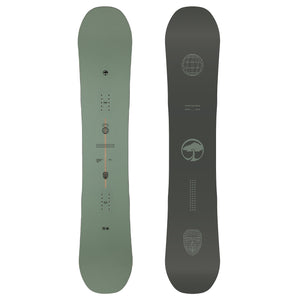
Rocker Type: System Camber
Flex: Medium (5-6 of 10)
Shape: Directional Twin
Base: Extruded Base for easy repair
The Formula Decon is a slightly softer, more accessible version of Arbor’s Formula lineup. Its System Camber profile still provides responsive edge control, while the extruded base and biax glassing make it easier to maintain and more forgiving for riders still building skills.
This board is designed with beginner to intermediate riders in mind, offering a good learning platform without sacrificing the durability and sustainable construction Arbor is known for, including recycled steel edges and bio-resin.
Pros:
- Easier to repair extruded base
- Forgiving flex for learning riders
- Sustainable materials throughout
Cons:
- Extruded base is slower than sintered options
- Less aggressive performance for advanced riders
5. Salomon Pulse
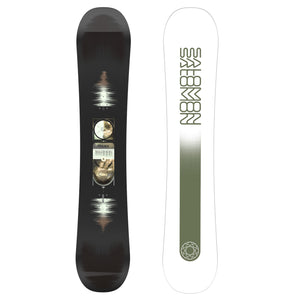
Rocker Type: Flat/Camber/Flat
Flex: Soft
Shape: Directional Twin
Core: Wood core construction
The Salomon Pulse is a soft, forgiving board built for riders just starting their all-mountain journey. Its Flat/Camber/Flat profile mellows out traditional camber, making it easier to initiate turns and land tricks in the park while still delivering dependable edge hold on groomers.
With a wide range of sizes and a directional twin shape, the Pulse adapts well to different rider heights and weights. It is an approachable option for anyone prioritizing comfort and ease of use over aggressive performance.
Pros:
- Very forgiving and beginner friendly
- Wide size range available
- Great for park and mellow groomers
Cons:
- Soft flex lacks stability at speed
- Not suited for advanced freeriding
6. Season Primer
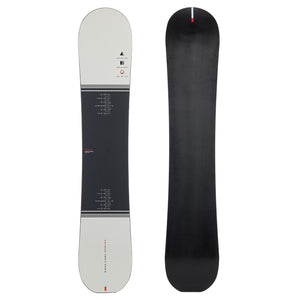
Rocker Type: Entry Rocker / Symmetrical Camber / Exit Rocker
Shape: Directional Twin
Core: Poplar Wood Core
Sidecut: Dual-Digressive Sidecut
The Season Primer offers a relaxed, stable ride thanks to its directional twin shape and mild setback, making it comfortable across a variety of snow conditions. The dual-digressive sidecut allows for both slow, predictable carves and tighter, lively turns when edge angle increases.
Its full poplar wood core adds a snappy, energetic response underfoot. Season also includes a lifetime pass for free waxes and annual tunes, adding long-term value that few competitors match for casual to intermediate riders.
Pros:
- Comfortable and stable ride feel
- Lifetime waxing and tuning included
- Versatile sidecut for varied turns
Cons:
- Limited published technical specifications
- May feel too mellow for aggressive riders
7. Salomon Craft
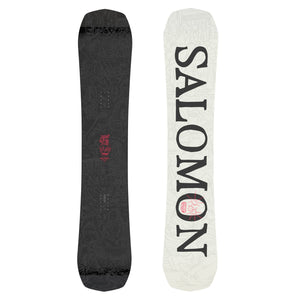
Rocker Type: Rock Out Camber
Flex: 3 of 5 (Soft-Medium)
Core: Aspen Strong FSC Certified Woodcore
Base: Sintered Base with Natural Wax
The Salomon Craft blends flat stability underfoot with camber near the feet and a pressable rocker at the tip and tail, giving riders a lively yet manageable ride. The Quadrilizer sidecut supports both high speed carving and tight, technical maneuvering in variable terrain.
Its Aspen Strong core is CNC-milled for improved impact resistance and consistent flex throughout the season. The bio-based resin and cork sidewall pads add eco-conscious touches, making the Craft a solid pick for progressing intermediate riders.
Pros:
- Balanced camber and rocker blend
- Durable, impact-resistant core
- Good edge control from Freestyle EB tune
Cons:
- Softer flex limits high speed confidence
- Less ideal for deep powder riding
8. Arbor Element
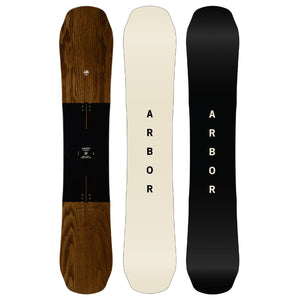
Rocker Type: System Rocker
Flex: Medium (6-7 of 10)
Shape: Directional Twin
Core: Highland II Poplar/Paulownia blend
The Arbor Element is built for a surfy, playful ride, with System Rocker delivering natural float and catch-free tracking across the snow. Despite the rockered profile, edge hold remains reliable thanks to progressively engaging outside contacts, making it fun in both powder and on groomers.
The mixed triax over biax laminate adds versatility for jumps, backcountry, and everyday riding, while sustainable materials like the bio-plastic topsheet and bio-resin keep environmental impact low. It suits intermediate riders wanting a playful, forgiving all-mountain board.
Pros:
- Playful, surfy feel with good float
- Reliable edge hold despite rocker
- Sustainable, durable construction
Cons:
- Less precise for hard carving
- Rocker profile less stable at high speed
How to Choose an All-Mountain Snowboard
All-mountain snowboards are designed to do a bit of everything, making them the most popular category among riders of every skill level. Whether you spend your days carving groomers, floating through fresh powder, or hitting the occasional park feature, the right all-mountain board should feel like an extension of your riding style. With so many options on the market, understanding a few key factors will help you narrow down the choice and find a board that matches your ability, terrain preferences, and long-term goals.
Understanding Rocker Types
The rocker profile of a snowboard determines how it behaves underfoot and plays a major role in how forgiving or aggressive the ride feels. Different rocker types suit different riding styles and terrain preferences.
Camber
Camber is the traditional profile, offering an arched shape that touches down near the tip and tail when unweighted. Once weighted, it creates strong edge hold and energetic pop, ideal for carving and jumps, though it can be less forgiving for beginners.
Rocker
Rocker profiles curve upward at the tip and tail, similar to the bottom of a boat. This makes turn initiation easier and improves float in powder, though pure rocker boards can sacrifice some edge hold on hardpack.
Hybrid Profiles
Many modern all-mountain boards blend camber and rocker, such as Rocker/Camber/Rocker or System Camber designs. These hybrids aim to combine the pop and edge hold of camber with the forgiveness and float of rocker, making them versatile choices for varied terrain.
| Rocker Type | Best For | Edge Hold | Forgiveness |
|---|---|---|---|
| Camber | Carving, jumps, park | Excellent | Lower |
| Rocker | Powder, beginners | Moderate | High |
| Hybrid (Rocker/Camber/Rocker) | All-mountain versatility | Good | Good |
Flex Rating and Riding Style
A board’s flex rating indicates how stiff or soft it feels when bent, and this significantly impacts performance. Manufacturers typically rate flex from 1 to 10, with softer boards being more forgiving and stiffer boards offering more stability and precision.
Soft Flex (1-4)
Soft flexing boards are easier to maneuver at slow speeds, making them great for beginners, jibbing, and casual park laps. They are more forgiving of mistakes but can feel unstable at higher speeds.
Medium Flex (5-6)
Medium flex boards strike a balance between forgiveness and performance, making them ideal for intermediate riders who want to progress across different terrain types without sacrificing too much stability.
Stiff Flex (7-10)
Stiffer boards provide more power transfer and stability at speed, favored by advanced riders who prioritize aggressive carving and big mountain performance, though they require more skill to control.
Shape Considerations
Snowboard shape affects how a board rides in different directions and terrain. Understanding the difference between shapes helps match a board to your riding priorities.
True Twin
True twin boards are symmetrical, meaning the nose and tail are identical. This makes them ideal for riding switch and performing tricks equally well in both directions, popular in park and freestyle riding.
Directional Twin
Directional twin shapes look symmetrical but have subtle differences, such as a stiffer tail or slight setback, that optimize performance riding forward while still allowing decent switch capability. This is the most common all-mountain shape.
Directional
Fully directional shapes are optimized purely for riding forward, often with a longer nose and setback stance, ideal for powder and high speed stability but limited for switch riding.
Core Materials and Construction
The core of a snowboard affects weight, response, and durability. Most all-mountain boards use wood cores, often blending materials like poplar, paulownia, aspen, or even carbon and bamboo for added strength and lighter weight.
- Poplar cores offer a balanced, reliable feel suited to all-mountain riding
- Paulownia is lightweight and adds a lively, responsive character
- Aspen provides strength and durability for impact resistance
- Carbon inserts increase stiffness and responsiveness without adding much weight
Base Material
The base of a snowboard affects speed, durability, and maintenance needs. There are two primary types used across all-mountain boards.
Sintered Bases
Sintered bases are made from a higher density material that absorbs wax well, resulting in faster speeds and better durability over time. They require more maintenance and are pricier to repair but reward regular waxing with excellent performance.
Extruded Bases
Extruded bases are more affordable and easier to repair, making them a practical choice for beginners or riders who do not want to worry about frequent maintenance, though they are generally slower than sintered options.
Matching a Board to Your Ability Level
Choosing a board that matches your current skill level ensures a more enjoyable and confidence-building experience on the mountain.
| Ability Level | Recommended Flex | Recommended Rocker |
|---|---|---|
| Beginner | Soft | Rocker or hybrid rocker |
| Intermediate | Medium | Hybrid camber-rocker |
| Advanced | Stiff | Camber or system camber |
Sustainability and Build Quality
Many modern all-mountain snowboards now incorporate sustainable materials, such as bio-resins, recycled steel edges, and eco-friendly topsheets, without compromising performance. These features are worth considering if environmental impact matters to your purchasing decision, and they often come paired with strong warranties and factory tuning for a reliable out-of-box experience.
Final Tips for Choosing
When narrowing down your options, consider where you ride most often, how quickly you want to progress, and how much maintenance you are willing to perform. A versatile hybrid rocker-camber board with a medium flex is often the safest choice for riders who want one board to handle everything the mountain offers. Testing different shapes and flex ratings at a demo day, if possible, can also help you feel the differences firsthand before committing to a purchase.