
Best Snowboard Bindings for Beginners of 2026
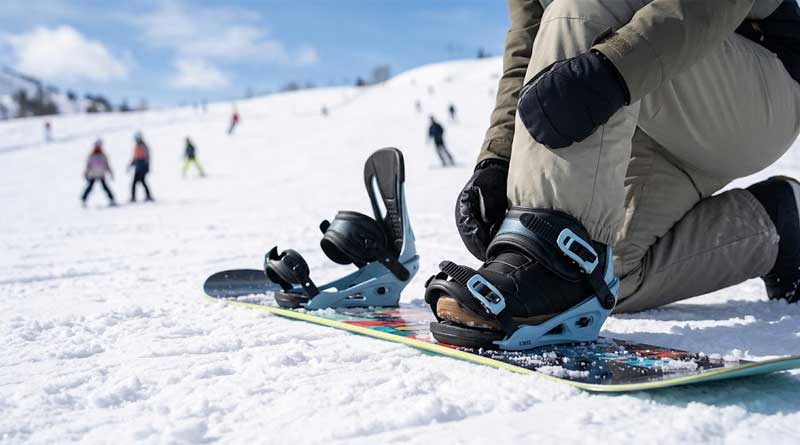
Choosing your first snowboard bindings can feel overwhelming with so many models on the market. Beginner-friendly bindings focus on comfort, easy adjustability, and a forgiving flex that helps you fall less and learn faster. In this guide, we have rounded up eight of the best beginner snowboard bindings from trusted brands including Arbor, Burton, K2, Salomon, and Union. Each option offers reliable mounting compatibility, a soft to medium flex for a forgiving ride, and durable construction built to handle your early days on the mountain. Read on to find the pair that best matches your boots, board, and riding goals.
1. Arbor Spruce
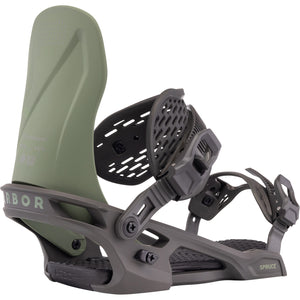
- Mount Pattern: 4×4, Channel, 2×4
- Ability Level: Beginner-Intermediate
- Flex Rating: Medium
- Warranty: 3 Years, lifetime on baseplate
The Arbor Spruce is a great pick for beginners who want a binding that will grow with them. Its medium flex offers a bit more support than the softest options on this list, giving new riders confidence when carving without feeling too stiff or unforgiving during those early falls and turns on the mountain.
The universal baseplate works with nearly every mounting system on the market, so you will not run into compatibility issues when pairing it with a new board. Backed by a generous baseplate warranty, the Spruce is built to handle years of progression from your very first runs.
Pros:
- Balanced medium flex suits progressing riders
- Compatible with 4×4, 2×4, and Channel mounts
- Strong lifetime baseplate warranty
Cons:
- Slightly stiffer than ideal for absolute first-timers
- Fewer color options than competitors
2. Burton Citizen – Women’s
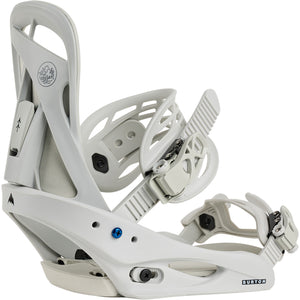
- Mount Pattern: 4×4, 2×4, Channel
- Ability Level: Beginner-Intermediate
- Flex Rating: Soft
- Warranty: 1 Year
Designed specifically for women, the Burton Citizen delivers a soft, forgiving flex that makes it easy to get comfortable on your board from day one. The cushioned baseplate absorbs shock and reduces leg fatigue, so you can spend more time riding and less time recovering between runs.
A single-component highback provides responsive, predictable performance, while the canted design follows the natural angle of your legs for added comfort. The straps wrap securely around a variety of boot shapes, making this a dependable, low-fuss choice for new riders building foundational skills.
Pros:
- Soft flex ideal for first-time riders
- Women’s specific fit and canted highback
- Cushioned baseplate reduces fatigue
Cons:
- Only a 1 year warranty
- Soft flex may feel limiting as skills advance
3. K2 Sonic
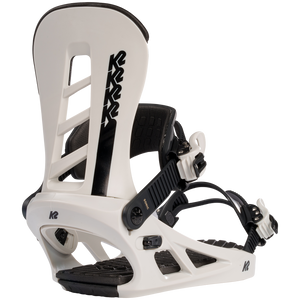
- Mount Pattern: 4×4, 2×4, Channel
- Ability Level: Beginner-Intermediate
- Flex Rating: Soft
- Warranty: 1 Year
The K2 Sonic keeps things simple with a soft, easygoing flex that suits riders who are still developing balance and control. It is a straightforward, no-frills binding that focuses on comfort and ease of use rather than performance extras, making it approachable for anyone new to the sport.
Wide mounting compatibility means the Sonic pairs easily with most beginner boards, and the straps are simple to adjust between runs or when sharing gear. While it lacks some of the premium touches found on pricier bindings, it delivers dependable comfort at a beginner-friendly price point.
Pros:
- Very soft, forgiving flex
- Wide mounting system compatibility
- Budget-friendly price point
Cons:
- Basic feature set compared to rivals
- Only 1 year warranty coverage
4. Salomon Rhythm
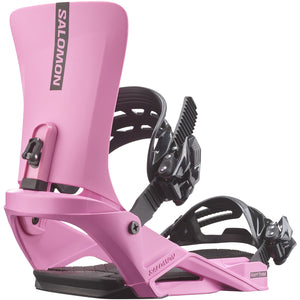
- Mount Pattern: 2×4, 4×4, Channel
- Ability Level: Beginner-Intermediate
- Flex Rating: Soft
- Warranty: 2 Years
The Salomon Rhythm strikes a nice balance between softness and support, giving beginners a forgiving ride while still offering enough structure to help with technique development. It is a versatile option that works well whether you are riding groomers or testing your first turns in softer snow.
Its straps and buckles are easy to operate even with gloves on, which is a small detail that makes a big difference on cold mountain mornings. Backed by a two year warranty, the Rhythm offers solid long-term value for riders who plan to stick with the sport.
Pros:
- Soft, beginner-friendly flex
- Glove-friendly buckles and straps
- Two year warranty for added peace of mind
Cons:
- Fewer premium comfort features than higher-end models
- Limited size range in some markets
5. Union Flite Pro
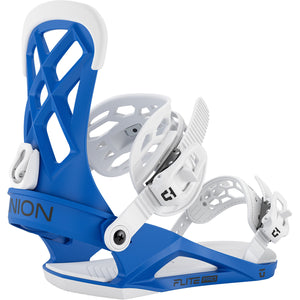
- Mount Pattern: 4×4, 2×4, Burton 3D, Channel
- Ability Level: Beginner-Intermediate
- Flex Rating: Soft
- Warranty: Lifetime on baseplates and heelcups
The Union Flite Pro stands out for its exceptional mounting flexibility, working with nearly every disc system on the market including Burton’s 3D pattern. That makes it an easy pick if you are still deciding on a board or plan to swap setups down the line without buying new hardware.
Its soft flex keeps the ride comfortable and predictable, while the lightweight construction helps beginners maneuver without extra bulk underfoot. Union backs the baseplate and heelcups with a lifetime warranty, giving new riders confidence that this binding can handle plenty of learning-curve mishaps.
Pros:
- Compatible with nearly all mounting systems
- Lifetime warranty on baseplate and heelcup
- Lightweight, comfortable soft flex
Cons:
- Other parts only carry a 1 year warranty
- Soft flex may feel limiting long-term
6. K2 Cassette – Women’s
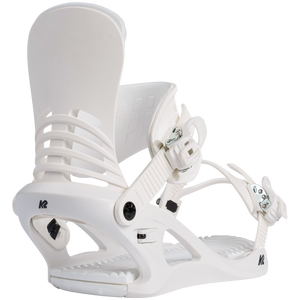
- Mount Pattern: 4×4, 2×4, Channel
- Ability Level: Beginner-Intermediate
- Flex Rating: Soft, rated 3 of 10
- Warranty: 1 Year
Built with a female-specific chassis, the K2 Cassette is canted to match a woman’s natural leg position, which helps reduce fatigue and improve control during long days on the hill. The one-piece baseplate keeps things lightweight while still delivering dependable power transfer for new riders.
Tool-less adjustments make it simple to fine-tune the highback and ankle strap right on the chairlift or at the base of the mountain. Combined with a soft, forgiving flex, the Cassette is a comfortable, beginner-friendly binding that is easy to live with while you build confidence.
Pros:
- Female-specific canted chassis
- 100 percent tool-less adjustments
- Lightweight, forgiving soft flex
Cons:
- Only a 1 year warranty
- Softer flex limits future progression
7. Salomon Pact
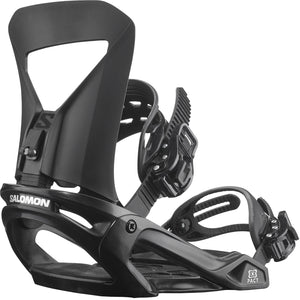
- Mount Pattern: 2×4, 4×4
- Ability Level: Beginner-Intermediate
- Flex Rating: Soft, rated 1.5 of 5
- Warranty: 2 Years
The Salomon Pact is engineered around a durable fiberglass nylon composite baseplate that holds up well against the bumps and scrapes of learning to ride. An adjustable toe ramp and universal disc make setup painless, so beginners can spend more time practicing and less time fussing with hardware.
Vibration-filtering material in the highback cuts down on shock, keeping your legs fresher after a full day of falls and recoveries. Tool-free strap adjustments add convenience, while a two year warranty gives new riders solid coverage as they settle into the sport.
Pros:
- Durable fiberglass nylon baseplate
- Vibration-filtering highback reduces fatigue
- Tool-free strap adjustments
Cons:
- Narrower mount pattern compatibility
- Very soft flex may feel limiting over time
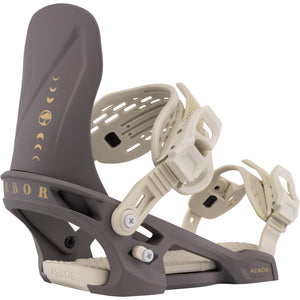
8. Arbor Acacia – Women’s
- Mount Pattern: 4×4, 2×4
- Ability Level: Beginner-Intermediate
- Flex Rating: Medium
- Warranty: Limited lifetime on baseplate
The Arbor Acacia gives women a medium flex option that offers a touch more support than the softest bindings on this list, helping riders build technique without sacrificing comfort. It is a solid choice for beginners who want a binding that can keep pace as their confidence grows.
The straightforward strap design provides a secure, comfortable hold on a range of boot shapes, and the baseplate is backed by a limited lifetime warranty. While the mounting options are slightly narrower than some competitors, the Acacia still covers the most common setups beginners are likely to use.
Pros:
- Medium flex supports skill progression
- Limited lifetime baseplate warranty
- Comfortable, secure strap design
Cons:
- Fewer mounting pattern options than rivals
- Slightly firmer feel than ultra-soft alternatives
How to Choose Snowboard Bindings for Beginners
Picking the right snowboard bindings as a beginner is just as important as choosing the right board or boots. Bindings are the connection point between your body and your board, and the wrong choice can slow your progress, cause discomfort, or even lead to injury. With so many options on the market, it helps to understand the handful of factors that actually matter when you are just starting out. Below, we break down everything you should consider before buying your first pair of bindings.
Understand Flex Rating
Flex rating describes how much a binding bends and gives underfoot, and it is one of the most important specs for beginners to understand. Bindings generally fall into three categories: soft, medium, and stiff.
Soft Flex
Soft flex bindings are the most forgiving option and are widely recommended for true beginners. They absorb impact well, reduce leg fatigue, and make it easier to balance while you are still learning how your body should move on a board. Most of the bindings featured in this guide, including the K2 Sonic and Salomon Pact, fall into this category.
Medium Flex
Medium flex bindings, like the Arbor Spruce and Arbor Acacia, offer a bit more responsiveness and support. They are a good option for beginners who pick up skills quickly and want a binding that will not feel limiting after their first season.
Stiff Flex
Stiff bindings are generally not recommended for beginners. While they offer maximum energy transfer and precision, they are unforgiving on landings and require more refined technique to control comfortably.
Check Mounting Compatibility
Before buying bindings, always confirm they are compatible with your board’s mounting system. Most beginner boards use one of the following patterns.
| Mount Pattern | Description | Common Brands |
|---|---|---|
| 4×4 | Four holes in a square pattern, widely used across most brands | K2, Salomon, Arbor |
| 2×4 | A rectangular hole pattern offering more stance adjustability | Union, K2, Salomon |
| Channel | Burton’s toolless track system, allows sliding stance adjustments | Burton, and Channel-compatible brands |
| Burton 3D | Burton’s proprietary three-hole disc system | Burton, select Union models |
Bindings that support multiple mount patterns, such as the Union Flite Pro, offer the most flexibility if you are not yet sure which board you will end up with.
Consider Binding Style
Nearly all beginner-friendly bindings use a strap-in style, where two straps secure your boot in place. This design is simple, reliable, and easy to adjust, which is why it dominates the beginner category. Step-in and rear-entry bindings exist but are less common and not typically recommended for first-time riders, since they can be trickier to fit correctly and offer less adjustability.
Think About Ability Level Labeling
Most brands label their bindings with an ability level, such as beginner, beginner-intermediate, intermediate, or advanced. Every binding featured in this article falls into the beginner-intermediate range, which means it offers a forgiving ride now while still leaving room to grow as your skills improve. Buying a binding rated purely for beginners can mean you outgrow it quickly, while buying one rated for advanced riders can make learning unnecessarily difficult.
Look at Comfort Features
Comfort plays a bigger role in learning to snowboard than many new riders expect. A few features to pay attention to include the following.
Cushioning
Cushioned baseplates, like Burton’s FullBED system, absorb shock from landings and reduce fatigue over a long day on the mountain.
Highback Design
A canted or ergonomic highback follows the natural angle of your legs, which improves comfort and control, especially on bindings designed specifically for women.
Tool-Free Adjustments
Bindings with tool-free strap and highback adjustments make it easy to fine-tune your fit throughout the day without carrying extra gear.
Factor In Warranty and Durability
Beginners fall a lot, so durability matters. Look for bindings with a solid warranty on the baseplate and heelcup, since these are the components under the most stress. Several bindings in this guide, including the Union Flite Pro and Arbor Spruce, offer lifetime coverage on these key parts, which can save you money if something breaks during your learning phase.
Match Bindings to Your Boots and Board
Always check that your bindings match the flex and size of your boots and board. A soft, forgiving binding paired with a stiff, aggressive board can feel mismatched, while a supportive binding paired with a very soft board may feel overbuilt. As a general rule, beginners should aim for a setup where flex ratings are similar across the board, boots, and bindings.
Set a Realistic Budget
Beginner bindings are generally more affordable than performance-oriented models, but prices still vary based on materials and features. It is worth spending a little more for a durable baseplate and solid warranty rather than choosing the cheapest option available, since a well-built binding will last through multiple seasons of learning and progression.
Final Tips for First-Time Buyers
- Prioritize soft to medium flex over stiff options
- Confirm mounting compatibility with your board before purchasing
- Choose strap-style bindings for the easiest learning curve
- Look for cushioned baseplates and tool-free adjustments
- Check warranty coverage on the baseplate and heelcup
- Match binding flex to your boots and board
Taking the time to consider these factors will help you avoid common beginner mistakes and set you up for a more enjoyable, comfortable learning experience on the mountain. Any of the eight bindings featured in this guide make a strong starting point, so choose the one that best fits your budget, board setup, and personal comfort preferences.