
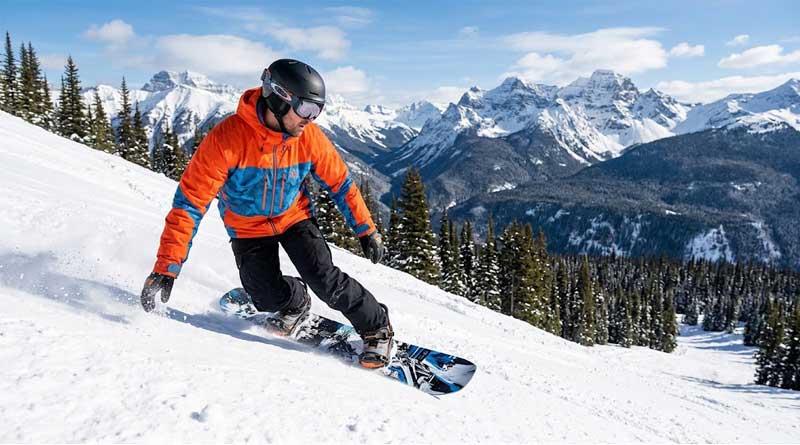
Best Medium Flex Snowboard Bindings of 2026
Choosing the best snowboard bindings can make or break your day on the mountain, whether you’re carving groomers or dropping into fresh powder. The right pair connects your boots to your board, transferring every movement into control and precision. With so many styles, flex ratings, and entry systems available, picking one suited to your ability level and riding style is essential. Below, we review eight standout snowboard bindings, followed by a detailed guide to help you choose the perfect match for your needs.
1. Arbor Spruce
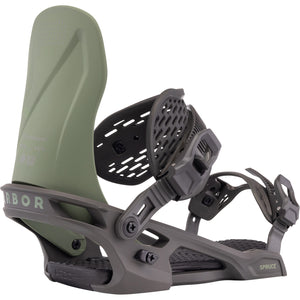
- Binding Mount Pattern: 4×4, Channel, 2×4
- Ability Level: Beginner-Intermediate
- Flex Rating: Medium
- Binding Style: Strap
The Arbor Spruce is a fantastic option for riders progressing from beginner to intermediate levels. Its medium flex offers a balance between comfort and responsiveness, making it forgiving on landings while still allowing for decent board feel. The strap-based design ensures a secure, adjustable fit that molds well to a variety of boot shapes.
What really stands out is the lifetime warranty on the baseplate, showing confidence in long-term durability. Compatibility with multiple mount patterns means it fits almost any board setup without hassle, making it a versatile choice for growing riders.
Pros: Beginner-friendly flex, versatile mounting compatibility, excellent warranty coverage, comfortable strap fit.
Cons: Not ideal for advanced aggressive riding, limited to strap-only entry.
2. Burton Cartel
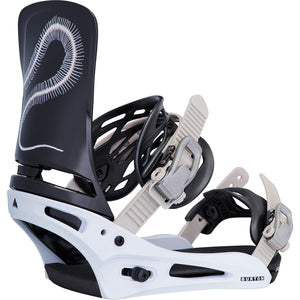
- Binding Mount Pattern: 4×4, Channel, 2×4
- Ability Level: Intermediate-Advanced
- Flex Rating: Medium
- Binding Style: Strap
The Burton Cartel is a long-standing favorite among intermediate to advanced riders who want dependable performance across varied terrain. Its medium flex strikes a balance between playful park laps and stable carving on groomers, giving riders confidence in mixed conditions without feeling too stiff or too soft underfoot.
Built with Burton’s proven strap technology, the Cartel delivers a locked-in feel that holds up through aggressive riding sessions. The universal mounting pattern makes it compatible with nearly any board, simplifying setup for riders switching between multiple decks throughout the season.
Pros: Reliable all-mountain performance, secure strap closure, broad mounting compatibility, durable construction.
Cons: Standard one-year warranty, may feel less plush for beginners.
3. Burton Step On Genesis
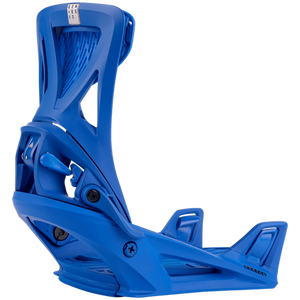
- Binding Style: All Quick Entry, Step-On
- Binding Mount Pattern: Channel, 2×4, 4×4
- Ability Level: Intermediate-Advanced
- Flex Rating: Medium
The Burton Step On Genesis redefines convenience with its quick-entry design, letting riders click in and out without bending down or fumbling with straps. This makes chairlift loading and unloading noticeably faster, a huge advantage during busy resort days or long touring sessions where efficiency matters.
Despite the step-on mechanism, the Genesis doesn’t sacrifice performance. The medium flex delivers responsive energy transfer, and the connection points provide a surprisingly strap-like hold. Riders who commit to the Step On ecosystem, including compatible boots, will appreciate the seamless integration and reduced setup time.
Pros: Fast entry and exit, strong power transfer, versatile mount compatibility, great for lift-heavy days.
Cons: Requires Step On compatible boots, one-year warranty only.
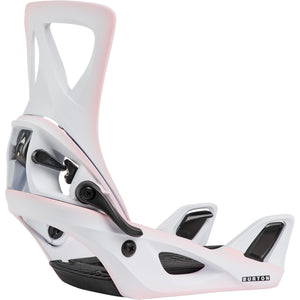
4. Burton Step On – Women’s
- Binding Style: All Quick Entry, Step-On
- Binding Mount Pattern: Channel, 2×4, 4×4
- Ability Level: Intermediate-Advanced
- Flex Rating: Medium
Designed specifically for women, the Burton Step On offers the same fast, effortless entry system as its unisex counterpart but tailored to a narrower foot shape and lighter build. This results in a more precise fit and improved comfort for riders who found standard bindings too bulky or loose.
Performance-wise, the medium flex provides a responsive yet forgiving ride suitable for intermediate to advanced terrain. The step-on connection remains secure through varied snow conditions, and the reduced hardware means quicker adjustments trailside. It’s an excellent pick for women wanting speed and precision without complexity.
Pros: Female-specific fit, quick step-on convenience, secure hold, responsive medium flex.
Cons: Requires compatible Step On boots, limited warranty period.
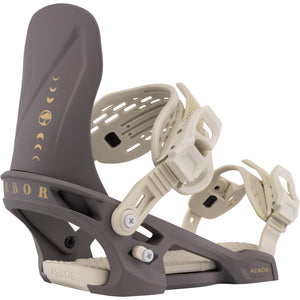
5. Arbor Acacia – Women’s
- Binding Mount Pattern: 4×4, 2×4
- Ability Level: Beginner-Intermediate
- Flex Rating: Medium
- Binding Style: Strap
The Arbor Acacia is built for women progressing from beginner to intermediate levels who want a comfortable, supportive binding for learning new skills. The medium flex offers enough give to absorb impact during falls while still providing structure for turning and edge control as confidence builds on the slopes.
Its strap-based closure system allows for easy micro-adjustments, ensuring a snug fit throughout the day. The baseplate’s limited lifetime warranty adds peace of mind, and the streamlined mounting pattern keeps setup simple for riders using compatible women’s specific boards.
Pros: Comfortable for developing riders, adjustable strap fit, lifetime baseplate warranty, forgiving medium flex.
Cons: Narrower mount compatibility, not suited for advanced aggressive riding.
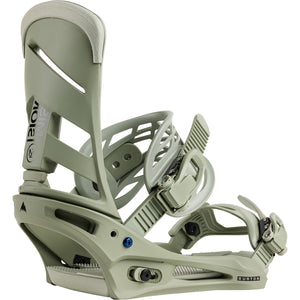
6. Burton Mission
- Binding Mount Pattern: 4×4, Channel, 2×4
- Ability Level: Intermediate-Advanced
- Flex Rating: Medium
- Binding Style: Strap
The Burton Mission has earned its reputation as a workhorse binding suited to intermediate and advanced riders tackling all types of terrain. Its medium flex provides dependable support for carving, freestyle tricks, and everyday all-mountain riding, making it a versatile choice for riders who don’t want to specialize in one style.
The strap design locks the boot firmly in place, minimizing heel lift and maximizing energy transfer to the board. With compatibility across multiple mounting systems, the Mission adapts easily to different board setups, making it a practical option for riders with more than one deck.
Pros: Versatile all-mountain performance, secure strap hold, wide mount compatibility, durable build quality.
Cons: Standard one-year warranty, medium flex may feel limiting for park specialists.
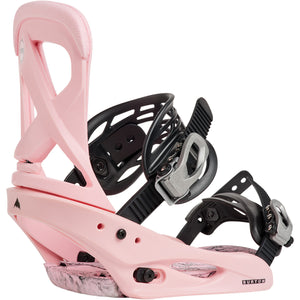
7. Burton Scribe – Women’s
- Binding Mount Pattern: 4×4, 2×4, Channel
- Ability Level: Intermediate-Advanced
- Flex Rating: Medium
- Binding Style: Strap
The Burton Scribe is tailored for women riding at an intermediate to advanced level who want reliable performance across variable snow conditions. The medium flex delivers a responsive yet comfortable ride, allowing riders to confidently tackle groomers, moderate powder, and light park features without feeling overly stiff.
Its strap system offers a secure, customizable fit designed around a woman’s foot shape, reducing pressure points during long days on the mountain. The broad compatibility with multiple mount patterns makes the Scribe easy to pair with a variety of women’s snowboards.
Pros: Female-specific comfort, versatile mount compatibility, responsive medium flex, secure strap closure.
Cons: One-year warranty only, not designed for beginners.
8. Burton Step On
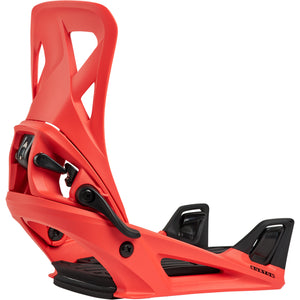
- Binding Style: All Quick Entry, Step-On
- Binding Mount Pattern: Channel, 2×4, 4×4
- Ability Level: Intermediate-Advanced
- Flex Rating: Medium
The Burton Step On is a top choice for intermediate to advanced riders who value speed and simplicity without compromising performance. Clicking in takes seconds, eliminating the need to sit or crouch, which is especially useful on crowded slopes or during quick lift-line transitions throughout the day.
The medium flex ensures solid energy transfer and control, while the step-on connection points maintain a locked-in feel comparable to traditional strap bindings. Riders invested in the Step On boot system will find this binding a seamless, efficient upgrade to their setup.
Pros: Rapid entry and exit, dependable power transfer, broad mount compatibility, ideal for busy resort days.
Cons: Requires Step On specific boots, standard one-year warranty.
How to Choose the Best Snowboard Bindings
Selecting the right snowboard bindings is just as important as choosing the board itself. Bindings are the direct link between your body and your board, translating every shift in weight, every carve, and every landing into control. A poor match can lead to discomfort, reduced performance, and even safety issues, while the right pair enhances confidence and enjoyment on every run. Understanding the key factors that influence binding performance will help you make an informed decision suited to your riding style, skill level, and goals.
Understand Your Ability Level
Ability level is one of the first things to consider when browsing bindings. Manufacturers typically categorize bindings as beginner, beginner-intermediate, intermediate-advanced, or advanced. This classification reflects the flex, response, and support built into the binding.
Beginner and Beginner-Intermediate Riders
New riders benefit from bindings with a softer, more forgiving flex. These bindings absorb impact during falls, provide comfort while learning turns, and reduce fatigue during long days of practice. Options like the Arbor Spruce or Arbor Acacia are excellent examples designed with progressing riders in mind.
Intermediate to Advanced Riders
As skills improve, riders often seek more responsive bindings that offer precise energy transfer and stability at higher speeds. Bindings such as the Burton Cartel, Burton Mission, or Burton Scribe cater to this demand, offering a balance of support and performance for varied terrain.
Consider Flex Rating
Flex rating determines how stiff or soft a binding feels underfoot, directly affecting comfort, control, and versatility.
- Soft flex: Best for beginners and freestyle riders who want forgiveness and playful movement.
- Medium flex: Versatile for all-mountain riding, balancing comfort and responsiveness.
- Stiff flex: Preferred by advanced riders who want maximum energy transfer for speed and precision carving.
Most bindings in this roundup feature a medium flex, making them adaptable to a wide range of riding styles, from casual cruising to more aggressive terrain.
Choose the Right Binding Style
Binding style affects how quickly and comfortably you can get in and out of your setup, which matters more than many riders initially realize.
Strap Bindings
Strap bindings are the traditional choice, offering a highly adjustable and secure fit. Riders sit or crouch to fasten straps over the boot, which allows for fine-tuned tightness and consistent hold throughout the day. This style suits most skill levels and remains the most widely used option.
Step-On Bindings
Step-on bindings allow riders to click directly into the binding without bending down, significantly speeding up the process of loading lifts or adjusting on the go. This style requires compatible boots but offers unmatched convenience, especially for those who frequently deal with long lift lines or technical terrain requiring quick transitions.
Check Mounting Pattern Compatibility
Before purchasing bindings, always confirm compatibility with your snowboard’s mounting system. Mismatched patterns can prevent proper installation or compromise stability.
| Mount Pattern | Description | Common Use |
|---|---|---|
| 4×4 | Four screw holes in a square pattern | Standard on many snowboards |
| 2×4 | Two rows of four holes | Offers stance adjustability |
| Channel | Burton’s proprietary sliding track system | Allows infinite stance adjustment on compatible boards |
Many bindings, including several reviewed above, support multiple mount patterns, giving riders flexibility when switching between boards or upgrading equipment in the future.
Think About Warranty and Durability
Warranty length can be a good indicator of a manufacturer’s confidence in their product’s longevity. Some bindings offer standard one-year coverage, while others, like the Arbor Spruce and Arbor Acacia, include lifetime warranties on the baseplate. Considering how often you ride and the terrain you frequent can help determine how much warranty coverage matters for your investment.
Match Bindings to Riding Style
Your preferred riding style should heavily influence your binding choice.
- All-mountain riders benefit from medium flex, strap bindings with strong mount compatibility.
- Riders prioritizing convenience should consider step-on systems for faster transitions.
- Freestyle and park riders may prefer softer flex for better maneuverability during tricks.
- Riders tackling steep or icy terrain often prefer stiffer, more responsive setups for control.
Consider Gender-Specific Design
Many brands offer women’s specific bindings designed with narrower footbeds and adjusted strap geometry to accommodate typically smaller foot shapes. These designs, such as the Burton Scribe or Burton Step On Women’s, often improve comfort and performance compared to unisex options, particularly for riders with narrower feet.
Set a Budget
Bindings range widely in price depending on technology, materials, and brand reputation. While step-on systems often come at a premium due to added convenience, traditional strap bindings can offer excellent performance at a more accessible price point. Consider your budget alongside how frequently you ride to determine the best value for your investment.
Final Thoughts
Choosing the best snowboard bindings comes down to matching ability level, flex preference, binding style, and mount compatibility with your specific riding needs. Whether you prioritize convenience with step-on systems or the secure customization of strap bindings, understanding these factors ensures a comfortable, responsive connection between you and your board every time you hit the slopes.