Best Budget Ski Backpacks of 2026
Whether you are going for resort skiing or heading for the backcountry, a snow backpack is a necessary piece of gear on the slopes. It helps keeps your essentials safe and secure. With a good pack, you can keep extra layers, water, snacks, and even avalanche equipment. A backpack built specifically for snowsports is going to allow you to pack goggles with your helmet, skis, snowboard, and ice tools. Some backpacks have deployable airbags built in that can be helpful in the event of a slide.
Below is the list of top budget-friendly backpacks for skiing and snowboarding that provide plenty of snow-specific features.
1. DAKINE Heli Pro

- Capacity: 20 L (1,220 cu. in.)
- Material: 100% recycled polyester
- Carry Options: Diagonal/A-frame ski, vertical/horizontal board
- Fit & Weight: Fits 21″ torso, 48″ hips — 2 lb 1.8 oz
The DAKINE Heli Pro is a compact, highly functional snow pack built for backcountry missions and short resort laps alike. It feels intentionally pared down but thoughtfully equipped: a fleece-lined goggle pocket that actually protects lenses, a shovel pocket with sleeves for tidy tool storage, and a sternum rescue whistle that speaks to the pack’s safety-first design. The top access main compartment is simple to pack and reach, and the quick-stash pocket keeps a phone or snacks handy. When you want to travel light for a big objective or add a midlayer for a quick mission, the 20 liters hit a sweet spot.
Carry options are versatile — diagonal or A-frame ski carry plus vertical and horizontal board configurations — making the pack flexible for different trips. The mesh-padded, quick-dry back panel and 38 mm webbing belt keep the load stable and comfortable. At just over two pounds, it’s light enough not to slow you, yet durable thanks to recycled polyester. If you need a small, reliable snow pack with smart organization and eco-conscious materials, the Heli Pro is an excellent, no-nonsense choice.
Pros: Lightweight and well organized; fleece goggle pocket; multiple carry options; eco material.
Cons: Limited capacity for multi-day missions; no raincover; hydration reservoir not included.
2. OutdoorMaster Snow Pack

- Material: Environmentally friendly recycled, water-resistant fabric
- Hydration: 2 L bladder compatible (not included)
- Attachment: 6 silicone loops + multiple ski/board straps
- Carry Comfort: 3D breathable back panel with chest strap & waist belt
The OutdoorMaster Snow Pack offers a surprisingly full feature set for a value-oriented snow pack. Its recycled, water-resistant outer fabric and included raincover tucked in the bottom pocket help keep gear dry in variable winter weather. Organization is practical: a velvet-lined top pocket for goggles or phone, a roomy main compartment for layers and first-aid, and two large mesh side pockets for bottles. The protected zipper pocket for the hydration tube and the clean routing show attention to everyday usability on the hill.
Where this pack stands out is in attachment versatility and comfort: multiple external straps and silicone loops let you lash skis, poles, ropes, or accessories in several orientations, and the 3D breathable back panel with adjustable belt and chest strap reduces fatigue on long approaches. It’s not a boutique backcountry specialist, but for riders and skiers who want a durable, well-organized pack at an affordable price, OutdoorMaster delivers strong value and sensible features.
Pros: Good carrying comfort; lots of attachment options; raincover included; hydration-ready.
Cons: Hydration bladder not included; lower-end fit/finish than premium brands.
See the OutdoorMaster Snow Pack
3. The North Face Slackpack 2.0

- Capacity: 20 L (1,220 cu. in.)
- Materials: 600D & 1200D polyester with non-PFC DWR
- Access: Back-panel access + separate avalanche-tool pocket
- Fit & Weight: Fits 18.7″ torso, 22.8–50″ hips — 2 lb 1.2 oz
The North Face Slackpack 2.0 is a feature-rich snow pack that balances on-mountain performance with rugged durability. Designed with athlete input, it offers a roomy main compartment accessed via the back panel and a dedicated, secure avalanche-tool pocket with internal organizing sleeves for probe and shovel. The patented glove stash on the shoulder strap keeps gloves or a hat handy and is a thoughtful touch when you’re changing transitions. Multiple ski- and board-carry options are available, and the front snowboard carry stows away cleanly when not in use.
Materials and build quality feel robust — reinforced abrasion zones, a hard-wearing shell, and a thoughtful internal pocket with key hook for secure storage. The slim profile keeps freedom of movement while touring or charging through tight trees. Hydration compatibility and a fleece-lined goggle pocket round out a pack that’s equally at home on resort runs and local backcountry objectives. If you want a dependable, well-organized 20-liter pack from a trusted brand, the Slackpack 2.0 is hard to beat.
Pros: Robust materials and reinforced zones; secure avalanche-tool storage; athlete-informed design; sleek profile.
Cons: No raincover included; slightly heavier than minimalist options.
View Men’s at REI View Women’s at REI
4. Osprey Glade
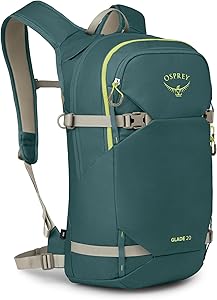
- Hydration: Includes 2.5L Hydraulics reservoir with insulated harness
- Avalanche Ready: Dedicated avalanche safety gear compartment
- Carry Options: A-frame, diagonal ski, vertical snowboard/snowshoe carry
- Durability & Fit: NanoTough fabric; stable dynamic harness — 2.31 lb
The Osprey Glade is clearly aimed at winter athletes who want integrated hydration and fast access to safety gear. Including a 2.5L reservoir and an insulated harness with THERMOLITE lining removes a major worry about frozen tubes on chilly ascents. The avalanche safety compartment is well thought out for organized shovel and probe storage, which saves precious seconds in an emergency. The harness and dynamic fit make it comfortable and stable whether you’re skinning, biking, or bootpacking.
Built from weather-resistant NanoTough fabric, the Glade stands up to abrasion from edges and regular winter abuse. Multiple carry configurations let you adapt the pack to your preferred setup, and the engineered fit supports movement without bouncing. It’s heavier than some ultralight race packs, but for day trips where hydration, safety access, and durability matter, the Glade is an excellent, confidence-inspiring choice.
Pros: Reservoir included and insulated; dedicated avalanche compartment; durable fabric; stable harness.
Cons: Slightly heavier than minimalist racing packs; price may be higher than basic models.
5. Unigear Ski Backpack
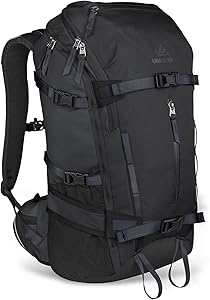
- Capacity: 30 L; dimensions 22.05 x 11.81 x 6.89 in
- Material: 900D polyester shell with PU coating; 500D PVC bottom
- Hydration & Protection: 3 L bladder compatible; velvet-lined goggle pocket
- Carry & Comfort: S-shaped straps, PE foam inverted Y back panel, hip belt
The Unigear Ski Backpack is a roomy 30-liter option for longer day tours and heavier loads. Its organized internal layout accommodates a 15″ laptop, a hydration sleeve for a 3L bladder, and a velvet-lined goggle pocket for lens protection. Build materials lean toward durability: thicker 900D panels and a reinforced bottom give real confidence when tossing the pack in a trunk or on wet snow. The reflective strip and integrated whistle show practical safety thinking for low-light travel.
Comfort-oriented features like S-shaped shoulder straps, an air-permeable PE foam back panel, and a supportive hip belt make carrying heavier setups easier. Multiple carry options and robust straps allow vertical snowboard carry or A-frame ski carry, and dual ice-axe loops expand utility for mountaineering. It’s a solid, value-driven choice for day tours and resort-to-backcountry missions where space and durability top the priority list.
Pros: Large capacity and strong materials; hydration-ready; thoughtful ergonomics; good organization.
Cons: Heavier and bulkier than 20L packs; styling and fit less refined than premium brands.
6. Hikenture Ski Boot Bag Backpack

- Capacity: 50 L — fits boots up to size 12.5 (30.5)
- Material: Ultra-durable 1050D nylon with reinforced stitching
- Drain & Layout: Snow drainage grommets + three main compartments
- Comfort: Thick padded back panel, padded shoulder straps, chest strap
The Hikenture Ski Boot Bag Backpack is a generous, travel-focused gear hauler designed to carry boots, helmet, outer layers, and accessories in one reliable package. At 50 liters it’s closer to a true gear duffel in pack form — three large compartments plus smaller zip pockets keep equipment separated so boots won’t scuff goggles or electronics. The drain grommets and reinforced bottom feet are practical details that help when boots arrive wet and snowy from the slopes.
Comfort features — thick padded back panel, soft shoulder straps, and a reinforced handle — make lugging heavy loads easier on the drive to and from the mountain. An included standing mat and oversized zipper pulls designed for gloved hands are friendly, considered touches. If you want a single bag that can carry a full setup without fuss, Hikenture offers durability and organization at a sensible price point.
Pros: Huge capacity and organized compartments; durable 1050D nylon; drain holes and standing mat; glove-friendly zippers.
Cons: Too large for minimalist day users; bulk and weight when empty.
See the Hikenture Ski Boot Bag Backpack
7. MERALIAN Ski Boot Bag
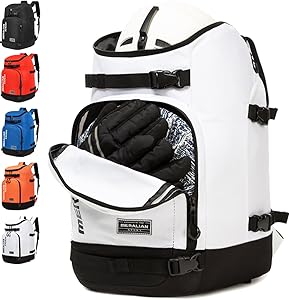
- Capacity: 50 L — dimensions 20 x 11 x 12 in; fits boots to size 13
- Material: Waterproof 600D nylon with double stitching
- Carry Options: Two handles, adjustable shoulder straps, chest strap
- Safety & Extras: Reflective strip and satisfaction guarantee
The MERALIAN Ski Boot Bag is a travel-ready backpack built around a roomy boot compartment, a top helmet pocket, and a front pocket for accessories. The 50-liter volume handles a full personal kit — boots, helmet, gloves, layers — while keeping items separated to prevent scuffs and damp transfer. Durable 600D nylon and double-stitched seams add lasting reliability, and the included reflective strip improves visibility for early-morning departures or late returns.
Carrying options are flexible: two grab handles for quick moves and adjustable shoulder straps plus a chest strap when you prefer hands-free travel. The design is straightforward and practical, aimed squarely at skiers who need a single, reliable bag for travel and storage rather than a technical on-mountain pack. MERALIAN pairs sensible construction with an approachable price and a customer-friendly guarantee.
Pros: Spacious and well organized; durable construction; multiple carry options; reflective safety strip.
Cons: Less technical for backcountry use; no drain grommets noted.
How to Choose Budget Ski Backpacks
When heading to the slopes or venturing into the backcountry, a ski backpack is more than just a storage option — it’s your mobile gear hub. But you don’t need to spend a fortune to get one that performs well. Affordable ski backpacks today offer excellent functionality, comfort, and durability without the premium price tag. The key is knowing what to look for so you can find the best value for your money.
Understanding Your Needs
Before diving into specifications or features, think about how and where you’ll be skiing. Not every skier needs a technical avalanche-ready pack. For resort skiing or short day trips, a simple 15–25-liter backpack will usually suffice, giving you enough space for water, snacks, an extra layer, and essentials like goggles and gloves. If you plan on doing backcountry or sidecountry missions, you’ll need additional storage for safety gear and tools, which may push you toward a slightly larger and more technical pack.
Resort Skiers
Resort skiers typically ride lifts rather than hiking uphill, so they can prioritize comfort, ease of access, and a compact design. Look for padded shoulder straps, a sternum strap for stability, and a few well-placed pockets for organization. A hydration sleeve and a fleece-lined pocket for goggles or sunglasses are also practical features that won’t significantly increase cost.
Backcountry and Touring Skiers
Backcountry or touring skiers need a pack with more functionality. That means dedicated compartments for avalanche tools, attachment straps for skis or a snowboard, and a supportive hip belt for heavier loads. Even on a budget, some packs offer A-frame or diagonal ski carry options. Pay close attention to how the pack distributes weight — good ergonomics matter more when you’re climbing or skinning uphill for hours.
Capacity: Choosing the Right Size
Cheap ski backpacks usually range from 15 to 35 liters in capacity. The right size depends entirely on your skiing style and the amount of gear you plan to carry.
- 15–20 liters: Ideal for resort days, quick tours, or half-day outings. Lightweight and compact.
- 20–30 liters: Great for day tours, providing space for layers, food, water, and safety tools.
- 30+ liters: Suited for long tours or travel when you need to carry boots, helmets, and more equipment.
Keep in mind that a larger pack isn’t always better. An oversized backpack can feel cumbersome on lifts and during descents. Choose the smallest one that comfortably fits your essentials.
Key Features to Look For
Even when shopping on a budget, you can find ski backpacks with impressive functionality. Prioritize features that genuinely improve your on-snow experience and ignore unnecessary extras that inflate cost.
Ski and Snowboard Carry Options
For backcountry and freeride skiers, ski or snowboard carry systems are essential. Most packs under $100 include diagonal or A-frame ski carry, while some offer vertical snowboard carry. Check for reinforced straps and buckles, as cheaper materials can fail under load or in freezing conditions.
Hydration Compatibility
Hydration sleeves are standard on many cheaper ski packs, but not all include a reservoir. If staying hydrated is a priority, ensure the pack accommodates a bladder of at least 2 liters and has an insulated hose port to prevent freezing. Some affordable models, like those from Osprey or OutdoorMaster, include insulation on the shoulder straps for this reason.
Pockets and Organization
Efficient pocket layout makes a big difference on the slopes. A top fleece-lined goggle pocket, an internal mesh sleeve, and an external quick-stash pocket for gloves or snacks are helpful features. Avalanche gear compartments with sleeves for a shovel and probe are ideal if you’re venturing off-piste. If you mostly ski inbounds, a simpler design will do just fine.
Fit and Comfort
Fit is crucial, even for the cheapest backpack. A poorly fitting backpack can throw off your balance and fatigue your shoulders. Look for adjustable sternum straps, a padded hip belt, and ergonomic shoulder straps. Many affordable packs now feature ventilated or mesh-padded back panels that help reduce sweat buildup and improve comfort throughout the day.
Material and Durability
Budget doesn’t have to mean flimsy. Many manufacturers now use recycled polyester or durable nylon with a waterproof coating. Look for packs made from at least 600D polyester or nylon fabric — this level of thickness handles scrapes, ski edges, and snow exposure well. Reinforced bottoms or PVC panels also increase longevity, particularly when setting the pack down in wet snow.
Weight and Mobility
A good ski backpack should strike a balance between durability and weight. Lightweight designs are easier to carry and less tiring on long days, but very thin fabrics may tear faster. A reasonable target for budget daypacks is around 2 to 2.5 pounds. Frameless designs save weight and are ideal for resort skiing, while semi-rigid back panels provide more structure for carrying skis or heavy safety tools.
Weather Resistance
Skiing conditions are unpredictable, and your backpack must handle snow and moisture. Most inexpensive ski packs are water-resistant rather than fully waterproof, which is sufficient for most users. However, some include a rain cover or a water-repellent coating (DWR) for extra protection. Always check that the zippers are robust and shielded by flaps to keep snow out of the main compartment.
Safety Considerations
While premium avalanche packs feature built-in airbags, budget options focus on smart safety design instead. Look for reflective elements, a rescue whistle integrated into the sternum strap, and easy access to avalanche tools if you ski off-piste. These small details can make a meaningful difference when visibility is poor or in emergencies.
Brands That Offer Great Budget Ski Backpacks
Several brands have earned a reputation for delivering excellent performance at lower price points. DAKINE’s Heli Pro line remains a standout for resort and short backcountry use, offering quality materials and functional organization around the $100 range. OutdoorMaster’s Snow Pack is another great value option, combining recycled materials, hydration compatibility, and plenty of straps for versatile carry. Osprey’s Glade series, while slightly pricier, often includes an insulated reservoir, providing long-term value for those who ski regularly.
Other brands like Unigear, MERALIAN, and Hikenture focus on larger, travel-oriented boot bags and multi-compartment ski backpacks that cost less than half of high-end models yet perform reliably for weekend trips and resort travel.
Tips for Getting the Most Value
Check Seasonal Sales
Many outdoor retailers discount ski gear at the end of the winter season. Shopping in the spring or summer can save you 30–50% on last year’s models, with only minor design changes from new releases.
Prioritize Function Over Brand Name
Expensive doesn’t always mean better. In many cases, mid-tier and budget brands use similar materials but cut costs by skipping premium logos or less essential extras. Focus on fit, comfort, and the core features you’ll actually use.
Consider Multi-Use Designs
Some ski packs double as hiking or biking backpacks in the off-season. Features like removable hip belts, hydration sleeves, and laptop compartments make them more versatile, giving you value year-round.
Inspect Construction Quality
When buying budget gear, inspect stitching, zippers, and strap reinforcements carefully. Even inexpensive packs can last several seasons if well-made. Look for double stitching in high-stress areas and metal or high-quality plastic buckles.
Final Thoughts
Choosing a budget ski backpack doesn’t mean compromising on performance or comfort. The right pack depends on your skiing style, how much gear you carry, and the terrain you explore. Resort skiers can focus on light, simple models with good padding and easy access, while backcountry enthusiasts should prioritize carry systems and avalanche tool organization. Look for sturdy materials, practical features, and an ergonomic fit — these elements matter more than luxury branding or high-end add-ons.