Best Downhill Ski Jackets of 2026
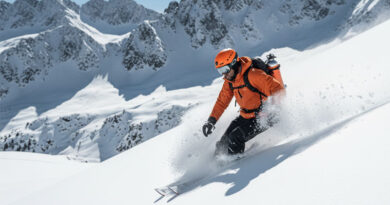
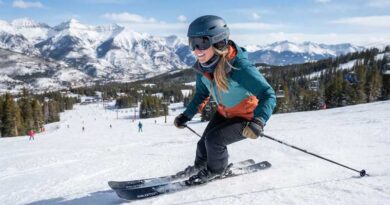
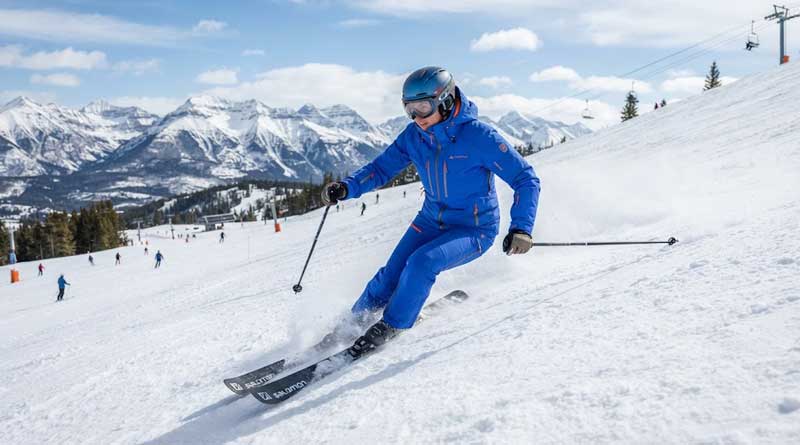
Hitting the slopes is all about the thrill of the ride, but a freezing, wet skier is a miserable one. That’s why your jacket is the most important piece of gear you own. The best downhill ski jackets are built to block wind, repel snow, and keep you warm without making you sweat. They offer smart features like powder skirts and plenty of pockets. This article will help you find the perfect shell to match your style, budget, and the mountain conditions you love.
1. REI Co-op Powderbound Insulated

- Best Use: Downhill skiing, snowboarding, snowsports
- Waterproofing: Peak 2‑layer waterproof/breathable laminate
- Insulation: 80g polyester (body) / 60g polyester (sleeves)
- Back Length: 33.75 in (thigh‑length) · Weight: 1 lb 14.3 oz
The Powderbound jacket delivers serious weather protection without weighing you down. The 2‑layer Peak waterproof laminate keeps snow and sleet out, while the 80g synthetic insulation in the body and 60g in the sleeves traps heat effectively. Pit zips offer quick venting when you’re working hard, and the adjustable hood and powder skirt seal out the elements. With a thigh‑length cut and bluesign‑approved nylon fabric, it’s a reliable choice for resort days and backcountry adventures alike.
Mobility is excellent thanks to the articulated design, and the fabric stays quiet even in cold temperatures. The fit is generous enough for light layering but not bulky. While the jacket is warm and protective, the insulation could be slightly more breathable during high‑output activities. Still, for the price and performance, it’s a standout piece that handles mixed conditions with confidence.
- Pros: Solid waterproofing, good mobility, warm for its weight, eco‑friendly bluesign fabric
- Cons: Insulation could be more breathable, no RECCO reflector
View Men’s at REI View Women’s at REI
2. TWGN Men’s Ski Jacket

- Waterproof: Breathable fabric with waterproof zippers
- Insulation: Lightweight warm cotton fill
- Shell: Polymer blending material, anti‑scratch & wear‑resistant
- Pockets: 2 side zip, 1 chest press‑seal, 1 inner zip
This affordable ski jacket packs a surprising amount of performance for the price. The waterproof breathable shell and fully taped zippers keep moisture out, while the lightweight cotton fill traps body heat effectively without excess bulk. The high‑density fabric blocks wind well, and the adjustable, detachable hood lets you adapt to changing weather. The anti‑scratch material adds durability when navigating rocky trails or dense trees, making it a great value for casual skiers.
Fit is true to size with a standard cut, and the adjustable cuffs help seal warmth in. While the insulation is adequate for mild to moderate cold, it may not suffice in extreme low temperatures. The pocket layout is practical, though the chest pocket could be deeper. Overall, this jacket offers solid protection and comfort at a budget‑friendly price, ideal for recreational snowsports.
- Pros: Excellent value, waterproof zippers, scratch‑resistant shell, true‑to‑size fit
- Cons: Not for extreme cold, chest pocket could be larger
3. MOERDENG Women’s Ski Jacket

- Waterproof: Professional coated fabric, windproof & quick‑dry
- Insulation: Fluff lining for heat retention
- Fit: Relaxed‑fit with adjustable cuffs
- Multipurpose: Skiing, snowboarding, winter sports
The MOERDENG jacket is a versatile choice for women who want reliable weather protection without breaking the bank. The waterproof coated shell and windproof inner soft shell keep you dry and comfortable in rain, snow, and wind. The fluffy lining and durable fabric provide excellent heat retention, while the quick‑dry material ensures you stay fresh after exertion. Adjustable cuffs help seal warmth in, and the relaxed fit allows easy layering.
This jacket performs admirably on the slopes, handling wet snow and gusty conditions with ease. The standard US sizing is accurate, and the design is stylish enough for off‑hill wear. However, the insulation is not as lofty as premium options, and the hood could be more adjustable. For budget‑conscious adventurers, it’s a dependable, warm, and practical shell that covers all the essentials.
- Pros: Great value, warm fluff lining, quick‑dry fabric, true US sizing
- Cons: Hood adjustment limited, insulation less lofty than premium jackets
See the MOERDENG Women’s Ski Jacket
4. Helly Hansen Alpha 4.0 Insulated
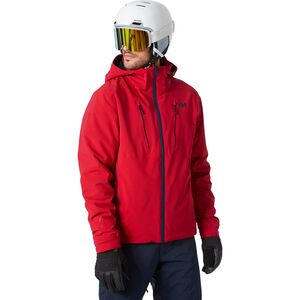
- Waterproof: Helly Tech Professional (20,000mm), fully sealed seams
- Insulation: PrimaLoft Black Eco (100% recycled polyester)
- Venting: H2Flow system underarm
- Weight: 2 lb 8.6 oz · RECCO reflector
The Alpha 4.0 is a serious contender for skiers who demand professional‑grade performance. The Helly Tech Professional 2‑layer fabric with 20,000mm waterproof rating and fully sealed seams laughs at wet snow and rain. PrimaLoft Black Eco insulation delivers reliable warmth even when damp, while the H2Flow underarm vents let you dial in temperature during strenuous runs. The removable, adjustable hood and powder skirt add versatility, and the LIFE POCKET with Aerogel keeps your phone battery alive in the cold.
Fit is regular and comfortable, with a hip‑length cut that doesn’t restrict movement. The jacket feels premium, with thoughtful details like a ski pass pocket and RECCO reflector for safety. On the downside, it’s slightly heavier than some shells, and the price reflects its high quality. For serious riders who need top‑tier waterproofing and eco‑friendly insulation, this jacket is a standout choice.
- Pros: Excellent waterproofing, eco‑friendly insulation, RECCO, great venting
- Cons: Premium price, heavier than some alternatives
View at REI View at Helly Hansen
5. Flylow Gear Malone
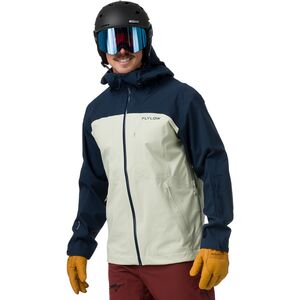
- Waterproof/Breathable: 20,000mm / 20,000g/m²
- Construction: 3‑layer stretch softshell
- Powder Skirt: Removable
- Weight: 1 lb 8 oz
The Flylow Malone is built for skiers who split time between resort laps and backcountry tours. The 3‑layer stretch fabric with 20K/20K waterproofing and breathability sheds snow while releasing sweat, keeping you comfortable during skinning and descents. The fully sealed seams and helmet‑compatible hood add protection, while the removable powder skirt lets you adapt to conditions. With two internal pockets and a sleeve pass pocket, organization is a breeze.
The regular fit and hip length provide good coverage without bulk, and the stretch fabric allows unrestricted movement. It’s impressively light at just 1 lb 8 oz, making it a great touring companion. The only drawbacks are the lack of insulation – it’s a pure shell – so you’ll need to layer properly in colder weather. For versatile riders who want a durable, breathable shell, the Malone is an excellent choice.
- Pros: Exceptional breathability, stretch fabric, lightweight, removable powder skirt
- Cons: No insulation (needs layering), limited pocket count
6. Helly Hansen Alpha LifaLoft
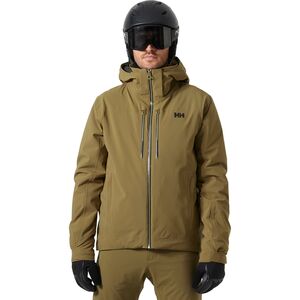
- Construction: 3‑layer rugged shell, fully sealed seams
- Insulation: LifaLoft (synthetic, ultra‑light)
- Venting: H2Flow underarm vents
- Weight: 2 lb 10 oz · RECCO reflector
The Alpha LifaLoft is Helly Hansen’s answer to riders who refuse to compromise on warmth or weight. The 3‑layer shell is tough yet flexible, shedding icy winds and powder spray with ease. LifaLoft insulation provides impressive warmth for its weight, and the articulated sleeves ensure full freedom of movement. The detachable, helmet‑compatible hood and underarm H2Flow vents let you fine‑tune your microclimate, while the Lifepocket+ with Aerogel protects your phone from the cold.
The regular fit and 30‑inch center back length offer solid coverage without feeling baggy. The jacket is notably light for its insulation level, making it a great travel companion. However, the price is steep, and the pocket layout is minimal – only one pass pocket, one Lifepocket, and one chest pocket. For skiers who prioritize warmth, weather protection, and low weight, this jacket delivers in spades.
- Pros: Excellent warmth‑to‑weight, rugged 3‑layer shell, great venting, RECCO
- Cons: Expensive, limited pocket options
View at Backcountry View at Helly Hansen
7. Helly Hansen Alphelia LIFALOFT – Women’s

- Waterproofing: HELLY TECH Performance (waterproof/breathable)
- Insulation: 70% polypropylene / 30% polyester synthetic
- Features: Thumbholes, powder skirt, RECCO reflector
- Back Length: 26 in (hip‑length) · Weight: 1 lb 11.4 oz
The Alphelia LIFALOFT is a lightweight powerhouse for women who demand both warmth and breathability. The HELLY TECH Performance fabric repels snow and rain effectively, while the synthetic insulation (70% polypropylene/30% polyester) offers excellent heat retention without bulk. The hip‑length cut and thumbholes keep cold air out, and the adjustable hood and powder skirt seal the elements. At just 1 lb 11.4 oz, it’s remarkably packable for travel.
The jacket’s ventilation is superb, thanks to strategic breathability, so you stay comfortable during high‑effort runs. The RECCO reflector adds a safety layer, and the fit is flattering yet functional. The only minor drawbacks are that the insulation could be slightly warmer for extreme cold, and the pocket count is average. Overall, this jacket is a top choice for active women seeking a lightweight, weather‑ready shell with premium features.
- Pros: Lightweight, good breathability, RECCO, thumbholes and powder skirt
- Cons: Not for extreme cold, average pocket storage
View at REI View at Helly Hansen
8. REI Co-op First Chair GTX

- Waterproofing: 2‑layer GORE‑TEX ePE laminate
- Lining: Recycled polyester taffeta (bluesign approved)
- Venting: Pit zips · 2‑way zipper
- Back Length: 32 in (thigh‑length) · Weight: 1 lb 10.5 oz
The First Chair GTX brings GORE‑TEX reliability to an affordable price point. The 2‑layer GORE‑TEX ePE laminate offers bombproof waterproofing and breathability, while the recycled polyester shell and lining are bluesign approved for eco‑conscious skiers. The thigh‑length cut and 2‑way zipper provide extra coverage and convenience, especially when sitting on lifts. Pit zips allow quick heat dump during strenuous runs, and the powder skirt keeps snow out.
The fit is roomy enough for layering, making it a versatile shell for various conditions. The hood is adjustable and helmet‑compatible, and the pockets are well‑placed. At 1 lb 10.5 oz, it’s light for a GORE‑TEX jacket. However, it lacks insulation, so you’ll need to layer properly in cold weather, and the fabric can be a bit crinkly. For the price, it’s an outstanding shell that delivers premium performance.
- Pros: GORE‑TEX waterproofing, eco‑friendly materials, lightweight, 2‑way zipper
- Cons: Shell only (no insulation), fabric slightly crinkly
View Men’s at REI View Women’s at REI
9. Patagonia Stormstride
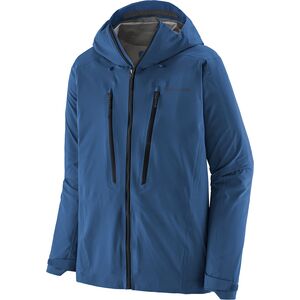
- Fit: Slim · Hip‑length
- Hood: Fixed, helmet‑compatible, laminated brim
- Venting: Underarm zippers
- Weight: 1 lb 4 oz
The Stormstride is Patagonia’s answer to fast‑and‑light backcountry missions. The slim fit and hip length keep the jacket close to your body, reducing drag and improving mobility. The fixed, helmet‑compatible hood with a laminated brim offers excellent visibility and protection, while underarm zippers provide effective ventilation when you’re working uphill. With two external chest pockets and internal drop‑in pockets, storage is smartly organized.
Weighing just 1 lb 4 oz, it’s one of the lightest shells available, making it ideal for touring and spring skiing. The fabric is durable yet supple, and the low‑bulk powder gasket keeps snow out without adding weight. The main trade‑off is the lack of insulation – it’s a pure shell – and the slim fit may not accommodate heavy layering. For minimalist skiers, this jacket is a superb choice.
- Pros: Ultra‑lightweight, great mobility, helmet‑compatible hood, excellent venting
- Cons: Shell only, slim fit limits layering
10. Flylow Lucy – Women’s
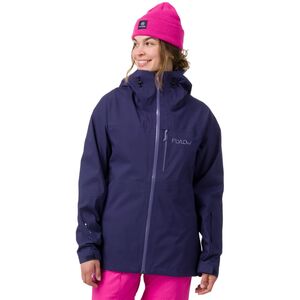
- Construction: 3‑layer laminate, fully sealed seams
- Fit: Regular · Hip‑length
- Powder Skirt: Removable
- Weight: 1 lb 3.5 oz
The Flylow Lucy is a stylish, feature‑rich shell designed for women who demand performance on the hill. The 3‑layer laminate and fully sealed seams offer reliable waterproofing, while the regular fit and hip length provide a flattering silhouette without sacrificing mobility. The removable powder skirt and underarm zips let you adapt to changing weather and activity levels, and the helmet‑compatible hood adds versatility for both resort and backcountry days.
With a center back length of 29.5 inches, the Lucy offers ample coverage, and the pocket layout – two hand, one chest, one sleeve pass, and an internal media pocket – keeps essentials close. At just 1 lb 3.5 oz, it’s impressively light, making it a great choice for touring. The only downside is that it’s a shell, so you’ll need to layer for warmth. Overall, it’s a durable, well‑ventilated jacket that combines style and function.
- Pros: Very lightweight, fully seam‑sealed, removable powder skirt, good pocket layout
- Cons: Shell only, no insulation
How to Choose Downhill Ski Jackets: A Complete Buyer’s Guide
Picking the right downhill ski jacket can feel overwhelming. There are dozens of brands, weird technical terms, and prices that range from “great deal” to “second mortgage.” But the truth is, a good jacket makes or breaks your day on the mountain. Get it right, and you’ll stay warm, dry, and comfortable from first chair to last run. Get it wrong, and you’ll be shivering in the lodge, watching your friends have all the fun.
This guide breaks down everything you need to know in plain English. No jargon, no fluff—just honest advice to help you find a jacket that fits your budget, your local weather, and your skiing style. Let’s start with the single most important decision you’ll make.
Insulation vs. Shell: The Big Choice
Every ski jacket falls into one of two categories: insulated or shell. Your choice here sets the stage for everything else.
Insulated Jackets (Warmth First)
These have built-in padding (usually synthetic or down) that traps body heat. They’re great for very cold climates, skiers who run cold, or anyone who hates layering. Modern insulated jackets are thinner than old puffy coats but still pack serious warmth. The downside? They can be too hot on spring days or during intense exercise.
Shell Jackets (Versatility First)
Shells have no insulation—just a waterproof, windproof outer layer. You add fleece or puffy mid-layers underneath depending on the weather. Shells are lighter, more breathable, and work across all seasons. They’re the top choice for backcountry skiers and resort rippers who like to dial in their warmth exactly. The catch: you have to buy and carry extra layers.
Quick rule of thumb: If you ski mostly in bitter cold (below -10°C / 14°F) and hate fussing with layers, get an insulated jacket. If you ski in variable conditions or like to travel to different mountains, buy a shell.
Waterproofing and Breathability: The Dynamic Duo
These two numbers are printed on almost every jacket, but they’re often misunderstood. Here’s what they actually mean for you.
Waterproof Rating (measured in mm)
- 5,000 – 10,000 mm: Light rain and dry snow. Fine for occasional skiers or spring slush.
- 10,000 – 15,000 mm: Good for most resort days with moderate snowfall.
- 15,000 – 20,000 mm+: Heavy, wet PNW snow or all-day storms. This is the sweet spot for serious skiers.
Breathability Rating (measured in g/m²/24h)
- 5,000 – 10,000 g: Okay for easy cruising, but you might get clammy on harder runs.
- 10,000 – 15,000 g: Good for active resort skiing.
- 15,000 – 20,000 g+: High-output skiing, tree runs, or touring. Sweat escapes fast.
Keep this in mind: A jacket with 20K/20K (waterproof/breathability) is premium. But if you only ski bluebird days, 10K/10K is perfectly fine. Don’t overpay for specs you won’t use.
Fit and Mobility: Ski Like You Mean It
A great jacket can have all the tech in the world, but if it binds your shoulders or rides up when you bend, you’ll hate it. Ski jackets come in three fits.
Regular Fit
Roomier through the chest and arms. Good for layering and casual skiers. Not too baggy, not too tight.
Tailored / Athletic Fit
Slimmer through the torso and sleeves. Looks sharp but leaves less room for thick sweaters. Best for park skiers and those who like a modern silhouette.
Relaxed / Freeride Fit
Boxy and longer. Made for big movements, deep snow, and wearing a backpack. Popular with powder hounds.
Pro tip: Try your jacket on with your thickest mid-layer. Raise your arms above your head like you’re holding ski poles. If the sleeves pull up past your wrists, go up a size.
Critical Features to Look For
Beyond the basics, these little details separate a good jacket from a great one. Don’t ignore them.
Powder Skirt
This is an elastic band inside the waist that clips around your pants. It keeps snow from going up your back when you wipe out. Essential for deep powder days. Look for one that’s removable or snap-button adjustable.
Helmet-Compatible Hood
Your hood should fit over your ski helmet without restricting head movement. Try it on with your helmet. If you can’t look side to side easily, move on.
Pit Zips
Zippers under your armpits that open for instant ventilation. These are lifesavers on warm afternoons or after a strenuous mogul run. The longer the zipper, the more airflow.
Pockets – Lots of Them
- Chest pocket: For your phone or radio.
- Sleeve pass pocket: Hold your lift ticket so scanners can read it without you fumbling.
- Inside mesh pockets: Great for goggles or a snack bar.
- Wrist gaiters: Stretchy fabric inside the cuffs that block snow and wind from going up your arms.
Recco Reflector
A small passive chip sewn into the jacket. Ski patrol can detect it with special gear if you’re buried in an avalanche. It’s not a replacement for a beacon, but it’s a nice safety bonus.
Fabric and Durability
Outer fabrics come in different weights. Here’s a simple breakdown.
| Denier (D) | Durability | Best For |
|---|---|---|
| 30D – 50D | Light, packable, less durable | Backcountry touring, spring skiing |
| 70D – 100D | Tough, abrasion-resistant | Most resort skiers, tree runs |
| 150D+ | Heavy, bombproof | Patrol, extreme terrain, frequent park laps |
Remember: Higher denier doesn’t always mean better—it means heavier. For 80% of skiers, 70D to 100D hits the sweet spot.
Seams and Zippers: The Weak Points
Water seeps in through stitching and zippers. Here’s what to check.
Fully Taped Seams
Every seam inside the jacket has a waterproof strip glued over it. This is non-negotiable for any jacket over $200. If a jacket only has “critically taped” seams (just the shoulders and chest), avoid it for wet climates.
Water-Resistant Zippers
Look for zippers with a “watertight” or “AquaGuard” coating. They don’t need rain flaps, so they look sleeker. But they can be stiff—test them in the store.
Matching Your Jacket to Your Ski Style
Your typical ski day matters more than the spec sheet. Choose based on where and how you ride.
Resort Cruiser
You stick to groomed runs, take coffee breaks, and ski 5–6 hours a day. Look for a relaxed-fit insulated jacket with 10K/10K waterproofing, a powder skirt, and plenty of pocket space. You don’t need ultra-breathable fabrics.
Powder Hound
You chase storms and spend hours in deep snow. Go for a freeride-fit shell with 15K+ waterproofing, a huge hood, and pit zips. Insulation is optional—you’ll layer up underneath.
Backcountry Tourer
You hike uphill and ski down. Lightweight is king. Pick a 3-layer shell with 20K breathability, 50D fabric, and zero insulation. You’ll wear a puffy vest or fleece underneath and shed layers as you sweat.
Park & Pipe
You hit jumps, rails, and boxes. Durability matters most. Get a 100D+ shell or insulated jacket with reinforced shoulders and elbows. Avoid slim fits—you need room to move freely.
Budget vs. Value: How Much to Spend
Ski jackets range from $100 to over $800. Here’s what each price tier realistically offers.
- Under $200: Basic waterproofing (5K–10K), simple insulation, fewer pockets. Good for 1–2 trips per year.
- $200 – $400: Solid 10K–15K fabrics, decent breathability, taped seams, and reliable zippers. This is the “sweet spot” for most skiers.
- $400 – $600: Premium membranes (Gore-Tex or similar), 20K+ specs, lightweight fabrics, and thoughtful design. Worth it if you ski 20+ days a year.
- $600+: Top-tier materials, cutting-edge stretch, eco-friendly construction, and brand prestige. Only for hardcore enthusiasts or those who want the absolute best.
Honest advice: A $350 jacket with 15K waterproofing will serve 90% of skiers perfectly. Spend more only if you ski in extreme weather or value lightweight packability.
Try Before You Buy (or Order Smart)
If you’re ordering online, check the return policy before clicking “buy.” Many brands have free returns, so you can order two sizes and send one back. When you try it on, do these three moves.
- The arm raise: Lift your arms straight up. The hem shouldn’t rise above your belt line.
- The cross-arm hug: Wrap your arms across your chest. You should feel no tugging across the back.
- The zipper test: Zip up all the way. The collar shouldn’t choke your chin, but it should be snug enough to block wind.
Final Checklist Before You Buy
Here’s a quick cheat sheet to take to the store or keep open on your phone.
- Insulated or shell? (pick one based on your climate)
- Waterproof ≥ 10K for most, ≥ 15K for wet/snowy regions
- Breathability ≥ 10K for resort, ≥ 15K for active skiing
- Fully taped seams (non-negotiable)
- Hood fits over your helmet
- Powder skirt (removable is a bonus)
- Pit zips for venting
- At least 3 exterior pockets + 1 internal
- Wrist gaiters to keep snow out
- Enough room to layer without feeling stuffed
Choosing a downhill ski jacket doesn’t have to be a headache. Focus on the fit, the weather you actually ski in, and the features you’ll genuinely use. Ignore marketing hype about “space-age” fabrics if you’re a weekend warrior. And most importantly, pick a jacket that makes you excited to zip it up and head for the lifts. Because when you’re warm, dry, and comfortable, every run feels like the best run of the day.