Best Cross-Country Ski Bindings of 2026
Choosing the right cross-country ski bindings can make a big difference in your comfort and control on the snow. Bindings connect your boots to your skis, so they need to match your skiing style and boot type. Whether you are a beginner or a seasoned skier, the best bindings will keep you stable and safe. In this article, we review the top cross-country ski bindings to help you find the perfect fit for your next adventure.
1. Rottefella NNN BC Auto

- Cross-country Style: Backcountry
- Boot and Binding Compatibility: NNN BC
- Weight (Pair): 15.2 ounces
- Steering Plate Width: 56mm
The Rottefella NNN BC Auto is built for skiers who want backcountry capability without a complicated setup. The automatic step-in closes with a clear audible click, so you always know you are locked in before heading out onto uneven or variable terrain. Releasing is just as simple, requiring only a light push with a ski pole, which is a genuine convenience when your hands are full or you are managing gear in cold conditions.
On snow, the wide 56mm steering plate delivers noticeably better control than narrower touring bindings, helping you hold a line through soft or inconsistent snow. It is a dependable choice for exploring beyond groomed trails.
Pros:
- Simple, reliable automatic step-in with audible confirmation
- Pole-assisted release requires no bending down
- Wide steering plate improves stability in variable snow
Cons:
- Limited to NNN BC compatible boots only
- Heavier than race-oriented binding options
2. Salomon Prolink Race Skate

- Cross-country Style: Skate
- Boot and Binding Compatibility: NNN / TURNAMIC / Prolink
- Weight (Pair): 8.1 ounces
- Lever Design: Minimalist, lightweight
The Salomon Prolink Race Skate binding is designed with one goal in mind, speed. Its low ski-to-binding connection keeps your boot close to the ski surface, translating every push directly into forward momentum. Compatibility with Prolink, NNN, and TURNAMIC boots means racers and dedicated skate skiers have flexibility when choosing footwear without sacrificing performance.
Integrated heel-plate guide ridges add a noticeable improvement in power transfer and overall feel while skating, and the minimalist levers keep things lightweight without complicating entry and exit. Mounted at the optimal position on the ski, this binding lets you focus entirely on technique rather than equipment.
Pros:
- Extremely lightweight at just 8.1 ounces per pair
- Low profile improves power transmission and ski feel
- Wide boot compatibility across three systems
Cons:
- Race-focused design offers less stability off-trail
- Not suited for backcountry or variable snow use
3. Rottefella NNN Basic

- Cross-country Style: Classic
- Boot and Binding Compatibility: NNN / TURNAMIC / Prolink
- Weight (Pair): 7 ounces
- Entry System: Hands-free click-in/click-out
The Rottefella NNN Basic is a straightforward, no-fuss option for skiers who spend most of their time at the groomed track. The hands-free click-in and click-out design means you can lock into your bindings quickly and get moving without fumbling around in the cold, making it especially appealing for recreational classic skiers and beginners alike.
Its wider platform adds meaningful stability underfoot, giving a confident kick-and-glide rhythm even for less experienced skiers still developing their technique. At just 7 ounces per pair, it stays out of the way while still supporting a solid, planted stride on groomed trails.
Pros:
- Very lightweight and easy to use
- Hands-free entry and exit
- Wide platform adds stability for beginners
Cons:
- Designed strictly for classic-only use
- Not intended for off-trail or backcountry skiing
4. Rottefella Auto Touring NNN NIS

- Cross-country Style: Skate and Classic
- Boot and Binding Compatibility: NNN / TURNAMIC / Prolink
- Weight (Pair): 9.6 ounces
- Mounting Requirement: Requires NIS mounting plates
The Rottefella Auto Touring NNN NIS is a smart pick for skiers who want to move between classic and skate technique without owning two separate setups. The auto step-in/out system keeps things easy at the trailhead, and the wider platform supports both stability and control across a range of snow conditions and skiing styles.
Beyond groomed trails, this binding also holds up reasonably well during occasional off-trail excursions, adding versatility that many dedicated classic or skate bindings lack. Keep in mind it requires NIS mounting plates, which are sold separately and necessary before use.
Pros:
- Versatile for both classic and skate technique
- Auto step-in/out simplifies use
- Handles light off-trail skiing well
Cons:
- Requires separately purchased NIS mounting plates
- Heavier than dedicated single-style bindings
5. Rottefella NNN BC Magnum

- Cross-country Style: Backcountry
- Boot and Binding Compatibility: NNN BC
- Weight (Pair): 530 grams
- Steering Plate Width: 67mm contoured
Built with a wide-wing profile borrowed from cross-country racing bindings, the Rottefella NNN BC Magnum is aimed at backcountry skiers who want serious turning power underfoot. The extra-wide, contoured 67mm steering plate increases contact area between the boot sole, binding plate, and ski, which translates into more confident control when navigating turns in ungroomed terrain.
While it is optimized for wider skis, the Magnum remains usable on skis as narrow as 52mm, giving it more flexibility than its race-inspired shape might suggest. It is a strong option for skiers prioritizing downhill control during backcountry tours.
Pros:
- Wide steering plate boosts turning power
- Usable across a range of ski widths
- Strong contact area improves control
Cons:
- Heavier than standard touring bindings
- Only compatible with NNN BC boots
6. Salomon Prolink Auto

- Cross-country Style: Classic
- Boot and Binding Compatibility: NNN / TURNAMIC / Prolink
- Weight (Pair): 9.9 ounces
- Entry System: Automatic levers
The Salomon Prolink Auto takes the stress out of classic skiing by offering an effortless, worry-free entry and exit system. The automatic levers make stepping in and out quick and intuitive, which is especially useful when you are stopping and starting frequently on groomed classic tracks or trying to keep pace with a group.
Its close-to-the-snow platform lets you feel more of what is happening beneath your skis, improving responsiveness during the kick-and-glide motion. Combined with integrated heel-plate guide ridges that maximize power transfer, this binding delivers a smooth, connected feel for classic skiers of most ability levels.
Pros:
- Effortless automatic entry and exit
- Close-to-snow platform enhances feel
- Good power transfer via heel-plate ridges
Cons:
- Classic-only, no skate compatibility
- Not designed for backcountry conditions
7. Rottefella Xplore

- Cross-country Style: Backcountry
- Boot and Binding Compatibility: Xplore
- Weight (Pair): 13.1 ounces
- Ski Width Range: 68 to 100+ mm waist width
The Rottefella Xplore is built for skiers who want to go beyond groomed trails into true backcountry exploration, whether that means touring, tele skiing, or light skimo adventures. The toe-mounted system and hinge point create a natural, efficient stride while climbing, and spring pin technology allows for a simple step-in entry while helping keep snow from clogging the binding.
A wider connection point and increased lateral support add real stability on descents, while 36mm high heel lifters make climbing steep sections noticeably more comfortable. It pairs with XP and Xplore boots and accepts optional accessories like the Hard Flex Plate for extended versatility.
Pros:
- Excellent for touring, climbing, and descending
- Heel lifters improve climbing comfort
- Spring pin design resists snow clogging
Cons:
- Requires specific XP or Xplore boots
- Heavier and more complex than basic touring bindings
How to Choose Cross-Country Ski Bindings
Cross-country skiing, also known as Nordic skiing, is one of the most rewarding winter sports, offering a blend of cardiovascular conditioning, outdoor exploration, and serene winter travel. When assembling your cross-country ski setup, it is easy to focus primarily on choosing the right pair of skis or finding comfortable boots. However, the bindings serve as the critical bridge connecting your body to the snow. Ski bindings transfer your leg power into forward momentum, control edge movement, assist in balance, and determine your overall stability on the trail.
Choosing the correct cross-country ski bindings can seem confusing due to various compatibility standards, mounting configurations, and mechanical options. Selecting incompatible gear can lead to frustration, reduced performance, or equipment that simply does not fit together. This guide breaks down everything you need to know about cross-country ski bindings so you can select the perfect set for your skill level, terrain preference, and gear setup.
Understanding Your Skiing Style
Before purchasing bindings, you must identify the primary style of cross-country skiing you intend to pursue. Nordic skiing is divided into three major categories, and each discipline requires a binding designed specifically for its unique mechanics.
Classic Track Skiing
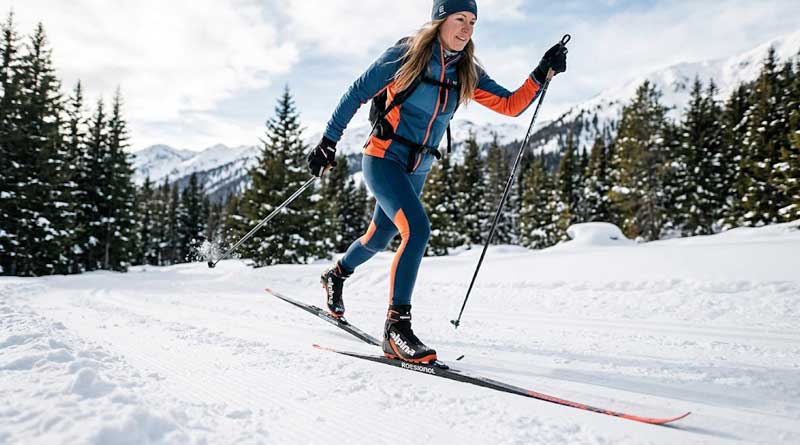
Classic skiing involves a forward striding motion, usually executed within pre-cut tracks on groomed Nordic trails. The motion mimics natural running or walking. Classic bindings feature a flexible rubber bumper—known as a flexor—at the front toe mechanism. This soft flexor permits your heel to lift naturally for a full kick and glide cycle without lifting the tail of the ski off the snow. Classic bindings prioritize smooth motion, weight transfer, and rhythmic striding.
Skate Skiing
Skate skiing takes place on wide, smooth, groomed tracks and uses a side-to-side diagonal pushing movement similar to ice skating or inline skating. Because skate skiing generates significant lateral forces, skate ski bindings require a much stiffer flexor bumper. This stiffer flex keeps the ski pulled tightly against the boot sole during the push-off and recovery phase, granting maximum control, responsiveness, and stability when carving or pushing off the ski edge.
Backcountry Skiing
Backcountry cross-country skiing—often called off-trail or Nordic touring—takes place away from groomed tracks on natural terrain, ungroomed snow, and rolling hills. Backcountry bindings are wider, heavier, and built with reinforced materials to handle the extra stress of untracked snow, metal-edged skis, and steep descents. These bindings provide high torsional rigidity to help steer wider skis through uneven terrain.
Decoding Binding Systems and Boot Compatibility
The single most important technical consideration when buying bindings is ensuring compatibility with your boots. Over the decades, binding manufacturers have introduced several proprietary standards, but modern gear has largely converged onto unified designs.
The Modern Standard: NNN, Turnamic, and Prolink
In modern cross-country skiing, the vast majority of boots and bindings follow a unified sole standard characterized by two parallel ridge lines along the footplate. The three main systems sharing this design are completely cross-compatible:
- NNN (New Nordic Norm): Designed by Rottefella, this is the original two-ridge standard that set the industry baseline.
- Turnamic: Developed by Fischer and Rossignol, Turnamic bindings feature two ridges and are 100% compatible with NNN boot soles.
- Prolink: Developed by Salomon and Atomic, Prolink bindings use the same two-ridge footprint and fit NNN-style boot soles seamlessly.
If you own modern boots labeled NNN, Turnamic, or Prolink, you can pair them with any NNN, Turnamic, or Prolink binding standard without issue.
Legacy System: Salomon Nordic System (SNS)
SNS was developed by Salomon and features a single thick central ridge on the binding plate. SNS exists in two main variations: SNS Profil (uses a single metal pin under the boot toe) and SNS Pilot (uses two metal pins under the boot sole). SNS bindings and boots are NOT compatible with NNN, Turnamic, or Prolink systems. While Salomon discontinued SNS in favor of Prolink, many older or pre-owned boots still use SNS. If you own SNS boots, you must source SNS bindings, or upgrade your boots to the modern standard.
Backcountry Standard: NNN BC
NNN BC (Backcountry) looks visually similar to standard NNN, featuring two guide ridges, but it is wider, thicker, and significantly stronger. The steel bar embedded in the toe of an NNN BC boot is thicker than that of a standard NNN boot. Because of these dimensional differences, standard NNN boots will not lock into NNN BC bindings, and NNN BC boots will not lock into standard NNN bindings.
Traditional Backcountry Standard: 75mm 3-Pin
The 75mm 3-pin system is a traditional design featuring a flat metal bail plate with three small vertical pins. The boot features an extended flexible duckbill toe flange with matching holes. When clamped down, the pins lock into the toe flange. While less common on modern groomed tracks, 75mm 3-pin bindings remain popular among traditional off-trail tourers due to their extreme durability, field-repairability, and downhill stability.
Ski Mounting Plate Options
Cross-country ski bindings attach to skis either via integrated factory plates or by direct screw mounting. Knowing what plate is pre-installed on your ski dictates which binding models will slide on easily.
Integrated Fixation Plate (IFP)
IFP is the factory mounting system found on most modern Fischer and Rossignol skis. Turnamic bindings are designed to slide onto IFP plates without tools or screws. Once installed, the binding can easily be shifted forward or backward along the plate. Sliding the binding forward provides better grip for ascending, while sliding it backward increases glide speed.
Nordic Integrated System (NIS)
NIS is a mounting plate system introduced by Rottefella and found on Madshus skis as well as older Fischer models. Rottefella NNN NIS bindings slide onto the plate using a specialized key tool, allowing tool-free adjustment along the ski to tune grip and glide performance.
Direct Screw-Mounted Bindings
Skis without integrated top plates require bindings that screw directly into the ski core. Prolink bindings and backcountry bindings (such as NNN BC and 75mm 3-Pin) generally use this traditional screw installation method. Drilled skis can accept any brand of screw-in binding, provided correct hole templates and drill bits are used.
Entry and Exit Mechanisms: Manual vs. Automatic
When selecting your bindings, you must also choose how you lock your boot into the binding toe piece.
Automatic Step-In Bindings
Automatic bindings offer convenience. To step in, you line up the boot’s metal toe bar over the binding slot and press down until it clicks into place. To release, you press down on the front push-button using the tip of your ski pole. Automatic bindings are ideal for beginners, casual tourers, and recreational skiers who value quick, tool-free ease of use on groomed tracks.
Manual Bindings
Manual bindings require you to open a lever by hand, place your boot toe bar into the hook, and pull the lever closed to lock it shut. To exit, you lift the lever manually. Although manual bindings require bending over, they provide a positive, locked-in feel. Manual bindings are far less prone to freezing up in wet, heavy, or icy snow conditions, making them the preferred choice for skate skiers, racers, and backcountry adventurers.
Comparison of Cross-Country Binding Systems
| Binding System | Compatible Boot Soles | Primary Skiing Style | Mounting Method | Key Advantage |
|---|---|---|---|---|
| Turnamic | NNN, Turnamic, Prolink | Classic, Skate | IFP Plate | Tool-free position adjustment on snow |
| Rottefella NNN | NNN, Turnamic, Prolink | Classic, Skate | NIS Plate / Screws | Proven design with wide accessory ecosystem |
| Salomon Prolink | NNN, Turnamic, Prolink | Classic, Skate | Direct Screws | Low-profile design for direct snow feel |
| NNN BC | NNN BC only | Backcountry / Off-Trail | Direct Screws | High strength and durability in deep snow |
| 75mm 3-Pin | 75mm 3-Pin Duckbill only | Backcountry / Off-Trail | Direct Screws | Maximum lateral control and field repairability |
| SNS Profil / Pilot | SNS Profil / Pilot only | Classic, Skate (Legacy) | Direct Screws | Historical standard, widely available secondhand |
Steps to Selecting the Right Binding
Follow this step-by-step decision framework to ensure you select the best binding for your needs:
- Step 1: Buy your boots first. Boot fit determines your comfort and warmth on the trail. Select the boot that fits your feet best, then select a binding system that matches your boot sole interface.
- Step 2: Identify your technique. Choose classic bindings with soft flexors for striding, skate bindings with stiff flexors for skate skiing, or heavy-duty backcountry bindings for untracked snow.
- Step 3: Check your ski top sheet. Inspect your skis to see if they feature an IFP plate, NIS plate, or a flat top sheet requiring screw-in mounting. Match the binding mounting style to your ski interface.
- Step 4: Decide on entry style. Choose automatic step-in bindings for casual groomed touring, or manual lever bindings for icy conditions, performance skating, or deep backcountry travel.
Conclusion
Choosing the right cross-country ski bindings boils down to matching three core variables: your skiing style, your boot sole standard, and your ski mounting interface. Modern standards like NNN, Turnamic, and Prolink have streamlined compatibility, making it easier than ever to pair your preferred boots with quality bindings. By understanding flexor stiffness, plate mounting options, and entry mechanisms, you can build a reliable Nordic setup that delivers excellent power transfer, precise control, and endless winter fun.