Best Cross-Country Ski Waxes of 2026
Cross-country skiing is a fun winter sport, but the right wax makes a big difference. The correct wax helps your skis glide smoothly and grip the snow, so you can move faster and easier. With so many options available, choosing can feel confusing. This article reviews the best cross-country ski waxes to help you find the right one for your needs. Whether you are a beginner or an expert, we will guide you to a great choice for your next snowy adventure.
1. Swix Universal Temperature

- Wax Type: Glide
- Wax Form: Rub-on
- Temperature Condition: Universal
- Weight: 180 grams
Swix Universal Temperature wax is a reliable choice for skiers who do not want to worry about checking the forecast before heading out. This hydrocarbon wax is designed to deliver consistent glide in all snow conditions, making it a versatile option for recreational cross-country skiers. The rub-on application is quick and simple, requiring only friction and polishing to get a functional layer on the base. For those seeking better performance, the wax can also be ironed in, scraped, and brushed to create a smooth finish that enhances glide.
The 180-gram size offers good value and will last through many outings. Because it is a universal hydrocarbon formula, it may not match the speed of condition-specific racing waxes, but it makes up for that with convenience and ease of use. It is an excellent staple for a wax kit when simplicity and broad functionality matter more than podium-level speed. The wax works well on natural and artificial snow alike, giving skiers a dependable option for everyday training and touring.
- Pros: Works in all snow conditions; easy rub-on application; can be ironed for better glide.
- Cons: Not as fast as specialized race waxes; hydrocarbon formula wears off faster.
2. ZUMWax Rub-On Wax

- Wax Type: Glide
- Wax Form: Rub-on
- Temperature Condition: Universal – All Conditions
- Weight: 70 grams
ZUMWax Rub-On Wax is a practical solution for skiers who want quick application without the need for an iron. The attached cork allows you to rub the wax onto the base and buff it in immediately, and the push-up container makes on-hill touch-ups easy. This wax is free from PTFE and other harmful chemicals, offering a safer and more eco-friendly option without sacrificing speed. It is a rub-on version of the popular Iron-On Universal Wax, softened specifically for easier penetration into the base.
The 70-gram size is compact yet long-lasting, providing many days of skiing or riding. Made in the USA, this wax is hand-poured in Washington State and designed to boost performance in all conditions. It enhances the riding experience by creating a smoother, more enjoyable glide. While it may not provide the same durability as an ironed-in wax, its convenience and safe formula make it a great choice for recreational skiers and snowboarders who prioritize ease and portability.
- Pros: No iron needed; attached cork for easy buffing; PTFE-free and eco-friendly.
- Cons: Less durable than iron-in waxes; 70g size may be small for frequent users.
3. Swix PS7 Violet

- Wax Type: Glide
- Wax Form: Solid
- Temperature Condition: 18–28°F
- Weight: 60 grams
Swix PS7 Violet is a solid glide wax from the Performance Speed line, covering the most universal temperature range of 18 to 28 degrees Fahrenheit. It is part of the Swix Pro Line System, which combines innovation and performance with environmentally conscious materials. This wax is 100% fluoro-free and nontoxic, making it a responsible choice for skiers who care about sustainability. It can be used on cross-country, alpine, or snowboard bases, offering versatility across disciplines.
Application is straightforward: drip parallel lines onto the base and iron them in. Swix recommends two lines for cross-country skis, three for alpine, and five for snowboards. The wax has a low melting point and applies evenly, providing excellent base penetration for performance on natural or artificial snow. It replaces the older CH7 Violet wax and utilizes natural, recycled, and raw synthetic materials. Swix wax temperatures are based on air temp in the shade, with lower numbers being harder for durability and higher numbers being more hydrophobic.
- Pros: Fluoro-free and nontoxic; excellent base penetration.
- Cons: Requires an iron for application; 60g size is relatively small.
4. Swix P20G Classic

- Wax Type: Grip
- Wax Form: Solid kick wax
- Temperature Condition: Cold through warm snow temperatures
- Included: Cork and scraper
The Swix P20G Classic is a grip wax collection designed for classic cross-country skiing. It includes popular V-line kick waxes that cover a wide range of snow temperatures, from cold to warm. The pack also comes with a synthetic cork for application and a scraper for removal, making it a complete kit for skiers who wax their own classic skis. This tourpack format keeps the components organized for convenient transport in a ski bag or race venue wax box.
This collection is ideal for applying traction to the grip zone of waxable cross-country skis, providing the kick needed for uphills and flats. The V-line waxes are well-regarded for their performance and reliability across varying conditions. Whether you are a recreational skier or a racer, having a range of kick waxes on hand allows you to adapt to changing snow. The included cork and scraper ensure you can apply and remove wax efficiently, making this a practical and comprehensive option for classic technique enthusiasts.
- Pros: Complete grip wax kit; covers cold to warm temperatures.
- Cons: Only for classic technique; not a glide wax.
5. TOKO Universal Liquid Wax

- Wax Type: Glide
- Wax Form: Liquid
- Temperature Condition: All conditions
- Volume: 100ml
TOKO Universal Liquid Wax is a convenient glide wax designed for all snow conditions. Its liquid formula allows for effortless application, enhancing sliding properties and preventing base drying for both skis and snowboards. This wax is particularly suited for cross-country skiing, including skis with mechanical climbing systems. The easy-to-spread liquid coats the base quickly and helps maintain metal edges, making it a practical choice for routine winter sports care.
The 100ml bottle features an easy application design that ensures clean and controlled dispensing. TOKO is known for peak performance products, and this liquid wax delivers excellent sliding in a variety of conditions. It is a great option for skiers who want a quick and effective way to improve glide without the hassle of ironing. Whether you are heading out for a casual tour or a training session, this liquid wax offers a reliable and user-friendly solution for maintaining speed and protecting your bases.
- Pros: Easy liquid application; works in all conditions; helps maintain metal edges.
- Cons: Less durable than solid waxes; may need more frequent reapplication.
6. OutdoorMaster Rub-on Ski Wax

- Wax Type: Glide
- Wax Form: Rub-on
- Temperature Condition: 2°C to -30°C (36°F to -22°F)
- Weight: 80 grams
OutdoorMaster Rub-on Ski Wax is a PFAS-free option that prioritizes safety and reliability. The 80-gram wax requires no iron; simply apply it to the base and rub it in with the included cork. The package comes with three pieces of cork for easy replacement, and the rotating container makes operation more convenient. This wax is designed for universal temperature conditions, performing well in snow temperatures ranging from 2°C to -30°C. It is a great choice for cross-country skiers who want a portable and quick waxing solution.
The compact size and fast application offer a smoother and faster skiing experience, making it ideal for skiers who prefer to spend more time on the snow than in the wax room. The PFAS-free formula provides peace of mind for environmentally conscious users. While it may not offer the same level of performance as high-end racing waxes, its convenience, affordability, and ease of use make it a solid option for recreational skiers and snowboarders. The included corks and 24-hour sales service add value to the package.
- Pros: No iron needed; PFAS-free; includes three corks; rotating container.
- Cons: Not for racing-level performance; rub-on wax may not last as long as ironed wax.
7. XCMAN Rub on Quick Wax

- Wax Type: Glide
- Wax Form: Rub-on
- Temperature Condition: 5°C to -25°C (41°F to -13°F)
- Weight: 70 grams
XCMAN Rub on Quick Wax is designed to enhance your gliding experience in all conditions while improving the performance and safety of your skis, snowboard, Nordic, or cross-country gear. This quick wax is easy to use: rub it onto the base evenly, then buff it from tip to tail with a cork. The process takes less time than traditional waxing, leaving more time for skiing. The air temperature range is 5°C to -25°C, making it universal for most winter conditions.
The new formula weighs approximately 70 grams and does not contain harmful chemicals or PFAS, offering a safer and more environmentally friendly performance. It is widely suitable for use on and off the track, making it a wise choice for skiers and a great ski gift. While it may not replace a full iron-in wax job for maximum speed, its convenience and portability make it an excellent option for quick touch-ups and recreational use. The rub-on application is forgiving and easy to master, even for beginners.
- Pros: Quick and easy rub-on application; PFAS-free; wide temperature range.
- Cons: Less durable than iron-in wax; may require frequent reapplication.
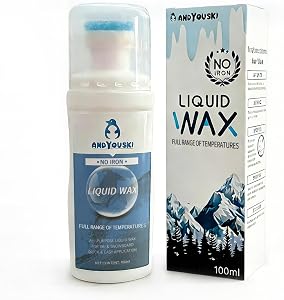
8. ANDYOUSKI Universal Liquid Ski Wax
- Wax Type: Glide
- Wax Form: Liquid
- Temperature Condition: Universal
- Volume: 100ml
ANDYOUSKI Universal Liquid Ski Wax eliminates the need for bulky irons and messy wax shavings. Its innovative liquid formula allows for instant application directly from the bottle, making waxing simpler, cleaner, and more convenient than traditional methods. The universal performance means a single formula works for all your gear, including skis and snowboards, providing reliable speed and smooth glide across diverse snow types and temperature conditions. The compact 100ml bottle fits perfectly in a jacket pocket, allowing quick and easy wax touch-ups right on the slopes.
The easy squeeze-and-spread system features a built-in sponge head that ensures controlled application and helps achieve a professional-quality finish. The eco-friendly fluorine-free formula delivers quality performance with peace of mind, as it contains no fluorine, making it a safer choice for the environment and user health. While liquid waxes may not offer the same longevity as solid waxes, the convenience and portability of this product make it an excellent choice for skiers who want a hassle-free way to maintain glide throughout the day.
- Pros: No iron needed; built-in sponge head for controlled application.
- Cons: Less durable than solid waxes; may need frequent reapplication for long outings.
A Comprehensive Guide on How to Choose Cross-Country Ski Waxes
Cross-country skiing is one of the most exhilarating and physically demanding winter sports in the world. Whether you are gliding through a tranquil, snow-covered forest on a weekend afternoon or pushing your heart rate to the absolute limit in a competitive marathon, your experience on the snow is heavily dictated by the equipment you use. Among the most critical components of your cross-country skiing setup is the wax applied to the base of your skis. The right wax can make you feel as though you are flying effortlessly over the snow, while the wrong wax can result in frustrating slipping, exhausting drag, and a generally miserable day on the trails.
Choosing the correct cross-country ski wax might seem like a daunting task, akin to learning a complicated science. There are dozens of brands, hundreds of colors, and a myriad of formulas tailored to highly specific weather and snow conditions. However, once you break down the fundamental principles of how ski wax works and understand the basic categories, the selection process becomes highly logical and manageable. This comprehensive guide will walk you through everything you need to know about choosing the perfect cross-country ski waxes for your next winter adventure.
Understanding the Types of Cross-Country Skis
Before you can select a ski wax, you must first understand the type of skis you are using, as this dictates the type of wax you need. Cross-country skis are generally divided into two main disciplines: classic skiing and skate skiing.
- Skate Skis: These skis are used for the skating technique, which mimics the motion of ice skating. The entire length of a skate ski is designed to glide. Therefore, skate skis only ever require glide wax.
- Classic Skis: These skis are used for the traditional forward-striding technique in parallel tracks. Classic skis are divided into three zones: the front and rear sections are the “glide zones,” while the middle section (directly under the binding) is the “kick zone” or “grip zone.” Waxable classic skis require glide wax on the tips and tails, and grip wax in the middle.
The Two Main Categories of Ski Wax
The foundation of cross-country ski waxing rests on two completely different types of wax that serve opposite purposes: glide wax and grip wax.
Glide Wax
Glide wax is designed to reduce the friction between the base of your ski and the snow, allowing you to slide forward with maximum speed and minimal resistance. Snow is composed of microscopic ice crystals. As your ski passes over the snow, the friction creates a microscopically thin layer of water. Glide wax helps to manage this water layer. If there is too little water, the dry friction slows you down. If there is too much water, a suction effect occurs, which also slows you down. Glide wax makes the ski base hydrophobic and optimizes this friction based on the temperature. It is applied to the entire length of skate skis and to the glide zones of classic skis.
Grip Wax (Kick Wax)
Grip wax, also known as kick wax, does the exact opposite of glide wax. It is designed to grip the snow crystals when you press your weight down onto the ski. This grip is what allows a classic skier to push off and propel themselves forward. As soon as the skier releases the downward pressure and shifts their weight, the camber (the upward bow in the middle of the ski) lifts the grip wax off the snow, allowing the ski to glide. Grip wax is only applied to the kick zone of waxable classic skis.
How to Choose Glide Wax
Selecting the right glide wax primarily comes down to assessing the temperature of the snow, the age of the snow, and your level of dedication to performance. Here are the main factors to consider:
- Temperature Ratings: Glide waxes are color-coded based on temperature ranges. Cold-weather waxes are typically harder to resist the sharp, abrasive nature of cold snow crystals. Warm-weather waxes are softer to combat the suction effect of wet snow. It is crucial to measure the snow temperature rather than just the air temperature.
- Wax Formats: Glide wax comes in traditional solid blocks, liquid gliders, and pastes. For beginners or those looking for convenience, liquid glide waxes have advanced significantly and offer excellent performance with a fraction of the effort of hot waxing.
- Fluorinated vs. Non-Fluorinated: Historically, high-performance glide waxes relied heavily on fluorocarbons (PFCs). However, due to severe environmental and health concerns, fluorinated waxes are being phased out globally. Always choose environmentally friendly, non-fluorinated waxes.
How to Choose Grip Wax (For Classic Skis)
If you ski on waxable classic skis, choosing your grip wax is an art that requires paying close attention to the conditions of the day. Grip wax is divided into two distinct subcategories:
Hard Waxes (Kick Waxes)
Hard waxes come in small, cylindrical aluminum tins. They are used when the snow is fresh, cold, and the crystals are relatively intact and sharp. You apply hard wax by coloring it onto the kick zone like a crayon and smoothing it out with a synthetic cork. Selecting the right hard wax is entirely dependent on temperature, moving from hard, cold waxes to softer, warmer waxes.
Klister Waxes
Klister comes in a tube and has a sticky, gel-like consistency. Klister is necessary when the snow structure has completely transformed—meaning the snow has melted and refrozen, becoming icy, granular, or slushy. Hard wax cannot grip these rounded or icy snow crystals, but klister can. Klister is notoriously messy to apply but is absolutely essential for warm or icy spring skiing conditions.
Temperature and Snow Condition Guide
While different brands have their own specific proprietary blends, the ski wax industry has generally adopted a universal color-coding system to make selecting waxes easier for consumers.
| Wax Color | Typical Snow Conditions | Snow Temperature Range (°C) |
|---|---|---|
| Green / Polar | Extremely cold, dry, abrasive snow. | -15°C to -30°C |
| Blue | Normal winter conditions. Cold, fresh snow. | -5°C to -15°C |
| Violet / Red | Transitional temperatures, often around freezing. | 0°C to -5°C |
| Yellow | Warm, wet, or melting snow. Slushy conditions. | +10°C to 0°C |
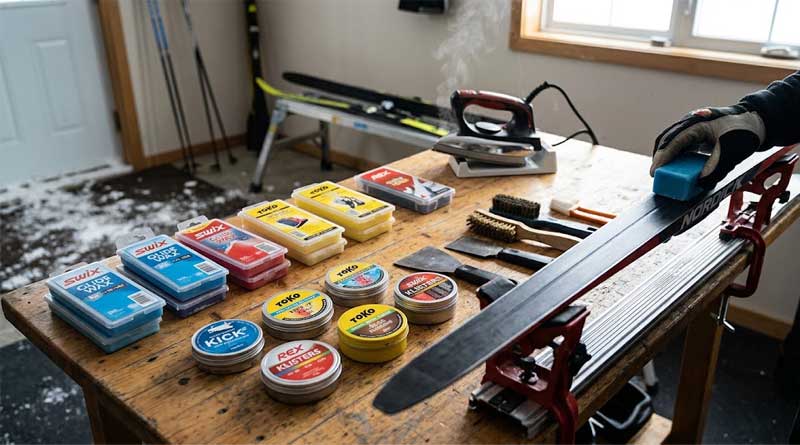
Essential Tools for Waxing
If you decide to dive into the world of hot waxing your skis for maximum performance and base protection, you will need a few essential tools.
- Waxing Iron: A specialized iron with a thick base plate designed to hold a steady, specific temperature.
- Plexiglass Scraper: Used to scrape the excess cooled glide wax off the ski base.
- Groove Pen: A small tool used to scrape wax out of the central groove of the ski.
- Waxing Brushes: Nylon and brass/copper brushes are used to polish the base and remove wax from the microscopic structure of the ski base.
- Synthetic Cork: Essential for generating friction to smooth out hard grip waxes in the kick zone.
Step-by-Step Selection Strategy for Beginners
If you are just starting out, do not let the vast array of waxes overwhelm you. Follow a simplified strategy to build your wax kit slowly. Start by purchasing a universal liquid glide wax. This will work adequately across a wide variety of temperatures and requires almost no tools to apply. If you have waxable classic skis, begin by purchasing a blue hard wax and a red hard wax. Blue will cover you for the vast majority of crisp winter days, while red will assist you when the temperatures begin to creep up toward the freezing mark.
As you gain experience and begin to notice how temperature and humidity affect your glide and grip, you can slowly expand your collection. You might add a green wax for the bitter cold days of January, or a universal klister for the unpredictable, icy conditions of late spring. Keep a small thermometer in your ski bag to test the snow before you wax, and take notes on what works and what doesn’t.
Conclusion
Choosing cross-country ski waxes is a rewarding process that deeply connects you to the natural environment and the specific weather conditions of the day. By understanding the distinction between glide and grip, identifying the temperature of the snow, and selecting the corresponding color-coded waxes, you will dramatically improve your efficiency and enjoyment on the trails. Remember that taking care of your ski bases by keeping them waxed will not only make you faster but will also extend the life of your equipment. Embrace the learning curve, don’t be afraid to experiment, and enjoy the unparalleled feeling of perfectly waxed skis gliding across fresh winter snow.