Best Ski Racks for Subaru Outback of 2027
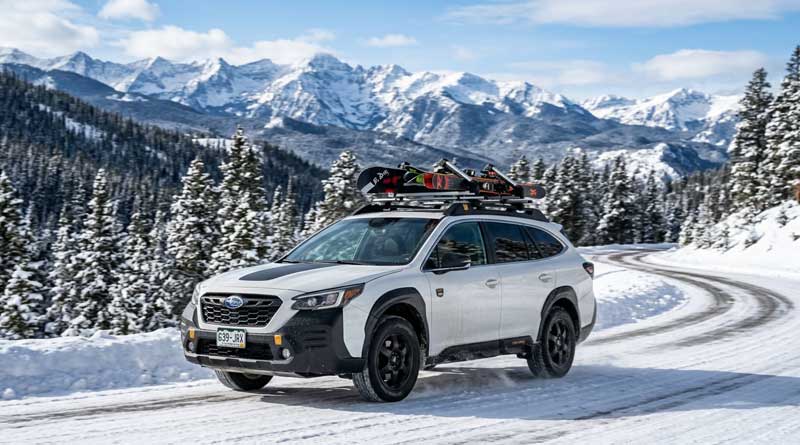
Finding the right ski rack for a Subaru Outback can transform winter trips into smoother adventures. The Outback’s roof rails and available hitch make it versatile for carrying skis and snowboards without sacrificing cargo space. Whether you prefer a spare-tire mount, hitch-mounted unit, or roof rack, the best options balance capacity, security, ease of use, and weather resistance. This guide reviews top performers that handle multiple pairs of skis or snowboards while fitting the Outback’s design, helping you choose gear that stays secure on snowy roads and mountain approaches.
1. JOYTUTUS Spare Tire Ski Rack

- Capacity: 4 snowboards or 6 pairs of skis
- Tire Fit: 30.5″–36.5″ diameter, 10″–11.5″ width
- Installation: No tools, adjustable straps
- Security: Built-in locking mounts and holders
This spare-tire ski rack attaches directly to the rear tire without removing it, using adjustable straps that accommodate a wide range of tire sizes. The elevated mounting position keeps gear higher off the ground, which helps reduce mud and snow accumulation during drives to the mountain. Freeze-resistant silicone pads stay flexible in cold weather, gripping skis and boards securely even when temperatures drop below freezing. The design folds flat against the tire when not in use, so you do not need to remove the entire rack between trips.
Security is handled by lockable mounts that deter theft at trailheads or overnight stops. The high capacity supports group outings, and the rear location frees the roof for other cargo or a roof box. While primarily designed for vehicles with external spares, the strap system offers flexibility for compatible setups. Overall it delivers simple, tool-free convenience for drivers who want quick access without climbing onto the roof.
Pros:
- No-tool installation and quick attachment
- Folds flat for compact storage
- Freeze-resistant pads for cold climates
- Elevated design reduces road debris buildup
Cons:
- Limited to vehicles with suitable external spare tires
- May not suit all Outback configurations without adapters
- Capacity shared across skis and boards can limit mixed loads
2. Tyger Auto Folding Hitch Ski Rack

- Receiver Fit: 1.25″ or 2″ hitch
- Capacity: 6 pairs of skis or 4 snowboards
- Adjustability: Height-adjustable plates and 120° tilt
- Security: Dual key locks plus three safety straps
This hitch-mounted rack offers an accessible alternative to roof systems, mounting into standard receivers found on many Outbacks equipped with a hitch. Sturdy steel construction with powder coating resists rust, and the included hitch lock adds a first layer of protection. Height-adjustable plates accommodate different ski and board lengths, while the main pole tilts up to 120 degrees for rear hatch clearance and easier loading. Three safety straps further secure the load during transit.
Family-friendly capacity handles mixed loads of boards and skis, making it practical for group trips. The foldable design stores compactly when not needed, and the dual anti-theft locks cover both the rack and the hitch connection. Five-year limited warranty coverage provides added peace of mind. Drivers who prefer not to reach the roof will appreciate the ground-level access and straightforward installation process.
Pros:
- Works with both 1.25″ and 2″ receivers
- Tilting mechanism for trunk access
- Dual locks and multiple safety straps
- Strong steel build with rust resistance
Cons:
- Requires a vehicle hitch
- Adds length behind the vehicle
- May need careful loading to balance weight
3. BougeRV Lockable Folding Hitch Rack

- Capacity: 6 pairs of skis or 4 snowboards
- Materials: Steel base with aluminum alloy components
- Features: Folding sections, tilt function, dual locks
Built with a high-quality steel base and lighter aluminum alloy parts, this hitch rack reduces overall weight while maintaining strength. An integrated anti-rattle system with a rotating knob keeps the connection stable and quiet on the highway. Rubber strips on the upper rack clamp boards firmly, and thick padding on the lower supports protects bindings from scratches. Four webbing buckles provide extra securing points to prevent gear from shifting or colliding.
Pull pins allow the upper and lower sections to fold for storage, and the tilt feature grants rear access when needed. Dual locks use the same key for both the rack and the gear. Height-adjustable plates fit a range of board lengths, and the design also accommodates poles, paddles, or fishing rods. Twelve-month technical support rounds out the package for Outback owners seeking a reliable hitch solution.
Pros:
- Anti-rattle hitch connection
- Folding and tilting for convenience
- Protective padding and extra webbing
- Multi-use capacity beyond skis
Cons:
- Limited to 2″ receivers
- Aluminum parts may show wear over time
- Requires careful key management
4. JOYTUTUS Universal Roof Ski Rack

- Capacity: 6 pairs of skis or 4 snowboards
- Loading Area: 27.5-inch wide platform
- Mounting: Crab-style clamps for aero, oval, square bars
- Access: Sliding extension for side loading
This roof-mounted rack uses a sliding extension that lets you pull the load toward the side of the vehicle for easier access, reducing the need to climb or stretch across the roof. Soft rubber bars protect both the gear and the crossbars, while the reinforced mounting system grips aero, oval, square, and round bars without drilling. The built-in locking system secures the skis or boards and the rack itself to the bars at the same time.
Rust-resistant materials and flexible rubber that remains soft in freezing temperatures make it suitable for winter conditions. Oversized buttons allow glove-friendly operation. The wide loading area handles family loads or extra poles and paddles. Universal fit works with most Outback roof rail and crossbar setups, delivering a versatile option for drivers who prefer keeping gear on the roof.
Pros:
- Sliding extension improves loading ease
- Universal crossbar compatibility
- Integrated dual locking
- Scratch-free rubber padding
Cons:
- Requires existing crossbars
- Roof height can still challenge shorter users
- Wind noise possible at highway speeds
5. Yakima PowderHound 6
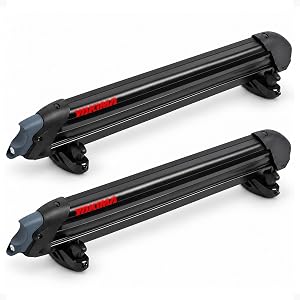
- Capacity: 6 pairs of skis or 4 snowboards
- Access: Large one-button glove-friendly release
- Mounting: Clamp system for various crossbars
- Security: Integrated SKS locks with keys
The PowderHound 6 mounts to existing roof crossbars with a simple clamp system that needs no drilling. A large button designed for cold hands opens the arms quickly, and the overhang clamp position keeps gear within easier reach. It carries traditional skis effectively, though wider skis may reduce the maximum number that fit. Integrated Same Key System locks protect against theft during stops.
Yakima’s long experience shows in the straightforward design that suits both resort days and longer cross-country trips. Some wind noise is expected, yet the rack remains stable. The system works well with the Outback’s factory or aftermarket crossbars, offering a trusted brand option for drivers who want reliable roof mounting without complex installation.
Pros:
- Glove-friendly one-button access
- No-drill crossbar mounting
- Integrated anti-theft locks
- Proven brand reliability
Cons:
- Wide skis may lower capacity
- Some wind noise at speed
- Requires compatible crossbars
6. Thule Ski & Snowboard Rack

- Capacity: 6 pairs of skis or 4 snowboards
- Access: Oversized push buttons for gloved hands
- Security: Included lock cores
- Mounting: Universal hardware for Thule and most factory systems
Thule’s ski carrier includes universal mounting hardware that works with Thule systems and most factory roof racks. Oversized push buttons make opening and closing simple even with thick gloves. Snowboards can be carried base-to-base to maximize the four-board capacity, while six pairs of skis fit comfortably for larger groups. Lock cores keep the load secured to the rack.
The design prioritizes ease of use in cold conditions and solid protection for valuable gear. Compatibility notes indicate an adapter may be needed for certain Thule Rapid Aero bars. For Outback owners already using Thule or similar roof systems, this rack integrates cleanly and delivers the brand’s reputation for quality and secure transport on winter roads.
Pros:
- Oversized glove-friendly buttons
- Base-to-base snowboard option
- Included lock cores
- Broad factory and Thule compatibility
Cons:
- Adapter may be required for some bars
- Premium pricing typical of the brand
- Roof access still required
7. VEVOR Ski & Snowboard Roof Rack

- Length: 31.7 inches (805 mm)
- Capacity: 6 pairs of skis or 4 snowboards
- Material: Lightweight aluminum with corrosion resistance
- Padding: 22.8-inch extended rubber protection
This aluminum roof rack measures just over 31 inches long and mounts to most crossbars using metal hooks and hand-tightened nuts, requiring no drilling. The lightweight construction resists low temperatures, corrosion, and breakage while keeping added vehicle weight low. Thick, extended rubber padding protects boards from scratches and dampens vibration for a quieter ride.
An anti-theft lock system with two keys secures the load, and a large button allows easy operation with gloves. Recommended for crossbars under roughly 3.9 by 1.2 inches, it suits many Outback setups. The streamlined shape helps reduce wind resistance, making it a practical budget-friendly choice for drivers seeking solid capacity and basic security without premium branding.
Pros:
- Lightweight aluminum build
- Extended rubber padding for protection
- No-drill mounting
- Included anti-theft locks
Cons:
- Crossbar size limitations
- Less refined than premium brands
- May produce some wind noise
How to Choose the Best Ski Rack for Your Subaru Outback
Selecting a ski rack for a Subaru Outback involves matching the vehicle’s strengths with your specific winter needs. The Outback offers strong roof-rail systems on most trims and optional hitch receivers, giving owners flexibility between roof-mounted, hitch-mounted, and even spare-tire style carriers. Capacity, security, ease of loading, weather resistance, and vehicle compatibility should guide the decision. Understanding these factors helps avoid common pitfalls such as overloaded roofs, insecure gear, or racks that interfere with daily driving.
Assess Your Typical Load and Capacity Needs
Start by counting how many pairs of skis or snowboards you regularly transport. Most quality racks handle four to six pairs of skis or three to four snowboards. Families or groups often need the higher end of that range, while solo or duo skiers can manage with lighter options. Consider mixed loads as well. Some racks allow combinations such as two boards and three pairs of skis. Measure the longest skis or boards you own, because height-adjustable plates or wider loading areas become important for longer or wider modern equipment.
Roof racks distribute weight across the vehicle’s roof rails and crossbars. Confirm the Outback’s roof load rating in the owner’s manual; most models support several hundred pounds dynamically when properly equipped. Hitch racks shift the load rearward and lower, which can improve handling for some drivers but requires a properly installed receiver rated for the combined weight of the rack and gear. Spare-tire style racks depend on an accessible external spare, which is less common on current Outbacks and may need verification of tire diameter and width compatibility.
Decide Between Roof, Hitch, and Alternative Mounts
Roof-mounted racks keep the rear of the vehicle free for cargo or a trailer and maintain a familiar driving profile. They work best when the Outback already has crossbars or when you plan to add a compatible set. Loading from the side or with a sliding extension reduces the need to climb onto the vehicle, a practical advantage in icy parking lots. Hitch-mounted racks offer ground-level access and often fold or tilt for hatch clearance. They free the roof for a cargo box or other equipment but extend the vehicle’s length and can affect parking or garage clearance.
Spare-tire mounts provide a third option for vehicles with rear-mounted spares. They install without tools in many cases and fold flat when unused. Because the Outback typically stores its spare underneath, this style may require adapters or may not fit without modification. Evaluate how often you need full rear access, whether you already own a hitch, and whether roof height is a concern for all drivers in the household.
Prioritize Security Features
Ski and snowboard gear represents a significant investment. Look for racks that lock both the equipment to the carrier and the carrier to the vehicle. Integrated key systems or SKS-style locks simplify management when multiple pieces of gear share the same key. Secondary straps add redundancy during high-speed travel or rough roads. Hitch locks prevent the entire rack from being removed from the receiver. Roof racks should clamp securely to the crossbars so they cannot be lifted off easily.
Consider where you leave the vehicle. Resort parking lots, overnight trailheads, and urban stops each carry different risk levels. A dual-lock system combined with visible security features often deters opportunistic theft. Keep spare keys in a safe place and note manufacturer policies for key replacement.
Evaluate Ease of Use in Cold Conditions
Winter conditions demand glove-friendly operation. Oversized buttons, large levers, and soft rubber that remains flexible in freezing temperatures make loading and unloading faster and safer. Sliding or extending arms that bring the load closer to the side of the vehicle reduce awkward reaches. Folding or tilting mechanisms help when you need to open the rear hatch without removing the entire rack.
Installation time also matters. Tool-free or hand-tightened systems allow seasonal installation and removal without specialized tools. Once mounted, check that the rack does not rattle or shift. Anti-rattle mechanisms on hitch models and firm clamp designs on roof models improve the driving experience.
Check Compatibility with Your Outback
Confirm the exact model year and trim of your Outback. Factory roof rails accept many aftermarket crossbars, but shapes vary between aero, square, oval, and round profiles. Measure bar dimensions if the rack specifies maximum width or height. For hitch racks, verify whether your vehicle has a 1.25-inch or 2-inch receiver and whether it is Class II or Class III. Some models include adapters; others do not.
Weight distribution affects handling. Heavier roof loads raise the center of gravity, while hitch loads can influence trailer-like dynamics. Distribute gear evenly and follow manufacturer torque or tightening recommendations. After the first few trips, recheck all fasteners, as cold temperatures and vibration can loosen connections.
Material Durability and Weather Resistance
Aluminum and coated steel both perform well when properly finished. Look for powder coating, E-coating, or anodizing that resists road salt and moisture. Rubber pads and silicone grips should stay pliable in sub-zero temperatures so they continue to protect gear and maintain clamp pressure. Avoid materials that become brittle or lose grip when cold.
Wind noise is common with roof-mounted systems. Streamlined designs and proper spacing can reduce it. Hitch racks generally produce less wind noise but may generate more road noise if not tightly secured. Test the installed rack at highway speeds if possible before committing to long trips.
Budget, Warranty, and Long-Term Value
Entry-level racks provide solid capacity and basic locks at lower prices. Mid-range and premium options often improve materials, adjustability, and warranty coverage. A multi-year warranty against manufacturing defects adds confidence, especially for steel components exposed to salt. Factor in the cost of any required crossbars, adapters, or hitch installation when comparing total ownership cost.
Consider how frequently you ski. Occasional users may prefer a simple, affordable rack that installs seasonally. Frequent travelers benefit from faster loading features, stronger security, and designs that remain on the vehicle with minimal aerodynamic penalty.
Practical Checklist Before Purchase
- Count maximum skis or boards needed on a typical trip
- Measure longest ski or board length and width
- Confirm roof rail and crossbar type or hitch receiver size
- Decide preferred access style: roof, hitch, or alternative
- Verify lock type and whether keys are shared
- Check glove-friendly controls and cold-weather material ratings
- Review warranty length and support availability
- Estimate total cost including any adapters or bars
Installation and First-Use Tips
Follow the manufacturer’s torque specifications or hand-tightening guidance exactly. Over-tightening can damage bars or clamps; under-tightening allows movement. Load heavier items first and balance left to right. Use all provided straps. After the first drive of 20–30 minutes, stop and recheck every connection. Clean salt and dirt from the rack after each outing to prolong finish life.
Store the rack indoors during the off-season when possible. Folding designs save space. Keep keys labeled and in a known location. If the rack includes height-adjustable plates, set them once for your most common gear and mark the positions for quick future setup.
Common Mistakes to Avoid
Do not exceed the vehicle’s roof or hitch weight rating. Avoid mounting a rack on bars that are too narrow or too thick for the clamps. Never leave valuables unlocked even for short stops. Do not assume all “universal” racks fit every Outback without measuring. Ignoring the need for periodic retightening can lead to noise or, in extreme cases, gear loss.
Matching Rack Type to Your Driving Style
| Driving Style | Recommended Mount | Key Advantages |
|---|---|---|
| Frequent resort trips with full family gear | High-capacity roof or hitch | Maximum load, mixed ski and board support |
| Solo or duo day trips | Compact roof or foldable hitch | Easy install, lower cost, quick access |
| Mixed cargo needs (roof box plus skis) | Hitch-mounted | Frees roof space, ground-level loading |
| Minimal modification preference | Existing crossbar roof rack | Uses factory rails, no hitch required |
By systematically evaluating capacity, mount type, security, cold-weather usability, and Outback-specific compatibility, you can select a ski rack that performs reliably for years. Test the chosen system on a short local drive before the first mountain trip. Proper installation and regular checks keep both the gear and the vehicle safe throughout the season. The right rack turns the Outback into an efficient winter hauler, letting you focus on the slopes rather than logistics.