Best All-Temp Snowboard Waxes of 2026
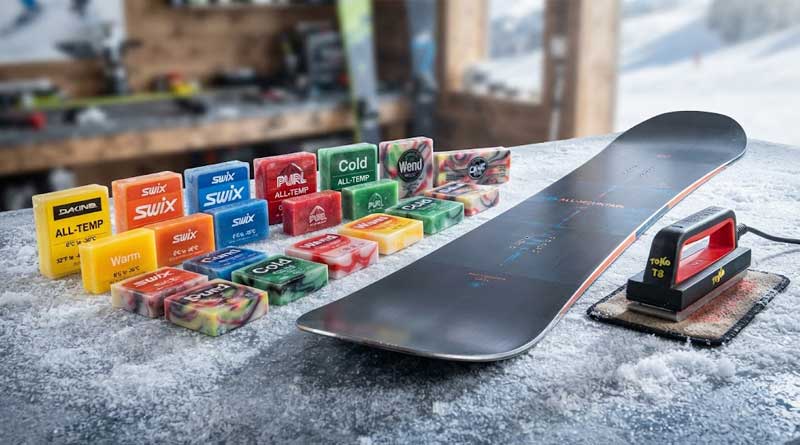
If you want your snowboard to glide smoothly in any weather, the right wax makes a big difference. Cold, warm, or wet snow all affect how your board performs. That is why all-temp waxes are so useful. They work well in many conditions, so you do not need to switch waxes all the time. In this article, we will look at the best all-temp snowboard waxes to help you find the right one for your rides.
1. Hertel Super HotSauce

- Temperature Range: 6°F to 52°F
- Size: 340 grams
- Application: Rub-on or iron-on
- Suitable For: Skis and snowboards
Hertel Super HotSauce is an all temperature wax built for riders who want to spend more time riding and less time tuning. According to the maker, a single ounce can last up to three full days on the slopes, which makes the generous 340 gram package a strong value for the whole season.
It works across a wide range from 6°F to 52°F, so you can handle changing snow without switching products. The formula skips harmful additives, and you can apply it by rubbing or ironing depending on your time. Backed by Hertel’s history since 1972, it is a dependable pick for skiers and snowboarders.
Pros
- Wide temperature range
- Large 340 gram size
- Two application options
Cons
- Not specialized for one snow type
- Large package may be more than casual riders need
2. Swix Universal

- Type: Universal wax for all temperatures
- Size: 60g or 180g bar
- Formula: Non-fluoro
- Suitable For: All skis and snowboards
Swix Universal is a standard wax meant for everyday training, and it works for all skis and snowboards. It offers reliable gliding properties and protects the base, so it suits riders who want a simple product they can use in any temperature without thinking twice.
It comes as a 60g or 180g bar, so you can pick the size that matches how often you wax. Because it is non-fluoro, it is a more environmentally friendly choice than fluorinated options. It is not a specialized race wax, but for regular sessions and basic base care, it delivers dependable and consistent everyday performance.
Pros
- Good glide and base protection
- Works in all temperatures
- Two bar sizes available
Cons
- Not tuned for specific snow conditions
- Not intended for racing
3. IGOSKI Snowboard Wax

- Type: Universal ski and snowboard wax
- Formula: Non-fluoro
- Application: Wax iron
- Conditions: Most snow types and temperatures
IGOSKI Snowboard Wax is a universal option for skis or snowboards, and it is a handy choice when you are unsure which wax to use for the day. It glides well in most snow conditions and temperature ranges, which takes the guesswork out of waxing before a trip.
The wax is non-fluoro and made to be applied with a wax iron, so you will need a basic waxing setup at home or in the shop. It suits casual riders and beginners who want a simple, versatile product rather than a specialized formula tuned for one narrow temperature window or race conditions.
Pros
- Versatile for skis and snowboards
- Glides well in most conditions
- Non-fluoro formula
Cons
- Requires a wax iron
- Not a specialized performance wax
4. Dakine Nitrous

- Material: 100% petroleum based paraffin
- Size: 5.6 oz (160g)
- Formula: PFC free
- Versions: Cold, Warm, and All Temp
Dakine Nitrous is a 100% petroleum based paraffin wax that comes in a 5.6 oz (160g) size. Its blended formula is designed to deliver long lasting speed in a variety of conditions, and hot waxing is recommended for the best results, though you can also rub it on.
You can choose Cold for temperatures below 20°F, Warm for temperatures above 26°F, or All Temp for all snow conditions, which lets you match the wax to the day. The formula is PFC free, so it avoids perfluorocarbons. Having three versions is a real advantage for riders who like to tune their setup.
Pros
- Cold, Warm, and All Temp options
- PFC free formula
- Long lasting speed
Cons
- Petroleum based
- Hot waxing works best
5. Hertel Wax Rub N Go

- Item Form: Solid
- Weight: 70 g
- Application: Rub-on, no corking or buffing
- Quantity: 1 item
Hertel Wax Rub N Go is built for riders who want a quick, no-fuss way to keep their gear gliding. It is quick and easy to apply, with no corking or buffing needed, so you can refresh your base in seconds right at the lift or in the parking lot.
It delivers a lasting coat that holds through extended use, so you need fewer touch-ups and can spend more time on the slopes. The compact 70 g solid bar is easy to carry in a jacket pocket. It will not replace a full hot wax session, but it is ideal for on-the-go riders.
Pros
- Very fast application
- Lasting coat
- Compact and portable
Cons
- Small 70 g size
- Not a replacement for hot waxing
6. mountainFLOW Snowboard Wax

- Material: 100% plant-based ingredients
- Petroleum Content: 0%
- Size: 130g per bar
- Safety: Biodegradable and non-toxic
mountainFLOW is a plant-based snowboard wax made from 100% plant-based ingredients with 0% petroleum. Since anything applied to a board eventually enters the environment, this biodegradable and non-toxic formula is a thoughtful option for riders who care about the mountains they ride on.
Despite the fully natural plant-based formula, the brand says it performs as well as conventional petroleum-based wax and backs the claim with controlled performance tests. Each bar weighs 130g, which is plenty for multiple waxing sessions. It is a really strong choice for eco-minded skiers and snowboarders alike who do not want to give up speed for sustainability.
Pros
- 100% plant-based and biodegradable
- Non-toxic for users and the environment
- Performance backed by controlled tests
Cons
- Performance claims come from the brand
- Temperature range is not listed
See the mountainFLOW Snowboard Wax
7. Purl Ski & Snowboard Wax

- Type: All-temperature universal wax
- Iron Temperature: 265°F (130°C)
- Material: Biodegradable microcrystalline petroleum
- Origin: Made in the USA
PURL Purple Universal Wax is an all-temperature wax made for alpine skis, snowboards, touring skis, and cross country skis. It is designed to give smooth glide from early-season cold snow to warm spring conditions, making it a flexible base layer for changing weather.
Made in the USA from biodegradable microcrystalline petroleum products, it penetrates the base for durable protection against friction, heat, and static. Simply melt it down with a wax iron at 265°F (130°C). You can easily use it alone or pair it with PURL warm or cold waxes to fine-tune your setup for specific snow conditions and rider needs.
Pros
- Works on skis and snowboards
- Durable base protection
- Made in the USA
Cons
- Requires a wax iron
- Petroleum based
See the Purl Ski & Snowboard Wax
8. Hertel Racing FC739

- Temperature Range: 6°F to 52°F
- Formula: Fluoro-free
- Durability: Up to seven days per ounce
- Origin: Made in the USA
Hertel Racing FC739 is an all temperature wax that covers a wide range from 6°F to 52°F, so it handles changing snow without needing multiple products. According to the maker, an ounce can last up to seven full days on the slopes, which makes it an efficient choice for frequent riders.
This fluoro-free wax is made in the USA and aims to balance sustainability with strong performance. It focuses on control, which helps reduce rider fatigue and improve stability on the slopes for both skiers and snowboarders. With Hertel’s legacy dating to 1972 and Olympic golds, it is a trusted option.
Pros
- Wide temperature range
- Long lasting per ounce
- Fluoro-free and made in the USA
Cons
- Universal rather than condition-specific
- Package size is not listed
The Ultimate Guide to Choosing All-Temp Snowboard Waxes
Snowboarding is an exhilarating sport where smooth glides, quick edge transitions, and maximum speed depend directly on the condition of your base. Whether you are carving through morning groomers, charging deep backcountry powder, or hitting park features late in the afternoon, friction is your primary adversary. Waxing your snowboard is the single most effective maintenance routine to reduce friction, protect your base material from abrasion, and ensure consistent sliding performance across varied terrain.
While temperature-specific waxes offer pinnacle performance under rigid thermal conditions, they require constant monitoring of air and snow temperatures. For the vast majority of snowboarders—from recreational riders to seasoned enthusiasts who travel across varying climates—the ideal solution is an All-Temp (Universal) snowboard wax. This comprehensive guide explores everything you need to know about choosing, evaluating, and applying all-temperature snowboard waxes to keep your board fast and protected all season long.
Understanding All-Temp (Universal) Snowboard Wax
All-Temp snowboard wax, frequently referred to as universal wax, is specifically engineered to function effectively across a broad spectrum of snow temperatures and humidity levels. Standard wax formulations are tailored to exact thermal brackets—such as cold waxes for temperatures below 14°F (-10°C) or warm waxes for slushy conditions above 32°F (0°C). In contrast, universal waxes blend hard and soft paraffin waxes alongside specific lubricants to create a versatile compound that performs reliably across typical operating temperatures ranging from approximately 12°F to 32°F (-11°C to 0°C).
How All-Temp Waxes Work
Snowboard wax works by creating a hydrophobic (water-repellent) barrier between the base of your board and the snow pack. As your snowboard slides, friction generates microscopic amounts of heat that melt the tip of snow crystals, creating a microscopic film of water. If your wax is too soft for cold, abrasive snow, the sharp ice crystals will bite into the base, causing drag. Conversely, if your wax is too hard in warm, moist snow, excess water suction builds up under the board, creating a wet suction effect that severely slows you down. All-Temp formulas strike a calculated middle ground, providing sufficient hardness to resist crystal bite while retaining enough hydrophobic flexibility to shed excess moisture.
Who Should Use All-Temp Wax?
Universal waxes are perfect for several categories of riders:
- Everyday Resort Riders: Snowboarders who ride in fluctuating conditions throughout a single day (e.g., cold morning shade turning into sun-drenched afternoon slopes).
- Vacationers and Travelers: Riders visiting destinations with unpredictable weather patterns who do not want to carry multiple wax irons and temperature-specific wax kits.
- Casual to Intermediate Riders: Snowboarders seeking excellent glide performance without the complex chemistry and frequent re-waxing schedules required by racing waxes.
- Base Layer Preparation: Technicians using universal wax as a neutral conditioning layer when saturating new or freshly structured bases.
Chemical Composition: Hydrocarbon, Fluorinated, and Eco-Friendly Waxes
When selecting an All-Temp wax, understanding the chemical composition is essential. The ingredient makeup determines the wax’s environmental impact, durability, speed, and cost.
Hydrocarbon Waxes
Hydrocarbon wax is the standard industry benchmark for general snowboarding. Composed primarily of refined paraffin waxes derived from crude oil, hydrocarbon waxes contain complex hydrogen and carbon molecular chains. They are non-toxic to handle during hot wax application and provide exceptional durability and glide for non-competitive riding.
- Pros: Affordable, widely available, safe to apply without specialized respirators, excellent general glide.
- Cons: Lower water repellency compared to fluorinated additives in high-humidity snow.
Fluorinated Waxes (Fluoro Waxes) and Regulatory Shifts
Historically, fluorinated waxes contained per- and polyfluoroalkyl substances (PFAS) or fluorocarbons. Fluorine additives drastically reduced surface tension, allowing boards to repel water exceptionally well in warm, wet snow conditions. However, due to severe environmental permanence and health risks associated with bioaccumulation, major international governing bodies (including FIS) and national environmental agencies (such as the US EPA and European Chemicals Agency) have banned or heavily restricted fluorinated waxes.
- Pros: Unmatched speed in ultra-high humidity and wet spring snow.
- Cons: Environmentally persistent toxin, health hazard when inhaled as vapors, banned in official competitions and widely phased out of consumer markets.
Plant-Based, Bio-Degradable, and Eco Waxes
With the phase-out of fluorocarbons and growing eco-consciousness among winter sports enthusiasts, manufacturers have developed high-performance plant-based and biodegradable waxes. Formulated using natural oils, soy derivatives, pine resins, and plant waxes, these products minimize chemical runoff into alpine watersheds when snowpack melts in the spring.
- Pros: Non-toxic, petroleum-free, environmentally safe, clean burning during hot iron application.
- Cons: Can have slightly reduced longevity compared to synthetic hydrocarbon blends on coarse, artificial snow.
Application Forms: Hot Wax vs. Rub-On, Paste, and Liquids
All-Temp waxes are available in various forms, each serving a different purpose depending on your available time, tools, and performance demands.
1. Hot Wax (Solid Blocks)
Hot waxing is the gold standard for snowboard base maintenance. Using a dedicated waxing iron, solid wax blocks are melted, dripped onto the base, ironed smooth, cooled, scraped, and brushed. This process allows heat to open the microscopic pores of the sintered or extruded base material, permitting deep saturation.
- Longevity: 3 to 6 full riding days.
- Best For: Season prep, deep conditioning, maximum board protection and high speeds.
2. Rub-On Liquid and Paste Waxes
Liquid and paste all-temp waxes are designed for quick field application. They come in squeeze tubes or applicator bottles equipped with built-in foam pads. You simply rub the product onto the base, let it dry for a few minutes, and buff it out with a cork pad or felt scraper.
- Longevity: Half a day to 1 full riding day.
- Best For: Mid-day touch-ups, emergency spring-slush fixes, travel kits where hot irons are impractical.
3. Solid Rub-On Waxes with Corking
Solid rub-on bars allow you to color or draw wax directly onto an unheated base. Friction generated by vigorously rubbing a natural cork block over the applied wax creates sufficient localized heat to bind a thin layer of wax to the base surface.
- Longevity: 1 riding day.
- Best For: Quick morning tune-ups in hotel rooms without a full tuning bench setup.
Key Factors to Consider When Selecting an All-Temp Wax
Not all All-Temp waxes are created equal. When evaluating options, consider these five crucial factors to match the wax to your specific riding habits and region.
1. Temperature Spectrum Flexibility
Check the temperature rating specified by the manufacturer. While all universal waxes target a middle range, some lean slightly colder (e.g., 10°F to 28°F / -12°C to -2°C) while others lean warmer (e.g., 20°F to 35°F / -6°C to 2°C). If you primarily ride in cold inland areas like Colorado or Utah, choose a universal wax formulated on the colder side. If you ride humid coastal ranges like the Pacific Northwest or Whistler, choose an all-temp wax designed to handle higher moisture.
2. Snow Type and Texture
Fresh powder consists of delicate, crystalline structures, whereas groomed packed powder, ice, or man-made machine snow contains hard, rounded, or crushed grains. Man-made snow is particularly abrasive and strips soft waxes rapidly. Look for all-temp formulations containing additive hardeners (such as ceramic or synthetic micro-additives) if you frequently ride artificial snow or icy resort conditions.
3. Ambient and Snow Humidity
Humidity determines how much free water exists between your base and the snow. High humidity environments require waxes with high hydrophobic properties to prevent suction. Low humidity environments require slicker, friction-reducing compounds to prevent static buildup on dry snow crystals.
4. Durability vs. Speed
Softer waxes offer effortless initial glide but wear off quickly on abrasive snow. Harder waxes endure long days and harsh conditions but require higher iron temperatures during application. A premium All-Temp wax carefully balances density and lubricity to maximize runtime on the hill.
5. Base Material Compatibility
Snowboard bases generally fall into two categories: extruded and sintered.
- Extruded Bases: Less porous, lower maintenance, and absorb less wax overall. Rub-on or lightweight all-temp hot waxes work sufficiently well.
- Sintered Bases: Highly porous, high-performance base material that craves frequent deep hot-wax saturation. Premium hydrocarbon or ceramic-infused eco universal hot waxes are ideal for keeping sintered bases hydrated.
Comparison of Snowboard Wax Types
The table below summarizes the key trade-offs between different wax formats and chemical types to help you decide which option best fits your routine.
| Wax Category | Application Method | Durability (Riding Days) | Speed Performance | Ease of Application | Relative Cost |
|---|---|---|---|---|---|
| All-Temp Hydrocarbon Hot Wax | Iron melt, scrape, brush | 3 – 6 Days | High | Moderate (Requires tools) | Low – Moderate |
| All-Temp Eco / Bio Hot Wax | Iron melt, scrape, brush | 3 – 5 Days | High | Moderate (Requires tools) | Moderate |
| Liquid / Paste Quick Wax | Wipe on, dry, buff | 0.5 – 1 Day | Moderate | Very Easy | Moderate |
| Solid Rub-On with Cork | Rub on, friction cork | 1 Day | Moderate | Easy | Low |
| Cold-Specific Hot Wax | Iron melt, scrape, brush | 4 – 7 Days | Peak (in cold snow only) | Moderate (Requires precision iron) | Moderate |
Step-by-Step Overview: How to Apply All-Temp Hot Wax
To get the best performance out of your All-Temp hot wax, proper application technique is crucial. Follow these essential steps for a shop-quality wax job at home.
Step 1: Base Cleaning and Preparation
Before applying new wax, secure your snowboard on tuning vices. Clean the base of dirt, grease, and old oxidized wax using a citrus-based cleaner or a dry nylon brush. Wipe the board completely dry with a lint-free microfiber towel.
Step 2: Iron Temperature Setup
Plug in your dedicated waxing iron and set it to the manufacturer’s recommended temperature for your specific all-temp wax (typically between 110°C and 140°C / 230°F to 284°F). The iron should melt the wax smoothly without generating smoke. If the wax smokes, your iron is too hot and will damage the wax molecules and base.
Step 3: Dripping and Spreading
Hold the wax block against the warm iron soleplate roughly 2 to 4 inches above the base. Drip a steady stream of wax droplets along the edges and center of the board. Next, place the iron onto the board and move it continuously in smooth, melting passes from tip to tail to spread the wax into an even layer. Keep the iron moving at all times to prevent localized overheating of the core.
Step 4: Cooling Phase
Allow the board to cool down completely to room temperature for at least 20 to 30 minutes. This cooling period is critical because it gives the microscopic pores of the base time to shrink around the absorbed wax, locking it in place.
Step 5: Scraping Excess Wax
Using a clean, sharp plastic wax scraper (never a metal scraper), hold the tool at a 45-degree angle pushed in the direction of tip to tail. Remove all excess surface wax until the base looks completely smooth. Remember: wax stays inside the base pores, not on top as a thick layer.
Step 6: Brushing and Structure Reveal
Finish by brushing the base vigorously from tip to tail. Start with a stiff brass or heavy nylon brush to clear wax out of the base structure grooves, followed by a fine horsehair or soft nylon brush to polish the surface to a high-gloss finish.
Pro Tips for Maintaining Your Waxed Base
To maximize speed and extend base life, keep these practical tips in mind throughout the season:
- Watch for White Oxidation: If the base along your edges looks chalky or greyish-white, your base is dried out and desperate for a fresh hot wax application.
- Keep Rub-On in Your Pocket: Carry a small tube of liquid or rub-on all-temp wax in your jacket pocket during warm spring days when slush suddenly develops.
- Pre-Season Base Saturation: Apply two to three hot wax cycles of all-temp wax at the start of the season without scraping between the first two cycles to deeply hydrate a dry base.
- Store Waxed for Summer: At the end of the season, coat your base with a thick layer of all-temp hot wax and leave it unscraped over the summer to protect the base and metal edges from humidity and rust.
Final Thoughts
Selecting the right All-Temp snowboard wax comes down to balancing convenience, riding conditions, environmental priorities, and performance goals. For most snowboarders, an eco-friendly or high-grade hydrocarbon universal hot wax block provides the perfect combination of effortless glide, base longevity, and easy application. By combining a reliable universal hot wax with quick rub-on touch-ups when needed, you will enjoy fast, responsive riding regardless of what Mother Nature delivers on the mountain.