Best GoPro for Snowboarding of 2025
Capturing your snowboarding adventures is easier than ever with a GoPro. These small yet powerful cameras let you film every jump, turn, and snowy mountain view in stunning detail. Whether you’re carving through powder or hitting the park, a GoPro can handle cold temperatures, snow, and high speeds with ease. In this guide, we’ll help you find the best GoPro for snowboarding based on video quality, stabilization, battery life, and mounting options so you can record every epic ride and relive the thrill later.
1. HERO13 Black

- Video Resolution: 5.3K
- Screen Size: 2.27 Inches
- Storage Type: Micro SD
- Special Feature: Waterproof
The GoPro HERO13 Black brings cutting-edge video quality and intelligent lens features to snowboarding enthusiasts. It’s compatible with the new HB-Series Lenses, allowing you to instantly switch between different shooting styles. The camera automatically detects attached lenses or filters and optimizes settings for the best results. Its 5.3K resolution captures every detail on the slopes with over 90% more resolution than 4K, making your snowboarding adventures look truly cinematic.
With HyperSmooth 6.0 stabilization, the HERO13 Black ensures your runs look smooth even on rough terrain. It supports ultra-slow-motion recording up to 13x slower than real-time, perfect for capturing those powder turns or mid-air tricks. It also doubles as a webcam or live-streaming camera, offering versatility for vloggers. Whether you’re carving through fresh snow or filming epic jumps, this camera delivers professional-grade performance and stunning clarity.
Pros: Exceptional video stabilization, ultra-high resolution, versatile lens system, waterproof build.
Cons: Premium price, large file sizes require fast storage.
2. HERO12 Black

- Video Resolution: 5.3K
- Screen Size: 2.3 Inches
- Battery Life: Up to 70 Minutes at 5.3K60
- Connectivity: Bluetooth
The GoPro HERO12 Black is designed for snowboarders who demand exceptional performance in every condition. Its rugged and waterproof build ensures durability up to 33ft (10m), so you can capture your mountain adventures without worry. The upgraded Enduro battery offers twice the runtime, making it perfect for long days on the slopes. With stunning 5.3K video and 27MP photos, your footage looks incredibly sharp and detailed, even in challenging light conditions.
HERO12’s HDR video and photo features bring out vivid colors and balanced contrast in every shot. HyperSmooth 6.0 stabilization and 360° horizon lock ensure your clips stay silky smooth and perfectly level, even when you’re spinning through the air. The wide field of view and Bluetooth audio connectivity add extra convenience for creating immersive, high-quality snowboarding content. It’s a complete package for those wanting pro-level results without extra gear.
Pros: Outstanding stabilization, waterproof design, extended battery life, vibrant HDR footage.
Cons: Slightly heavier than older models, premium cost.
3. HERO11 Black

- Video Resolution: 5.7K
- Photo Resolution: 27MP
- Aperture: f/2.8
- Storage Type: Micro SD
The GoPro HERO11 Black is a reliable choice for snowboarders looking to capture wide, detailed shots of their runs. Its new image sensor expands the field of view, offering a broader perspective that captures more of the landscape. With crisp 5.3K video and 27MP photos, the HERO11 produces professional-grade footage ideal for editing or sharing online. The lens also resists water and glare, keeping visuals sharp even in bright, reflective snow conditions.
HyperSmooth 5.0 stabilization and horizon lock ensure ultra-steady footage, even when you’re carving or landing jumps. It supports 8x slow motion at 2.7K, allowing you to highlight every turn and trick in incredible detail. The HERO11’s versatile performance and image quality make it perfect for snowboarders who want cinematic results without heavy editing. It’s a rugged, all-around performer for both casual riders and pros.
Pros: Superb stabilization, wide-angle sensor, waterproof build, high-resolution video.
Cons: Slightly bulky, shorter battery life in cold weather.
4. HERO10 Black
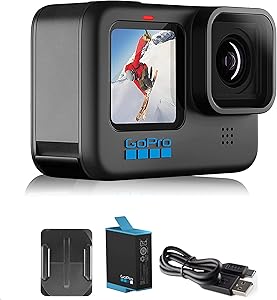
- Video Resolution: 5.3K
- Photo Resolution: 23MP
- Processor: GP2 Engine
- Screen Size: 1.88 Inches
The GoPro HERO10 Black introduced major performance improvements for action sports enthusiasts. Its GP2 processor doubles the frame rate, delivering smoother, more responsive footage with incredible clarity. It captures stunning 5.3K60 video and 23MP photos, allowing snowboarders to freeze and extract crystal-clear stills from their footage. The upgraded lens repels water and reduces glare, ensuring your mountain shots remain vibrant and distortion-free.
HyperSmooth 4.0 stabilization keeps footage steady even during aggressive rides or jumps. The HERO10 also excels in low-light conditions, making it great for early morning or late-day sessions. With fast wireless and wired transfers, your clips upload effortlessly to the GoPro cloud. For riders who want top-tier image quality and reliable performance on the go, the HERO10 Black is still one of the best-value GoPros available.
Pros: Exceptional stabilization, fast processor, vibrant video, easy file transfers.
Cons: Shorter battery life, slightly smaller screen.
5. HERO9 Black

- Video Resolution: 5K
- Photo Resolution: 20MP
- Battery: 1720mAh Enduro
- Screen Size: 2.27 Inches
The GoPro HERO9 Black remains a solid choice for snowboarders wanting great value with premium performance. It records in 5K resolution, delivering detailed, lifelike footage that holds up even when zoomed in. The new 23.6MP sensor and in-camera horizon leveling enhance the professional feel of your clips. Its front display makes framing easier, while the larger rear touch screen offers smooth, intuitive control even with gloves on.
HyperSmooth 3.0 stabilization ensures buttery-smooth footage across all modes. The improved 1720mAh battery provides 30% more runtime, perfect for cold-weather sessions. With crisp 20MP photos and built-in SuperPhoto optimization, you can easily capture sharp, balanced shots on the move. The HERO9 is perfect for snowboarders who want high-end performance, strong durability, and longer battery life in one package.
Pros: Strong battery life, front screen convenience, excellent stabilization, high detail video.
Cons: Slightly heavier design, slower startup time.
How to Choose a GoPro for Snowboarding
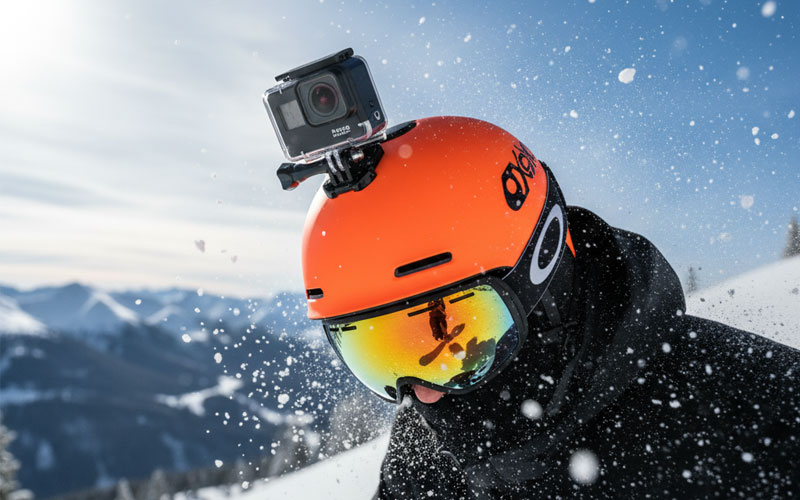
Picking the right GoPro for snowboarding can feel overwhelming — there are so many models, settings, and mounts to consider. The ideal camera captures fast action without shakiness, survives cold temperatures, and gives you flexible footage for editing later. This guide walks you through the key features to prioritize, recommended accessories, and practical shooting tips so you can spend less time worrying about gear and more time shredding the slopes.
Start with your priorities
Before comparing specs, ask yourself what matters most: Do you want cinematic footage for YouTube, quick clips for social media, or stable POV shots while you ride? Are you shooting solo or with friends? How much editing do you plan to do afterward? Your answers will guide which features are essential and which are optional.
Key camera features to evaluate
Video resolution and frame rate
Higher resolution (4K, 5.3K on some models) gives you more detail and lets you crop or reframe in post without losing quality. Higher frame rates (60, 120, 240 fps) are essential if you plan to create smooth slow-motion clips — handy for showing tricks and jumps. If your priority is social clips, 4K at 60fps or 1080p at 120fps is a good balance.
Image stabilization
Stabilization is critical for snowboard footage. Look for advanced electronic image stabilization (often called HyperSmooth or similar depending on model). This reduces wobble from turns, bumps, and jumps and creates watchable footage without a gimbal. If you ride aggressively or shoot handheld, prioritize the best stabilization available.
Field of view and lens options
GoPros offer wide fields of view that capture more of the scene — great for POV shots and group rides. Some newer models support interchangeable lenses or digital lens modes, allowing “narrow” or “linear” settings to reduce distortion. If you prefer a more cinematic look, choose a model with flexible lens options or modes that remove the fisheye effect.
Low-light performance
Snow reflects light differently, so you’ll sometimes shoot in bright midday sun and at dusk. Sensors that perform well in varied lighting and offer good dynamic range will hold details in highlights and shadows. While action cams aren’t cinema cameras, aim for the best low-light capability you can afford, especially if you ride early mornings or late afternoons.
Battery life and cold-weather performance
Cold drains batteries quickly. Look for models with removable batteries so you can swap spares. Carrying extra batteries in an inside pocket keeps them warm and preserves charge. Some GoPros offer improved battery life and power-management modes — handy for long days on the mountain.
Durability and waterproofing
Snow, moisture, and crashes happen. Most modern GoPros are rugged and waterproof out of the box, but confirm the depth rating and whether you need a housing for extra protection. Rugged mounts and protective lenses are also recommended to avoid damage from falls or ice.
Mounts and accessories that matter
Helmet and chest mounts
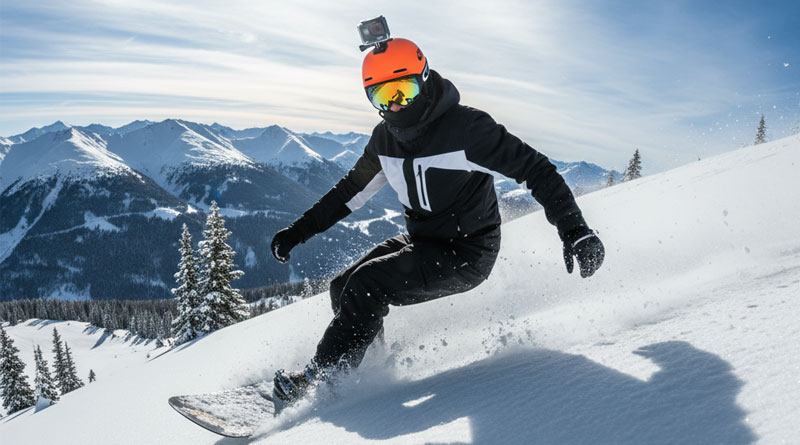
Helmet mounts give an authentic POV but can be shaky depending on helmet movement. Chest mounts create a more stable, slightly lower perspective that captures board and body movement. Many riders use both to get a variety of angles for editing later.
Head strap, pole, and handlebar mounts
A flexible head strap is useful for filming when you’re not wearing a helmet. An extendable pole or “selfie stick” lets you film yourself from different distances and get sweeping cinematic passes. If you ride with a backpack, consider mounting the camera on the pack strap for a steady view over your shoulder.
Magnetic and quick-release systems
Quick-release mounts make switching angles fast. Magnetic clips and adhesive mounts let you attach the camera in creative positions, but test adhesives in cold temperatures to ensure they hold. Always back up magnetic mounts with a tether when filming high or risky spots.
Practical shooting settings and habits
Frame rate and shutter choices
For general riding, 4K at 60fps gives crisp footage and flexibility in editing. For slow-mo highlights, 1080p at 120–240fps is ideal. Use a faster shutter when there’s bright sun to avoid motion blur, and consider ND filters if you’re aiming for cinematic motion blur during sunny runs.
White balance and color profiles
Snow can fool auto white balance, making footage look blue or washed out. If your camera lets you set a manual white balance, select a cooler setting to preserve natural snow tones. Many GoPros offer flat or log-like color profiles — shoot in a flatter profile if you plan to color grade in post.
Framing and composition
Keep horizon lines level when possible and use the wide view to show context — trees, lines, and fellow riders create more engaging shots. When capturing tricks, get closer or use a longer focal mode to emphasize movement. Vary your angles: POV, follow cams, and static tripod shots all make edits more dynamic.
Editing and storage
High-resolution footage eats storage and requires a decently powerful computer to edit smoothly. Carry multiple high-speed microSD cards and back up footage daily. Learn basic color correction and stabilization tools in your editor — even small tweaks can make snowboard footage look much more professional.
Budget and model selection
Decide how much you’ll spend. Older GoPro models still produce excellent footage and often cost less. Newer models add stabilization, higher-resolution sensors, and better low-light performance. Balance the features you need (stabilization, frame rates, battery life) with how often you’ll use the camera. If you’re serious about video, invest in a mid-to-high-tier model and a couple of solid accessories; for casual social clips, a budget-friendly or previous-generation GoPro will do the job.
Final checklist before you buy
- Confirm the model’s stabilization performance.
- Check battery life and whether batteries are removable.
- Ensure it supports the frame rates and resolutions you want.
- Pick at least two mounts (helmet and chest or pole) to vary shots.
- Buy spare microSD cards rated for high write speeds.
- Carry spare batteries and a small protective case.
Choosing the right GoPro for snowboarding comes down to balancing stabilization, frame rates, battery life, and accessories against your budget. Focus first on stabilization and battery strategy, then add the mounts and lenses that suit your shooting style. With the right setup, you’ll capture smooth, exciting runs that make your edits sing — and you’ll spend more time riding and less time regretting missed shots.