Best Polarized Snowboard Goggles of 2026
If you love snowboarding, you know how important it is to see clearly on the slopes. Bright sunlight and glare can ruin your fun and safety. That is why polarized snowboard goggles are a great choice. They reduce glare and protect your eyes from harsh light. In this article, we will look at the best polarized snowboard goggles available. We will help you find a pair that keeps your vision sharp and your ride enjoyable.
1. Opolis Glacier View

- UV Protection: 100 percent
- Lens Shape: Cylindrical
- Polarized: Yes
- Frame Size: Medium
The Opolis Glacier View snow goggles are built for riders who want reliable performance whether they are heading into the backcountry or enjoying a bluebird day at the resort. The sleek frame suits smaller faces well, and it sits comfortably under a helmet without awkward gaps or pressure points.
Polarized lenses cut glare, and the included spare lens is easy to swap when the light changes. The Tangerine Sunrise lens transmits 17.8 percent of light, while the Honey Flow lens lets through 60.2 percent, covering both bright and flat conditions. With full UV protection and a cylindrical lens shape, this pair offers a practical, well-rounded option for everyday snowboarding.
Pros: Polarized lenses, spare lens included, easy lens swaps, fits smaller faces, helmet compatible
Cons: Medium frame only, not photochromic
2. COPOZZ Polarized Ski Goggles

- Lens Coating: Revo mirror coating from Italy
- Lens Design: Large spherical, frameless
- Fit: OTG and helmet compatible
- UV Protection: 100 percent
The COPOZZ Polarized Ski Goggles pair a large spherical, frameless lens with a Revo mirror coating imported from Italy, giving a clear and unobstructed view on the slope. The double-layer lens has an anti-fog treatment, and two-way ventilation moves fresh air through while pushing moisture out quickly.
The OTG design fits comfortably over glasses, and the extra long woven strap with a non-slip grip and adjustable buckle works with most helmets. Multi-layer high density foam keeps wind out and warmth in. Lenses are interchangeable, so you can build a setup for day or night skiing, and the sizing suits adults and youth alike, which makes it a versatile pick for families.
Pros: Wide frameless view, anti-fog lens, fits over glasses, interchangeable lenses, adult and youth sizing
Cons: Replacement lenses sold separately, spherical lens may feel bulkier
See the COPOZZ Polarized Ski Goggles
3. GoLight Anti-Glare OTG Goggles

- Lens Shape: Cylindrical profile
- Lens Coating: Multi-layer mirrored
- Field of View: Expanded side-to-side
- Fit: OTG design
The GoLight Anti-Glare OTG goggles focus on visibility, using a refined cylindrical lens profile that widens your side-to-side view while keeping depth perception natural. That balance matters on a snowboard, where judging distance and spotting terrain changes quickly can make a real difference to your confidence.
A multi-layer mirrored coating boosts contrast in changing light, which helps subtle bumps and dips stand out on flat or shifting days. The anti-glare treatment reduces harsh reflections off the snow, and the OTG design suggests room to wear prescription glasses underneath. If you want a wide, clear view without a lot of fuss, these goggles deserve a close look before your next trip.
Pros: Wide field of view, natural depth perception, better contrast, anti-glare, OTG design
Cons: Limited detail on lens swaps, fewer published specifications
See the GoLight Anti-Glare OTG Goggles
4. JQF Gear Magnetic Ski Goggles
- Lens Attachment: Magnetic, interchangeable
- UV Protection: UV400
- Lens Coating: Full REVO, dual-layer
- Frame Material: TPU
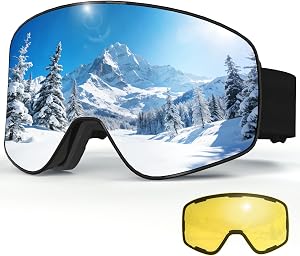
The JQF Gear Magnetic Ski Goggles make lens changes fast, since the lenses snap onto the frame magnetically and can be swapped quickly. The full Revo coated dual-layer lens blocks UV400 rays, and dual-direction ventilation helps keep vision fog-free during snowstorms or hard efforts on the mountain.
Comfort is well covered too. The TPU frame stays flexible without deforming, and a three-layer soft sponge absorbs impact and shields your face from the cold. The wide elastic strap has three silicone grip strips that keep it from slipping on a helmet, and the OTG design fits over most glasses. For riders who move between varied light conditions, this is a flexible, practical pair that suits many other outdoor activities.
Pros: Magnetic lens swaps, UV400 protection, anti-fog ventilation, flexible TPU frame, non-slip strap
Cons: Extra lenses may cost more, magnetic system needs careful handling
See the JQF Gear Magnetic Ski Goggles
5. Opolis Alpin

- UV Protection: 100 percent
- Light Transmission: 10 percent / 26 percent
- Polarized: Yes
- Helmet Compatible: Yes
The Opolis Alpin snow goggles are rugged and functional, made to perform from backcountry trails to first chair. They integrate with your helmet for a precise fit, and the design delivers a really wide field of view so you can scan the terrain ahead with confidence.
Polarized lenses reduce glare, and the spare lens makes it easy to adjust when conditions shift. The Carmel Glide lens transmits 10 percent of light, suited to bright sun, while the Coffee Run lens transmits 26 percent for cloudier moments. With 100 percent UV protection and a standard bridge fit on a medium frame, these goggles are a dependable choice for hard-charging riders who like a tough, no-nonsense build.
Pros: Very wide field of view, polarized, spare lens included, helmet integration, full UV protection
Cons: Low light transmission suits bright days best, not photochromic
6. Opolis Summit

- UV Protection: 100 percent
- Light Transmission: 7.5 percent / 21.5 percent
- Lens Shape: Cylindrical
- Interchangeable Lenses: Yes, 1 extra included
The Opolis Summit snow goggles combine visibility, durability and a comfortable fit in one package. A wide field of view lets you take in the slopes, and the rugged construction is ready for long days on the mountain, whether you ride resort runs or explore beyond the boundaries.
Two lenses are included and they are easy to swap. The Silver Line lens transmits 7.5 percent of light for strong sun, while the Cherry Frost lens transmits 21.5 percent for dimmer conditions. Both are polarized, cylindrical and offer 100 percent UV protection. With helmet compatibility and a standard bridge fit on a medium frame, the Summit is a solid, versatile option for riders who face changing weather.
Pros: Wide field of view, two lenses included, polarized, helmet compatible, comfortable fit
Cons: Medium frame only, low transmission lenses are less suited to overcast days
How to Choose Polarized Snowboard Goggles
Snowboarding is one of the most exciting winter sports, but it comes with challenges. One of the biggest is dealing with bright sunlight and glare reflecting off the snow. This is where polarized snowboard goggles come in. They help you see clearly, protect your eyes, and make your ride safer and more enjoyable. But with so many options available, choosing the right pair can feel overwhelming. This guide will walk you through everything you need to know to pick the perfect polarized snowboard goggles for your needs.
What Are Polarized Snowboard Goggles?
Polarized snowboard goggles are specially designed eyewear that uses a chemical coating to filter out horizontal light waves. This reduces glare from reflective surfaces like snow and ice. Unlike regular tinted goggles that only darken your view, polarized lenses actually cut through the harsh brightness, giving you a clearer and more comfortable vision.
These goggles are especially useful on sunny days when the snow acts like a giant mirror. Without polarization, you might squint, get headaches, or even miss important details on the slopes. With polarized lenses, you can see contours, bumps, and other riders more easily.
Why Choose Polarized Goggles?
Before diving into the selection process, let’s look at why polarized goggles are worth considering:
- Glare Reduction: They block intense reflected light, making it easier to see.
- Eye Comfort: Less squinting means less eye strain and fewer headaches.
- Better Contrast: You can spot terrain changes and obstacles more clearly.
- UV Protection: Most polarized lenses also block harmful UV rays.
- Enhanced Safety: Clear vision helps you avoid accidents and ride with confidence.
Key Factors to Consider When Choosing Polarized Snowboard Goggles
Now, let’s break down the most important factors to think about before buying your goggles.
1. Lens Shape and Size
Goggles come in different shapes, and each has its own advantages. The two main types are cylindrical and spherical lenses.
- Cylindrical Lenses: These curve horizontally but are flat vertically. They offer a retro look, are usually cheaper, and provide decent peripheral vision.
- Spherical Lenses: These curve both horizontally and vertically, mimicking the shape of your eye. They offer better optics, less distortion, and a wider field of view. They also tend to be more expensive.
Consider the size of your face too. Goggles that are too small can leave gaps, while oversized ones may not fit under your helmet properly. Look for goggles that fit snugly without pressing too hard on your face.
2. Lens Color and Tint
The color and tint of your polarized lenses affect how well you see in different light conditions. Here’s a quick guide:
| Lens Color | Best For | Benefits |
|---|---|---|
| Yellow/Gold | Low light, cloudy days | Boosts contrast and brightness |
| Rose/Pink | Mixed conditions | Improves contrast in flat light |
| Green | Bright sunny days | Reduces glare and eye strain |
| Gray | Very bright conditions | True color perception, cuts brightness |
| Blue/Purple | All-around use | Good contrast and glare reduction |
Many goggles come with interchangeable lenses, so you can swap them based on weather conditions. This is a great feature if you ride in varied environments.
3. Polarization Quality
Not all polarized lenses are created equal. Look for goggles from reputable brands that clearly state their lenses are polarized. Cheap polarized lenses may not filter light effectively or could distort your vision. Read reviews and check specifications before buying.
Also, note that some polarized lenses can make it harder to see your phone or GPS screen. If you rely on digital devices while riding, test this if possible.
4. Fit and Comfort
Comfort is crucial because you’ll wear these goggles for hours. Here’s what to check:
- Face Foam: Multi-layer foam provides a soft seal and keeps cold air out.
- Strap Adjustability: A wide, adjustable strap ensures a secure fit over your helmet.
- Helmet Compatibility: Make sure the goggles fit well with your helmet to avoid gaps or pressure points.
- Weight: Lighter goggles reduce fatigue during long rides.
If possible, try goggles on before buying. If shopping online, check the return policy.
5. Ventilation and Anti-Fog Features
Foggy goggles are a nightmare. They block your vision and force you to stop and wipe them constantly. Polarized goggles with good ventilation and anti-fog coatings help prevent this.
- Vents: Look for goggles with multiple vents on the top and bottom to allow airflow.
- Anti-Fog Coating: This inner coating stops moisture from condensing on the lens.
- Dual Lenses: Two lenses with air between them provide better insulation and reduce fogging.
Even with these features, avoid breathing directly into your goggles or putting them on your forehead when not in use.
6. Field of View
A wide field of view helps you see other riders, obstacles, and terrain changes without turning your head. Spherical lenses and frameless designs often offer the best peripheral vision. Some goggles are designed to fit over glasses, which is another consideration if you wear prescription eyewear.
7. Durability and Materials
Snowboarding can be tough on gear. Your goggles should withstand bumps, drops, and cold temperatures. Look for:
- Impact-Resistant Lenses: Polycarbonate lenses are lightweight and shatter-resistant.
- Flexible Frames: TPU (thermoplastic polyurethane) frames bend without breaking.
- Scratch-Resistant Coating: This keeps your lenses clear over time.
Proper care also extends the life of your goggles. Store them in a protective case when not in use.
8. Price and Value
Polarized snowboard goggles range from budget-friendly to premium. Here’s a rough idea:
| Price Range | What to Expect |
|---|---|
| $30 – $60 | Basic polarization, fewer features, okay for occasional use |
| $60 – $120 | Good quality, better fit, anti-fog, some interchangeable lenses |
| $120 – $250+ | Premium optics, superior comfort, multiple lenses, top brands |
Higher price doesn’t always mean better for your needs. Consider how often you ride and in what conditions. A mid-range pair often offers the best balance of quality and value.
9. Brand Reputation and Reviews
Stick with brands known for quality snowboarding gear. Some popular options include Oakley, Smith, Giro, Anon, and Dragon. Read customer reviews to learn about real-world performance, especially regarding polarization, fogging, and durability.
Be wary of extremely cheap polarized goggles from unknown brands. They may claim polarization but deliver poor results.
10. Interchangeable Lenses
If you ride in different light conditions, interchangeable lenses are a big plus. You can switch from a dark lens for sunny days to a yellow or rose lens for cloudy days. Some systems are easier to swap than others, so check how the lenses attach and detach.
How to Test Polarized Goggles
If you’re buying in person, here’s a simple test:
- Put on the goggles and look at a reflective surface like snow or water.
- Slowly rotate your head. If the glare changes or disappears, the lenses are polarized.
- Check for distortion by looking at straight lines. They should look straight, not wavy.
Online, you can’t test them, so rely on brand reputation and return policies.
Common Mistakes to Avoid
Many people make these mistakes when buying polarized snowboard goggles:
- Choosing Style Over Function: Looks matter, but fit and lens quality matter more.
- Ignoring Helmet Compatibility: Goggles that don’t fit your helmet can leave gaps or cause discomfort.
- Buying Cheap Polarized Lenses: They often underperform and may distort vision.
- Forgetting About Replacement Lenses: If you can’t buy new lenses, you may need new goggles when they scratch.
- Not Considering Light Conditions: A lens that works great on sunny days may be useless in flat light.
Care and Maintenance Tips
To keep your polarized goggles in top shape:
- Clean lenses with a microfiber cloth and lens cleaner, not your shirt.
- Avoid touching the inner lens, as this can damage anti-fog coatings.
- Store in a soft pouch or hard case.
- Don’t leave them in hot places like a car dashboard.
- Replace scratched or damaged lenses promptly.
Final Thoughts
Choosing the best polarized snowboard goggles comes down to understanding your needs and the conditions you ride in. Focus on lens quality, fit, comfort, and anti-fog features. Polarization is a huge benefit for reducing glare and improving visibility, but it should be paired with good overall design.
Take your time, read reviews, and if possible, try before you buy. A great pair of polarized goggles can transform your snowboarding experience, keeping your eyes comfortable and your vision sharp from first lift to last run.
Whether you’re a beginner or a seasoned rider, investing in quality polarized snowboard goggles is a smart move. Your eyes will thank you, and you’ll enjoy the slopes more than ever.