Best Race Skis of 2027
Race skis are built for speed, precision, and control on groomed runs. They help skiers carve sharp turns and stay stable at high speeds. Whether you are a beginner looking to improve or an advanced skier chasing faster times, the right pair makes a big difference. In this article, we review the best race skis for different skill levels and needs. We cover their key features, pros, and cons so you can find the perfect fit for your next run down the mountain.
1. Rossignol Arcade 88

- Terrain: Groomed
- Dimensions: 132 / 88 / 120 mm
- Radius: 12–16 m
- Core: PEFC poplar
The Rossignol Arcade 88 is built for advanced skiers who want one ski to handle everything from the first chair to the final lap. It blends race-inspired technology with a freeride construction, giving you a stable platform that can carve hardpack with precision while still remaining playful enough for mixed conditions. The 88 mm waist is a versatile sweet spot for groomed runs and occasional soft snow.
With a standard alpine camber profile and a flat tail, this ski rewards strong edging and confident turn initiation. The poplar core keeps the ski lively and responsive without adding unnecessary weight. It is a quiver-of-one option for those who spend most of their time on-piste but want a ski that can adapt when conditions change. Bindings are not included, so you can pair it with your preferred setup.
- Pros: Versatile 88 mm waist; stable at speed; race-inspired carving performance; lively poplar core
- Cons: Bindings not included; limited float in deep powder; best suited to advanced skiers
2. Nordica Wild Belle DC 84 – Women’s

- Terrain: Groomed
- Dimensions: 131–133 / 84 / 110–112 mm
- Radius: 12.2–13.7 m
- Core: Wood/Pulse Core
The Nordica Wild Belle DC 84 is a women’s all-mountain ski that comes with bindings included, making it a convenient choice for skiers who want a playful yet powerful ride. Double Core technology gives it a smooth flex and reliable stability at any speed, while the 84 mm waist provides a balanced platform for groomed runs and light off-piste exploration.
The standard alpine camber and flat tail allow for strong edge grip and predictable turn finishes. With DIN settings ranging from 3 to 11, it suits a wide range of intermediate to advanced skiers. The wood and Pulse Core construction keeps the ski lightweight and responsive, and the pair weighs between 6 lbs. 12 oz. and 7 lbs. 3 oz. depending on length. It is an excellent choice for women who want one ski to do it all.
- Pros: Bindings included; lightweight; stable at speed; women-specific design
- Cons: Limited float in deep powder; not ideal for aggressive expert charging
3. Rossignol Arcade 84

- Terrain: Groomed
- Dimensions: 132 / 84 / 120 mm
- Radius: 12–16 m
- Core: Poplar
The Rossignol Arcade 84 is a unisex ski that comes with bindings included, offering a complete package for advanced skiers who want a versatile quiver-of-one. It balances race tech with a freeride construction, making it capable of carving groomers with precision while still handling mixed snow conditions with confidence.
The 84 mm waist provides a quick edge-to-edge feel, and the standard alpine camber with a flat tail delivers strong grip and stability. The poplar core keeps the ski lively and durable, while the included bindings have a DIN range of 3.5 to 12, suitable for a wide range of skiers. Weighing between 7 lbs. and 8 lbs. 9.6 oz. per pair, it is a solid choice for those who want a reliable on-piste performer that can venture off the beaten path.
- Pros: Bindings included; versatile 84 mm waist; stable and lively; good DIN range
- Cons: Not ideal for deep powder; heavier at longer lengths
4. Atomic Cloud Q9

- Terrain: Groomed
- Dimensions: 115–121.5 / 74.5–76 / 98.5–105 mm
- Radius: 12.1–14.3 m
- Core: Light Woodcore / Densolite Core
The Atomic Cloud Q9 is a women’s ski designed for intermediate skiers who want to feel effortless and confident on groomed runs. With a narrow 75 mm waist and a Multi Radius sidecut, it excels in any on-piste condition, making turn initiation smooth and predictable. The lightweight construction reduces fatigue, allowing you to ski longer and improve your technique.
Bindings are included with a DIN range of 3 to 10, and the ski is compatible with both Alpine and GripWalk boot soles. The Light Woodcore and Densolite Core combination keeps the ski light and forgiving while still providing enough stability for moderate speeds. At just over 10 lbs. with bindings, it is a manageable setup for progressing skiers. It is an excellent choice for women who spend most of their time on groomed trails.
- Pros: Lightweight and easy to turn; bindings included; GripWalk compatible; great for intermediates
- Cons: Not for advanced or aggressive skiers; limited versatility off-piste
5. Völkl Mantra 88

- Terrain: Groomed
- Dimensions: 134 / 88 / 114 mm
- Radius: 13.2–16.2 m
- Core: Wood
The Völkl Mantra 88 is a men’s ski that delivers a blend of power and precision for skiers who want to go anywhere on the mountain. Updated for better agility, it can carve groomers with authority and still handle off-piste terrain with confidence. The 88 mm waist provides a versatile platform that balances quickness with stability.
The tip and tail rocker profile makes turn initiation easy and adds float in softer snow, while the flat tail provides a solid finish. The wood core gives the ski a damp, stable feel at speed, and the multi-radius sidecut allows for a variety of turn shapes. Bindings are not included, so you can choose your preferred setup. It is a strong option for advanced skiers who want a precise and powerful ride.
- Pros: Powerful and precise; versatile 88 mm waist; rocker profile adds agility; stable at speed
- Cons: Bindings not included; heavier than some competitors; demands strong technique
6. Völkl Mantra 88 – Women’s

- Terrain: Groomed and powder
- Dimensions: 134 / 88 / 114 mm
- Radius: 11.9–13.2 m
- Core: Wood
The Völkl Mantra 88 for women is a versatile all-mountain ski that refuses to make you choose between piste and powder. With a wood core and Tailored Titanal Frame, it stays stable and damp at speed while remaining agile enough for moguls and groomers. The 88 mm waist and tip and tail rocker give it the ability to float in softer snow without sacrificing edge grip on hardpack.
Bindings are not included, allowing you to customize the setup to your preferences. The multi-radius sidecut supports a wide range of turn shapes, from short slalom turns to longer arcs. Weighing around 7 lbs. per pair, it is manageable for strong intermediate to advanced women skiers. It is a confident choice for those who want one ski to handle the entire mountain with stability and precision.
- Pros: Versatile for groomed and powder; stable and damp; women-specific construction; playful yet powerful
- Cons: Bindings not included; heavier than pure carving skis; requires advanced technique
7. Rossignol Arcade 80

- Terrain: Groomed
- Dimensions: 130 / 80 / 118 mm
- Radius: 10–14 m
- Core: PEFC poplar wood core
The Rossignol Arcade 80 opens the door to the entire resort for skiers who want a lightweight and confident carving experience. With an 80 mm waist, it is quick edge-to-edge and excels on groomed runs in all on-piste snow conditions. Air Tip technology and carbon layers reduce overall weight, making it easy to handle for a wide range of abilities.
Bindings are included with a DIN range of 2.5 to 10, and the ski is compatible with both Alpine and GripWalk boot soles. The tip and tail rocker profile adds versatility and ease of turn initiation, while the poplar wood core provides a lively and durable feel. Weighing as little as 5 lbs. 4.5 oz. per pair, it is one of the lighter options in this list, ideal for skiers who prioritize ease and comfort without sacrificing performance.
- Pros: Very lightweight; bindings included; easy to turn; GripWalk compatible
- Cons: Narrow waist limits off-piste performance; not for aggressive expert skiers
8. Nordica Enforcer 89

- Terrain: Groomed
- Dimensions: 120–122.5 / 89 / 108–110.5 mm
- Radius: 16.5–17.5 m
- Core: Wood/metal/Pulse core
The Nordica Enforcer 89 is a favorite among skiers who spend most of their time on trails. It carves with confidence and excels on firmer snow, offering a smooth and stable ride that inspires trust at speed. The 89 mm waist provides a versatile platform that can handle mixed conditions, while True Tip technology keeps the ski playful and easy to maneuver.
The tip and tail rocker profile adds agility and float when needed, and the wood, metal, and Pulse core construction delivers a damp and powerful feel. Bindings are not included, so you can pair it with your preferred setup. Weighing between 7 lbs. 12.9 oz. and 8 lbs. 13.1 oz. per pair, it is a substantial ski that rewards strong technique. It is an excellent choice for advanced men skiers who want a precise and reliable on-piste performer.
- Pros: Smooth and stable; excellent edge grip; playful True Tip technology; versatile 89 mm waist
- Cons: Bindings not included; heavier than some alternatives; not ideal for beginners
9. Blizzard Black Pearl 88

- Terrain: Groomed
- Dimensions: 125–127.5 / 88 / 107–109.5 mm
- Radius: 11–15 m
- Core: Women-specific TrueBlend All-Mountain Woodcore
The Blizzard Black Pearl 88 is a women’s ski that thrives on steep trails and technical terrain. It features a women-specific construction for a damp and stable feel, giving you confidence to push your limits. The 88 mm waist and tip and tail rocker profile allow it to perform both on and off piste, making it a true all-mountain companion.
The TrueBlend All-Mountain Woodcore, a blend of beech and poplar, provides a smooth flex and reliable edge grip. Bindings are not included, so you can customize the setup to your needs. Weighing between 6 lbs. 14 oz. and 8 lbs. 2.5 oz. per pair, it is manageable for strong intermediate to advanced women skiers. It is a versatile and capable ski that handles groomers with precision and soft snow with ease.
- Pros: Damp and stable; versatile for on and off piste; women-specific construction; strong edge grip
- Cons: Bindings not included; not the lightest option; best for advanced skiers
10. Rossignol Arcade W 80 – Womens

- Terrain: Groomed
- Dimensions: 130 / 80 / 118 mm
- Radius: 9–12 m
- Core: PEFC poplar wood core
The Rossignol Arcade W 80 is a women’s ski that opens the door to the entire resort with a lightweight feel and confident carving. The 80 mm waist makes it quick and easy to turn on groomed runs, while carbon layers reduce overall weight for effortless handling. It is designed for women who want a reliable on-piste ski that inspires confidence in all conditions.
Bindings are included with a DIN range of 2.5 to 10, and the ski is compatible with both Alpine and GripWalk boot soles. The tip and tail rocker profile adds versatility and ease of turn initiation, while the poplar wood core provides a lively and durable feel. Weighing as little as 4 lbs. 13.6 oz. per pair, it is an exceptionally light setup that reduces fatigue and makes skiing more enjoyable. It is a great choice for intermediate women skiers.
- Pros: Very lightweight; bindings included; easy to turn; GripWalk compatible
- Cons: Narrow waist limits off-piste use; not for aggressive expert skiers
How to Choose Race Skis
Choosing the right race skis can feel overwhelming, especially with so many brands, models, and technical terms to understand. Race skis are specialized pieces of equipment designed for speed, precision, and control on groomed snow. They differ significantly from all-mountain or freeride skis in their construction, shape, and intended use. Whether you are a beginner racer or an experienced competitor, understanding the key factors will help you make a smart decision. This guide walks you through everything you need to know about choosing race skis.
What Are Race Skis?
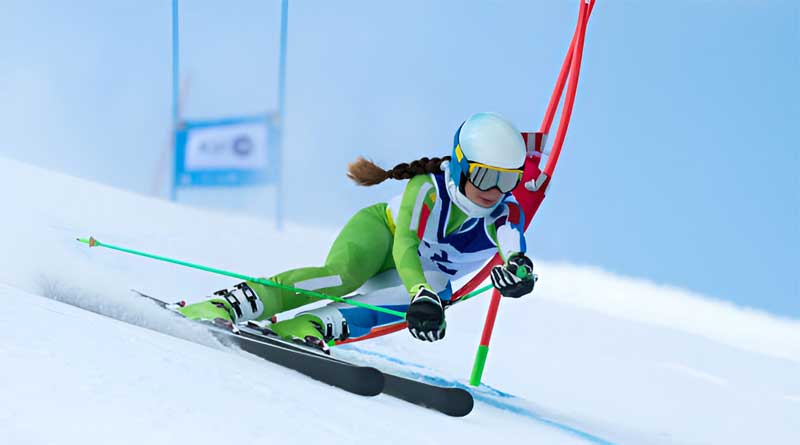
Race skis are built specifically for competitive skiing or for skiers who want the highest level of on-piste performance. They are narrower, stiffer, and more aggressive than recreational skis. Their design prioritizes edge grip, quick turn initiation, and stability at high speeds. Race skis are typically used in disciplines such as slalom, giant slalom, super-G, and downhill. Each discipline requires a different type of ski, so it is important to know which one you are shopping for.
Key Characteristics of Race Skis
- Narrow waist width, usually between 60 mm and 70 mm for technical disciplines
- Stiff flex for powerful edge grip and high-speed stability
- Metal laminates such as titanal for dampness and torsional rigidity
- Longer effective edge for precise carving
- Aggressive sidecut for tight or long turns depending on discipline
- Flat tails for strong turn finishes
- Often sold without bindings, allowing custom setup
Determine Your Racing Discipline
The first step in choosing race skis is identifying which discipline you will be racing or training in. Each discipline has its own ski specifications regulated by the International Ski Federation (FIS) for competition. Even if you are not racing at an FIS level, understanding these differences will help you pick the right ski for your goals.
Slalom (SL)
Slalom skis are the shortest and most agile race skis. They are designed for tight, quick turns and rapid edge-to-edge transitions. Waist widths are typically around 65 mm to 68 mm. Sidecut radii are short, often between 10 and 13 meters. These skis are stiff but responsive, allowing skiers to make sharp, rhythmic turns down a steep, icy course. Slalom skis are ideal for technical skiers who enjoy quick, precise movements.
Giant Slalom (GS)
Giant slalom skis are longer and have a larger turn radius than slalom skis. They are built for higher speeds and longer, sweeping turns. Waist widths usually range from 65 mm to 70 mm. Sidecut radii are typically between 17 and 27 meters depending on the length and category. GS skis are stiffer and more stable at speed, making them suitable for strong intermediate to advanced racers. They require good technique and leg strength to bend and control.
Super-G (SG) and Downhill (DH)
Super-G and downhill skis are the longest and fastest race skis. They are designed for maximum stability at very high speeds. Waist widths are usually around 65 mm to 70 mm, but lengths can exceed 210 cm for downhill. Sidecut radii are much larger, often 30 meters or more. These skis are extremely stiff and heavy, requiring expert-level strength and skill. They are not recommended for recreational skiers or those new to racing.
Understand Ski Construction
The way a race ski is constructed has a huge impact on its performance. Understanding the materials and build will help you choose a ski that matches your ability and racing goals.
Core Materials
Most race skis use a wood core, often made from poplar, beech, ash, or a combination. Wood provides a lively, responsive feel and good energy transmission. Some high-end race skis use denser woods like beech or ash for added stiffness and dampness. Cheaper race skis may use foam or composite cores, but these are generally less durable and less responsive.
Metal Laminates
Many race skis include layers of metal, usually titanal or aluminum, above and below the core. Metal laminates add torsional rigidity, dampness, and edge grip. They make the ski stiffer and more stable at speed but also heavier and more demanding. Beginners may find metal-laminated skis too punishing, while advanced racers often prefer them for their performance.
Sidewall Construction
Race skis almost always use a full sidewall construction rather than a cap construction. Full sidewalls run vertically along the edges of the ski, providing better edge grip, durability, and energy transmission. Cap construction is lighter and more forgiving but less precise. For racing, full sidewall is the standard.
Base Material
Race skis use sintered bases, which are harder, faster, and more durable than extruded bases. Sintered bases absorb wax well and hold speed on flat sections. They require regular waxing and maintenance but offer superior glide. Some race skis come with a structured base pattern to improve water displacement and speed.
Choose the Right Length
Ski length is one of the most important factors in choosing race skis. Too short, and the ski will feel unstable at speed. Too long, and it will be difficult to control. Length recommendations vary by discipline, skier height, weight, and ability.
| Discipline | Typical Length Range | Recommended For |
|---|---|---|
| Slalom | 150–165 cm | Technical skiers, quick turns |
| Giant Slalom | 170–185 cm | Strong intermediate to advanced racers |
| Super-G | 185–205 cm | Expert racers, high speeds |
| Downhill | 205–215+ cm | Elite racers only |
For non-FIS racing or recreational racing, you can often size down slightly for easier handling. However, always check the manufacturer’s recommendations and any local race regulations.
Consider Turn Radius
Turn radius is determined by the ski’s sidecut and is measured in meters. It indicates how long or short the ski’s natural turn will be. Slalom skis have short radii, typically 10 to 13 meters, for tight turns. GS skis have longer radii, often 17 to 27 meters, for larger turns. Super-G and downhill skis have radii of 30 meters or more. Choose a turn radius that matches the type of course you will be skiing and your preferred turning style.
Stiffness and Flex
Race skis are generally stiff, but stiffness varies between models and disciplines. Slalom skis are stiff but shorter, making them manageable for strong skiers. GS skis are stiffer and longer, requiring more strength. Super-G and downhill skis are extremely stiff. Your weight, height, and leg strength should guide your choice. Lighter skiers may struggle to bend very stiff skis, while heavier or more powerful skiers may overpower softer skis.
Bindings and Boot Compatibility
Most race skis are sold flat, meaning bindings are not included. This allows you to choose bindings that match your boot sole, DIN range, and skiing style. Race bindings are typically heavier and more durable than recreational bindings. They offer higher DIN ranges, often up to 16 or 18 for adults. Make sure your bindings are compatible with your boots, whether they use Alpine (ISO 5355) or GripWalk (ISO 23223) soles. Always have bindings mounted and adjusted by a certified technician.
Ability Level and Racing Goals
Your ability level should heavily influence your choice. Beginners and intermediate skiers should avoid FIS-level race skis, which are extremely demanding. Instead, look for “race-inspired” or “cheater” race skis. These are softer, more forgiving versions of race skis designed for recreational racers and advanced skiers. They offer much of the performance without the punishing stiffness. Advanced and elite racers can choose full FIS race skis for maximum performance.
Race Ski Categories
- FIS Race Skis: Highest level, stiffest, longest, for elite competitors
- Non-FIS Race Skis: Slightly softer and shorter, for serious amateur racers
- Cheater Race Skis: Race-inspired, forgiving, for advanced recreational skiers
- Junior Race Skis: Scaled-down versions for young racers
Boots Matter as Much as Skis
Even the best race skis will not perform well with ill-fitting or soft boots. Race boots are stiff, narrow, and designed for precise energy transmission. They should match your foot shape, ankle flexibility, and racing discipline. A good bootfitter can help you choose the right race boot and customize it for comfort and performance. Remember, boots are the most important piece of equipment for control and safety.
Maintenance and Tuning
Race skis require regular maintenance to perform at their best. Edges should be sharpened frequently, especially for icy conditions. Bases should be waxed before every race or training session. Some racers use different waxes for different snow temperatures and humidity levels. A well-tuned ski is faster, safer, and more enjoyable to ski. Learn basic tuning skills or find a reputable ski shop to keep your race skis in top condition.
Budget Considerations
Race skis can be expensive, especially FIS-level models. Prices range from a few hundred dollars for junior or entry-level race skis to over a thousand dollars for top-tier models. Bindings, boots, and tuning equipment add to the cost. Set a realistic budget and prioritize. If you are new to racing, consider buying used race skis or previous-season models to save money. Always inspect used skis for edge and base damage before purchasing.
Try Before You Buy
Whenever possible, demo race skis before buying. Many ski shops and resorts offer demo days where you can test different models and lengths. This allows you to feel how a ski performs on snow and decide if it matches your style and ability. If demoing is not possible, talk to experienced racers, coaches, or shop technicians for recommendations.
Summary Table: Race Ski Selection Guide
| Factor | What to Consider |
|---|---|
| Discipline | Slalom, GS, Super-G, or Downhill |
| Length | Match discipline, height, weight, ability |
| Turn Radius | Short for SL, long for GS/SG/DH |
| Stiffness | Stiffer for heavier, stronger skiers |
| Construction | Wood core, metal laminates, full sidewall |
| Bindings | Compatible with boots, correct DIN range |
| Ability Level | FIS, non-FIS, or cheater race skis |
| Budget | New, used, or previous-season models |
Final Thoughts
Choosing race skis is a personal decision that depends on your discipline, ability, body type, and goals. Take your time, do your research, and seek advice from coaches and professionals. The right race skis will help you ski faster, turn more precisely, and enjoy the sport even more. Whether you are chasing podiums or simply want to improve your carving, investing in the right equipment is a step toward better skiing.