Best Ski Bindings for Women of 2027
Finding the right ski bindings can completely change your time on the slopes. For women, the best bindings offer a perfect mix of safety, comfort, and control. This guide breaks down the top options designed specifically for women’s boots and skiing styles. We’ll look at easy-to-use features, release settings, and durability so you can pick the pair that helps you ski with confidence and have more fun on the mountain.
1. Marker Griffon 13 X

- DIN Range: 4 to 13
- Boot Compatibility: Alpine and GripWalk
- Brake Widths: 90, 105 and 120 mm
- Weight (Pair): 4 lbs. 7.96 oz.
The Marker Griffon 13 X is a strong choice for women who ski with confidence and want a binding that keeps up on any terrain. It is a unisex design, but the wide DIN range of 4 to 13 lets lighter skiers dial in a dependable release setting with room to grow as their skills progress. The low stand height keeps you close to the ski, so every edge input transfers directly to the snow.
Whether you are carving hardpack, cruising freeride lines or hitting park features, this binding feels tough yet stays light enough for all-day comfort. It works with both Alpine and GripWalk soles, and three brake widths make it easy to match your skis. The adjustment range of 240 to 380 millimeters suits a wide variety of boot sizes, including smaller women’s boots. At just over four pounds per pair, it is an easy binding to live with.
Pros:
- Direct power transmission
- Wide DIN range
- Versatile for park and freeride
Cons:
- Not the lightest option
- Geared toward advanced skiers
View at REI View at evo View at Amazon
2. Tyrolia Attack LYT 11 GW

- DIN Range: 3 to 11
- Boot Compatibility: Alpine and GripWalk
- Brake Widths: 95 and 110 mm
- Weight (Pair): 3 lbs. 15.8 oz.
The Tyrolia Attack LYT 11 GW is a lighter, more compact take on the popular Tyrolia freeski binding, and it delivers 15 percent less weight without giving up performance. For women who want a binding that feels nimble underfoot, this is a smart pick. Its DIN range of 3 to 11 is well suited to lighter and mid-weight skiers who want a reliable release setting.
At under four pounds per pair, it helps reduce overall ski weight, which you will notice on long days and when carrying your gear. It accepts both Alpine and GripWalk boot soles, and the heel lift feature adds extra versatility. Brake widths of 95 and 110 millimeters cover most all-mountain and freeride skis. Advanced skiers who prioritize a light feel and sharp responsiveness will appreciate how refined and confidence-inspiring this binding feels on the hill.
Pros:
- Lightweight and compact
- Low starting DIN of 3
- Includes heel lift
Cons:
- Only two brake widths
- Recommended skier weight not listed
3. Look Pivot 2.0 15 GW

- DIN Range: 6 to 15
- Skier Weight: 140 to 200 lbs.
- Brake Widths: 95, 105 and 115 mm
- Weight (Pair): 5 lbs. 4.8 oz.
Made for all-mountain freeskiing, the Look Pivot 2.0 15 GW is a high-performance binding for advanced women skiers who push their limits. The standout feature is its powerful shock absorption and generous travel, which keep the boot securely engaged over chop, bumps and rough landings. Retention and release are consistent, so you can ski aggressively with confidence.
With a DIN range of 6 to 15 and a recommended skier weight of 140 to 200 pounds, it is best suited to stronger or more aggressive skiers who need a higher release setting. It supports both Alpine and GripWalk soles, and three brake widths let you pair it with many ski waists. At just over five pounds per pair it is on the heavier side, but that reflects a robust, damped design. Lighter skiers should check that the minimum DIN of 6 fits their needs.
Pros:
- Excellent shock absorption
- Trusted retention and release
- Very high DIN ceiling
Cons:
- Heavier than most rivals
- High minimum DIN may not suit lighter skiers
View at REI View at evo View at Amazon
4. Salomon S/Lab Shift2 13 MN

- DIN Range: 6 to 13
- Boot Compatibility: Alpine, GripWalk and Touring
- Brake Widths: 90, 100, 110 and 120 mm
- Weight (Pair): 4 lbs. 1 oz.
The Salomon S/Lab Shift2 13 MN is an alpine touring binding that pairs solid downhill performance with a seamless uphill experience, making it ideal for women who want to explore deep into the backcountry. You can transition between skinning and skiing with confidence, and the binding is built to handle serious terrain once you point your skis downhill.
It is compatible with Alpine, GripWalk and Touring soles, which gives you flexibility when choosing boots. A DIN range of 6 to 13 suits strong, advanced skiers, and four brake widths make it simple to match a wide range of skis. The 30 millimeter adjustment range helps you fine-tune fit, while the heel lift makes climbing more comfortable. At roughly four pounds per pair, the weight stays reasonable. If you split your time between lift-served days and backcountry missions, this is a versatile and trustworthy option.
Pros:
- Works for both uphill and downhill
- Three boot sole standards supported
- Four brake width options
Cons:
- Minimum DIN of 6 may be high for lighter skiers
- Premium touring design
View at REI View at evo View at Amazon
5. Salomon Strive 14 GW

- DIN Range: 5 to 14
- Skier Weight: 127 to 319 lbs.
- Brake Widths: 90, 100 and 115 mm
- Weight (Pair): 2 lbs. 2.6 oz.
With its low center of gravity, the Salomon Strive 14 GW gives women skiers an enhanced on-snow feel and lets the character of the ski shine through. The low stand height brings you closer to the snow, improving power transmission and response so the ski reacts quickly to your inputs on every turn.
A DIN range of 5 to 14 and a recommended skier weight of 127 to 319 pounds make it suitable for a wide range of advanced skiers, though lighter women should confirm that the minimum setting fits their needs. It works with both Alpine and GripWalk soles and offers three brake widths. The 30 millimeter adjustment range helps accommodate different boot sizes. Weighing only about two pounds per pair, it is one of the lightest bindings in this lineup, which means less weight on your skis and a livelier feel. It is a great option for dedicated, performance-minded skiers.
Pros:
- Very lightweight
- Low stand height for great snow feel
- Wide skier weight range
Cons:
- Minimum DIN of 5 may be high for lighter skiers
- Aimed at advanced skiers
View at REI View at evo View at Amazon
6. Tyrolia Protector PR 11 GW

- DIN Range: 3 to 11
- Adjustment Range: 255 to 378 mm
- Brake Widths: 85 and 110 mm
- Weight (Pair): 5 lbs. 1.8 oz.
The Tyrolia Protector PR 11 GW is a safety-focused binding that suits intermediate women skiers who are building confidence on the mountain. Its Full Heel Release technology improves protection in forward and backward twisting falls, adding real peace of mind. That makes it a thoughtful choice for progressing skiers who want dependable performance without stepping up to an aggressive race-style binding.
A DIN range of 3 to 11 covers lighter and mid-weight skiers well, and the recommended skier weight is anything above 67 pounds. The binding works with Alpine and GripWalk soles, and the wide adjustment range fits many boot sizes, including smaller women’s boots. Brake widths of 85 and 110 millimeters allow you to match it to narrower or wider skis. At just over five pounds per pair it is heavier than some competitors, but the trade-off is added safety technology and a forgiving, dependable feel for everyday resort skiing.
Pros:
- Full Heel Release technology
- Low DIN of 3 suits lighter skiers
- Wide adjustment range
Cons:
- Heavier build
- Only two brake widths
View at REI View at evo View at Amazon
7. Tyrolia Protector+ Attack 14 GW

- DIN Range: 4 to 14
- Boot Compatibility: Alpine and GripWalk
- Brake Widths: 95 and 110 mm
- Weight (Pair): 2 lbs. 13 oz.
The Tyrolia Protector+ Attack 14 GW delivers the kind of precision and protection advanced women skiers want on the hill. Its lower stand height keeps you close to the ski for quick, accurate edge response, while the higher DIN range of 4 to 14 gives you room to ski aggressively without sacrificing a dependable release.
This binding is extremely versatile and ready for any terrain, from groomers to steeps and variable snow. The starting DIN of 4 is helpful for lighter skiers, and the top end of 14 suits those who ski hard. It works with Alpine and GripWalk soles, and brake widths of 95 and 110 millimeters cover most all-mountain skis. At about two pounds 13 ounces per pair, it keeps weight low without feeling flimsy. If you want a lightweight, responsive binding that can handle a bit of everything, this one deserves a close look when upgrading your setup.
Pros:
- Low stand height
- Wide DIN range
- Lightweight and versatile
Cons:
- Only two brake widths
- Recommended skier weight not listed
View at REI View at evo View at Amazon
8. Salomon Strive 10 GW
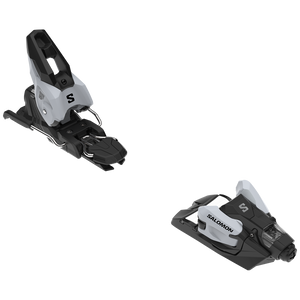
- Boot Sole Type: Alpine and GripWalk
- Ability Level: Beginner to intermediate
- DIN Low: 3
- DIN High: 10
The Salomon Strive 10 GW is designed to get you closer to the snow for the best possible snow feel, power transmission and response. For women who are stepping up their game, it offers a confidence-inspiring platform that responds quickly to subtle shifts in pressure and helps you feel more connected to your skis on every run.
It is a great choice for beginner to intermediate all-mountain riders, thanks to a DIN range of 3 to 10 that works well for lighter and mid-weight skiers. Compatibility with both Alpine ISO 5355 and GripWalk ISO 23223 soles means it pairs easily with most modern ski boots. The low DIN setting makes it easier to find a safe, comfortable release value as you build skills, and the upper range leaves room to grow. For women who want a straightforward, reliable binding that does not overcomplicate things, the Strive 10 GW is an easy recommendation for resort days.
Pros:
- Low DIN of 3 suits lighter skiers
- Great snow feel and response
- Works with modern boot soles
Cons:
- Lower DIN ceiling than expert bindings
- Advanced skiers may outgrow it
How to Choose Ski Bindings for Women
Ski bindings are the critical link between your boot and your ski, translating every movement into turn shape and control while releasing when it matters most. For women, the right binding can mean the difference between confidence on the slopes and unnecessary risk. Many women ski on bindings that are too stiff or mounted on unisex skis with release settings that never suit their weight and skiing style. This guide explains what makes a binding suitable for women, how to understand the DIN setting, and which features to prioritize for safety and performance.
Why Women Need Different Ski Bindings
The most important difference between men’s and women’s ski bindings is not the construction but the release setting. The DIN value (also called Z-value) determines how easily a binding releases during a fall. This value is calculated using weight, height, boot sole length, age, and skiing ability. Because women generally weigh less and have different bone density than men, a binding designed for a heavier skier may not release when it should.
Women are nearly twice as likely to suffer knee injuries in skiing accidents compared to men, partly because their bindings release less frequently during falls. Tests suggest that increasing binding sensitivity by just 15 percent could make bindings significantly safer for women without causing excessive pre-release. This is why paying attention to the DIN range of a binding is crucial: if the minimum DIN is too high for your weight, the binding simply will not release when you need it to.
Understanding the DIN Setting
The DIN setting is a number that indicates the force required to release your boot from the binding. It typically ranges from 1 to 15 or higher. Your setting is determined by a combination of factors, and a certified technician should always adjust it using a calibrated testing device.
| Factor | How It Affects DIN |
|---|---|
| Weight | Lighter skiers need lower DIN values |
| Height | Taller skiers generally need slightly higher values |
| Boot Sole Length | Longer soles require lower release settings |
| Age | Skiers over 50 typically use one step lower |
| Skiing Ability | Beginners use lower values; aggressive experts use higher |
For example, a woman weighing between 49 and 57 kilograms with a boot sole length of 271–290 millimeters might have a base DIN around 4. A beginner would use that value, while an aggressive advanced skier might go down one or two lines to a lower number for easier release. Always have a professional set your DIN—never guess.
Key Features to Look For
Appropriate DIN Range
Look for a binding whose DIN range comfortably includes your calculated setting. A binding with a DIN range of 3.5 to 11, such as the Look NX 11 GW, is a common choice for women and lighter skiers because it accommodates lower release values without sacrificing retention at the top end. Avoid bindings with a minimum DIN above 4 or 5 if you are a lighter or intermediate skier, as they may not release reliably.
Boot Sole Compatibility
Modern ski boots come in two main sole standards: traditional Alpine (ISO 5355) and GripWalk (ISO 23223). Many current bindings are “multi-norm” compatible, meaning they work with both types. If you have GripWalk boots or plan to buy them, verify that your binding supports that standard. The Marker Squire 11 and Look NX 11 GW are examples of bindings that accommodate both sole types.
Release Technology
Better bindings offer multi-directional release, which means the toe piece can release upward and sideways, not just laterally. This provides more protection during awkward falls. Look’s Full Drive Concept toe piece, for instance, offers 180-degree multi-directional release that functions independently from the heel. For women concerned about knee safety, this feature is worth prioritizing.
Weight and Ease of Use
A lighter binding reduces fatigue and makes carrying skis easier. Composite materials can achieve lower weight without compromising safety. Easy step-in and step-out designs are also valuable, especially if you ski with children or frequently stop on the hill. The Marker Squire 11 features an improved heel that requires 30 percent less step-in force than previous models.
Types of Bindings and Their Best Uses
- Alpine Resort Bindings: Designed for groomed runs and all-mountain skiing. Prioritize reliable release, appropriate DIN range, and boot compatibility. Look for models with DIN ranges starting around 3.5 to 4.
- Freeride Bindings: Built for off-piste and variable snow. They are typically heavier and more durable, with higher DIN ranges. Women who ski aggressively in deep snow may need a binding like the Marker Griffon 13, which offers a DIN range of 4 to 13.
- Touring Bindings: For ski touring and backcountry travel, weight becomes critical. Tech bindings like the ATK Raider 11 EVO offer adjustable release values and integrated brakes in a lightweight package, but they require touring-specific boots.
- Park and Freestyle Bindings: These prioritize elasticity and shock absorption. The Look Pivot series is popular for its turntable heel that reduces knee strain on landings.
Common Mistakes to Avoid
- Using a binding with too high a minimum DIN: If the lowest setting on your binding is above your calculated DIN, the binding will not release properly. This is a common problem with used skis or package deals.
- Assuming unisex is fine: Many ski packages mount unisex bindings with high DIN ranges. Women often fall in the lower third of these ranges, increasing injury risk.
- Setting your own DIN: Without a calibrated testing device, you cannot verify that your binding releases at the correct force. Always use a qualified shop.
- Ignoring boot sole wear: Worn boot soles can affect release accuracy. Check your boots regularly and replace them when the sole tread is significantly worn.
Final Recommendations
When shopping for ski bindings, start with your DIN number. Calculate it using a reputable online tool or ask a shop technician, then look for bindings whose range includes that number with room on both sides. Prioritize multi-directional release and boot sole compatibility. If you are a lighter or intermediate skier, models like the Look NX 11 GW or Marker Squire 11 are sensible starting points. More aggressive skiers may prefer the Marker Griffon 13 or Atomic Strive 14.
Finally, remember that the binding is only one part of the safety equation. Well-fitting boots, properly maintained skis, and honest self-assessment of your ability all contribute to staying safe on the mountain. Get your bindings professionally mounted and adjusted, and check them at the start of every season.