Best Ski Bindings of 2027
Choosing the right ski bindings is important for your safety and control on the slopes. The best bindings connect your boots to your skis and release when you fall, helping prevent injuries. With so many options available, finding a reliable pair can feel confusing. This article reviews the best ski bindings for different skiers, skills, and budgets. We explain key features in simple terms so you can pick the right bindings and enjoy your time on the mountain with confidence.
1. Marker Griffon 13 X

- Best Use: Downhill Skiing
- DIN Range: 4–13
- Boot Compatibility: Alpine ISO 5355 and GripWalk ISO 23223
- Weight: 4 lbs. 7.96 oz. per pair
The Marker Griffon 13 X ski bindings are designed for advanced skiers who want reliable performance on groomed slopes, freeride terrain, and in the terrain park. Their strong yet lightweight construction makes them suitable for everyday skiing, whether you enjoy carving hardpack or exploring fresh snow. The low stand height helps create a direct connection between your boots and skis, allowing efficient power transmission and responsive handling during turns.
With a DIN range of 4 to 13, these bindings accommodate a wide range of advanced skiing needs when correctly matched to the skier. They support both Alpine and GripWalk boot soles, offering flexibility when choosing compatible ski boots. The adjustable length range of 240–380 mm helps accommodate different boot sole lengths. Available brake widths of 90, 105, and 120 mm make it easier to match the bindings to suitable skis. Their unisex design also makes them a versatile option for different skiers. Professional installation and release-value adjustment are recommended for safety.
Pros:
- Versatile for piste, freeride, and park skiing.
- Low stand height supports direct power transmission.
- Compatible with Alpine and GripWalk boots.
Cons:
- May be more than beginners need.
- Heavier than some lightweight binding options.
View at REI View at evo View at Amazon
2. Tyrolia Attack LYT 11 GW

- Best Use: Downhill Skiing
- DIN Range: 3–11
- Boot Compatibility: Alpine ISO 5355 and GripWalk ISO 23223
- Weight: 3 lbs. 15.8 oz. per pair
The Tyrolia Attack LYT 11 GW ski bindings are designed for skiers who want dependable downhill performance without carrying unnecessary weight. As a lighter and more compact version of the popular Attack freeski bindings, this model offers a practical balance of performance and convenience. Tyrolia states that the design reduces weight by 15% compared with the referenced standard version, helping create a lighter setup for long days on the mountain.
These unisex bindings are suitable for advanced downhill skiers who want responsive equipment for exploring different runs. Their DIN range of 3 to 11 offers a range of release settings, although the correct setting depends on the skier’s weight, height, age, boot sole length, and skiing style. Compatibility with Alpine and GripWalk boot soles makes them convenient for skiers using modern boots. The available brake widths of 95 and 110 mm provide options for matching the bindings to suitable ski waist widths. A heel-lift feature adds flexibility to the binding design. However, the recommended skier weight range is not available, so proper sizing and professional adjustment are particularly important.
Pros:
- Lightweight and compact construction.
- Compatible with Alpine and GripWalk boots.
- Suitable for varied downhill skiing.
Cons:
- DIN range may not suit every advanced skier.
- Recommended skier weight range is unavailable.
3. Look Pivot 2.0 15 GW

- Best Use: Downhill Skiing
- DIN Range: 6–15
- Boot Compatibility: Alpine ISO 5355 and GripWalk ISO 23223
- Weight: 5 lbs. 4.8 oz. per pair
The Look Pivot 2.0 15 GW ski bindings are built for advanced skiers who want strong downhill performance and dependable control across all-mountain terrain. Designed for freeskiing, they focus on shock absorption, retention, and controlled release. These features can help maintain a consistent connection between the skier and the skis during demanding turns, landings, and changing snow conditions. Their robust construction makes them an option for experienced riders who regularly push their equipment.
The DIN range of 6 to 15 is suited to skiers whose release requirements fall within that range, making professional setup essential. The bindings accept Alpine and GripWalk boot soles, giving skiers more flexibility when choosing compatible footwear. Three brake widths are available: 95, 105, and 115 mm. This helps riders select a suitable option for their ski width. The recommended skier weight range is 140–200 pounds, so skiers outside that range should seek expert advice about suitability. Weighing 5 lbs. 4.8 oz. per pair, these bindings are relatively substantial compared with lighter alternatives. They are best considered by experienced skiers who prioritize performance and retention over minimum weight.
Pros:
- High DIN range for suitable advanced skiers.
- Designed for shock absorption and consistent retention.
- Compatible with Alpine and GripWalk boots.
Cons:
- Heavier than many alternative bindings.
- DIN range may be unsuitable for lighter or less aggressive skiers.
View at REI View at evo View at Amazon
4. Salomon S/Lab Shift2 13 MN

- Best Use: Alpine Touring and Downhill Skiing
- DIN Range: 6–13
- Boot Compatibility: Alpine ISO 5355, GripWalk ISO 23223, and Touring ISO 9523
- Weight: 4 lbs. 1 oz. per pair
The Salomon S/Lab Shift2 13 MN ski bindings are designed for skiers who want to explore the backcountry without giving up dependable downhill performance. Their hybrid design combines touring functionality for uphill travel with an alpine-style setup for descending. This makes them a useful option for adventurous skiers who enjoy climbing to untouched snow before skiing down challenging slopes. The bindings are built to support versatile mountain use, allowing skiers to move between touring objectives and downhill terrain with suitable equipment.
One of the main advantages of this model is its broad boot compatibility. It supports Alpine, GripWalk, and Touring ISO 9523 soles, although individual boot models must meet the binding’s specific compatibility requirements. The DIN range runs from 6 to 13, making correct release-value selection particularly important. A 30 mm adjustment range helps accommodate different boot sole lengths, while brake widths of 90, 100, 110, and 120 mm offer several options for matching ski dimensions. The heel-lift feature supports uphill travel. At 4 lbs. 1 oz. per pair, these bindings balance touring capability with downhill-focused performance. Professional installation and compatibility checks are essential before heading into the backcountry.
Pros:
- Combines touring and downhill functionality.
- Supports three major boot sole standards.
- Multiple brake-width options.
Cons:
- Heavier than many dedicated touring bindings.
- Higher DIN minimum may not suit every skier.
View at REI View at evo View at Amazon
5. Salomon Strive 14 GW

- Best Use: Downhill Skiing
- DIN Range: 5–14
- Boot Compatibility: Alpine ISO 5355 and GripWalk ISO 23223
- Weight: 2 lbs. 2.6 oz. per pair
The Salomon Strive 14 GW ski bindings are made for advanced downhill skiers who want a direct feel for the snow and responsive control. Their low center of gravity helps bring the skier closer to the ski, supporting a natural connection and allowing the ski’s characteristics to shine. This design can be appealing for riders who enjoy carving turns, moving quickly across groomed runs, and exploring different resort terrain. The bindings combine a lightweight profile with a performance-focused design for demanding days on the mountain.
With a DIN range of 5 to 14, the Strive 14 GW offers a broad selection of release settings for skiers whose requirements fit within that range. It works with Alpine and GripWalk boot soles, giving users flexibility when choosing compatible ski boots. The 30 mm adjustment range helps accommodate suitable boot sole lengths, while brake widths of 90, 100, and 115 mm offer choices for different ski dimensions. The recommended skier weight range is 127–319 pounds. At 2 lbs. 2.6 oz. per pair, these bindings are notably light according to the supplied specifications. Their unisex design suits a range of riders, but proper installation and release-value adjustment remain essential for safe use.
Pros:
- Lightweight construction according to the supplied specifications.
- Low center of gravity for a close snow feel.
- Wide DIN range for suitable advanced skiers.
Cons:
- Not intended for uphill touring.
- DIN minimum may be too high for some lighter skiers.
View at REI View at evo View at Amazon
6. Tyrolia Protector PR 11 GW

- Best Use: Downhill Skiing
- DIN Range: 3–11
- Boot Compatibility: Alpine ISO 5355 and GripWalk ISO 23223
- Weight: 5 lbs. 1.8 oz. per pair
The Tyrolia Protector PR 11 GW ski bindings are designed for skiers who want additional release functionality while enjoying their time on the slopes. Their main feature is Full Heel Release (FHR) technology, which is designed to improve release performance during certain forward and backward twisting falls. This feature makes the bindings worth considering for intermediate skiers who value release characteristics as part of their equipment choice. They are intended for downhill skiing rather than uphill touring, providing a practical setup for resort days.
The bindings offer a DIN range of 3 to 11, allowing different settings depending on the skier’s individual requirements. They are compatible with Alpine and GripWalk boot soles, so users can select suitable boots from either category. The adjustment range of 255–378 mm accommodates a range of boot sole lengths, while brake widths of 85 and 110 mm provide options for matching appropriate skis. The supplied recommended weight information specifies greater than 67 pounds, but this alone does not establish suitability for every skier above that weight. At 5 lbs. 1.8 oz. per pair, the Protector PR 11 GW is a relatively heavy option. A qualified ski technician should determine whether the release settings and binding setup are appropriate.
Pros:
- Full Heel Release technology is designed to improve release in twisting falls.
- Compatible with Alpine and GripWalk boots.
- Wide boot sole adjustment range.
Cons:
- Relatively heavy construction.
- Maximum DIN of 11 may not meet some advanced skiers’ needs.
View at REI View at evo View at Amazon
7. Tyrolia Protector+ Attack 14 GW

- Best Use: Downhill Skiing
- DIN Range: 4–14
- Boot Compatibility: Alpine ISO 5355 and GripWalk ISO 23223
- Weight: 2 lbs. 13 oz. per pair
The Tyrolia Protector+ Attack 14 GW ski bindings are designed for advanced skiers who want precise handling and versatile performance across different types of downhill terrain. Their lower stand height helps create a closer connection between the boot and ski, supporting direct control and responsive turns. With a design intended for varied mountain conditions, these bindings can suit riders who spend their time carving groomed runs, exploring mixed terrain, or skiing more challenging slopes. The combination of the Protector and Attack design makes them an option for skiers seeking performance with additional release-focused features.
The DIN range of 4 to 14 provides a broad selection of release settings for skiers whose requirements fall within the available range. Alpine and GripWalk compatibility allows use with suitable boots from either standard. Brake widths of 95 and 110 mm give buyers options for matching the bindings to their skis. At a listed weight of 2 lbs. 13 oz. per pair, they offer a relatively manageable setup according to the supplied specifications. However, a recommended skier weight range is not available, so buyers should consult a qualified technician to determine suitability. Correct boot compatibility, mounting, and release adjustment are essential for safe performance on the mountain.
Pros:
- DIN range up to 14 for suitable advanced skiers.
- Lower stand height supports direct ski control.
- Compatible with Alpine and GripWalk boots.
Cons:
- Recommended skier weight range is unavailable.
- Not designed for uphill touring.
View at REI View at evo View at Amazon
8. Salomon Strive 10 GW
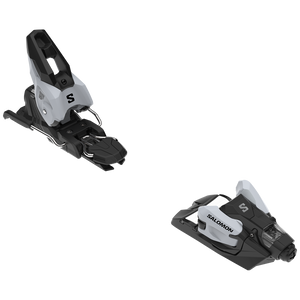
- Best Use: All-Mountain Downhill Skiing
- DIN Range: 3–10
- Boot Compatibility: Alpine ISO 5355 and GripWalk ISO 23223
- Ability Level: Beginner to Intermediate
The Salomon Strive 10 GW ski bindings are designed for beginner and intermediate skiers who want better snow feel, reliable power transmission, and responsive control. Their low-profile design helps bring the skier closer to the snow, allowing the skis to perform naturally during turns and transitions. This makes them a practical choice for riders developing their technique or progressing toward more confident all-mountain skiing. They are designed for downhill use and can suit skiers who want a straightforward binding setup for regular days at the resort.
These bindings support both Alpine ISO 5355 and GripWalk ISO 23223 boot soles, offering flexibility when selecting compatible ski boots. The DIN range of 3 to 10 provides release settings for skiers whose individual needs fall within that range. This can be useful for less aggressive riders, although the correct setting must always be determined according to the skier and equipment rather than ability level alone. The low-profile construction emphasizes snow contact and response, helping users feel connected to their skis. Brake width, adjustment range, and pair weight were not provided in the supplied product information, so buyers should verify these details before purchasing. Professional mounting and adjustment are recommended for dependable performance and safety.
Pros:
- Suitable DIN range for many beginner and intermediate skiers.
- Low-profile design promotes snow feel and response.
- Compatible with Alpine and GripWalk boots.
Cons:
- Maximum DIN of 10 may not suit some advanced skiers.
- Weight and brake-width details were not provided.
How to Choose Ski Bindings
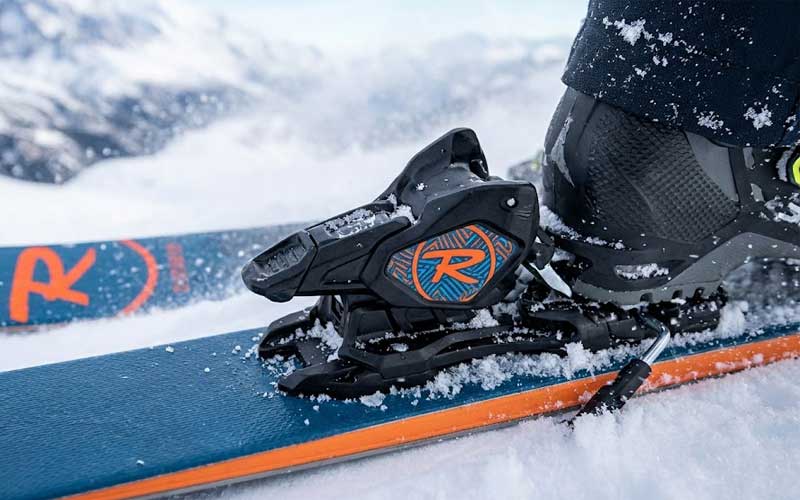
Ski bindings are the critical link between your boots and your skis. They transfer every movement you make into the snow, and—more importantly—they are designed to release your boot in a crash to protect your knees and legs. Choosing the right bindings is not simply a matter of picking the most expensive model or the one that matches your skis aesthetically. It requires an honest assessment of your skiing ability, the terrain you frequent, your boot type, and your ski’s construction.
This guide breaks down the essential factors you need to consider, from the fundamental distinction between system and flat bindings to the technical nuances of DIN settings and brake widths.
Understand the Two Main Mounting Systems
Before you look at specific models, you must determine what type of ski you own or plan to buy. Skis generally fall into two categories regarding binding integration.
System Bindings
Many all-mountain and piste-oriented skis are sold as a package with a pre-mounted plate or rail system. The binding slides onto this track, allowing for easy length adjustment without drilling new holes. System bindings are convenient because the manufacturer has already matched the binding’s performance characteristics to the ski’s flex and intended use. They also often allow for a tool-free adjustment if you switch boots or share skis with someone else. However, you must verify that the included binding’s release range (DIN) is appropriate for your weight and ability, as entry-level packages sometimes include bindings with a limited adjustment range.
Flat (Drill) Bindings
Freeride, freestyle, and many high-performance all-mountain skis are sold “flat,” meaning there is no integrated track. These skis require you to purchase bindings separately and have them mounted by a certified technician who drills into the ski. Flat mounts offer a more direct connection to the snow and eliminate the slight stack height added by system rails, which many advanced skiers prefer for better snow feel. This option gives you complete freedom to match a specific binding model to your exact skiing style and boot compatibility.
Match Bindings to Your Skiing Discipline
The type of terrain you ski and how aggressively you ski it will dictate the category of binding you need. Bindings are generally categorized by their intended use, weight, and construction materials.
Alpine (On-Piste) Bindings
If you primarily ski on groomed runs, alpine bindings are your best choice. They prioritize power transmission, durability, and reliable release mechanics. Entry-level to intermediate bindings often use composite materials to keep costs and weight down, while advanced to expert models feature metal components for greater precision and retention at high speeds. Look for a binding with a DIN range that comfortably encompasses your calculated setting.
Freeride and Freestyle Bindings
Freeride bindings are designed for off-piste terrain and powder. They tend to be slightly heavier and more robust to absorb the variable snow conditions and high impact forces of cliff drops and crud. They often feature wider brakes to accommodate fatter skis. Freestyle bindings, used in terrain parks, emphasize elasticity and shock absorption to prevent pre-release during hard landings and aggressive maneuvers.
Alpine Touring (AT) and Tech Bindings
If you plan to hike uphill (ski touring), you need a binding that allows your heel to lift for skinning and lock down for the descent. There are two main types:
- Frame Bindings: These look like traditional alpine bindings but have a frame that pivots at the toe. They work with standard alpine boots, making them a versatile entry point into touring, but they are heavy.
- Tech (Pin) Bindings: These are significantly lighter and more efficient for climbing. They use metal pins at the toe and heel to secure a boot with specific inserts (tech fittings). While modern tech bindings have improved downhill performance and safety release, they generally do not meet the same safety standards as alpine bindings for in-resort skiing and require touring-specific boots.
Determine the Correct DIN Setting Range
The DIN setting (often referred to simply as the release value) is the most misunderstood and safety-critical aspect of binding selection. The term originates from the German Institute for Standardization, though the current calculation method is governed by the ISO 11088 standard. The DIN number on your binding indicates how much force is required to release your boot.
A binding’s “DIN range” (e.g., 4–12 or 7–15) is the spectrum of release forces it can be adjusted to. Your personal DIN setting—calculated using your weight, height, boot sole length, and skier type (ability)—must fall within the binding’s range. It is crucial that you do not buy a binding where your calculated setting is at the very top or bottom of its range. A binding performs most consistently and safely when your setting is in the middle of its adjustable range. If your calculated DIN is 11, do not buy a binding with a maximum DIN of 11; choose a model with a range like 7–15 or 8–16.
Always have a certified technician calculate and set your DIN. While online charts can give you an estimate, a professional considers factors like boot sole wear and performs a release test to ensure the binding functions correctly.
Ensure Boot Compatibility
Your boots must fit your bindings. There are two primary standards to be aware of:
- Alpine (ISO 5355): Standard solid plastic toe and heel lugs found on most piste boots.
- GripWalk (ISO 23223): Boots with a rubberized, rockered sole for better walking traction. Many modern bindings are “Multi-Norm” (MN) or “GripWalk compatible,” meaning they can accept both standard alpine and GripWalk boots.
- Touring Norm: Tech boots have a completely different shape and lack standard toe/heel lugs. They require specific pin bindings and will not work in standard alpine bindings.
Check the binding specifications carefully to ensure they are compatible with the sole type of your boots. Using the wrong combination can be dangerous, as the release function may not work as designed.
Select the Correct Brake Width
The brake is the retractable metal arm that stops your ski from sliding away after you release. It must be wide enough to clear the edges of your ski when deployed. The rule is simple: the brake width should be equal to or slightly wider (up to about 15mm) than your ski’s waist width. It should never be narrower than the ski’s waist, or the brake will catch on the snow and drag.
| Binding Brake Size | Fits Ski Waist Width | Typical Ski Category |
|---|---|---|
| 80 mm | 65 – 80 mm | Narrow carvers, frontside skis |
| 90 mm | 75 – 90 mm | Frontside carvers, narrower all-mountain |
| 100 mm | 85 – 100 mm | All-mountain, wider daily drivers |
| 110 mm | 95 – 110 mm | Freeride, powder-oriented skis |
| 120+ mm | 105 – 120+ mm | Dedicated powder and big-mountain skis |
If you are between sizes, it is generally safer to choose the wider brake. A brake that is slightly too wide can usually be bent inward slightly by a technician, but a brake that is too narrow cannot be safely stretched without compromising its function.
Consider Weight and Materials
Binding weight matters most if you are touring or if you are a lighter skier. Heavy metal bindings offer superior damping and power transmission for aggressive downhill skiing, but they require more effort to lift on the skin track. Conversely, lightweight bindings made from aluminum, carbon, or high-grade composites reduce fatigue on the uphill but may feel less planted on hard snow.
For resort skiers, weight is less critical than durability and release consistency. For touring, every gram counts, but you should not sacrifice safety or downhill control for a marginal weight savings if you plan to ski aggressively.
Final Thoughts: Get Professional Mounting and Testing
Once you have selected your bindings, the final and most important step is installation. Mounting bindings requires precise drilling, alignment, and torque specifications. A mistake can compromise the ski’s structural integrity or cause the binding to pull out under load. Furthermore, the forward pressure and release settings must be adjusted to your specific boots and verified using a calibrated testing device.
Purchase your bindings from a reputable retailer and have them mounted by a certified technician. Bring your boots with you when you drop off your skis; the technician needs them to set the correct boot sole length and perform the final safety check. A properly chosen and professionally mounted binding system is essential for both your performance on the snow and your safety in a fall.