Best Ski Boots for Advanced Skiers of 2025
If you’re an advanced skier, you know your boots can make or break a day on the mountain. At this level, you’re not just cruising — you’re charging down steeps, carving hard, and maybe even dropping into powder stashes. That means you need boots that keep up: stiff, responsive, and dialled-in to your feet. But with so many options out there, finding the right pair can be a pain. This guide cuts through the noise. We’ve rounded up the best ski boots for advanced skiers — no fluff, just serious performance — so you can focus on skiing harder, faster, and more confidently this season.
1. Tecnica Mach1 MV 120
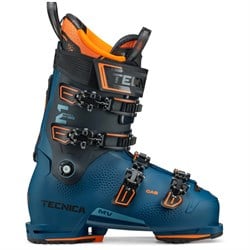
Last: 98mm, 100mm, or 103mm
Flex: 120
Shell Material: Polyether (customizable by bootfitter)
Weight (per boot): Approx. 1850g
The Tecnica Mach1 MV 120 is a standout for advanced skiers who want a precise fit and all-mountain power. What sets it apart is the incredible level of customization. The C.A.S. (Custom Adaptive Shape) liner and shell can be heat-molded, punched, or ground to match your exact foot shape, making the Mach1 one of the most dialed-in fits on the market. Add to that a range of last widths—98mm for narrow feet, 100mm for medium, and 103mm for wide—and it’s easy to see why this boot suits so many skiers. Tecnica has even added a carbon spine to increase stiffness without adding weight, giving you more control through turns and variable snow.
On the mountain, the Mach1 MV 120 feels stable, strong, and responsive. It’s got a natural stance and predictable power transfer that works well both on groomers and in tougher conditions off-piste. Compared to race-inspired models like the Lange Shadow, the Mach1 has a slightly softer, more forgiving personality without compromising on performance. It’s not the cheapest boot out there, but its build quality, comfort, and adaptability make it well worth the price for serious skiers who want precision without sacrificing comfort. If you’re looking for a boot to grow with as you continue to progress, the Mach1 MV 120 is hard to beat. Read full review here.
Pros:
- Excellent shell and liner customization
- Available in three different widths
- Strong and precise performance
- Carbon spine improves stiffness without adding bulk
Cons:
- Expensive compared to mid-range options
- Requires professional bootfitting to reach full potential
See the Tecnica Mach1 MV 120 See the Women’s Mach1 MV 105
2. Scarpa 4-Quattro XT – Women’s
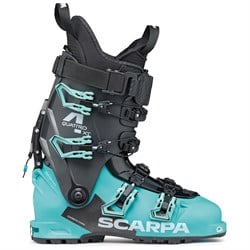
Last: 100mm
Flex: 115
Weight (per boot): 1345g
Walk Mode: Yes – 61° range of motion
The Scarpa 4-Quattro XT is one of the most capable women’s hybrid ski boots available, built for advanced skiers who split time between uphill missions and downhill charging. What sets it apart is how seamlessly it blends lightweight touring performance with true alpine power. At just 1345 grams per boot and offering a generous 61 degrees of cuff mobility, it climbs remarkably well. But Scarpa didn’t stop there. The 4-Quattro XT is fully compatible with GripWalk alpine bindings and tech bindings, making it a true one-quiver option for those who want to ski everything without switching boots.
On the descent, the boot is stiff, precise, and impressively responsive for its weight. The 115 flex provides ample power transfer and control even in choppy or steep terrain, and the stock liner delivers good comfort and heel hold. That said, the fit feels narrower than the 100mm last suggests, so those with wide feet may want to look elsewhere. Another small drawback is the non-replaceable GripWalk Vibram soles—great for traction, but not ideal for long-term wear and tear. Despite that, the 4-Quattro XT is a standout pick for women looking for a boot that truly does it all, whether skiing the resort, tackling sidecountry lines, or heading deep into the backcountry.
Pros:
- Excellent downhill control with uphill mobility
- Lightweight yet powerful feel
- Compatible with both alpine and tech bindings
- Comfortable stock liner and great cuff mobility
Cons:
- Feels tighter than advertised for wider feet
- Non-replaceable soles reduce long-term durability
See the Scarpa 4-Quattro XT See the Scarpa 4-Quattro SL
3. Lange Shadow 130 LV GW
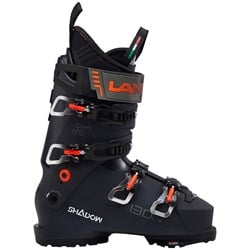
Last: 97mm or 100mm
Flex: 130
Shell Design: Dual Pivot with Suspension Blade
Weight (per boot): Approx. 1890g
The Lange Shadow 130 LV GW is a high-performance alpine boot built for advanced and expert skiers who demand precision, power, and innovation. Replacing the popular RX line, the Shadow introduces Lange’s unique Suspension Blade and Dual Pivot design, which improves energy transfer between the upper and lower parts of the boot. This new spine system—shorter and positioned higher than traditional designs—creates a more direct line of force from your legs to your skis, reducing fatigue and boosting control. For skiers who like to charge hard in variable terrain, this tech-forward boot offers a smooth and highly efficient ride.
With a stiff 130 flex, the Shadow delivers exceptional responsiveness and stability at speed. The customizable liner locks in your heel, the shell can be heat-molded, and the asymmetrical design adds to its snug, performance-first feel. It skis incredibly well, especially in firm conditions and when laying down powerful carves. That said, this boot is unapologetically aggressive—less experienced or lighter skiers may find it overkill. It’s also one of the most expensive boots on the market, and some of the new tech (like the dual pivot) is still relatively untested long-term. But if you want race-like power in an all-mountain package, the Shadow 130 is a standout choice.
Pros:
- Exceptional power transfer and edge control
- Innovative design reduces fatigue
- Strong, stable, and confidence-inspiring
- Customizable fit and excellent heel hold
Cons:
- Very stiff—overkill for less aggressive skiers
- Pricey, with some unproven tech long-term
See the Lange Shadow 130 LV See the Women’s Shadow 115 LV
4. Atomic Hawx Ultra XTD 120 BOA GW
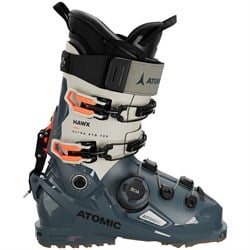
Last: 98mm
Flex: 120
Closure System: BOA® dial (bottom), traditional buckles (top)
Weight (per boot): Approx. 1540g
The Atomic Hawx Ultra XTD 120 BOA GW is a true crossover boot that blends touring-friendly features with downhill capability. Its narrow 98mm last gives a snug, performance fit, while the BOA dial replaces two lower buckles for quick, micro-adjustable tightening. This system offers a more even wrap around the foot, increasing comfort and control. Add to that a lightweight polyurethane shell and a reliable walk mode, and you have a boot that’s just as happy skinning up as it is carving down. It also includes tech inserts and GripWalk soles, making it compatible with a wide range of alpine touring bindings.
Where the Ultra XTD really shines is in its versatility. On uphill missions, the generous range of motion and reduced weight make long tours less taxing. On the downhill, the boot holds its own with a stiff and supportive flex, offering good feedback and power transfer through variable snow. While not quite as locked-in or warm as a true alpine boot, it comes close—making it ideal for those who split time between the resort and backcountry. One downside is that this model only comes in a narrow fit, and those with wider feet may want to check out the Hawx Prime XTD (100mm last). Still, for advanced skiers looking for one boot to do it all, this is one of the most balanced options on the market.
Pros:
- Excellent balance of touring comfort and alpine performance
- BOA dial improves fit and ease of use
- Lightweight for its stiffness
- Compatible with multiple binding types
Cons:
- Narrow fit may not suit all foot shapes
- Not as warm or powerful as a dedicated alpine boot
See the Atomic Hawx Ultra XTD 120 See the Women’s Hawx Ultra XTD 115
5. K2 Recon 120
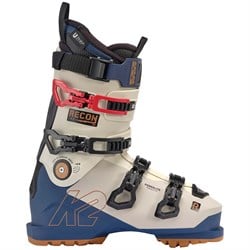
Last: 98mm or 100mm
Flex: 120
Weight (per boot): Approx. 1650g
Shell Material: Powerlite TPU (heat-moldable)
The K2 Recon 120 is a lightweight, value-driven boot for advanced skiers who want power and precision without the bulk. Built with K2’s Powerlite shell, the Recon trims unnecessary material while maintaining stiffness and responsiveness. The result is a boot that’s nearly half a pound lighter per foot than many competitors, offering a nimble feel underfoot that excels in both groomers and off-piste terrain. With heat-moldable liners and shells, it also offers a good amount of fit customization. Available in two last widths (98mm and 100mm), the Recon suits both low- and medium-volume feet, and its 120 flex hits the sweet spot for skiers looking to charge without overworking their legs.
While it doesn’t have a walk/hike mode—something we’d love to see given its lighter build—the Recon 120 still performs admirably in bootpacks or short hikes to secret stashes. On the slopes, it delivers a solid, stable feel and smooth power transfer at speed. It’s less aggressive than the Tecnica Mach1 or Lange Shadow, but its playful nature makes it a great choice for all-day resort laps. At $600, it also undercuts most premium boots by a decent margin, which makes it a smart pick for advanced skiers who want performance on a budget. If you want the BOA version, though, be prepared to spend around $100 more.
Pros:
- Lightweight and nimble on the slopes
- Strong performance at a reasonable price
- Customizable shell and liner
- Available in both narrow and medium widths
Cons:
- No walk mode despite its lightweight design
- Not as precise or stiff as more premium models
See the K2 Recon 120 See the Women’s Anthem 105 MV
6. Tecnica Zero G Tour Pro W – Women’s
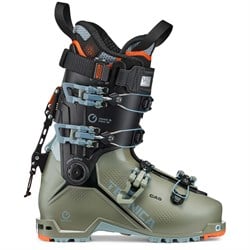
Last: 99mm
Flex: 125
Weight (per boot): 1128g
Walk Mode: Yes – 60° range of motion
The Tecnica Zero G Tour Pro W is a groundbreaking ski boot designed specifically for advanced and expert female backcountry skiers. For years, women with aggressive skiing styles had to settle for unisex or lower-flex boots in the touring category. Tecnica answered with this 125-flex women’s-specific version of their popular Zero G Tour Pro. With a lightweight build, huge range of motion, and a stiff downhill profile, the boot caters to those who demand powerful performance both uphill and on the descent. The Grilamid shell and carbon cuff trim weight while maintaining lateral stiffness, and a higher instep improves ease of entry compared to past models.
On the skintrack, the boot feels light and efficient, ideal for long climbs and technical approaches. Once locked into ski mode, it transforms into a stiff and stable downhill machine that can charge through steep chutes and firm snow with confidence. The updated liner and revised last shape increase comfort while preserving Tecnica’s snug, performance-oriented fit. However, it’s not a great choice for wide feet—the 99mm last is best suited for lower-volume feet, and bootfitting may be needed for a custom feel. Also, at $900, it’s a significant investment, and may be too much boot for newer or less frequent skiers. Still, for seasoned backcountry riders, the Zero G Tour Pro W is one of the most capable women’s boots available.
Pros:
- Impressive stiffness at a very low weight
- Massive range of motion for efficient touring
- Women’s-specific fit with improved instep and liner
- Reliable power transfer on steep terrain
Cons:
- Pricey for casual or newer skiers
- Narrow fit may require customization for wider feet
See the Tecnica Zero G Tour Pro W See the Tecnica Zero G Tour W
7. Dynafit Radical Pro – Women’s
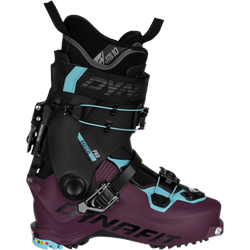
Last: 103.5mm
Flex: 110
Weight (per boot): 1270g
Walk Mode: Yes – 60° range of motion
The Dynafit Radical Pro Women’s is built for the backcountry skier who prioritizes powerful downhill performance without giving up uphill comfort. With a roomy 103.5mm last, it’s a rare wide-fit option that doesn’t feel sloppy or underbuilt. The 110 flex, paired with Dynafit’s signature Hoji Lock System, provides strong energy transfer and confident skiing even in steep and variable terrain. Transitions are fast too—the single-lever Hoji mechanism simultaneously locks the cuff and switches the mode, streamlining your day in the backcountry (though you might still need to fiddle with the top buckle for a perfect seal).
This boot isn’t the lightest on the market at 1270 grams, but it offers a very good tradeoff between weight and downhill stability. It’s a favorite among ski guides and backcountry professionals for good reason: you can wear it all day, ski hard, and rely on it in tough conditions. One drawback is the stock liner—it’s warm and comfy out of the box, but packs out quicker than expected and can wear down in pressure zones over time. Still, the Radical Pro delivers excellent versatility, especially for wider-footed skiers looking for a boot that performs equally well going up and down. A less expensive 100-flex Radical model is also available, but the Pro version offers noticeably better downhill control.
Pros:
- Roomy fit ideal for wider feet
- Hoji Lock System makes transitions fast and easy
- Solid downhill performance for a touring boot
- Warm and comfortable even in cold conditions
Cons:
- Stock liners pack out quickly
- Not as light as some dedicated touring boots
See the Dynafit Radical Pro See the Dynafit Radical
8. Atomic Hawx Prime 115 S BOA – Women’s
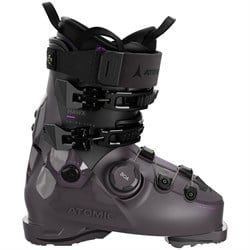
Last: 100mm
Flex: 115
Weight (per boot): 1739g
Walk Mode: No
The Atomic Hawx Prime 115 S BOA is a performance-focused resort boot made for expert-level female skiers who want comfort without compromising power. This year’s version introduces the BOA Fit System, which replaces the lower buckles with a dial that evenly distributes pressure and fine-tunes the fit across your forefoot. Paired with Atomic’s heat-moldable Mimic liner, Adaptive Fit Cuff system, and medium-volume 100mm last, this boot provides a secure, customizable fit that stays comfortable all day. It also features a Prolite shell—lightweight but strong in key zones—offering a blend of responsiveness and control on firm and choppy snow.
On the hill, the Prime 115 delivers a confident and smooth ride. The 115 flex is stiff enough for aggressive skiers who like to charge down groomers or explore off-piste lines, but it’s not punishing or overbuilt. The 3M Thinsulate insulation in the liner adds warmth on cold days, and the cuff spoiler can be removed to better accommodate different calf shapes. The downside? The boot isn’t ideal for high-volume feet—it fits true to its medium last but doesn’t leave much wiggle room. Also, there’s no walk mode, which limits its use for sidecountry hikes or bootpacks. Still, for frontside-focused skiers who want tech-driven comfort, this is a top-tier option.
Pros:
- BOA system improves fit and pressure distribution
- Customizable shell and liner with Mimic heat molding
- Comfortable for long days at the resort
- Good warmth thanks to insulated liner
Cons:
- Not ideal for wide feet
- Lacks a walk/hike mode for added versatility
See the Atomic Hawx Prime 115 S BOA W See the Atomic Hawx Prime 85 W GW
How to Choose Ski Boots for Advanced Skiers?
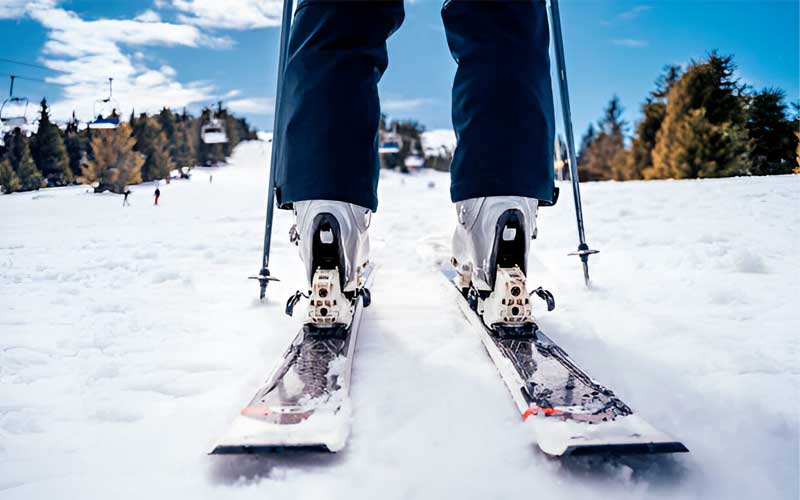
Choosing the right ski boots is crucial for advanced skiers. At this level, performance matters more than ever—your boots need to match your ability, style, and terrain preferences. A poorly fitting or underperforming boot can limit your control, cause discomfort, and even cut your day short. But with so many technical details and options out there, finding the perfect pair can feel overwhelming. This guide will break it down step-by-step to help you confidently choose ski boots that elevate your experience on the mountain.
1. Understand Flex Ratings
Flex refers to how stiff the boot is when you lean forward. For advanced skiers, flex is a major factor in performance. Generally, ski boot flex ratings range from around 60 to 140, with higher numbers being stiffer.
-
For advanced women: Look for flex ratings between 100 and 120.
-
For advanced men: Consider boots in the 110 to 130 range.
A stiffer boot offers better power transfer and stability at high speeds or on steep terrain. But keep in mind—flex isn’t standard across brands. One brand’s 120 might feel like another’s 110. Try on multiple boots and, if possible, test them before buying.
2. Choose the Right Last Width
The last refers to the width of the boot at its widest point (usually across the forefoot) and is key for comfort and control. Advanced skiers need a snug fit to maximize responsiveness, but it shouldn’t be painfully tight.
-
Narrow (97–98mm): Great for low-volume feet and a race-inspired fit.
-
Medium (100mm): Best for average-width feet or those who want a balance of comfort and precision.
-
Wide (102–104mm): Suitable for high-volume feet or skiers who prioritize all-day comfort.
Boots also come in different volumes—low, medium, or high—which affects the overall shape. Always try before you buy, or work with a bootfitter who can help you identify the right fit for your foot shape.
3. Prioritize Fit and Comfort
Even the best-performing boot is useless if it doesn’t fit properly. Advanced skiers typically want a tight, performance-oriented fit that allows for precision control, but not so tight that it causes pain or restricts circulation.
Here are a few tips:
-
Your toes should lightly touch the end of the liner when standing upright.
-
When flexing forward, your heel should stay secure without lifting.
-
Pressure should feel even across the foot, not concentrated in one spot.
If the boot feels “almost right,” a bootfitter can heat-mold the shell or liner to better match your foot. Many modern boots also include customizable liners or shells (like Tecnica’s C.A.S. or Atomic’s Mimic tech).
4. Match the Boot to Your Skiing Style
Not all advanced skiers are the same. Your ideal boot will depend on whether you’re charging hard on-piste, venturing off into powder, or touring the backcountry. Here’s a quick breakdown:
-
All-Mountain: Look for a versatile boot with a medium-to-high flex (110–130), precise fit, and strong lateral support.
-
Freeride/Backcountry: Choose a boot with walk mode, tech binding compatibility, and good range of motion. Weight is important here—lighter boots make uphill climbs easier.
-
Resort/Frontside: Focus on stiff, powerful boots that provide strong edge control. Comfort is still key if you ski long days.
Don’t get swayed by what’s “trendy”—go for what suits your terrain, conditions, and personal preferences.
5. Consider Closure Systems
Advanced ski boots come with a few different closure systems, each with its pros and cons:
-
Traditional 4-buckle design: Time-tested and customizable, offering strong lockdown and support.
-
BOA® system: Uses a dial to tighten a cable system across the forefoot. It offers an even wrap and quick adjustments, but some still prefer buckles for downhill force.
-
Hybrid systems: Some boots combine BOA and buckles, often with a power strap or cam-style strap for added support.
Test what feels most secure and comfortable for your foot. BOA systems are gaining popularity, especially in mixed-terrain and touring boots, due to their fit precision and convenience.
6. Weight and Shell Materials
Weight becomes more important the more time you spend in the backcountry or bootpacking. Lighter boots save energy but may sacrifice some stiffness. Most advanced-level resort boots weigh around 1700g–2000g per boot, while touring options range from 1100g–1400g.
Materials also matter:
-
Grilamid: Lightweight and stiff, common in touring boots.
-
Polyurethane (PU): Heavier but durable, often found in alpine resort boots.
-
Polyether or carbon-reinforced shells: High-performance options that offer a balance of stiffness, responsiveness, and weight.
If you’re riding lifts all day, you might not care about a few extra grams. But if you’re doing long tours, weight is a big factor.
7. Check Compatibility with Bindings
Not every boot fits every binding. This is especially important if you’re skiing a mix of alpine and tech setups.
-
GripWalk soles are becoming common and are compatible with most new alpine bindings—but not all.
-
Tech inserts are necessary for pin-style backcountry bindings (like Dynafit or Marker Alpinist).
-
ISO 5355 boots (traditional alpine soles) may not work with hybrid or touring bindings.
Double-check that your boot and binding systems are compatible before committing to a setup.
8. Think Long-Term: Customization and Bootfitting
Advanced skiers often spend a lot of time in their boots, so personalization matters. Choose boots that offer:
-
Heat-moldable liners
-
Shell customization (grindable or punchable)
-
Adjustable cuff angles or forward lean
-
Replaceable soles for long-term durability
Even the best-fitting boot may need tweaks. A professional bootfitter can stretch the shell, adjust the liner, or add custom insoles to maximize performance and comfort.
Final Thoughts
At the advanced level, your boots become more than just gear—they’re a direct extension of your body. A properly selected and fitted boot will improve your balance, control, and confidence in all conditions. Take your time, do your research, and work with a reputable ski shop if possible. Try on several models, ask about adjustments, and prioritize the boot that feels like it was made just for you.