Best Ski Goggles for Small Faces of 2025
Finding the right ski goggles can be tricky if you have a smaller face. Many goggles feel too big, let in cold air, or slip while you ride. The best ski goggles for small faces offer a snug, comfortable fit without sacrificing visibility or protection. They stay secure during turns, prevent fogging, and keep your eyes safe from glare and snow. In this guide, we’ll help you choose the best options that combine comfort, clarity, and style for smaller face shapes.
1. Smith Blazer
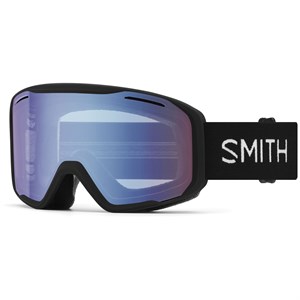
- Frame: Medium fit, OTG-compatible Responsive Fit that flexes to face contours.
- Lens: Cylindrical Carbonic-X lens with Fog-X inner lens for long-lasting anti-fog.
- Ventilation: Built-in Airflow Technology to keep air moving and reduce fog.
- Strap: Ultra-wide silicone-backed strap for a secure, helmet-friendly hold.
The Smith Blazer delivers straightforward, dependable performance for skiers and riders who want clear optics without a high price. Smith’s Responsive Fit frame flexes to face contours, giving a comfortable medium fit that works for many riders and pairs well with helmets. Its Carbonic-X cylindrical lens provides solid optical clarity at this price point, while the Fog-X inner lens uses a moisture-absorbing surface etched into the lens, so anti-fog performance remains effective over time. Airflow Technology channels air across the lens to reduce condensation and cut down on field interruptions during active days on the mountain. The build is durable enough for resort use and everyday handling, making it a practical daily driver for seasonal skiers.
Practical touches make the Blazer a solid everyday goggle: OTG compatibility for prescription wearers, two-layer DriWix foam that wicks sweat, and an ultra-wide silicone-backed strap that stays secure. It lacks high-end color-boosting tints and doesn’t include a spare lens, but for anyone seeking durable anti-fog performance, comfortable integration with helmets and glasses, and a clean, no-nonsense design at a friendly price, the Blazer is hard to beat. This goggle is an excellent choice for beginners and regular resort riders who prioritize reliability and comfort over premium optical bells and whistles. For small-face riders the medium frame may be slightly roomy, but the Responsive Fit helps tailor the seal and reduces pressure points across the brow and temples.
Pros and Cons
- Pros: Great value, durable anti-fog, helmet and OTG compatibility.
- Cons: No ChromaPop/contrast-boosting tint, replacement lens not included.
2. OutdoorMaster Ski Goggles PRO

- Lens: Large spherical frameless lens with interchangeable system.
- Protection: Anti-fog coating and 100% UV400 protection.
- Compatibility: OTG design and extra-long elastic strap for helmets.
- Extras: Comes with protective case and carrying pouch.
The OutdoorMaster Ski Goggles PRO focus on maximizing field of view and straightforward versatility. The large spherical, near-frameless lens creates a panoramic sightline that feels immersive on the mountain, and the quick interchangeable lens system lets you swap tints fast as light changes. Anti-fog coatings and full UV400 protection keep vision safe and usable across variable conditions, and the construction aims to balance weight, durability, and cost for recreational riders. The lens curvature gives a broad uninterrupted view, which helps when scanning terrain and other skiers from lifts and high speeds. For riders who value a wide sightline the PRO is an appealing budget-focused choice.
Comfort and ease of use are strengths: the OTG-friendly interior clears room for prescription frames and the extra-long strap pairs well with most helmets. Materials are consistent with a budget-to-midrange option, so you shouldn’t expect the longevity of high-end brands, but the goggles deliver a lot of practical performance for the price—wide vision, lens flexibility, and useful accessories like a case and pouch. For those with smaller faces the lens may feel large, so fit can be less snug until foam compresses. Still, easy lens swaps and broad coverage make these a useful pick for weekend riders and casual resort skiers who want adaptable optics without a high cost.
Pros and Cons
- Pros: Huge field of view, versatile interchangeable lens system, good value.
- Cons: Replacement lenses often sold separately, build not as premium as top brands.
See the OutdoorMaster Ski Goggles PRO
3. Dragon DX3 OTG Low Bridge Fit
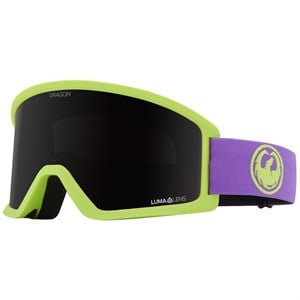
- Frame: Mid-size OTG frame with Low Bridge Fit for flatter nose bridges.
- Lens: Thermal-formed cylindrical lens with Super Anti-Fog coating.
- Tech: LUMALENS Optimized Color Technology for improved contrast.
- Comfort: Dual-layer foam with hypoallergenic micro-fleece lining.
The Dragon DX3 mixes retro lines with modern optical tuning and fit options that actually matter on the mountain. The Low Bridge Fit version adapts the nose area to flatter bridges, adding foam to improve the seal and reduce leakage for riders who often find standard goggles gap at the nose. The thermal-formed cylindrical lens resists distortion and the Super Anti-Fog treatment keeps visibility steady during extended sessions. The mid-size frame keeps the profile classic while maintaining useful peripheral vision so the goggle reads as balanced rather than oversized.
What really lifts the DX3 is LUMALENS color-optimization: enhanced contrast and color fidelity make terrain features easier to read in mixed or flat light, which boosts confidence on variable days. The dual-layer foam with micro-fleece is comfortable against skin and handles moisture well, and the OTG capability helps prescription wearers. LUMALENS isn’t available across all colorways and some SKUs carry a California Proposition 65 notice, but for riders seeking a stylish goggle with thoughtful low-bridge fit, strong anti-fog, and reliable day-to-day comfort, the DX3 sits neatly in the midrange that blends style and practical performance for many users.
Pros and Cons
- Pros: Excellent anti-fog, low-bridge fit option, enhanced color/contrast tech.
- Cons: LUMALENS limited to select colorways, Proposition 65 warning on some versions.
See the Dragon DX3 OTG Low Bridge Fit
4. Findway Ski Goggles OTG
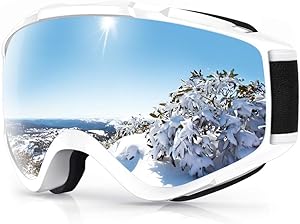
- Lens: Spherical double lens with anti-scratch and anti-fog coating.
- Ventilation: Professional ventilation system to reduce fogging.
- Frame: Oversized OTG TPU frame with triple-layer foam.
- Strap: Silicone-backed, extra-long adjustable strap for helmets.
The Findway OTG is built around practicality: a roomy spherical double lens delivers a broad, high-definition look at the slope and a durable anti-scratch and anti-fog finish keeps things clear run after run. The professional ventilation actively pulls air through channels to move moisture away from the lens, which matters on heavy exertion days or when temperatures swing. For riders who value a big view and low maintenance, Findway’s approach is simple and effective and it performs consistently during casual resort use.
Comfort is driven by the oversized OTG frame that easily accommodates prescription glasses and a supportive triple-layer foam that seals without excessive pressure. The TPU frame adds resilience while the silicone-backed strap maintains grip against helmets. These aren’t race-level goggles and the oversized fit may overwhelm smaller faces, but for recreational skiers who want a roomy OTG solution, reliable ventilation and a one-year guarantee, the Findway provides strong everyday value. Fit adjustments and strap tension can tighten the seal on smaller faces and make the goggles far more comfortable during long days.
Pros and Cons
- Pros: Big view, strong ventilation and anti-fog, OTG friendly, 1-year guarantee.
- Cons: Oversized fit may overwhelm smaller faces, not as premium as high-end models.
See the Findway Ski Goggles OTG
5. OutdoorMaster OTG Ski Goggles

- Frame: OTG-friendly soft TPU frame for comfort over glasses.
- Lens: Dual-layer lens with inner anti-fog coating and UV400 protection.
- Compatibility: Universal helmet compatibility via extra-long strap.
- Included: Carrying pouch for transport and lens protection.
These OutdoorMaster OTG goggles focus on uncomplicated, dependable performance for riders who need room for prescription glasses. The soft TPU frame flexes for comfort over most spectacles while the dual-layer lens with an inner anti-fog surface helps maintain clarity on casual days. UV400 protection is standard, and the goggles keep things light and simple for resort runs. Construction emphasizes utility and ease of use over advanced optics, which suits riders who want a workhorse goggle without extra complexity.
They won’t wow gear obsessives chasing rapid-change systems or exotic tints, but they’re a practical, wallet-friendly option for beginners and everyday riders. Foam and strap comfort are good enough for multi-hour sessions and the OTG fit is generous, though small-face users may find the profile a touch loose until foam breaks in. For riders who need a no-nonsense goggle that accommodates glasses and delivers steady anti-fog at a low price, these OutdoorMaster OTG goggles are a sensible buy, offering easy maintenance and predictable on-mountain performance.
Pros and Cons
- Pros: Affordable, effective OTG fit, good anti-fog for the price.
- Cons: Lacks interchangeable lenses and premium optical tech.
See the OutdoorMaster OTG Ski Goggles
6. EXP VISION Ski Goggles

- Cleaning: Detachable sponge frame for easy cleaning and freshening.
- Lens: Panoramic cylindrical dual polycarbonate lens with REVO coating.
- Venting: Two-way venting system plus triple-layer sponge to reduce fog.
- Design: OTG style with extra space for prescription glasses and lightweight frame.
EXP VISION packs sensible conveniences into a budget-minded goggle made for everyday resort use. The detachable sponge frame is a standout feature that simplifies cleaning and reduces lingering odors after long days, and the panoramic cylindrical lens gives a broad sightline for tracking terrain. The REVO coating adds brightness and contrast on sunny days, while dual polycarbonate construction emphasizes impact resistance for standard mountain use. These features make EXP VISION a practical option for those who appreciate low-maintenance gear.
Ventilation is handled with a two-way system and a triple-layer sponge that manages heat and moisture, keeping fogging to a minimum during extended activity. The OTG-friendly interior and featherlight frame make the goggles comfortable over glasses, though longevity will reflect their budget orientation. For riders seeking a lightweight, feature-rich bargain—especially those who appreciate the removable sponge for upkeep—EXP VISION offers a compelling blend of convenience, ventilation and easy on-mountain usability. Proper strap adjustment and routine cleaning will extend their useful life and keep optics clear.
Pros and Cons
- Pros: Detachable sponge for hygiene, panoramic lens, strong venting, OTG fit.
- Cons: Budget materials may age faster, REVO tint can be polarizing for some light conditions.
See the EXP VISION Ski Goggles
7. ZIONOR X Ski Goggles

- Vision: Panoramic design with anti-fog and UV treatment for clarity.
- OTG: Roomy OTG fit accepts glasses up to 5.5″ × 1.65″.
- Durability: Ruggedized lens with EDT (Enhanced Durability Tech).
- Fit: Curved frame for improved helmet compatibility and stability.
ZIONOR X aims at riders who want wide vision and straightforward OTG accommodation without fuss. The panoramic lens and anti-fog/UV treatments make these goggles versatile across a range of conditions, and the stated maximum eyewear dimensions give clarity for prescription users. The EDT-treated lens boosts resistance to scratches and impacts, which is useful for riders who are rough on gear or value durability in a daily-use goggle. The result is a practical, durable option that handles typical resort abuse.
The curved frame helps the goggles sit securely with most helmets and holds steady at speed. Styling and finish are utilitarian rather than premium, but the practical approach keeps costs down while delivering solid performance. Small-face riders may find the profile roomy, so tightening straps and foam compression are often necessary to get a snug seal. For shoppers focused on durability, clear OTG sizing, and a wide field of view at an accessible price, ZIONOR X is a practical, no-nonsense choice that balances robustness with simple on-mountain functionality.
Pros and Cons
- Pros: Wide view, durable lens, clear OTG sizing, helmet-friendly shape.
- Cons: Styling and finish are basic, may lack high-end optical refinement.
8. ZABERT OTG Ski Goggles

- Strap: Upgraded silicone-backed non-slip strap for helmet security.
- Design: Frameless, oversized OTG shape with fashionable color options.
- Lens: Double lens with anti-fog, anti-scratch, and 100% UV protection.
- Ventilation: Professional airflow system to exhaust heat and moisture.
ZABERT OTG combines eye-catching style with practical OTG functionality. The frameless oversized silhouette delivers a broad field of view while the double lens provides scratch resistance, anti-fog performance, and full UV protection for bright days. The professional airflow system channels moisture away from the lens, helping maintain clarity during active use, and the triple-density sponge contributes a comfortable, supportive seal. These qualities make ZABERT a popular, fashion-forward choice for resort riders who want looks plus performance.
Extras like a one-year guarantee and an upgraded non-slip silicone strap improve helmet integration and daily usability. These goggles favor looks and comfort over top-tier optical precision, so they’re best for riders who want a fashionable, comfortable OTG option at a modest price. Small-face wearers should note the oversized look may dominate their features, but strap adjustment and foam compression usually create an acceptable fit for resort skiing. For buyers who prize style, ease of use, and solid venting in an affordable package, ZABERT fits the bill.
Pros and Cons
- Pros: Stylish oversized OTG design, good anti-fog/venting, non-slip strap, warranty.
- Cons: Not as optically precise as top-tier goggles, trendy colors may not suit all riders.
See the ZABERT OTG Ski Goggles
How to Choose Ski Goggles for Small Faces
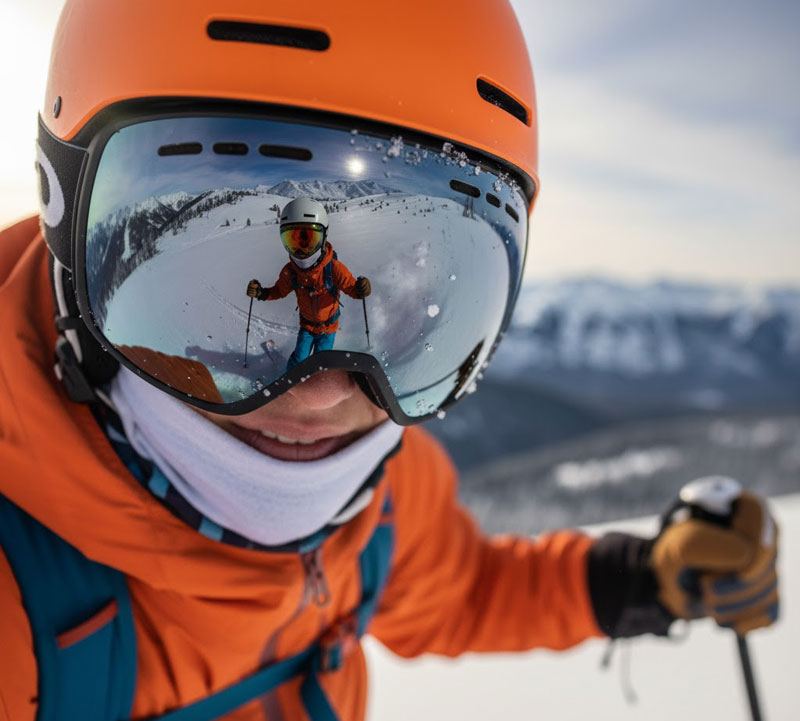
Finding the right ski goggles can be tricky if you have a smaller face. Ill-fitting goggles often cause discomfort, gaps that let in cold air, or restricted vision that ruins your day on the slopes. But with so many options available, you can easily find goggles that match your size without compromising performance, comfort, or style. This guide will help you understand exactly what to look for when choosing ski goggles for small faces.
Understanding the Importance of Fit
The fit of your ski goggles is more than just about comfort. A proper fit ensures a complete seal against your face, preventing wind and snow from getting in. It also keeps your lenses from fogging up, which is crucial for visibility and safety. Goggles that are too big can shift during turns or jumps, while overly tight ones can create pressure points, leading to headaches or sore spots after a few hours of skiing.
For small faces, the goal is to find goggles with a compact frame that sits flush on your cheeks and nose without gaps. Many brands now offer “small fit” or “women’s fit” models designed specifically for narrower facial structures.
Key Features to Consider
1. Frame Size and Shape
Start by focusing on frame dimensions. Look for goggles described as “small,” “narrow,” or “youth” fit. These typically have shorter widths and smaller lens heights to better match smaller faces. Avoid oversized or spherical designs that can overwhelm your face. Instead, go for medium-to-small spherical or cylindrical frames for a balanced look and feel.
Some brands, like Smith, Oakley, and Giro, offer scaled-down versions of their popular adult models. For example, the Smith I/O MAG S and Oakley Flight Deck XM provide advanced features in smaller frames.
2. Lens Shape and Size
The lens shape determines how much you can see and how natural your vision feels. Cylindrical lenses curve horizontally but remain flat vertically, offering good visibility in a more compact design. Spherical lenses curve both horizontally and vertically, giving better peripheral vision but can appear bulkier on smaller faces.
For compact faces, a low-profile lens design with adequate peripheral vision works best. Smaller lenses also sit closer to your face, improving stability and reducing wind entry.
3. Helmet Compatibility
Helmet and goggle fit go hand in hand. Poor compatibility can create gaps at the forehead (known as “gaper gaps”), which let in cold air and snow. Always test your goggles with your helmet before heading to the slopes. Many brands design their goggles and helmets to integrate seamlessly, reducing pressure points and ensuring a snug fit.
If you already own a helmet, bring it along when shopping for goggles. Look for adjustable straps and flexible frames that can adapt to your specific setup.
4. Lens Technology
Lens technology affects visibility in varying weather conditions. For small-face goggles, you don’t have to sacrifice performance for size. Modern lenses feature anti-fog coatings, UV protection, and color-enhancing tints that improve contrast in low light.
Photochromic lenses automatically adjust tint based on lighting conditions, which is ideal if you ski in changing weather. Interchangeable lens systems, such as magnetic lens swaps, make it easy to adapt to bright or overcast days without carrying multiple goggles.
5. Ventilation and Anti-Fog Features
Smaller goggles tend to have less internal air volume, which can increase the risk of fogging. Look for models with efficient venting systems along the top and sides of the frame. Dual-pane lenses also help by creating a thermal barrier that prevents condensation.
Some high-end models use advanced anti-fog coatings or integrate small fans for active ventilation. While these features may add to the cost, they’re worth it for consistent visibility in cold and humid conditions.
6. Face Foam and Padding
The foam around the frame determines how well your goggles seal and how comfortable they feel. Triple-layer foam is the standard for premium goggles, offering a mix of firm and soft layers to cushion your face and absorb moisture. For small faces, make sure the foam contours evenly around your cheeks and nose without leaving gaps or pressing too hard.
Women’s and youth models often feature slightly narrower nose bridges and softer foam to improve comfort and fit on smaller facial structures.
Choosing the Right Lens Tint
The right lens tint can make a huge difference in visibility and eye comfort. When choosing ski goggles for small faces, you’ll want to focus not just on fit, but also on how your lenses perform under different light conditions.
Low Light Conditions
For cloudy, snowy, or dusk conditions, choose lenses with higher Visible Light Transmission (VLT), typically between 50–70%. Yellow, rose, or light amber tints are ideal for enhancing contrast and depth perception when visibility is poor.
Bright Conditions
For sunny or high-altitude skiing, opt for darker lenses with low VLT (5–25%). Grey, brown, or mirrored lenses block more sunlight and reduce glare, protecting your eyes from harsh reflections off the snow.
All-Condition Lenses
If you don’t want to swap lenses, go for photochromic or all-condition tints that automatically adjust to different light levels. They’re convenient for skiers who experience variable weather throughout the day.
Try Before You Buy
Whenever possible, try goggles on in person. Check for even pressure around the face, a secure seal, and unobstructed peripheral vision. Move your head side to side to ensure the goggles stay in place without slipping. If shopping online, check for detailed measurements, return policies, and size recommendations from other users with similar face shapes.
Some stores and websites list frame dimensions in millimeters, making it easier to compare models. Measure your current goggles or face width for reference and match it with the listed frame size to ensure a good fit.
Recommended Models for Small Faces
If you’re not sure where to start, here are a few popular and well-fitting options:
- Smith I/O MAG S – A smaller version of Smith’s top-performing goggle, offering magnetic lens changes and excellent optics.
- Oakley Flight Deck XM – Delivers wide peripheral vision in a compact design, ideal for smaller faces.
- Giro Ella – Specifically designed for women with a smaller fit, featuring quick-change lenses and plush foam.
- Anon WM3 – Compact, helmet-compatible goggles with superior ventilation and anti-fog performance.
- POC Fovea Mid – A reduced-size version of POC’s popular Fovea line, with exceptional clarity and fit.
Final Thoughts
Finding the perfect ski goggles for a small face doesn’t have to be complicated. The key is balancing fit, comfort, and performance. Focus on compact frames, quality lenses, and strong anti-fog features. Always test compatibility with your helmet, and prioritize a snug but pressure-free seal. With the right pair, you’ll enjoy clear vision, all-day comfort, and protection from the elements — making every run more enjoyable and safe.
Whether you’re a beginner or a seasoned skier, investing in goggles that fit properly is one of the smartest gear decisions you can make. A well-fitted pair not only enhances performance but also keeps your eyes protected, ensuring you can focus on what really matters — the thrill of the mountain.