Best Insoles for Ski Boots of 2026
If your feet hurt or feel cold while skiing, your ski boots may need better support. The right insoles can make your boots more comfortable and help you ski better. They support your feet, reduce pain, and keep you warm on the slopes. In this article, we will look at the best insoles for ski boots. We will help you find the right pair for your feet and your budget.
1. CURREX EdgePro
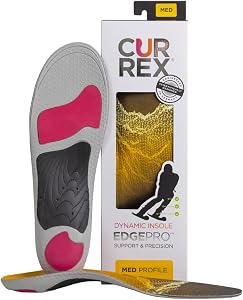
- Arch Support: 3D Dynamic Arch Technology
- Heel Stability: Decoupled heel cup with SuperGrip
- Insulation: Multi-layer fleece insulation
- Cushioning: Shock-absorbing heel and forefoot foam
CURREX EdgePro insoles are designed for skiers and snowboarders who want a more secure and comfortable fit inside tight boots. The 3D Dynamic Arch Technology provides strong midfoot support while the decoupled heel cup helps keep the foot properly positioned. Its SuperGrip heel material helps prevent unwanted heel movement, which can improve stability and control during precise turns. The supportive design also helps create a more efficient connection between your feet and boots.
The multi-layer construction combines fleece insulation with moisture and odor management to help keep feet warm and dry during long days on the mountain. Shock-absorbing cushioning under the heel and forefoot adds comfort while helping reduce pressure and fatigue. These insoles are particularly useful for winter sports where warmth, stability, and a precise boot fit are important.
Pros:
- Strong arch and heel support
- Excellent grip inside tight boots
- Warm and moisture-managing construction
Cons:
- May feel firm for users preferring soft cushioning
- Designed primarily for performance-focused footwear
2. Superfeet Winter Support Insoles

- Fit: Trim-to-fit design
- Arch Support: Supports low, medium, and high arches
- Heel Cup: Deep heel cup for stability
- Top Cover: Thermal and moisture-managing material
Superfeet Winter Support Insoles are made specifically for cold-weather footwear, including ski and snowboard boots. Their supportive shape helps stabilize the foot inside the boot and provides a secure foundation for making turns. The deep heel cup cradles the heel and helps reduce unwanted movement, which can contribute to a more controlled and stable feeling on the mountain. The trim-to-fit construction also allows users to customize the forefoot area for a better fit.
The thermal top cover adds warmth when temperatures drop, while the moisture-managing material helps reduce odors and keeps boots feeling fresher. The insoles are available for different arch heights, making them suitable for a broad range of foot shapes. They are also useful when a skier wants additional structure and support without replacing the original ski boot liner or shell.
Pros:
- Suitable for different arch heights
- Deep heel cup provides stability
- Warm top cover for winter conditions
Cons:
- Requires trimming for a precise fit
- May feel structured compared with softer insoles
See the Superfeet Winter Support Insoles
3. MASTERFIT EZFit QF

- Volume Options: Low Volume and Regular Volume
- Fit: Trim-to-fit forefoot
- Support: Ergonomic support shell
- Cushioning: Comfort cradle for pressure reduction
MASTERFIT EZFit QF insoles are designed to improve the fit, balance, and control of ski and snowboard boots. Their AutoAdapt design works with the shape of the foot and arch to provide structured support, while the ergonomic shell creates a stable platform underfoot. The insoles are available in Low Volume and Regular Volume versions, allowing skiers to choose based on how much space is available inside their boots. The forefoot can also be trimmed with scissors for a more precise fit.
The firm base is designed to reduce unwanted foot movement and improve power transfer toward the edges of the skis or snowboard. A comfort cradle adds pressure reduction and cushioning, helping make long days in cold conditions more comfortable. The design can also help refine roomy footwear by reducing internal volume without adding excessive bulk. For snug alpine shells, the Low Volume version provides a thinner profile.
Pros:
- Low and Regular Volume options
- Good balance and underfoot stability
- Supports power transfer and boot control
Cons:
- Requires trimming for exact boot fit
- Firm support may not suit everyone
4. Sidas 3Feet Winter Insoles

- Arch Type: Designed for high arches
- Arch Shell: High-profile EVA support
- Insulation: Aluminum forefoot insulation layer
- Heel Support: Stabilizing heel cup
Sidas 3Feet Winter Insoles are specifically designed for people with high arches who need additional support and pressure distribution during winter activities. The EVA arch shell is shaped with a higher profile and additional foam to support the arch while helping reduce fatigue. The heel cup helps stabilize the foot and ankle, which can contribute to greater precision and control inside ski and snowboard boots. A durable velvet top cover also provides a smooth connection between the sock and insole.
Cold-weather performance is another important feature. An aluminum sheet beneath the forefoot helps insulate the foot from cold conditions, while the engineered EVA foam in the forefoot provides cushioning and comfort. The combination of arch support, heel stabilization, cushioning, and insulation makes these insoles suitable for long winter sessions. However, their high-arch design means they are most appropriate for users whose foot shape matches the intended support profile.
Pros:
- Excellent support for high arches
- Aluminum layer improves forefoot insulation
- Stable heel cup for better control
Cons:
- Not designed for low or medium arches
- Higher arch profile may feel intrusive for some users
See the Sidas 3Feet Winter Insoles
5. Shred Soles Boot Insoles

- Impact Protection: ShredTech high-density heel gel
- Forefoot Cushioning: ShredBed Microcellular Urethane
- Arch Support: DynArch2 snowboarding-specific design
- Alignment: ShWedge tapered design
Shred Soles Boot Insoles are built with snowboarders in mind, combining impact protection, arch support, and alignment features in a performance-focused design. The ShredTech high-density gel is positioned under the heel to absorb and dissipate impact energy, which can make landings and rough terrain more comfortable. Under the forefoot, ShredBed Microcellular Urethane helps reduce chatter and adds cushioning without relying entirely on soft foam.
The DynArch2 support system is engineered specifically for snowboarding to provide structured arch support and help reduce strain during riding. The ShWedge taper is designed to encourage a more natural alignment of the ankles, knees, and hips while riding. This combination makes the insoles particularly focused on snowboard boot fit and impact management. They can be a useful option for riders who prioritize cushioning and responsive support during active sessions.
Pros:
- Strong heel impact absorption
- Snowboarding-specific arch support
- Forefoot cushioning helps reduce chatter
Cons:
- More snowboard-focused than ski-focused
- Performance-oriented design may feel firm to some users
See the Shred Soles Boot Insoles
How to Choose Insoles for Ski Boots
Skiing is one of the most exciting winter sports, but it can quickly become painful if your boots do not fit well. Many skiers blame their boots for discomfort, cold feet, or tired legs. In reality, the problem often lies in the insoles. The stock insoles that come with most ski boots are thin, flat, and offer very little support. They are placeholders, not performance gear. Choosing the right insoles for your ski boots can transform your entire skiing experience. You will feel more control, less pain, and greater warmth. This guide will walk you through everything you need to know to pick the best insoles for your feet and your skiing style.
Why Ski Boot Insoles Matter
Your feet are the foundation of your skiing. Every turn, every stop, and every shift in weight travels from your feet through your boots to your skis. If your feet move inside your boots, you lose control. If they press against hard surfaces, you feel pain. If they get cold, your whole day is ruined. Insoles sit between your feet and the boot’s base. They shape how your foot sits, how pressure spreads, and how much warmth stays in. A good insole can fix many common boot problems without buying new boots.
Signs You Need New Insoles
Not sure if you need new insoles? Look for these signs:
- Your feet ache or burn after a few runs.
- Your toes go numb or feel cold even in mild weather.
- Your feet slide around inside the boots.
- You feel pressure points on the bottom of your feet.
- Your arches feel tired or unsupported.
- Your boots feel too loose or too tight in the wrong places.
- The stock insoles look flat, thin, or worn out.
If you notice any of these, new insoles can help. They are one of the cheapest and most effective upgrades you can make.
Types of Ski Boot Insoles
There are three main types of insoles for ski boots. Each has pros and cons. Your choice depends on your budget, your foot shape, and how much skiing you do.
1. Stock Insoles
These come with your boots. They are basic and flat. They offer almost no arch support or cushioning. They are fine for trying on boots in a shop, but they are not meant for real skiing. Replace them as soon as you can.
2. Over-the-Counter (OTC) Insoles
These are pre-made insoles you can buy online or in stores. They come in different sizes and shapes. Some are designed for high arches, some for flat feet, and some for general comfort. They are affordable and easy to find. Good OTC insoles can improve support, warmth, and pressure relief. However, they may not fit your feet perfectly. You may need to trim them to fit your boots.
3. Custom Insoles
These are made just for your feet. A boot fitter or podiatrist takes a mold or scan of your feet and builds an insole to match. Custom insoles offer the best fit, support, and control. They are ideal for serious skiers, people with foot problems, or anyone who struggles with boot pain. They cost more, but they last for years and can be moved from one pair of boots to another.
Key Features to Look For
When you shop for insoles, do not just grab the first pair you see. Look for these important features.
Arch Support
Your arches need support to keep your feet in a neutral position. If your arches collapse, your knees rotate inward and your boots feel loose. Good insoles have a firm arch that matches your foot shape. Too soft and it will not help. Too hard and it will hurt. Look for insoles with a contoured arch that feels comfortable right away.
Cushioning
Cushioning absorbs shock and reduces pressure. Ski boots are stiff, so a little cushioning goes a long way. Look for insoles with gel, foam, or cork in the heel and forefoot. But do not choose insoles that are too soft. You need a firm base for control. The best insoles balance cushioning with stability.
Heel Cup
A deep heel cup holds your heel in place. This stops your foot from sliding forward when you ski. It also improves balance and reduces heel pain. Look for a heel cup that wraps around your heel snugly but does not pinch.
Material
Insoles come in many materials. Each has different qualities:
- EVA foam: Light, cushioned, and cheap. It breaks down over time.
- Gel: Soft and shock-absorbing. It can be heavy and may freeze in cold weather.
- Cork: Firm, supportive, and molds to your foot. It is durable and warm.
- Plastic or carbon: Very firm and stable. Best for advanced skiers and racing.
- Wool or fleece: Warm and soft. Good for the top layer but not for support.
Thickness
Thickness matters a lot in ski boots. If an insole is too thick, it will make your boots feel tight and cut off circulation. If it is too thin, it will not provide enough support. Check how much room you have in your boots. Many ski boot insoles are designed to be low-profile. If you have a tight fit, look for thin options. If your boots feel loose, a thicker insole can take up space and improve the fit.
Thermal Properties
Cold feet are a common problem in skiing. Some insoles have a reflective layer or insulating material to keep heat in. Others are made of materials that do not conduct cold. If you suffer from cold feet, look for insoles with a thermal top sheet or a foil layer. Also, avoid insoles that absorb moisture. Wet feet get cold fast. Look for moisture-wicking covers.
Trim-to-Fit vs. Pre-Sized
Some insoles come in exact sizes. Others are trim-to-fit, meaning you cut them to match your boot’s shape. Trim-to-fit insoles are more work, but they can fit better. Pre-sized insoles are easier but may not match your boot perfectly. If you choose trim-to-fit, cut a little at a time and test the fit often.
How to Choose the Right Insoles for Your Feet
Now that you know what to look for, here is a step-by-step guide to choosing the best insoles for your ski boots.
Step 1: Know Your Foot Type
Your foot type affects which insoles will work best. There are three main types:
- High arches: You need soft cushioning and good arch support. Your feet do not absorb shock well.
- Flat feet: You need firm arch support and stability. Your feet roll inward and need control.
- Neutral feet: You need balanced support and cushioning. You can wear many types of insoles.
To find your foot type, wet your feet and step on a piece of paper. Look at the shape of your footprint. A high arch shows only the heel and ball. A flat foot shows almost the whole foot. A neutral foot shows a moderate curve.
Step 2: Check Your Boot Fit
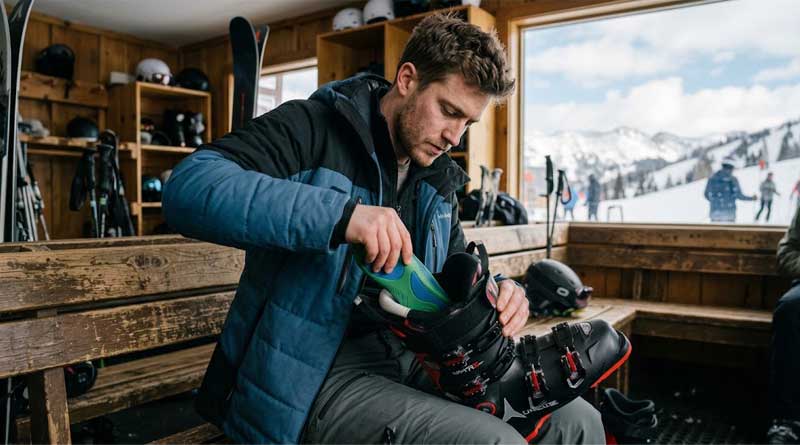
Put on your ski boots with the stock insoles. Walk around and notice how they feel. Are they tight? Loose? Do your feet slide? Do you feel pressure points? This tells you how much room you have for new insoles. If your boots are already tight, choose thin insoles. If they are loose, choose thicker ones.
Step 3: Set Your Budget
Insoles range from about $20 to over $200. OTC insoles are cheap and good for most skiers. Custom insoles cost more but offer the best fit and support. Think about how often you ski. If you ski a few times a year, OTC insoles are fine. If you ski every weekend or have foot pain, custom insoles are worth the money.
Step 4: Try Before You Buy
If possible, try insoles in your boots before buying. Many shops let you test them. Walk around, flex your knees, and simulate skiing movements. Check for pressure points, numbness, or slipping. If you buy online, make sure the store has a good return policy.
Step 5: Consider Your Skiing Style
Different skiing styles need different insoles. Here is a quick guide:
| Skiing Style | Recommended Insole Features |
|---|---|
| Recreational skiing | Cushioning, moderate arch support, warmth |
| All-mountain skiing | Balanced support, heel cup, moisture-wicking |
| Racing / performance | Firm support, carbon or plastic base, low profile |
| Touring / backcountry | Lightweight, warm, moisture-wicking, flexible |
| Park and pipe | Shock absorption, cushioning, secure heel |
Common Mistakes to Avoid
Many skiers make mistakes when choosing insoles. Avoid these common problems:
- Buying insoles that are too soft: Soft insoles feel nice in the shop but collapse when you ski. You lose control and your feet get tired.
- Ignoring boot fit: A great insole in a bad-fitting boot will not help. Fix the boot fit first.
- Choosing insoles that are too thick: This cuts off circulation and makes your feet cold and numb.
- Not trimming properly: If you trim too much, the insole will slide around. Trim a little at a time.
- Skipping the heel cup: A good heel cup is one of the most important features. Do not ignore it.
- Buying cheap insoles and expecting miracles: Very cheap insoles are often no better than stock insoles. Spend a little more for real support.
How to Care for Your Insoles
Once you have good insoles, take care of them. They will last longer and work better.
- Take them out of your boots after each ski day.
- Let them air dry. Do not put them near a heater.
- Clean them with mild soap and water. Do not machine wash.
- Check for wear. Replace them when they flatten or crack.
- Store them in a cool, dry place during the off-season.
When to See a Boot Fitter or Podiatrist
If you have serious foot pain, bunions, plantar fasciitis, or other foot conditions, see a professional. A boot fitter can recommend the right insoles and adjust your boots. A podiatrist can make custom orthotics that treat specific problems. Do not suffer through pain. Skiing should be fun, not painful.
Final Thoughts
Choosing the right insoles for your ski boots is one of the best investments you can make. They improve comfort, warmth, control, and performance. Start by knowing your foot type and boot fit. Set a budget. Look for good arch support, a deep heel cup, and the right materials. Try before you buy if you can. Avoid common mistakes like choosing insoles that are too soft or too thick. With the right insoles, your feet will feel better, your turns will feel stronger, and your ski days will be longer. Do not settle for the flimsy stock insoles. Upgrade today and feel the difference on your next run.