Best Snowboard Boots for Intermediate Riders of 2025
Finding the right snowboard boots can make a big difference in how much fun you have on the mountain. If you’re an intermediate rider, you need boots that balance comfort, control, and support—without being too stiff or too soft. The best boots help you ride longer, carve better, and stay warm all day. With so many options out there, it’s easy to feel overwhelmed. That’s why we’ve put together this list of the best snowboard boots for intermediate riders. Whether you like groomers, park laps, or powder stashes, these boots are made to help you level up your skills while keeping your feet happy from first chair to last run.
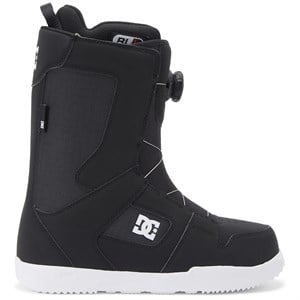
1. DC Phase Boa
-
Flex Rating: 4 (Soft)
-
Lacing System: BOA® Fit System with H4 Coiler and BOA® Black SS Laces
-
Liner: Response Liner I with multi-layer EVA memory foam and fleece lining
-
Outsole: Foundation UniLite™ for lightweight traction and cushioning
The DC Phase Boa boots are a great pick for intermediate riders looking for performance without breaking the bank. They feature the convenient H4 Coiler Boa system, which makes getting in and out a breeze—even with gloves on. Inside, the Response Liner I cradles your feet in heat-moldable foam and fleece, offering solid support with a plush feel. The flex leans soft, making these ideal for all-mountain cruising or riders who enjoy a forgiving ride with lots of play.
DC’s UniLite outsole keeps things light underfoot while still providing dependable grip when skating or hiking. The IMPACT-ALG™ footbed offers decent shock absorption for long days on the hill. While most users will find them warm and comfortable, the fit might vary depending on your bindings—some riders report pressure on one side. Still, with reliable construction, quick lacing, and a versatile flex, the Phase Boa delivers excellent value for a mid-season boot purchase.
Pros:
- Quick and easy Boa closure system
- Lightweight and grippy sole
- Warm, heat-moldable liner
- Great price-to-performance ratio
Cons:
- Might cause discomfort depending on bindings
- Not ideal for aggressive or stiff-flex riders
View at evo View Women’s at evo
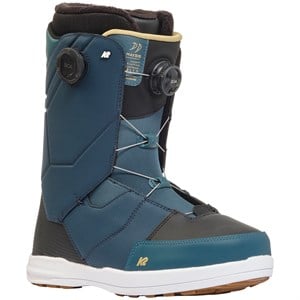
2. K2 Maysis
-
Flex Rating: 7 (Stiff)
-
Lacing System: Dual Boa® – H4 Coiler and Boa® Conda™ liner adjustment
-
Liner: Intuition™ Control Foam 3D Liner with internal and external J-Bars
-
Outsole: This Grips! Premium Rubber with Harshmellow™ dampening
The K2 Maysis is a top-tier all-mountain boot built for riders who want comfort, response, and convenience all in one. With its stiff flex, dual Boa system, and premium Intuition™ liner, it delivers a dialed-in fit and excellent heel hold that you can fine-tune even while wearing gloves. The Boa® Conda™ liner system ensures your ankle stays snug and supported, reducing heel lift without pinching or hot spots. These boots are built tough, with rubber reinforcements in high-stress areas to extend longevity.
What sets the Maysis apart is the combination of aggressive performance and plush feel. The Harshmellow™ midsoles soak up vibrations and hard landings, while the EVA footbed and Control Foam liner keep your feet happy on long days. The sustainable S’Cafe™ Coffee Mesh lining helps with moisture and odor control, which is a thoughtful bonus. Whether you’re bombing groomers, hitting park laps, or trekking through sidecountry stashes, these boots are versatile enough to handle it all.
Pros:
- Dual Boa system allows on-the-fly fit adjustments
- Outstanding heel hold with Boa® Conda™
- Dampens chatter and landings effectively
- Built for durability and all-day comfort
Cons:
- Runs slightly small—consider sizing up half a size
- Price might be high for casual riders
View at evo View at Backcountry
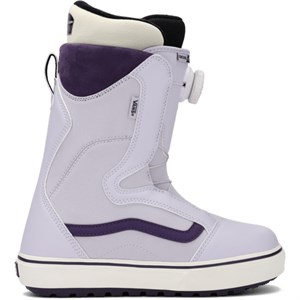
3. Vans Encore OG – Women’s
-
Flex Rating: 4–5 (Medium Soft)
-
Lacing System: Single Boa® Coiler with TX3 textile lace
-
Liner: V1 UltraCush with V1 Boot Harness
-
Outsole: V1 Waffle Lug for grip and classic skate-inspired look
The Vans Encore OG Women’s Snowboard Boots are a dream for riders who want simplicity, comfort, and solid all-mountain performance. Designed with a forgiving flex and an easy single Boa system, these boots make your setup quick and stress-free, so you can spend more time riding and less time fiddling with your gear. Inside, the UltraCush liner delivers plush comfort and reliable support, and the added PleasureCuff helps cradle your calves with a soft, cushy fit.
The Encore OG shines for newer to intermediate riders looking for warmth and style without extra weight. The V1 POPCUSH footbed cushions hard landings and the Heat Retention 360° layer ensures your feet stay warm even on freezing days. After a short break-in period, the boots mold to your feet nicely and provide great hold with minimal heel lift. The Waffle Lug sole grips well in icy parking lots and adds a bit of Vans flair to your ride. They’re especially well-suited for freestyle, surfy turns, and all-day park play.
Pros:
- Super easy Boa® system for quick fit
- Cozy and warm even in cold temps
- Lightweight with great board feel
- Stylish and low-profile design
Cons:
- Slight heel lift if not perfectly molded
- Less responsive for advanced, aggressive riders
View at evo View at Backcountry
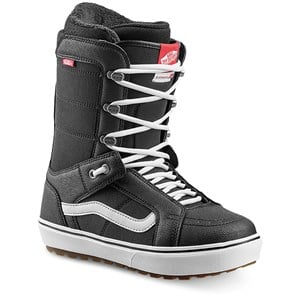
4. Vans Hi-Standard OG
-
Flex Rating: 4–5 (Medium Soft)
-
Lacing System: Traditional laces with Instep Lace Lockout
-
Liner: V1 UltraCush with Internal Web Harness
-
Outsole: V1 Waffle Lug with classic vulcanized style
The Vans Hi-Standard OG blends timeless Vans aesthetics with dependable performance for all-mountain riders. This boot keeps things simple with a traditional lace-up system that offers full control over fit and tension. Inside, the UltraCush liner provides day-long comfort with enough support for all but the most aggressive riders. The Web Harness keeps your heel locked down, and the POPCUSH footbed gives your feet the cushioning they need for long days on the hill.
The Hi-Standard OG excels for intermediate to advanced riders who like the classic feel of laces but still want modern tech in the ride. After a couple of sessions, the boots mold nicely to your foot, especially if you opt for heat molding. Some minor heel lift may occur depending on foot shape, but nothing that compromises overall performance. These boots are light, supportive, and versatile enough for everything from pow laps to jib lines in the park.
Pros:
- Classic lace-up feel with reliable performance
- Lightweight and great board feel
- Soft enough for freestyle but supportive enough for all-mountain
- Excellent heat-moldable fit and comfort
Cons:
- Slight heel lift for wider feet
- Tongue pressure may require a short break-in
View at evo View Women’s at evo
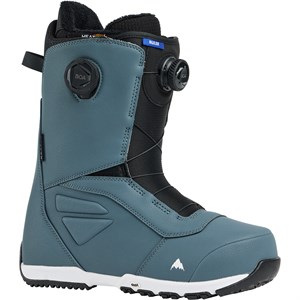
5. Burton Ruler Boa
-
Flex Rating: 6 (Medium)
-
Lacing System: Dual Zone Boa® with Coiler™ and Lockdown tech
-
Liner: Imprint™ 2 with 3M™ Thinsulate™ and Man Fur
-
Outsole: EST® Optimized Midsole with B3 Gel and Sleeping Bag Reflective Foil
The Burton Ruler Boa boots are made for riders who want a responsive, all-mountain boot that doesn’t sacrifice comfort. With a medium flex and dual Boa system, these boots offer quick micro-adjustability for both upper and lower zones. The Imprint™ 2 liner is plush yet supportive, featuring heat-moldable foam and added warmth thanks to 3M™ Thinsulate™ insulation. Whether you’re carving fast groomers or cruising through the trees, the Ruler Boa adapts with ease.
Underfoot, Burton’s EST® midsole gives you excellent board feel while maintaining cushioning through B3 Gel and reflective heat foil. These boots feel broken-in from day one, thanks to Total Comfort Construction, and they hold up well even after 20+ days on the mountain. One sizing note: they run small, so a half-size up is a smart move. With dependable fit, minimal pressure points, and a well-rounded flex, the Ruler Boa is a go-to for riders looking to push their skills without fuss.
Pros:
- Dual Boa system is quick and precise
- Warm, comfortable liner with solid heel hold
- Great board feel with excellent dampening
- Feels broken-in right out of the box
Cons:
- Runs small; sizing up recommended
- No internal quick-pull liner lacing
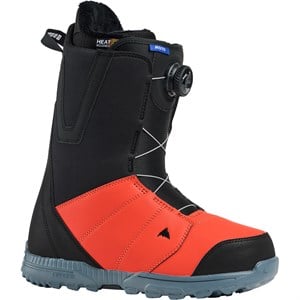
6. Burton Moto Boa
-
Flex Rating: 3 (Soft)
-
Lacing System: Boa® Coiler™ Closure System
-
Liner: Imprint™ 1+ with Integrated Lacing and EVA Footbed
-
Outsole: Shrinkage™ Footprint Reduction Technology with Snow-Proof Gusset
The Burton Moto Boa is a top choice for riders who prioritize comfort, ease of use, and lightweight performance. With its soft flex, this boot is forgiving enough for beginners but refined enough for park riders who like to tweak and play. The Boa Coiler™ system makes getting in and out quick, and adjusting fit throughout the day is easy—even with gloves on. Inside, the Imprint™ 1+ liner provides decent support and all-day comfort, plus it’s heat moldable for a custom feel.
The Moto Boa also features Shrinkage™ Footprint Reduction, which helps reduce toe drag—especially helpful for riders with bigger feet. While not the stiffest boot around, its soft flex makes it ideal for surfy turns, presses, and park laps. The snow-proof gusset keeps your feet warm and dry, even when the weather turns icy. It’s been a favorite in Burton’s line for over a decade, and it’s easy to see why: simple, comfortable, and effective. Just remember to size up—these tend to run small.
Pros:
- Super easy Boa® lacing for fast on/off
- Soft flex is ideal for beginners or park riders
- Lightweight and warm
- Reduces footprint to prevent toe drag
Cons:
- May feel too soft for aggressive riders
- Runs small—go up at least half a size
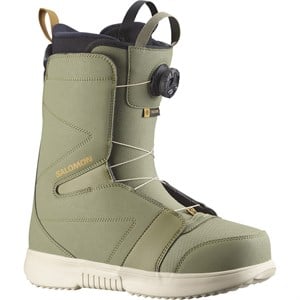
7. Salomon Faction Boa
-
Flex Rating: Soft
-
Lacing System: Boa® H4 Coiler™ with TX3 Textile Lace
-
Liner: Universal Liner with Custom Fit heat moldable foam
-
Outsole: D-Light EVA sole with added gridding for comfort
The Salomon Faction Boa boots are a solid pick for beginner and intermediate riders looking for comfort, simplicity, and smooth progression. With their soft flex and Fit to Ride construction, they’re lightweight and feel more like a street shoe than a clunky snowboard boot. The Boa H4 Coiler system makes getting the right fit quick and painless, and the TX3 lace adds a soft, natural flex to the closure that feels closer to traditional laces—without the hassle.
Inside, the Universal Liner uses Ultralon foam and a custom-fit shape that molds to your foot after just a few sessions. The low-profile D-Light sole keeps things light while still offering enough cushion to keep your feet happy on long days. These boots won’t blow you away with high-end features, but they’re incredibly reliable and warm for the price. Just keep an eye on the Boa staying tight—some riders report a little loosening after a few laps. For park progression and laid-back days on groomers, the Faction Boa is a great match.
Pros:
- Soft and forgiving—great for beginners
- Lightweight, compact Fit to Ride shell
- Quick and easy Boa® lacing system
- Warm and moldable liner
Cons:
- Boa may loosen slightly during long runs
- Not suitable for aggressive riding or steep terrain
View at evo View at Backcountry
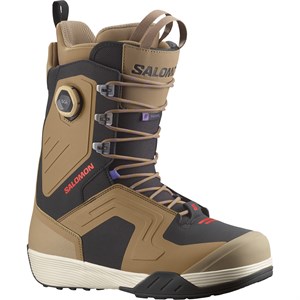
8. Salomon Dialogue Lace SJ Boa
-
Flex Rating: Medium
-
Lacing System: Traditional laces with Boa® STR8JKT internal harness
-
Liner: Custom Fit heat moldable liner with Ultralon foam
-
Outsole: Contagrip® Rubber with DampLite+ cushioning
The Salomon Dialogue Lace SJ Boa is built for riders who want a perfect blend of park creativity and all-mountain performance. With a mid-level flex and dual-zone closure (traditional laces plus Boa® STR8JKT heel harness), this boot offers one of the most secure and customizable fits in its class. The STR8JKT system acts like a 3-point seatbelt for your heel, virtually eliminating heel lift while adding serious control—especially noticeable when carving or riding switch.
Inside, the heat moldable Custom Fit liner wraps the foot in comfort and support, while the OrthoLite C2 footbed cushions hard landings and long sessions. The Contagrip® outsole grips well across all terrain, from icy stairs to slushy lift lines, and the EVA DampLite+ midsole soaks up chatter from variable conditions. This boot rides slightly softer than advertised, making it more ideal for freestyle-focused riders or anyone who values board feel over bombproof stiffness. Overall, it’s a premium-feel boot with versatility, comfort, and standout heel hold.
Pros:
- STR8JKT Boa® system locks in heel hold
- Dual lacing setup for max fit control
- Great board feel and freestyle flex
- Uses recycled materials in liner and outsole
Cons:
- Slightly softer than expected for a “medium” flex
- Not ideal for riders who prefer high-impact dampening
View at evo View at Backcountry
How to Choose Snowboard Boots for Intermediate Riders?
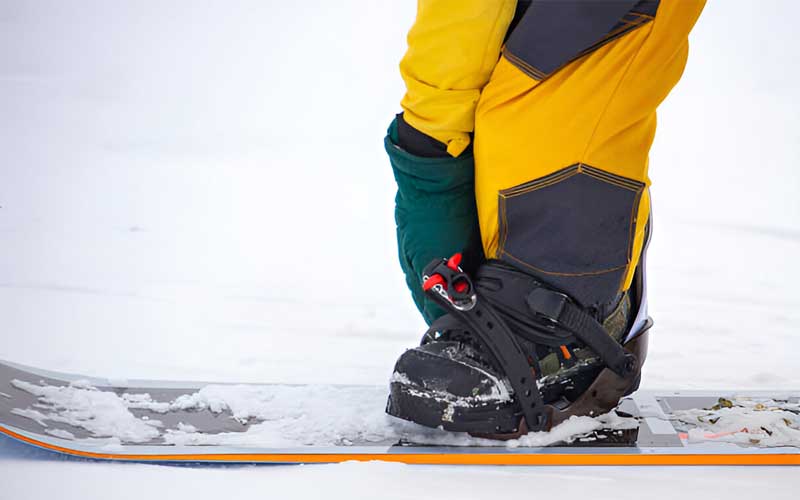
When you’re past the beginner phase and ready to take your snowboarding to the next level, upgrading your boots is one of the smartest moves you can make. The right pair of snowboard boots will give you better control, more comfort, and help you ride longer without fatigue or foot pain. But with so many types, fits, and features available, how do you know what’s right for you as an intermediate rider? This guide breaks it all down so you can choose the best boots with confidence.
1. Know Your Riding Style
Before anything else, think about where and how you like to ride. Your style has a big impact on the kind of boots that’ll suit you best:
-
All-Mountain: If you like to explore every part of the resort—groomers, trees, some powder—look for boots with medium flex and all-day comfort.
-
Freestyle/Park: If you enjoy jumps, rails, and buttery tricks, choose a softer, more flexible boot that allows for easy movement and tweaks.
-
Freeride: For riders who love speed, steep lines, and backcountry, stiffer boots offer better control and response.
As an intermediate, you might still be figuring this out, so if you ride a little bit of everything, an all-mountain boot with medium flex is a safe, versatile choice.
2. Understand Boot Flex
Boot flex refers to how stiff or soft the boot feels when you move. This plays a huge role in comfort and control.
-
Soft Flex (1–4): Easier to move and more forgiving. Great for park riders or intermediates who prefer a looser, surfier feel.
-
Medium Flex (5–7): A good balance of comfort and response. Ideal for all-mountain riders and most intermediate snowboarders.
-
Stiff Flex (8–10): More precise and responsive. Better for advanced riders, speed demons, or backcountry explorers.
Most intermediate riders will feel most comfortable with a medium flex boot—firm enough for better control, but not so stiff that it’s unforgiving or uncomfortable.
3. Get the Right Fit
A great boot is useless if it doesn’t fit properly. Snowboard boots should feel snug—like a firm handshake around your foot—but not painful or overly tight.
Tips for getting the right fit:
-
Try on with snowboarding socks (thin, moisture-wicking—not thick wool or cotton).
-
Your toes should barely touch the end when standing upright, but pull back slightly when you bend your knees.
-
No heel lift. Your heel should stay locked in place when flexing forward.
-
Heat-moldable liners will conform to your foot after a few rides or can be molded in-store.
Remember: boots pack out slightly over time, meaning they’ll feel roomier after a few days of riding. So it’s okay if they feel a bit tight when new.
4. Choose the Right Lacing System
Snowboard boots come with a few different lacing options. Each has pros and cons, and your choice comes down to personal preference.
-
Traditional Laces: Classic, customizable, and easy to repair. Slower to tighten and can loosen while riding.
-
Boa® System: Uses a dial to quickly tighten wire laces. Great for convenience and on-the-fly adjustments. Some models offer dual Boa—one for the outer boot, one for the liner.
-
Speed Lacing: Uses pull tabs for quick tightening in separate zones (upper and lower). Faster than traditional laces, but harder to fine-tune than Boa.
For intermediate riders, Boa or speed lacing systems are often preferred because they save time and are easier to adjust mid-day.
5. Liner Features Matter
The liner is the soft inner part of the boot that wraps around your foot and provides warmth, cushioning, and support. Good liners are often removable and heat-moldable, and some include extra features like:
-
J-bars for heel hold
-
Fleece or thermal layers for warmth
-
Integrated lacing or harness systems for a snug fit
Higher-end liners mold better to your foot and offer improved comfort, which helps if you ride frequently or all day long.
6. Don’t Forget the Footbed and Sole
Boots should offer good shock absorption and grip for walking on snow and ice. Look for boots with:
-
EVA footbeds or foam cushioning to absorb impacts from jumps or rough terrain
-
Grippy rubber soles for traction in icy parking lots or when hiking
-
Dampening tech to reduce vibrations when riding on bumpy or hard-packed snow
Intermediate riders benefit from boots with good dampening and cushioning, especially if you’re riding longer sessions or on mixed terrain.
7. Match Your Boots with Your Bindings
Boots need to match your binding style and size. Most boots are designed to work with standard strap bindings, but some boots are made for step-on bindings, which don’t require traditional straps. Make sure:
-
Your boot size fits inside your bindings without overhang or slop
-
Flex matches—don’t pair soft boots with stiff bindings (or vice versa)
If you’re using rear-entry bindings (like Flow), make sure your boot shape allows for easy entry and exit.
8. Consider Your Budget
Snowboard boots can range from $150 to over $400. While you don’t need the most expensive pair, avoid going too cheap, especially if you ride often.
-
$150–$200: Basic models, softer flex, fewer features
-
$200–$300: Good balance of comfort, tech, and support for most intermediates
-
$300+: Premium materials, dual Boa systems, heat-moldable liners, and advanced dampening
Think of boots as an investment in comfort and control—it’s often worth spending a little more here than on other gear.
9. Try Before You Buy (If Possible)
If you can, visit a snowboard shop and try on a few pairs before purchasing. Every brand fits slightly differently. For example:
-
Burton boots tend to fit narrower
-
Salomon and K2 fit more true-to-size
-
Vans run about half a size small
-
DC and ThirtyTwo often have wider toe boxes
Better yet, some resorts have demo programs where you can try boots before committing.
Final Thoughts
Choosing the right snowboard boots as an intermediate rider doesn’t have to be complicated. Focus on comfort, proper flex, easy lacing, and a supportive liner. A good-fitting boot will help you progress faster, ride longer, and have way more fun doing it. Take your time, try on a few styles, and don’t be afraid to spend a bit more for a boot that truly fits. Once you find the right pair, you’ll wonder how you ever rode without them.