Best Snowboard Goggles for Women of 2026
Nothing ruins a day on the mountain faster than fogged-up lenses or a frame that pinches your face. Finding the right snowboard goggles isn’t just about matching your jacket—it’s about locking in crisp visibility, seamless helmet compatibility, and all-day comfort for smaller to medium face shapes. From quick magnetic lens swaps to contrast-boosting tech, we’ve rounded up the standout pairs that handle blinding sun, flat light, and everything in between.
1. OutdoorMaster OTG Ski Goggles

- Design: Over-the-glasses (OTG) fit
- Lens: Dual-layer with anti-fog inner coating
- Protection: 100% UV400, soft TPU frame
- Strap: Extra long elastic, fits all helmets
The OutdoorMaster OTG Ski Goggles are made for riders who wear prescription glasses and want a fog-free day on the mountain without switching to contacts. The oversized over-the-glasses design leaves plenty of room for most frames, while the dual-layer lens with an anti-fog coated inner layer keeps moisture from building up during hard runs. The soft TPU frame flexes comfortably against the face and stays durable through many seasons of use.
Helmet compatibility is another strong point. The extra long elastic strap stretches over nearly any helmet, and the goggles suit both adults and teens, which makes them a smart choice for families sharing gear. The lenses provide 100 percent UV400 protection, so glare and harmful rays are handled on bright bluebird days. A carrying pouch is included to keep the lens clean between trips. You will not get interchangeable lenses like on pricier models, but for the price these goggles deliver dependable clarity, comfort, and glasses-friendly space for casual and intermediate riders.
- Pros: Fits over glasses; effective anti-fog lens; works with all helmets; carrying pouch included
- Cons: No interchangeable lenses; basic feature set
See the OutdoorMaster OTG Ski Goggles
2. Smith I/O MAG S

- Lens: Spherical ChromaPop, interchangeable
- Frame Size: Small, standard bridge fit
- Light Transmission: 13% to 23% (primary lens)
- Extras: 1 additional lens, 100% UV protection
The Smith I/O MAG S ChromaPop goggles bring the brand’s popular I/O MAG design to a frame sized for smaller faces, and the fit is a big part of the appeal. The spherical lens gives a wide, natural field of view, while ChromaPop technology boosts color and contrast so wind lips, landings, and tree glades stand out clearly in changing light. Light transmission varies by lens option, so you can match the tint to your typical conditions.
Swapping lenses is simple thanks to the MAG system, and a second lens is included, which makes it easy to pair a sunny-day lens with a low-light option. The goggles are helmet compatible, offer 100 percent UV protection, and use a standard bridge fit that suits most noses. They are not polarized or photochromic, so you will need to change lenses manually as conditions shift. The premium price is the main hurdle, but riders with small to medium faces who want top-tier optics and a quick lens swap will find the performance justifies the spend.
- Pros: Excellent color and contrast; quick lens swaps; small frame fit; spare lens included
- Cons: Premium price; not photochromic or polarized
3. goodr Peak G

- Lens Shape: Cylindrical, interchangeable
- Frame Size: Medium, standard bridge fit
- Extras: S1 yellow low-light lens, swappable strap
- Protection: 100% UV, helmet compatible
The goodr Peak G goggles are built for riders who want to rip groomers and carve fresh powder with a bold, playful look. The cylindrical lens keeps the profile clean and the view flat, and the included S1 yellow lens is a welcome addition for flat light and low-visibility days. Having a second lens in the box means you can adapt to changing conditions on the fly instead of heading home early or squinting through the storm.
The frame is a medium size with a standard bridge fit, and it is helmet compatible, so pairing it with your lid should be painless. A swappable strap lets you change the look or replace a worn band, which adds personality and extends the life of the goggles. UV protection is rated at 100 percent, though the lenses are not polarized or photochromic and light transmission figures are not listed. It is a great pick for everyday riders who want a lively design and dependable performance.
- Pros: Extra low-light lens included; swappable strap; helmet compatible; fun style
- Cons: No light transmission data; not polarized or photochromic
4. Smith I/O MAG ChromaPop

- Lens: Spherical ChromaPop, interchangeable
- Frame Size: Medium, standard bridge fit
- Light Transmission: 12% to 25% (primary lens)
- Extras: 1 additional lens, 100% UV protection
The Smith I/O MAG ChromaPop goggles are the standard-size version of Smith’s popular I/O MAG line, built to help you see terrain details with confidence. ChromaPop lens technology boosts color and contrast so wind lips, landings, and tree glades look sharper, and the spherical lens shape delivers a wide, natural view with minimal distortion. The lens range is huge, from bright-day mirrored options with low transmission to amber and yellow lenses with higher transmission for cloudy conditions.
Interchangeable lenses make the goggles adaptable, and a second lens is included so you are covered for more than one kind of day. The medium frame with a standard bridge fit works for most adult faces, and helmet compatibility is built in. UV protection is 100 percent. The lenses are neither polarized nor photochromic, so you will swap them by hand when light changes. Smith goggles cost more than budget options, but the optics, fit, and lens flexibility make the I/O MAG a top choice for riders who spend many days on snow and care about vision.
- Pros: Sharp color and contrast; huge lens selection; spare lens included; wide view
- Cons: Higher price; manual lens changes required
See the Smith I/O MAG See the Smith I/O MAG XL
5. Smith 4D MAG ChromaPop

- Lens: Oversized spherical ChromaPop, interchangeable
- Frame Size: Medium, standard bridge fit
- Light Transmission: 9% to 25% (primary lens)
- Extras: 1 additional lens, 100% UV protection
The Smith 4D MAG ChromaPop goggles are made for riders who want the widest possible view of the mountain. The oversized spherical lens offers a panoramic field of vision with sharp optics, helping you judge terrain, spot other riders, and pick your line before you drop in. ChromaPop technology adds color and contrast so shadows and textures in the snow are easier to read, especially when the light turns flat or shifts between sun and cloud.
A large selection of lens colors lets you tailor the goggles to your local conditions, from low-transmission mirrored lenses for bright sun to high-transmission amber for overcast days. The MAG system makes swapping quick, and one extra lens is included. The frame is medium with a standard bridge fit, helmet compatible, and blocks 100 percent of UV rays. The lenses are not polarized or photochromic, so you will change them manually. The price is high, and the large lens may feel bulky on smaller faces, but for riders who value peripheral vision and crisp detail, the 4D MAG is hard to beat.
- Pros: Panoramic field of view; excellent optics; wide lens range; spare lens included
- Cons: High price; large lens can feel bulky
See the Smith 4D MAG See the Smith 4D MAG S See the Smith 4D MAG XL
6. findway Ski Goggles OTG
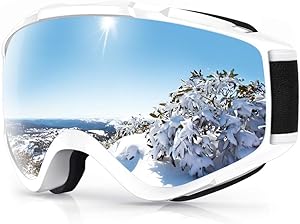
- Lens: Double-layer spherical, revo mirror coating
- Design: Frameless, oversized OTG fit
- Protection: Anti-fog, anti-scratch, 100% UV
- Strap: Silicone-backed, non-slip, helmet compatible
The findway Ski Goggles OTG are an oversized, glasses-friendly option that packs a lot of features into a budget-minded package. The double-layer lens has an anti-scratch, anti-fog inner layer and a full-face revo mirror coating that cuts glare on bright days. A frameless spherical design opens up the view, and the ventilation system moves fresh air across the lens to clear moisture quickly so fogging does not interrupt your runs.
Comfort gets attention too, with triple-layer foam, a premium TPU frame, and a wide silicone-backed strap that grips your helmet and stays in place. The OTG fit accommodates glasses underneath, and the goggles suit men, women, and youth, though they are not recommended for children under 12. UV protection is 100 percent, and the brand backs the goggles with a one-year guarantee and responsive customer service. Lens swapping is not part of the package, and the oversized frame may look large on smaller faces. Still, the ventilation, mirror coating, and glasses compatibility make these a solid value.
- Pros: Effective ventilation; mirror coating cuts glare; fits over glasses; one-year guarantee
- Cons: No swappable lenses; oversized fit; not for kids under 12
See the findway Ski Goggles OTG
7. OutdoorMaster PRO

- Lens: Large frameless spherical, interchangeable
- Design: OTG, fits over glasses
- Protection: Anti-fog coating, 100% UV400
- Included: Protective case and carrying pouch
The OutdoorMaster PRO ski goggles focus on unobstructed vision, using a large frameless spherical lens that opens up your view of the slopes. The design looks sleek, and every lens comes with an anti-fog coating and 100 percent UV400 protection. The OTG construction lets you wear your glasses underneath, so riders who need vision correction can enjoy the same wide view as everyone else.
The standout feature is the interchangeable lens system, with more than 20 lens options available so you can swap for bright days, storms, or night skiing. Extra lenses are sold separately, so building a full kit costs more, but the flexibility is rare at this price level. The extra long elastic strap fits over any helmet and suits both adults and teens. Included in the box are a protective case and a carrying pouch, which help keep the lens scratch-free when you are traveling. If you want the versatility of a swappable lens goggle without paying for a high-end brand, the PRO is an attractive and practical choice for frequent riders.
- Pros: Wide frameless view; 20+ lens options; fits over glasses; case and pouch included
- Cons: Extra lenses sold separately; full lens kit adds cost
8. SMITH Squad

- Lens: Oversize cylindrical ChromaPop, interchangeable
- Frame Size: Medium, standard bridge fit
- Light Transmission: 9% to 89% depending on lens
- Extras: 1 additional lens, 100% UV protection
The Smith Squad goggles deliver an unobstructed field of view from first chair to last run, thanks to an oversize ChromaPop lens that enhances color and contrast. Terrain features are easier to read, which helps you react to changes in the snow before they surprise you. The cylindrical lens shape gives a classic, clean look, and the medium frame with a standard bridge fit suits a broad range of adult faces.
Lens options are extensive, including mirrored lenses for sunny days and clear or yellow-toned lenses for low light. Light transmission ranges from 9 percent for bright sun up to 89 percent for the clear options, which makes it easy to match a lens to your conditions. One extra lens is included, and the lenses are interchangeable. The goggles are helmet compatible and provide 100 percent UV protection. They are not polarized or photochromic, and the cylindrical shape does not offer quite the same curved view as spherical models. For riders who want dependable Smith optics, the Squad is a versatile choice.
- Pros: ChromaPop clarity; wide range of lens options; spare lens included; helmet compatible
- Cons: Cylindrical lens less curved than spherical; not photochromic or polarized
9. Snowalva Ski Goggles
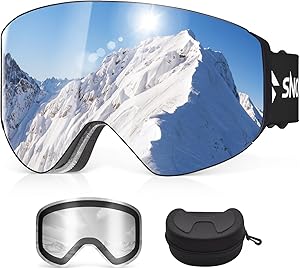
- Lens: Cylindrical with anti-fog coating
- Frame Type: Rimless, slim fit
- Visible Light Transmission: 9%
- Closure: Buckle, UV protection included
The Snowalva Ski Goggles use a traditional cylindrical lens that gives a straightforward, familiar view of the slopes. The rimless design keeps the look clean, and the anti-fog coating helps prevent moisture from clouding your vision during long days of skiing or snowboarding. A slim fit and buckle closure make the goggles easy to put on and secure, and they can also be used for snowmobiling, which adds some versatility.
With a visible light transmission of 9 percent, the lens is darker and best suited to bright, sunny conditions. On overcast or snowy days you may find it too dim, and there is no mention of interchangeable lenses to solve that. Ultraviolet protection is included, and the goggles are classified as safety goggles, giving peace of mind for casual riders. Details like helmet compatibility and frame size are not listed, so check the fit if you ride with a helmet. Even with those unknowns, the Snowalva goggles are a simple option for beginners and occasional riders who mostly ski in bright weather and want basic protection.
- Pros: Anti-fog coating; easy buckle closure; suits bright days; usable for snowmobiling
- Cons: Dark lens for low light; no interchangeable lenses; helmet fit not specified
10. EXP VISION Over-Glasses Ski Goggles

- Lens: Panoramic cylindrical, anti-fog coating
- Protection: 100% UV400 (UVA and UVB)
- Design: OTG fit with top and bottom vents
- Comfort: Detachable, replaceable foam padding
The EXP VISION Over-Glasses Ski Goggles stand out for their detachable sponge, which makes cleaning fast and helps refresh the goggles after sweaty days without scratching the lens. The panoramic cylindrical lens offers clear vision with minimal visual interference, and the anti-fog coating works with top and bottom vents to keep air moving so fogging stays under control during intense runs.
The spacious OTG frame fits comfortably over most prescription glasses, and the adjustable strap accommodates any helmet for a secure fit. A lightweight, flexible frame reduces facial pressure and neck strain, making the goggles comfortable from first chair to last run. Replaceable foam padding lets you adjust the fit for different face shapes and extends the life of the goggles, which is handy for shared or rental gear. UV400 lenses block 100 percent of UVA and UVB rays, reducing eye fatigue on bright snow. Interchangeable lenses are not mentioned, so you are limited to a single lens, but the practical design and easy maintenance make these a smart pick for glasses wearers and families.
- Pros: Detachable, replaceable foam; fits over glasses; good ventilation; lightweight frame
- Cons: No interchangeable lenses mentioned; cylindrical lens shape
See the EXP VISION Over-Glasses Ski Goggles
How to Choose Snowboard Goggles for Women
Snowboarding is one of the most exhilarating winter sports, but it comes with its fair share of challenges—especially when it comes to protecting your eyes from harsh winds, blinding sunlight, and flying snow. For women, finding the right pair of snowboard goggles involves more than just picking a color that matches your jacket. Fit, lens technology, ventilation, and compatibility with helmets all play critical roles in your comfort and safety on the mountain. This guide will walk you through everything you need to know to make an informed decision.
Why Women Need Specifically Designed Goggles
While many goggles are unisex, women-specific models cater to differences in facial structure. Women generally have narrower faces, smaller nose bridges, and slightly different cheekbone placement. A goggle designed for a man’s face may leave gaps around the nose or press uncomfortably against the cheeks, leading to fogging, windburn, and reduced visibility. Women’s goggles often feature:
- Narrower frame widths and reduced lens curvature
- Additional face foam around the nose bridge
- Smaller overall dimensions to fit smaller helmets
- Lighter weight materials for reduced neck strain
- Colorways and strap designs marketed toward women (though performance is the priority)
That said, face shape varies widely among individuals. The most important factor is always a proper seal around your face, regardless of whether the goggles are labeled men’s, women’s, or unisex.
Key Factors to Consider
1. Fit and Face Shape
Fit is the single most important factor. A poorly fitting goggle will fog, leak air, and cause discomfort. When trying on goggles (or ordering online with a good return policy), check the following:
- Seal: The foam should press evenly against your face without gaps, especially around the nose and cheeks.
- Pressure: You should feel gentle pressure, not pain. Too much pressure can cause headaches or restrict breathing.
- Field of view: The goggle should not obstruct your peripheral vision. Modern frameless designs often provide a wider view.
- Strap adjustment: Straps should be easy to adjust with gloves on and stay put without slipping.
If you wear a helmet, always try goggles on with the helmet. The goggle frame should sit flush against the helmet’s brim without leaving a gap on your forehead.
2. Lens Shape and Technology
Lens shape affects both vision and style. There are two main types:
| Lens Shape | Pros | Cons |
|---|---|---|
| Cylindrical (flat) | Lower cost, classic look, easy to replace lenses | More distortion at edges, less peripheral vision |
| Spherical (curved) | Less distortion, wider field of view, better optics | Higher cost, bulkier appearance |
| Toric (curved horizontally and vertically) | Excellent optics, minimal distortion, good for women’s faces | Most expensive, fewer options |
Lens technology also matters. Look for:
- Anti-fog coating: Essential for preventing condensation buildup.
- Scratch-resistant coating: Protects your investment.
- UV protection: All quality goggles block 100% of UVA and UVB rays.
- Polarized lenses: Reduce glare but can make it harder to see ice patches. Many snowboarders prefer non-polarized for this reason.
- Photochromic lenses: Automatically adjust tint based on light conditions—great for variable weather.
3. Lens Tint and VLT (Visible Light Transmission)
VLT percentage indicates how much light passes through the lens. Choosing the right VLT depends on weather and lighting conditions:
| VLT Range | Best For | Conditions |
|---|---|---|
| 80–90% | Night riding, heavy overcast | Very low light |
| 50–79% | Overcast, snowy days | Low to moderate light |
| 20–49% | Partly cloudy, mixed conditions | Moderate light |
| 5–19% | Bright sunny days, high altitude | Intense light |
Many women opt for interchangeable lens systems, which allow you to swap lenses as conditions change. This is more cost-effective than buying multiple goggles.
4. Ventilation and Anti-Fog Performance
Fogging is the enemy of every snowboarder. Goggles combat fog through:
- Dual-layer lenses: Two lenses with a sealed air gap reduce temperature difference.
- Ventilation ports: Allow moist air to escape and dry air to enter.
- Anti-fog coatings: Hydrophilic coatings absorb moisture.
- Frameless designs: Often improve airflow but may be less durable.
To prevent fogging, avoid touching the inside of the lens, store goggles in a dry place, and never wipe the interior with a rough cloth.
5. Helmet Compatibility
Goggles and helmets must work together. A gap between the goggle top and helmet brim exposes your forehead to cold and wind, and can cause goggle fogging. Look for:
- Helmet-compatible frames: Many brands label goggles as “helmet compatible.”
- Straps with silicone grippers: Prevent the goggle from sliding up on the helmet.
- Visor-style helmets: Some helmets come with integrated visors, but these are less common for snowboarding.
If you already own a helmet, bring it when trying on goggles. If shopping online, check the brand’s compatibility chart.
6. Frame Size and Field of View
Goggles come in small, medium, and large frames. Women with smaller faces should look for youth or women-specific small frames. Oversized goggles can look stylish but may not seal properly. Consider:
- OTG (Over-the-Glasses): If you wear prescription glasses, choose OTG goggles with extra room.
- Frameless: Offer the widest field of view but can be less durable.
- Low-profile frames: Better for smaller faces and reduce the “bug-eye” look.
7. Straps and Interchangeability
Strap width and material affect comfort and stability. Wider straps distribute pressure better. Look for:
- Silicone-backed straps: Prevent slipping on helmets.
- Quick-release buckles: Easy to adjust with gloves.
- Interchangeable straps: Some brands let you swap straps for style.
8. Prescription Options
If you wear glasses, you have three main options:
- OTG goggles: Wear your glasses underneath. Ensure the goggles have enough depth.
- Prescription inserts: Custom lenses that fit inside the goggle. More comfortable than glasses.
- Prescription goggle lenses: Directly made to your prescription. Most expensive but best optics.
9. Brand and Price
Reputable snowboard goggle brands include Oakley, Smith, Giro, Anon, Dragon, and Spy. Prices range from $30 for basic models to over $300 for high-end photochromic or prescription-ready goggles. Consider:
- Budget ($30–$80): Basic cylindrical lenses, limited anti-fog, good for beginners.
- Mid-range ($80–$180): Spherical or toric lenses, better ventilation, interchangeable lenses.
- High-end ($180–$350+): Photochromic, prescription-ready, premium materials, widest field of view.
Investing in a good pair pays off in comfort and safety. However, expensive doesn’t always mean better for your face shape. Always prioritize fit.
How to Try Goggles Before Buying
If possible, visit a local ski shop. Wear your helmet and any prescription glasses. Spend at least 10 minutes with the goggles on to check for pressure points. If shopping online, buy from retailers with free returns and read reviews from women with similar face shapes.
Maintenance and Care Tips
- Store goggles in a soft bag or case.
- Never wipe the inside lens with your fingers or rough fabric.
- Use a microfiber cloth and lens cleaner designed for goggle lenses.
- Allow goggles to air dry completely before storing.
- Replace lenses when scratched or when anti-fog coating wears off.
Common Mistakes to Avoid
- Buying goggles without trying them with your helmet.
- Choosing style over fit.
- Using a single lens for all conditions.
- Ignoring VLT ratings.
- Wearing goggles too loose or too tight.
- Not replacing worn-out foam or straps.
Final Checklist for Choosing Women’s Snowboard Goggles
- Does the goggle seal evenly around my face without gaps?
- Is it comfortable with my helmet?
- Does the lens match the light conditions I ride in most?
- Is the VLT appropriate for sunny, cloudy, or mixed days?
- Does it have good anti-fog ventilation?
- Can I change lenses easily if needed?
- Does it fit over my glasses (if applicable)?
- Is the strap adjustable and secure?
- Is the price within my budget?
- Does the brand offer a warranty or replacement parts?
Conclusion
Choosing the right snowboard goggles for women is a balance of fit, function, and personal preference. Prioritize a proper seal and helmet compatibility above all else. Consider your typical riding conditions to select the right lens tint and VLT. Don’t overlook ventilation, anti-fog technology, and prescription options if needed. With the right goggles, you’ll enjoy clearer vision, better comfort, and more confidence on every run. Take your time, try before you buy when possible, and invest in a pair that protects your eyes and enhances your snowboarding experience.