Best Ski Goggles for Asian Face of 2026
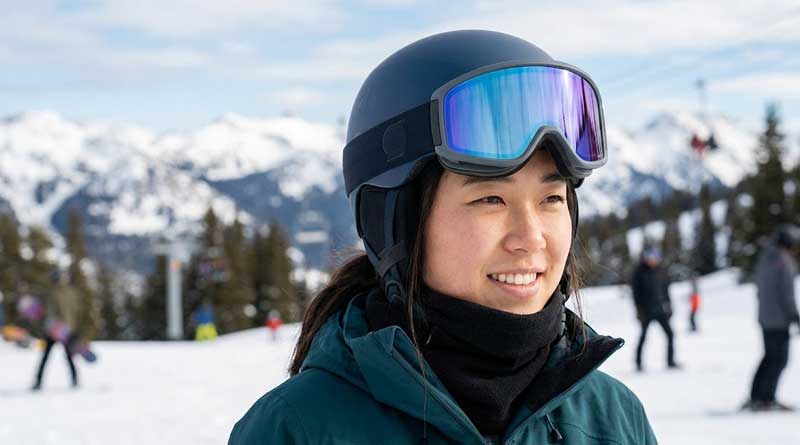
If you have an Asian face shape, finding ski goggles that fit well can be hard. Many goggles are made for narrower faces, so they pinch your nose or leave gaps. The good news is that some brands now make goggles just for you. In this article, we will show you the best ski goggles for Asian faces. We will look at fit, comfort, and price to help you choose the right pair for your next ski trip.
1. OutdoorMaster PRO

- Lens Design: Large spherical frameless construction offering clear panoramic views.
- UV Protection: Full 100% UV400 rating with advanced anti-fog lens coating.
- Fit Type: Over-The-Glasses OTG design compatible with most standard helmets.
- Included Accessories: Main goggle unit, hard protective case, and microfiber pouch.
The OutdoorMaster PRO ski goggles deliver impressive high-altitude performance and crystal-clear mountain vision at an accessible price point. Built with a sleek rimless spherical lens, these goggles offer an expansive, unobstructed view across snow-covered slopes while efficiently eliminating glare, wind turbulence, and stubborn fog during heavy mountain weather conditions.
Skiers who wear prescription glasses will appreciate the spacious over-the-glasses geometry that avoids nose bridge pinch. The long elastic strap securely grips any helmet shape, while the simple interchangeable system allows quick customization across twenty optional lens tints for varying atmospheric light levels on winter trails.
Pros
- Unobstructed panoramic vision field
- Glasses-friendly interior frame space
Cons
- Replacement lenses require separate purchase
2. goodr Peak G

- Lens Shape: Cylindrical lens design providing clean slope peripheral clarity.
- UV Protection: 100 percent defense against harsh high-altitude ultraviolet rays.
- Lens System: Swappable lens setup with one bonus yellow low-light lens.
- Frame Fit: Medium frame size featuring standard bridge and helmet compatibility.
The goodr Peak G snow goggles are tailored for riders who want fun styling paired with versatile performance on groomed runs or deep powder. Built around a classic cylindrical lens design, these goggles provide crisp terrain contrast while ensuring a snug seal against cold mountain wind and drifting snow.
Adapting to sudden changes in mountain sunlight is straightforward thanks to the included extra S1 yellow low-light lens. Featuring a fully swappable strap, medium frame proportions, and reliable helmet compatibility, these goggles offer exceptional comfort and flexibility for everyday winter sports enthusiasts carving up fresh trails.
Pros
- Includes bonus low-light S1 lens
- Easy swappable strap and lens design
Cons
- Lacks polarized lens coating protection
3. Smith I/O MAG ChromaPop

- Lens Optics: ChromaPop spherical lens technology boosting natural color contrast.
- Change Mechanism: Quick-swap MAG magnetic lens attachment system for fast swaps.
- UV Rating: 100 percent ultraviolet protection across all tint options.
- Sizing Fit: Medium frame fit with standard bridge and full helmet integration.
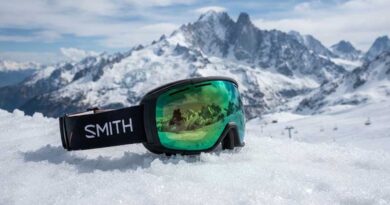
The Smith I/O MAG ChromaPop goggles set a premium standard for alpine clarity and swift adaptability on the slopes. Utilizing advanced spherical optics combined with ChromaPop contrast enhancement, these goggles make subtle contour details, wind lips, landings, and tree glades pop with stunning visual definition.
Changing lenses on the lift is effortless due to the secure magnetic MAG interchange mechanism. Supplied with a secondary low-light lens and designed for seamless helmet integration, this medium-fit eyewear delivers non-stop anti-fog airflow and superior comfort through changing storm conditions and sunny alpine days.
Pros
- Outstanding ChromaPop contrast and color clarity
- Fast magnetic MAG lens swapping mechanism
Cons
- Higher price point than entry-level alternatives
See the Smith I/O MAG See the Smith I/O MAG S See the Smith I/O MAG XL
4. Smith 4D MAG ChromaPop

- Field of View: Expanded spherical lens design maximizing peripheral downward visibility.
- Lens Tech: ChromaPop optic enhancement with 100 percent UV protection.
- Interchange System: Secure MAG magnetic lock for swift lens replacement.
- Frame Specs: Medium frame size with standard bridge fit and helmet compatibility.
Engineered for serious mountain riders dropping into challenging lines, the Smith 4D MAG ChromaPop goggles offer an exceptionally broad field of view. The innovative lens curvature extends downward vision, allowing skiers to observe terrain changes, gear zippers, and boot buckles without tilting their heads unnaturally.
With ChromaPop color tuning, every slope contour and snow texture appears sharp and defined. The magnetic MAG system lets users switch out the primary lens for the included low-light backup lens in seconds, while the precise medium frame shape integrates smoothly with all major helmet brands.
Pros
- Unmatched downward field of view
- Includes spare lens and protective case
Cons
- Premium pricing tier for advanced optics
See the Smith 4D MAG See the Smith 4D MAG S See the Smith 4D MAG XL
5. Oakley Flight Deck L

- Lens Material: Premium impact-resistant Plutonite dual lenses engineered with high-definition optics.
- Frame Design: Large rimless architecture providing unparalleled peripheral sightlines across slopes.
- Comfort Padding: Moisture-wicking triple-layer polar fleece face foam for comfortable all-day wear.
- Eyewear Compatibility: Discrete frame notches at temples seamlessly accommodating most prescription glasses.
The Oakley Flight Deck L goggles showcase fighter-pilot inspired rimless styling that maximizes peripheral sightlines across demanding alpine runs. Crafted with 3D anatomical engineering, these goggles deliver an airtight seal around face contours while efficiently wicking away perspiration through advanced airflow management systems during high-exertion sessions.
Featuring Plutonite lens construction and proprietary F3 anti-fog coatings, vision remains distortion-free and fully protected against harmful solar rays. Temple cutouts accommodate everyday prescription glasses, while the non-slip silicone-beaded strap secures the frame firmly against helmets for stable high-speed carving down steep mountain trails.
Pros
- Expansive rimless peripheral sightlines
- High-grade moisture wicking triple foam
Cons
- Secondary low-light lens not included
6. findway Ski Goggles OTG

- Magnetic Lock: N45 earth magnets with side clips for lens retention.
- Lens Structure: Dual panoramic spherical anti-fog anti-scratch lens construction.
- UV Protection: 100 percent UV filtering shielding eyes from solar glare.
- Frame Construction: Flexible TPU frame with two-way interior ventilation channels.
The findway Ski Goggles OTG bring user-friendly features and quick-change convenience to winter sports enthusiasts. Driven by six powerful N45 rare earth magnets alongside a side clip locking mechanism, the dual-lens system allows riders to swap lens tints in under sixty seconds without worrying about accidental lens detachments during hard impacts.
Designed with a generous over-the-glasses interior chamber, these goggles comfortably accommodate prescription frames beneath soft triple-layer sponge padding. The double-pane spherical lens creates a thermal barrier that resists fog build-up, ensuring clear panoramic views whether you are snowboarding through powder or skiing groomed runs.
Pros
- Fast magnetic swapping with clip locks
- Spacious over-the-glasses frame interior
Cons
- Extra lens options sold separately
See the findway Ski Goggles OTG
7. SMITH Squad

- Lens Profile: Oversized cylindrical ChromaPop lens enhancing terrain details clearly.
- UV Rating: 100 percent ultraviolet protection against high-elevation glare rays.
- Frame Sizing: Medium size frame with standard bridge and helmet compatibility.
- Package Extras: Includes primary ChromaPop lens and one additional bonus lens.
The Smith Squad snow goggles combine minimalist semi-rimless framing with an oversized cylindrical lens for an unobstructed field of view. Equipped with ChromaPop optics, these goggles heighten natural colors and terrain contrast, making it easy for skiers to spot bumps, ice patches, and changes in snow texture from morning to night.
Built to handle tough winter elements, the Squad frame integrates seamlessly with ski helmets to prevent forehead gaps and draft intrusion. With an extra bonus lens included in the box, users can quickly transition between bright sun conditions and low-visibility overcast days without missing a single beat on the slopes.
Pros
- ChromaPop technology boosts color definition
- Comes with secondary low-light bonus lens
Cons
- Traditional manual swapping without quick magnets
8. Odoland Magnetic Ski Goggles

- Lens System: Quick-change magnetic mechanism supplied with two spherical interchangeable lenses.
- Field of View: Ultra-wide 164-degree frameless spherical lens eliminating blind spots.
- Fit Profile: Over-the-glasses OTG design with extra-long helmet compatible strap.
- Sun Protection: UV400 rated dual-layer lenses featuring active airflow ventilation.
The Odoland Magnetic Ski Goggles offer outstanding performance and versatility by packing two complete lenses into a single package. Featuring a strong magnetic quick-swap system, users can instantly change between the dark sunny-day lens and the high-VLT yellow low-light lens to keep vision clear regardless of mountain weather shifts.
Designed with a frameless spherical shape, these goggles deliver a massive 164-degree panoramic view that eliminates side blind spots. The glasses-friendly interior chamber accommodates prescription frames easily, while multi-layer foam padding and active top-and-bottom ventilation channels prevent fogging and ensure long-lasting facial comfort on long downhill runs.
Pros
- Includes two interchangeable lenses for all weather
- Wide 164-degree frameless field of vision
Cons
- Frame size may feel bulky on smaller faces
See the Odoland Magnetic Ski Goggles
9. Snowalva Ski Goggles
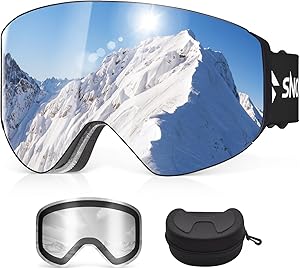
- Lens Geometry: Classic rimless cylindrical lens delivering natural slope visual perception.
- Light Transmission: Low 9 percent VLT rating optimized for bright sunny conditions.
- Protection Tech: Integrated anti-fog coating with full high-altitude ultraviolet filtering.
- Strap Closure: Secure buckle closure strap system offering a comfortable slim fit.
The Snowalva Ski Goggles rely on dependable cylindrical lens geometry to provide realistic, distortion-free optics on the mountain. Designed with a sleek rimless frame, these goggles help skiers accurately gauge terrain depth, avoid misjudgments, and navigate obstacles confidently during high-speed runs down snow-covered peaks.
Engineered with a low 9 percent visible light transmission rating, these goggles excel during bright, sunny days by effectively filtering intense solar reflection off snow surfaces. Specialized anti-fog coatings combined with a secure buckle strap ensure that vision remains crisp and the eyewear stays firmly in place during active slope shredding.
Pros
- Accurate distortion-free terrain visual perspective
- Sleek rimless cylindrical aesthetic design
Cons
- Low VLT is dark for overcast weather
10. OutdoorMaster Heron

- Lens Shape: Advanced toric lens providing broad view with enhanced depth perception.
- Magnetic System: MagKlick magnetic quick-detach technology for rapid lens swapping.
- Optical Defense: Dual-layer OVP anti-fog lens with complete 100% UV400 protection.
- Comfort Fit: OTG glasses compatibility backed by triple-layer foam and helmet strap.
The OutdoorMaster Heron ski goggles elevate slope vision through modern toric lens technology that combines the optical clarity of spherical lenses with the sleek profile of cylindrical designs. This design delivers an unobstructed, wide-angle view with heightened depth perception, letting winter sports enthusiasts navigate tricky mountain conditions easily.
Swapping lenses on the go is simple with the MagKlick magnetic attachment system, which holds the lens securely during active riding. Packaged with an extra yellow 87 percent VLT low-light lens, a protective hard case, and OTG prescription compatibility, these goggles offer outstanding value and versatility for all mountain adventures.
Pros
- Toric lens offers superior optical depth perception
- Includes backup 87% VLT low-light lens
Cons
- Magnetic system requires careful alignment in heavy snow
How to Choose Ski Goggles for an Asian Face
Finding the right ski goggles can be a challenge for anyone, but for people with Asian facial features, it can feel almost impossible. Many ski goggles are designed for narrow, tall nose bridges and shallow eye sockets. If your face has a flatter nose bridge, wider cheekbones, or a rounder face shape, those standard goggles may press against your nose, leave gaps around the edges, or slide down your face. The good news is that more brands are now making goggles specifically for Asian faces. This guide will walk you through everything you need to know to choose the perfect pair.
Why Regular Ski Goggles Often Don’t Fit Asian Faces
Ski goggles are built around a “one size fits most” idea. But faces come in many shapes. The main problem areas are the nose bridge and the face width.
The Nose Bridge Problem
Most Western-style goggles have a deep, curved cutout for a high nose bridge. If your nose bridge is lower or flatter, the goggle foam cannot seal properly. This creates a gap under the eyes. Cold air, snow, and wind get inside. Your goggles fog up. You feel uncomfortable all day.
The Face Width and Cheekbone Issue
Asian faces often have wider cheekbones and a rounder overall shape. Standard goggles may be too narrow. They squeeze the sides of your head. This causes headaches and pressure points. After a few hours, you want to rip them off.
Eye Socket Depth
Some Asian faces have shallower eye sockets. Goggles with a lot of internal depth can press against your eyelashes or eyebrows. This feels annoying and can even block your view.
Key Features to Look For in Asian Fit Ski Goggles
When you shop, focus on these specific features. They make a huge difference in comfort and performance.
1. Extra Foam on the Nose Area
This is the most important feature. Asian fit goggles have thicker foam padding around the nose. This extra foam fills the gap between the goggle frame and your lower nose bridge. It creates a proper seal without pressing too hard. Look for product descriptions that mention “extra nose foam” or “Asian fit nose bridge.”
2. Wider Frame Shape
Choose goggles with a wider overall frame. This prevents squeezing on the sides of your head. A wider frame also gives you a better field of view. Brands often label these as “wide fit” or “large fit.”
3. Curved or Flatter Nose Cutout
Instead of a deep U-shaped nose cutout, Asian fit goggles have a shallower, flatter curve. This matches a lower nose bridge better. The foam sits flat against your face instead of digging in.
4. Adjustable Strap with Wide Range
You need a strap that can loosen or tighten a lot. This helps you get a snug fit without over-compressing. Look for wide straps with silicone grip inside. They stay in place on your helmet or beanie.
5. Flexible Frame Material
A soft, flexible frame (like TPU or thermoplastic polyurethane) bends to your face shape. A stiff frame will not adapt. Flexible frames also handle cold temperatures better without cracking.
Types of Ski Goggles: Which One Is Right for You?
There are three main types of ski goggles. Each has pros and cons for Asian faces.
Cylindrical Goggles
These have a flat, curved lens that wraps around your face. They are usually cheaper and easier to swap lenses. For Asian faces, cylindrical goggles can work well if they have Asian fit foam. However, some models have a narrower shape that pinches the nose.
Spherical Goggles
These have a round, dome-shaped lens. They offer the best field of view and less distortion. Many high-end Asian fit goggles are spherical. They tend to have more room inside, which helps with shallow eye sockets. But they are often more expensive.
Toroidal Goggles
This is a newer shape. It combines the best of cylindrical and spherical. The lens curves horizontally and vertically but not as much as spherical. Toroidal goggles are gaining popularity for Asian faces because they fit close without pressure.
Understanding Lens Technology
The lens is just as important as the fit. Here is what to look for.
VLT (Visible Light Transmission)
VLT tells you how much light passes through the lens. A higher VLT (like 50-90%) is for cloudy, snowy days. A lower VLT (like 10-20%) is for bright, sunny days. For Asian faces, there is no special VLT need. But you should match the lens to the weather.
Photochromic Lenses
These lenses change tint automatically based on light. They are great if you ski in changing conditions. They cost more, but you only need one lens.
Interchangeable Lenses
Many goggles come with two lenses. You can swap them out for different weather. This is cheaper than buying two pairs of goggles. Just make sure the swapping system is easy to use with gloves on.
Anti-Fog Coating
Every good goggle has an anti-fog coating inside the lens. But if your goggle does not seal properly on your nose, fog will still happen. So fix the fit first, then rely on the coating.
How to Check the Fit Before You Buy
You cannot always try goggles on in a store. Here are some tips for online shopping and in-person checks.
Measure Your Face Width
Use a soft tape measure. Measure from one temple to the other, across your forehead. Compare this to the goggle’s listed frame width. You want the frame to be slightly wider than your face. This prevents squeezing.
Look for “Asian Fit” or “Asia Fit” Labels
Many brands now use these terms. Some also say “Low Bridge Fit.” These are your best starting points. Do not assume all goggles from a brand fit the same. Check each model.
Read Reviews from Asian Skiers
Look for reviews that mention nose bridge fit, cheek pressure, and fogging. A review from someone with a similar face shape is worth more than a generic “great goggles” review.
Check the Return Policy
Buy from a store that allows returns. Wear the goggles at home for 10-15 minutes. Move your head around. If you feel pressure on your nose or temples, return them.
Comparison Table: Features to Prioritize
| Feature | Why It Matters for Asian Faces | What to Look For |
|---|---|---|
| Nose foam | Fills gap under lower nose bridge | Extra thick foam, “Asian fit” label |
| Frame width | Prevents squeezing on cheekbones | Wider than your face temple-to-temple |
| Nose cutout shape | Matches flatter nose bridge | Shallow curve, not deep U-shape |
| Frame flexibility | Adapts to rounder face shapes | TPU or soft plastic frame |
| Strap adjustability | Lets you fine-tune pressure | Wide range, silicone grip inside |
| Lens shape | Affects internal space and view | Spherical or toroidal for more room |
Common Mistakes to Avoid
Even with good intentions, many people make these mistakes. Avoid them to save time and money.
- Buying regular goggles and hoping they work. They usually will not. The nose gap and side pressure are real problems.
- Choosing fashion over fit. A cool color means nothing if your goggles fog up or hurt.
- Ignoring helmet compatibility. Your goggles must fit under your helmet without gaps. Bring your helmet when trying goggles.
- Over-tightening the strap. This causes headaches. A proper Asian fit goggle seals without extreme tightness.
- Not testing with a helmet and balaclava. These change the fit. Always test with your real ski gear.
- Assuming expensive means better fit. Some budget brands make excellent Asian fit goggles. Read reviews carefully.
Top Brands That Offer Asian Fit Ski Goggles
These brands are known for making goggles that fit Asian faces well. This is not a complete list, but it is a good starting point.
- Oakley: Offers “Asian Fit” versions of many popular models. Known for wide frames and extra nose foam.
- Smith: Some models come in “Asia Fit.” Good for rounder faces and lower nose bridges.
- Anon: Their “Asian Fit” line focuses on comfort and wide fit. Good for people with wider cheekbones.
- Giro: Offers “Asian Fit” in select models. Known for flexible frames.
- Outdoor Master: A budget brand that makes some Asian fit options. Good for beginners.
- Zionor: Another budget-friendly brand. Check reviews for nose bridge fit.
How to Adjust Your Goggles for the Best Fit
Even the perfect goggle needs proper adjustment. Follow these steps.
Step 1: Loosen the Strap First
Start with the strap loose. Place the goggles on your face. Center them over your eyes.
Step 2: Press the Nose Area Gently
Use your thumbs to press the foam around your nose. This helps the foam mold to your shape. Do not press too hard.
Step 3: Tighten the Strap Slowly
Tighten the strap in small steps. Stop when the goggles feel snug but not painful. You should be able to fit one finger under the strap.
Step 4: Check for Gaps
Look in a mirror. Check the sides and nose area. If you see gaps, the fit is wrong. Try a different model or adjust more.
Step 5: Test with Your Helmet
Put on your helmet. The goggles should sit flush against the helmet’s brim. No gap means no cold air coming in.
Frequently Asked Questions
Can I use regular goggles if I have an Asian face?
You can, but you will likely have problems. The nose bridge gap causes fogging and cold air. The side pressure causes headaches. Asian fit goggles solve these issues.
Are Asian fit goggles more expensive?
Not always. Some brands charge the same. Others charge a little more. Budget brands like Outdoor Master and Zionor offer affordable options. You do not need to spend a lot to get a good fit.
What if I have a mixed face shape?
Many people have mixed features. For example, a lower nose bridge but a narrow face. In that case, look for goggles with extra nose foam but a narrower frame. Read reviews carefully. You may need to try a few pairs.
How do I know if my goggles are too tight?
Signs of too tight goggles include headaches, red marks that last more than 30 minutes, and pressure on your temples. If you feel any of these, loosen the strap or try a wider frame.
Can I make regular goggles fit better with aftermarket foam?
Some people add foam strips to the nose area. This can help a little. But it is not as good as a proper Asian fit goggle. The frame shape is still wrong. It is better to buy the right goggle from the start.
Final Tips for Buying Ski Goggles for an Asian Face
- Always prioritize fit over price, color, or brand name.
- Look for “Asian Fit,” “Asia Fit,” or “Low Bridge Fit” labels.
- Check the nose foam thickness and frame width.
- Read reviews from people with similar face shapes.
- Buy from a store with a good return policy.
- Test your goggles with your helmet and balaclava before skiing.
- Adjust the strap slowly and check for gaps in a mirror.
- Consider spherical or toroidal lenses for more internal room.
- Do not ignore lens technology like VLT and anti-fog coating.
- Remember that a good fit means more comfort, better vision, and more fun on the slopes.
Choosing ski goggles for an Asian face does not have to be hard. With the right knowledge and a little patience, you can find a pair that fits perfectly. Your face shape is not a problem. It just means you need goggles designed for you. Use this guide to make a smart choice. Then get out there and enjoy the snow.