Best Freeride Ski Boots of 2025
When it comes to skiing beyond groomed trails, having the right boots makes all the difference. Freeride ski boots are designed for skiers who love exploring deep powder, steep slopes, and unpredictable terrain. Unlike standard downhill boots, they offer a mix of support, flexibility, and comfort, giving you more control when conditions get tough. The best freeride ski boots balance power for descents with enough mobility for hiking or climbing to new lines. Whether you are an expert rider or moving into freeride skiing, choosing the right boots ensures safety, performance, and all-day comfort. This guide highlights the top freeride ski boots available today.
1. Tecnica Mach1 MV 130
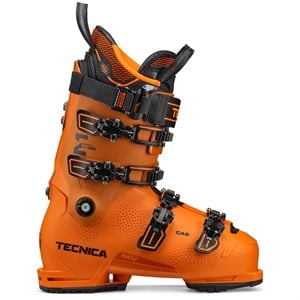
- Last: 100 mm
- Flex: 130
- Liner: Ecodesign High Performance Full C.A.S. Liner with Celliant® insulation
- Shell Material: C.A.S. Polyether
The Tecnica Mach1 MV 130 is a true powerhouse for aggressive skiers, earning its “big daddy” reputation with a powerful 130 flex. This boot is designed for those who demand maximum performance and precise control on the mountain. The 100 mm last provides a snug yet comfortable fit for average-width feet, while the C.A.S. shell and liner are anatomically shaped to offer a great out-of-the-box feel. The dimples on the shell make it easy for a bootfitter to customize the fit, ensuring a personalized feel. The standout T-Drive technology ensures a consistent and progressive flex in all temperatures, creating a strong connection between the cuff and the shell for enhanced precision and power transmission. This is a boot for the serious skier who doesn’t compromise on performance and wants to charge hard.
One of the more innovative features of this boot is the Ecodesign High Performance Full C.A.S. Liner, which includes Celliant® insulation. This technology converts body heat into infrared energy, which helps improve circulation, thermal regulation, and recovery. The liner also features an adjustable floating tongue for a customized fit around the shin. The Quick Instep design makes it easier to get the boots on and off, a welcome feature on cold days. With Lift Lock buckles that automatically stay open, the Tecnica Mach1 MV 130 is packed with smart, user-friendly features that complement its high-performance design, making it a top choice for expert skiers.
Pros and Cons
Pros:
- Extremely powerful and responsive 130 flex.
- Highly customizable C.A.S. shell and liner for a perfect fit.
- T-Drive technology provides consistent flex and enhanced power transmission.
- Features like Celliant® insulation and Lift Lock buckles add comfort and convenience.
Cons:
- Very stiff flex may be too demanding for less aggressive skiers.
- The high-performance nature of the boot is geared towards advanced and expert users.
2. Nordica Promachine 120
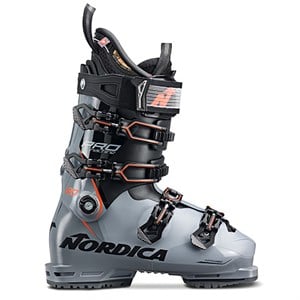
- Last: 98 mm
- Flex: 120
- Liner: Isotherm 3D Cork Fit Liner with PrimaLoft®
- Shell Material: Polyurethane
The Nordica Promachine 120 is a versatile freeride boot that delivers on its promise of performance, drawing on a long legacy of boot-making excellence. This boot is built for the advanced to expert skier who needs a precise and responsive feel, with a narrow 98mm last that’s ideal for low-volume feet. The combination of a polyurethane shell and cuff provides a consistent and powerful feel that easily handles everything from high-speed groomer turns to challenging, technical steeps. The Promachine 120 is a testament to Nordica’s commitment to creating boots that perform flawlessly in any condition you throw at them, offering a classic freeride feel with modern construction.
Inside, the Isotherm 3D Cork Fit Liner with PrimaLoft® insulation is a game-changer. The cork material provides a customizable, supportive fit that molds to your foot over time, ensuring excellent heel hold and precision. The addition of PrimaLoft® insulation keeps your feet warm and comfortable on even the coldest days, without adding bulk. The four micro-adjustable aluminum alloy buckles allow for a secure and customized fit, and the replaceable Michelin GripWalk soles offer superior traction and durability for walking. The Promachine 120 is a high-performance boot that combines a classic, precise fit with top-tier materials and insulation, making it a reliable choice for the dedicated skier.
Pros and Cons
Pros:
- Narrow 98mm last provides a precise, performance-oriented fit.
- Isotherm 3D Cork Fit Liner offers excellent heel hold and warmth.
- Versatile design that excels on both groomed runs and technical terrain.
- Durable polyurethane shell and cuff construction.
Cons:
- The narrow last may not be comfortable for skiers with wider feet.
- Requires a proper fit to avoid pressure points.
See the Nordica Promachine 120
3. Atomic Remedy 130
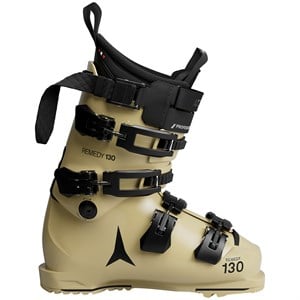
- Last: 96 mm
- Flex: 130
- Liner: Competition Elite Liner with Redster AFS Tongue
- Forward Lean: 16˚ (default)
The Atomic Remedy 130 is a race-inspired freeride boot built for the most aggressive and demanding skiers. With a super-narrow 96mm last, this boot is designed to provide the ultimate in precision and power transmission, picking up where the legendary Redster CS left off. While it’s built for elite performance, Atomic has made thoughtful tweaks, like a slightly roomier toe box and new liner adjustments, to make it more comfortable for extended use without sacrificing its race-ready feel. This is the boot for those who want to stomp their landings and charge down the most challenging lines with total confidence. The combination of a stiff 130 flex and a tight fit makes it ideal for expert skiers who require the highest level of support and response.
This boot is packed with features that serious skiers will appreciate. The Memory Fit technology allows for a fully personalized shell, cuff, and liner in minutes, with the ability to expand up to 6mm in the forefoot and 10mm at the ankle. This ensures a perfect anatomical fit after a quick trip to a bootfitter. The Competition Elite Liner and Redster AFS Tongue provide a supportive and customizable fit, while the 55mm Professional Dual Strap offers a tuneable flex progression. The boot’s 16˚ forward lean and Gripwalk soles make it ready for anything from a race start gate to a quick boot-up on a ridge. The Atomic Remedy 130 is a high-cholesterol, high-performance boot that will “fix what ails your skiing in a flash.”
Pros and Cons
Pros:
- Race-inspired 96mm last for ultimate precision and power.
- Memory Fit technology allows for comprehensive customization.
- Extremely stiff 130 flex for top-tier performance.
- Features like Gripwalk soles and a 16˚ forward lean are ideal for aggressive freeride.
Cons:
- The very narrow last is not suitable for most skiers and may require bootfitting.
- The high-performance focus makes it less forgiving for intermediate skiers.
4. Salomon Shift Pro 120
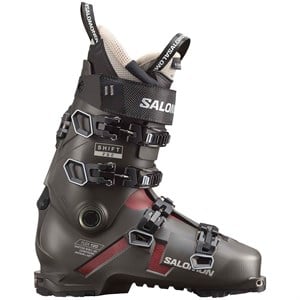
- Last: 100 mm
- Flex: 120
- Liner: My Custom Fit 4D Liner with Walk Function
- Ski/Walk Mode: Surelock Ski Walk Mechanism
The Salomon Shift Pro 120 is the ideal boot for the versatile freeride skier who wants to shred downhill and also explore the backcountry. It’s a true hybrid that seamlessly blends the power of a downhill boot with the touring capability of a backcountry boot. With a stiff 120 flex, it’s capable of driving even the widest skis with ease, providing the necessary support for aggressive skiing. The 100mm last is designed for average feet, but the Custom Shell HD heat molding system makes it highly adaptable, allowing for a personalized fit. This boot gives you the best of both worlds, offering confidence-inspiring performance whether you’re lapping the chairlift or earning your turns.
One of the key features is the Surelock ski/walk mechanism, which is designed to be low-profile and reliable, preventing snow and ice from jamming the hardware. This allows for quick and easy transitions from ski to walk mode and back. The My Custom Fit 4D Liner is seamless and pre-shaped, improving comfort and precision while keeping your feet warm. For those who like to hike or skin, the integrated tech inserts and Midgrip sole with Contagrip® pieces provide excellent grip and reliability. The Salomon Shift Pro 120 is a lightweight, high-performance touring boot that doesn’t compromise on downhill feel, making it a go-to choice for skiers who want to double their options on the mountain.
Pros and Cons
Pros:
- Excellent blend of downhill performance and touring functionality.
- Highly customizable fit with the Custom Shell HD system.
- Seamless My Custom Fit 4D Liner is comfortable and warm.
- Integrated tech inserts and GripWalk soles add versatility for touring.
Cons:
- The 120 flex may not be stiff enough for the most aggressive, heavy skiers.
- The focus on versatility means it’s not as dedicated to either downhill or touring as a specialized boot.
5. Tecnica Cochise 130 DYN
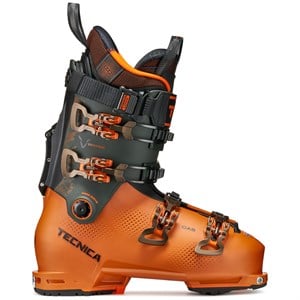
- Last: 99 mm
- Flex: 130
- Walk Mode: T-RIDE Walk Mechanism
- Soles: VIBRAM® GripWalk Soles with Dynafit® Tech Fittings
The Tecnica Cochise 130 DYN remains a top contender in the hybrid boot category, known for its powerful downhill performance and impressive touring capability. This boot is for the skier who wants a one-quiver boot that can handle aggressive resort skiing and demanding backcountry ascents with equal ease. Its very stiff 130 flex provides the responsive feel and support of a dedicated alpine boot, while a lighter C.A.S. shell and a highly mobile T-RIDE walk mode make it a serious touring contender. The 99mm last offers a solid, performance-oriented fit for average-width feet, and the C.A.S. shell allows for easy customization by a bootfitter.
The Cochise 130 DYN is engineered with smart, user-friendly features. The T-RIDE walk mechanism is a standout, offering a secure lock for the downhill and a smooth transition for the uphill. The boot comes equipped with VIBRAM® GripWalk soles and Dynafit® certified tech fittings, so you can use it with both alpine and touring bindings, greatly expanding your options. The High Performance C.A.S. Liner with Celliant® technology provides anatomical comfort and warmth, and the lightweight magnesium buckles are designed with a hiking catch to make skinning more comfortable. The Tecnica Cochise 130 DYN is a well-rounded and powerful boot that proves you don’t have to sacrifice downhill performance for touring functionality.
Pros and Cons
Pros:
- Extremely powerful 130 flex for hard-charging downhill performance.
- Efficient and reliable T-RIDE walk mechanism.
- Equipped with both GripWalk and Dynafit® tech fittings for maximum versatility.
- Customizable C.A.S. shell and liner for a dialed-in fit.
Cons:
- Heavier than dedicated touring boots.
- The high-performance stiffness may be too much for some skiers.
See the Tecnica Cochise 130 DYN
6. Scarpa F1 LT

- Last: 100 mm
- Flex: 100
- Weight: 4 lbs. 5.8 oz. (pair)
- Walk Mode: 72° range of motion
The Scarpa F1 LT is a specialized alpine touring boot designed for high-mileage missions and serious ski mountaineering. Unlike the burlier boots on this list, the F1 LT prioritizes an ultralight design, blending race-inspired features with backcountry functionality. The Carbon Grilamid® LFT shell and cuff provide an exceptional power-to-weight ratio, ensuring you have enough stiffness for technical descents without being weighed down on the climb. The 3D Lambda Torsion Frame increases rigidity and lateral stability, translating to a surprising amount of downhill performance for such a lightweight boot. This is the perfect boot for the efficient uphill-focused skier who still demands control on the way down.
Comfort and efficiency are at the core of the F1 LT’s design. The Intuition® Cross Fit Tour LT liners can be heat molded for a custom fit, and the Boa® Fit System makes for a fast and secure closure. The Speed Lock LT ski/walk mechanism is strong and easy to use, offering a clean design that reduces snow and ice buildup. With a remarkable 72° range of motion in walk mode, you’ll be able to move efficiently and naturally on the skin track. The Vibram® UFO RS rubber soles provide excellent grip on a variety of terrains, from rock scrambles to icy traverses. The Scarpa F1 LT is a testament to minimalist design without sacrificing critical performance, making it a go-to for ambitious traverses and technical ski mountaineering descents.
Pros and Cons
Pros:
- Extremely lightweight design for efficient uphill travel.
- Excellent range of motion in walk mode (72°).
- Boa® Fit System allows for fast and secure micro-adjustments.
- Vibram soles provide superior grip on technical terrain.
Cons:
- The medium 100 flex is not ideal for powerful, hard-charging downhill skiing.
- Lacks the burly feel and downhill support of a dedicated freeride boot.
How to Choose Your Freeride Ski Boots?
Choosing the right freeride ski boots is arguably the most critical decision you’ll make for your skiing experience. While skis get all the glory, your boots are the direct link between your body and your equipment. The right pair will give you power, control, and comfort, while the wrong pair can lead to a day of pain and frustration. Freeride skiing, with its mix of resort laps and backcountry exploration, demands a boot that’s both a powerful downhill performer and an efficient uphill companion. This guide will walk you through the key factors to consider, from fit and flex to features and technology, ensuring you find the perfect boots to take your skiing to the next level.
1. The Freeride Boot Mindset: Uphill vs. Downhill
The first step in choosing a freeride boot is to honestly assess your skiing style. Are you a resort-focused skier who occasionally ducks a rope for a quick sidecountry lap? Or are you a dedicated backcountry enthusiast who spends most of their time skinning up for fresh powder? Your answer will determine the balance you need between downhill performance and uphill touring efficiency. Freeride boots exist on a spectrum, and understanding where you fall on it is crucial.
- Downhill-Oriented Freeride Boots: These boots prioritize power and control above all else. They are often stiffer, heavier, and have a more traditional alpine boot feel. While they feature a walk mode, it’s typically less extensive than in true touring boots. They are ideal for strong skiers who spend 80% of their time in the resort and 20% on short sidecountry hikes.
- Touring-Oriented Freeride Boots: Also known as “freeride touring” boots, these are lighter and more focused on uphill efficiency. They have a greater range of motion in walk mode and are compatible with tech bindings. While they offer excellent downhill performance for their weight, they won’t feel as powerful or damp as their downhill-oriented counterparts. These are best for skiers who spend equal time in the resort and the backcountry, or who prioritize long tours.
2. Fit: The Most Important Factor
Fit is everything. A boot with the perfect flex and features is useless if it doesn’t fit your foot. Don’t get hung up on brand or color; focus on finding a boot that matches your foot shape. A proper boot fit will feel snug and secure, without any painful pressure points. Here’s what to look for:
Foot Shape and Last Width
Boots come in different last widths (the width of the forefoot). This measurement is a crucial starting point for finding the right fit.
- Narrow Last (97-98mm): Designed for skiers with narrow feet or those who want a super-precise, race-like fit for maximum power transmission.
- Medium Last (100mm): The most common last width, suitable for the majority of skiers with average-sized feet.
- Wide Last (102mm+): Best for skiers with wider feet or those who prioritize comfort over a hyper-aggressive, snug fit.
Keep in mind that last width is just a starting point. Your entire foot, including your heel, ankle, and instep, needs to be taken into account. Always consult with a professional bootfitter who can help you identify your foot shape and recommend the right boot, and perform customizations if needed.
The Shell and Liner Fit
The fit of a boot is a two-part system: the shell and the liner. A good bootfitter will first check the shell fit without the liner to ensure your foot fits the shell’s dimensions. You should have just enough space for your toes to touch the front of the shell with your heel pushed back. Next, you’ll try on the boot with the liner. It should feel snug and secure, especially around the ankle and heel. A common mistake is choosing a boot that feels comfortable and loose right away; this means it will pack out and feel sloppy after just a few days of skiing.
Many modern boots feature heat-moldable liners and shells (like Salomon’s Custom Shell HD or Tecnica’s C.A.S. system) that can be heated and molded to the specific contours of your foot. This personalization is key to a comfortable and high-performance fit.
3. Flex: The Stiffness Scale
A boot’s flex rating indicates its stiffness. This number is a good general guide, but it’s not standardized across brands. A 130 flex from one company might feel different from a 130 from another. It’s more of a relative scale within a brand’s lineup. Here’s a general breakdown:
- Intermediate Skier (Flex 90-110): A more forgiving flex that allows for easier turning and comfort while you’re still developing your skills.
- Advanced Skier (Flex 110-120): A stiffer flex that provides better power transmission and control, suitable for confident skiers who enjoy speed and a variety of terrain.
- Expert/Aggressive Skier (Flex 120-150): The stiffest boots, designed for heavy or extremely aggressive skiers who need maximum support and responsiveness to drive their skis with force.
The right flex depends on your weight, skiing ability, and aggressiveness. Heavier and more powerful skiers need a stiffer flex to prevent the boot from “collapsing” under pressure, while a lighter skier might find a high flex boot too stiff and difficult to control.
4. Key Freeride-Specific Features
Once you have the fit and flex dialed in, you can look at the specific features that make a boot ideal for freeride skiing.
Walk Mode
Walk mode is the defining feature of a freeride boot. This mechanism releases the cuff from the shell, allowing for a greater range of motion to make walking, hiking, or skinning up easier. Look for a walk mode that is easy to engage and disengage, and that locks securely when you switch back to ski mode.
Sole and Binding Compatibility
Freeride boots almost universally come with rockered soles for easier walking and hiking. Most are equipped with GripWalk (GW) soles, which are compatible with GripWalk-certified alpine bindings. For touring, you’ll need a boot with tech fittings (Dynafit® certified inserts) in the toe and heel, which are required for pin-style touring bindings. Make sure your boots and bindings are compatible to avoid safety issues.
Shell and Liner Technology
Many modern freeride boots feature lightweight, high-performance materials like polyurethane and polyether that offer a good balance of downhill power and weight savings. Liners often include advanced materials for warmth and customization, such as cork or heat-moldable foams. Some boots also feature specialized technologies like Salomon’s Core-Frame for enhanced power transmission or Tecnica’s T-Drive for consistent flex.
5. The Final Word: Don’t Buy Online
While this article can provide a solid foundation of knowledge, the single best piece of advice is to buy your boots from a professional bootfitter at a ski shop. A good bootfitter has the expertise and tools to measure your foot, assess your skiing style, and make sure the boots you choose are the perfect match. They can also perform crucial modifications like stretching, grinding, or heat molding to ensure a pain-free and high-performance fit. The investment in a professional bootfitting is the best money you can spend on your skiing. A perfect-fitting boot is a game-changer, giving you the confidence to explore new terrain and push your limits on the mountain.