Best Ski Goggles Under $50 [2026 Updated]
Finding the best ski goggles under $50 doesn’t mean sacrificing clarity or comfort. Whether you wear glasses or need anti-fog performance, budget-friendly options now offer impressive features. Modern lenses deliver UV400 protection, while OTG designs accommodate prescription eyewear. Ventilation systems fight fog, and helmet-compatible straps keep everything secure. In this guide, we review top affordable ski goggles and explain how to choose the right pair for your needs. You will find reliable performance without spending a fortune.
1. OutdoorMaster OTG

Design: OTG over-the-glasses fit
Lens: Dual-layer anti-fog coated inner lens
Protection: 100% UV400
Strap: Extra-long elastic, universal helmet compatibility
The OutdoorMaster OTG is a dependable choice for skiers who wear prescription glasses. Its over-the-glasses design fits comfortably over most eyewear, making it suitable for both adults and youth. The dual-layer lens with anti-fog coating keeps your vision clear on cold, humid days. A soft TPU frame adds flexibility and durability, while the extra-long elastic strap works with virtually any helmet.
In real use, the goggles provide reliable UV400 protection and a secure fit without pressure points. The included carrying pouch is a nice bonus. However, the anti-fog performance can struggle in extreme wet conditions if you stop moving. Overall, for the price, the OutdoorMaster OTG delivers solid value for glasses wearers and beginners alike.
Pros:
- Fits over prescription glasses
- Good anti-fog for the price
- Universal helmet compatibility
- Includes carrying pouch
Cons:
- May fog when stationary
- Limited lens color options
2. EXP VISION Over-Glasses Ski Goggles

Lens: Panoramic cylinder, anti-fog coated
Frame: Ultra-lightweight, flexible material
Foam: Replaceable, moisture-wicking padding
Protection: 100% UV400
The EXP VISION Over-Glasses Ski Goggles stand out for their detachable sponge, which makes cleaning easy and extends the life of the goggles. The panoramic cylinder lens offers a wide, distortion-free view, helping you spot terrain details across your peripheral vision. Strategic top and bottom vents promote airflow, reducing fogging even during intense runs. The lightweight frame minimizes pressure on your face, so you can wear them all day without neck strain.
These goggles are OTG-friendly and fit comfortably over most prescription glasses. The adjustable strap works with any helmet, and the replaceable foam padding lets you customize the fit for different face shapes. UV400 protection blocks harmful UVA and UVB rays, reducing eye fatigue on bright days. The main downside is that the replaceable foam may wear out over time, but it is easy to swap. Overall, a versatile pick for glasses wearers and shared gear.
Pros:
- Detachable sponge for easy cleaning
- Wide panoramic vision
- Replaceable foam padding
- Lightweight and comfortable
Cons:
- Foam may need replacement eventually
- Limited color choices
3. OutdoorMaster Ski Goggles PRO

Design: Frameless, large spherical lens
Lens System: Interchangeable, anti-fog coated
Protection: 100% UV400
Strap: Extra-long elastic, universal helmet compatibility
The OutdoorMaster Ski Goggles PRO features a frameless design with a large spherical lens that provides an unobstructed, clear view of the slopes. The interchangeable lens system lets you swap lenses for different weather conditions, with over 20 options available separately. The OTG design accommodates prescription glasses, and all lenses are anti-fog coated for clear vision. The extra-long elastic strap ensures compatibility with all helmets.
Performance-wise, these goggles offer excellent optical clarity and a wide field of view. The frameless design reduces weight and looks modern. The protective case and carrying pouch add value. However, extra lenses are sold separately, which can add up. Also, the large spherical lens may not suit smaller faces. Still, for the price, the PRO model is a strong choice for skiers wanting versatility and performance.
Pros:
- Interchangeable lens system
- Frameless spherical lens for wide view
- OTG compatible
- Includes protective case and pouch
Cons:
- Extra lenses sold separately
- May be too large for smaller faces
4. findway Ski Goggles OTG

Lens: Double lens, anti-scratch, anti-fog, Italian inner lens
Design: Oversized OTG, frameless spherical
Frame: Premium TPU, triple-layer foam
Strap: Silicone-backed non-slip, extra-long
The findway Ski Goggles OTG are built for performance and comfort. The professional ventilation system reduces fogging by bringing fresh air in and pushing moisture out. The double lens features anti-scratch, anti-fog, and impact-resistant properties, with an Italian-made inner lens for long-lasting anti-fog performance. The oversized OTG design fits over glasses and provides a super wide HD vision thanks to the spherical lens and frameless design.
The silicone-backed non-slip strap and triple-layer foam ensure a secure, comfortable fit. The goggles are helmet compatible and suitable for skiing, snowboarding, and more. A one-year guarantee adds peace of mind. However, they are not suitable for kids under 12. The mirror coating may show scratches more easily. Overall, the findway OTG offers excellent clarity and ventilation for the price.
Pros:
- Excellent ventilation and anti-fog
- Oversized OTG fit
- Italian inner lens
- 1-year guarantee
Cons:
- Not for kids under 12
- Mirror coating may scratch
5. Snowalva Ski Goggles

Lens: 2 UV400 anti-fog detachable magnet lenses
Design: Snowboard goggles for men and women
Protection: UV400
Compatibility: Adult sizing
The Snowalva Ski Goggles come with two detachable magnetic lenses, making it easy to adapt to changing light conditions. The UV400 anti-fog lenses provide clear vision and protect against harmful rays. The magnetic system allows for quick lens swaps without removing your gloves. The goggles are designed for men and women, offering a comfortable fit for adult faces.
In use, the magnetic lenses stay secure during normal skiing, but aggressive falls could potentially dislodge them. The anti-fog performance is good for the price, though extreme conditions may still cause some fogging. The included second lens adds value. Overall, the Snowalva goggles are a convenient option for skiers who want versatility without spending much.
Pros:
- Two magnetic lenses included
- Quick lens changes
- UV400 protection
- Good value
Cons:
- Magnets may shift in hard falls
- Limited color options
6. ZIONOR X Ski Goggles

Lens: Panoramic, anti-fog, UV protection, EDT impact-resistant
Design: OTG, fits glasses up to 5.5 x 1.65 in
Frame: Curved, optimized for helmet compatibility
Protection: UV400
The ZIONOR X Ski Goggles offer a panoramic view with optimized anti-fog and UV protection. The ruggedized lens features ZIONOR’s Enhanced Durability Tech (EDT) for better impact resistance, protecting skiers and snowboarders. The OTG design fits prescription glasses up to 5.5 inches long and 1.65 inches high. The curved frame is optimized for helmet compatibility, staying in place at high speeds.
These goggles provide crystal-clear vision and a wide field of view. The anti-fog treatment works well in most conditions. The frame is solid and durable, though slightly heavier than frameless designs. Customer service is responsive. The main drawback is that the OTG fit may not accommodate very large glasses. Overall, the ZIONOR X is a reliable, safety-focused option under $50.
Pros:
- Impact-resistant EDT lens
- Panoramic wide view
- OTG compatible
- Good helmet compatibility
Cons:
- Slightly heavier frame
- May not fit very large glasses
7. 100% STRATA 2
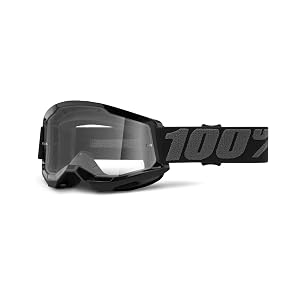
Foam: Ultra-thick double layer face foam
Lens: Polycarbonate for clear vision
Tear-offs: Supports triple post tear-offs
Fit: Improved seal with increased field of view
The 100% STRATA 2 is a motocross-inspired goggle that works for skiing and snowboarding. The ultra-thick double layer face foam manages sweat effectively, keeping your face dry. The polycarbonate lens provides clear vision and impact protection. The goggles support triple post tear-offs for secure fitment, which is useful in muddy or snowy conditions. The improved fitment and seal offer an increased field of view.
These goggles are durable and comfortable, with a secure fit that stays in place. However, they are not OTG compatible, so glasses wearers should look elsewhere. The lens is not specifically anti-fog coated, though ventilation helps. The tear-off system is a nice feature for racers. Overall, the STRATA 2 is a solid choice for those who prioritize durability and a wide view over OTG capability.
Pros:
- Ultra-thick double layer foam
- Supports tear-offs
- Durable polycarbonate lens
- Increased field of view
Cons:
- Not OTG compatible
- No anti-fog coating
8. Juli Ski Goggles
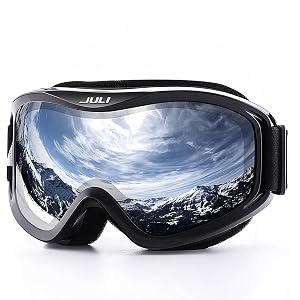
Ventilation: Professional airflow system
Strap: Extra-long elastic, adjustable, padded
Protection: UVA and UVB protection
Colors: Wide range of styles and vibrant colors
The Juli Ski Goggles feature a professional ventilation system that minimizes fogging and maintains clear visibility. The advanced airflow design channels fresh air in and pushes moisture out quickly. The extra-long elastic strap is fully adjustable and padded for a secure, customized fit. These goggles are helmet compatible and suitable for men, women, and youth. All lenses provide UVA and UVB protection.
Available in many colors, these goggles work for skiing, snowboarding, ATV riding, and more. The included carrying pouch is convenient. However, the anti-fog performance may degrade over time with heavy use. The strap padding is comfortable but can absorb moisture. Overall, the Juli Ski Goggles offer good value and style for casual skiers and riders.
Pros:
- Professional ventilation system
- Helmet compatible adjustable strap
- Full UVA/UVB protection
- Many color options
Cons:
- Anti-fog may degrade over time
- Strap padding absorbs moisture
How to Choose the Best Ski Goggles Under $50
Choosing ski goggles under $50 requires balancing essential features with budget constraints. You do not need to spend a fortune to get reliable eye protection, clear vision, and comfort. However, inexpensive goggles often cut corners in specific areas. Knowing which features matter most will help you avoid disappointment on the slopes. This guide covers the key factors: lens type, anti-fog technology, OTG compatibility, helmet fit, ventilation, UV protection, frame material, foam quality, strap design, and warranty. By the end, you will know exactly what to look for.
Lens Type and Shape
The lens is the most important part of any goggle. Under $50, you will find cylindrical and spherical lenses. Cylindrical lenses are flat and curved horizontally. They are cheaper but can distort vision at the edges. Spherical lenses curve both horizontally and vertically, mimicking the shape of the eye. They offer better optical clarity, less distortion, and a wider field of view. Many budget goggles now offer spherical lenses, such as the findway OTG and OutdoorMaster PRO.
Frameless designs are also popular. They reduce weight and increase the field of view. However, frameless goggles may be less durable if dropped. For most skiers, a spherical lens with a frameless or semi-frameless design offers the best balance of clarity and value.
Lens Color and VLT
Lens color affects how much light reaches your eyes. VLT stands for Visible Light Transmission. A lower VLT percentage means darker lens, suitable for bright sunny days. A higher VLT means lighter lens, better for cloudy or night skiing. Under $50, many goggles come with a single lens. Some, like the Snowalva, include two magnetic lenses for different conditions. If you can only afford one lens, choose a category 2 or 3 lens with a VLT around 12-30% for versatile performance.
Mirror coatings look cool and reduce glare, but they scratch easily. If you prioritize durability, choose a non-mirrored lens.
Anti-Fog Technology
Fogging is the most common complaint about budget goggles. Fog happens when warm, moist air from your face meets a cold lens. Good anti-fog technology includes a dual-layer lens and an anti-fog coating on the inner lens. The dual-layer creates a thermal barrier, while the coating absorbs moisture. Ventilation also plays a huge role. Look for goggles with top and bottom vents, like the EXP VISION and findway models.
Even the best anti-fog coating can fail if you stop moving. Avoid touching the inner lens, as this removes the coating. Some goggles, like the Juli, have ventilation but no dual-layer lens. They may fog more easily. If you ski hard and sweat a lot, prioritize a dual-layer lens with anti-fog coating.
Ventilation Systems
Ventilation works with anti-fog coating. Passive vents allow air to flow through the frame. Active vents use foam to filter snow while letting air pass. More vents mean better airflow but also more cold air. For very cold days, you may want fewer vents. For humid days, more vents help. Adjustable vents are rare under $50. Most budget goggles have fixed vents. Check reviews to see if a model vents well without freezing your eyes.
OTG Compatibility
If you wear prescription glasses, OTG (Over-The-Glasses) is essential. OTG goggles have a larger frame and deeper cutouts to fit glasses underneath. Not all OTG goggles fit all glasses. Check the maximum glass size. For example, ZIONOR X fits glasses up to 5.5 inches long and 1.65 inches high. If your glasses are larger, look for a different model.
OTG goggles can be bulkier and may have less peripheral vision. They also fog more easily because your glasses add another layer. Good ventilation and anti-fog coating are critical. The OutdoorMaster OTG and EXP VISION are specifically designed for glasses wearers. If you do not wear glasses, you can still use OTG goggles, but they may feel larger.
Prescription Inserts
Some skiers use prescription inserts instead of wearing glasses under goggles. Inserts are small lenses that clip into the goggle frame. They are not common under $50 and usually sold separately. If you need a precise prescription, consider buying non-OTG goggles and adding an insert later. However, for most casual skiers, OTG goggles are simpler and cheaper.
Helmet Compatibility
Almost all ski goggles are helmet compatible, but the strap length matters. A short strap may not fit over a large helmet. Look for an extra-long elastic strap, like those on OutdoorMaster, findway, and Juli. The strap should be adjustable and have silicone backing to prevent slipping. Some helmets have a brim that can interfere with the goggle frame. Choose a goggle with a curved frame that matches your helmet shape. ZIONOR X is specifically designed for better helmet compatibility.
If you do not wear a helmet, goggles with a shorter strap are fine. But helmets are strongly recommended for safety. Always bring your helmet when trying on goggles, or check the strap length in the product description.
Strap and Fit
The strap should be wide and elastic. A silicone-backed strap grips the helmet and prevents sliding. Padded straps are more comfortable but absorb sweat. Adjustability is key: you want a snug fit without pressure points. A good fit means the goggle foam seals against your face without gaps. Gaps cause windburn and fogging. If you have a smaller face, look for youth or women-specific goggles. Most budget goggles are unisex, but some run large.
UV Protection
UV protection is non-negotiable. Snow reflects up to 80% of UV rays, so your eyes get a double dose. Always choose goggles with 100% UV400 protection. This blocks UVA and UVB rays. All the goggles in this review offer UV400. Do not buy goggles without UV protection, even if they are cheap. Long-term UV exposure can cause snow blindness and eye damage.
UV protection is separate from lens darkness. A clear lens can still have UV400. Do not assume dark lenses automatically protect you. Check the label.
Frame Material and Durability
Budget goggles usually use TPU (thermoplastic polyurethane) or polycarbonate frames. TPU is flexible and comfortable. Polycarbonate is rigid and impact-resistant. Both are durable enough for casual skiing. Frameless designs may be more fragile. Avoid very cheap PVC frames, which crack in cold weather. The frame should flex without breaking. Triple-layer foam is more durable than single-layer foam. Replaceable foam, like on the EXP VISION, extends the life of the goggles.
Foam Quality
Foam seals the goggle against your face. It also wicks sweat. Double-layer or triple-layer foam is best. It provides a better seal and more comfort. Single-layer foam is cheaper but less effective. Moisture-wicking foam keeps sweat out of your eyes. Replaceable foam is a bonus. If the foam wears out, you can replace it instead of buying new goggles. This is rare under $50, but the EXP VISION offers it.
Interchangeable Lenses
Some budget goggles, like the OutdoorMaster PRO and Snowalva, offer interchangeable lenses. This lets you adapt to different weather. Magnetic lenses are easy to swap. Traditional lenses require more effort. Extra lenses are usually sold separately, which adds cost. If you ski often in varied conditions, interchangeable lenses are worth it. If you ski a few times a year, a single versatile lens is fine.
Magnetic lenses can pop off in a hard fall. Check that the magnets are strong and have a mechanical lock. Snowalva uses magnets only. For safety, consider a goggle with a locking mechanism.
Price vs. Value
Under $50, you can get excellent value if you prioritize the right features. The most important features are UV400 protection, anti-fog coating, and a comfortable fit. OTG compatibility is essential for glasses wearers. Interchangeable lenses and replaceable foam are nice bonuses. Do not pay extra for brand names alone. Many budget brands use the same factories as premium brands.
Compare the specifications in the table below to see how the reviewed goggles stack up.
| Goggle | Lens Shape | OTG | Anti-Fog | Interchangeable Lens | Replaceable Foam | UV400 |
|---|---|---|---|---|---|---|
| OutdoorMaster OTG | Cylindrical | Yes | Dual-layer coated | No | No | Yes |
| EXP VISION | Panoramic cylinder | Yes | Coated | No | Yes | Yes |
| OutdoorMaster PRO | Spherical frameless | Yes | Coated | Yes | No | Yes |
| findway OTG | Spherical frameless | Yes | Italian inner lens | No | No | Yes |
| Snowalva | Unknown | No | Coated | Yes (magnetic) | No | Yes |
| ZIONOR X | Panoramic | Yes | Coated | No | No | Yes |
| 100% STRATA 2 | Cylindrical | No | No | No | No | No (polycarbonate) |
| Juli | Unknown | No | Ventilation only | No | No | Yes |
Note: The 100% STRATA 2 does not explicitly list UV400, but polycarbonate lenses typically block UV. Always confirm before buying.
Warranty and Customer Service
Budget goggles may have defects. A good warranty protects your purchase. findway offers a 1-year guarantee. OutdoorMaster and ZIONOR provide friendly customer service. Check the return policy on Amazon. Most goggles can be returned within 30 days. Read reviews about customer service before buying. A responsive seller can replace defective goggles quickly.
Do not rely on warranty alone. Inspect your goggles upon arrival. Check for scratches, foam defects, and strap issues. Test the anti-fog by breathing on the lens. If something is wrong, return immediately.
Final Recommendations
For glasses wearers, the OutdoorMaster OTG and EXP VISION are top picks. They fit over most prescription glasses and offer good anti-fog. For performance and versatility, the OutdoorMaster PRO and findway OTG offer spherical lenses and excellent ventilation. The Snowalva is great if you want magnetic interchangeable lenses. The ZIONOR X is best for impact resistance. The 100% STRATA 2 is for non-glasses wearers who want durability. The Juli is a stylish budget option for casual use.
Remember: no goggle under $50 is perfect. You will compromise on something, whether it is lens quality, anti-fog longevity, or fit. Prioritize the features that matter most to you. Always wear a helmet, and never ski without UV protection. With this guide, you can choose confidently and enjoy clear vision on the slopes without breaking the bank.