Best Ski Bindings for Powder of 2026
Finding the right ski bindings for powder can make or break your backcountry and deep-snow adventures. When you are surfing through untouched snow, you need equipment that provides reliable power transmission, shock absorption, and lateral elasticity. The best bindings offer a low center of gravity for maximum snow feel, combined with robust toe and heel pieces that prevent unwanted pre-releases. We have tested and reviewed the top options on the market to help you find the perfect setup for your next deep winter escape.
1. Atomic Strive 12 GW
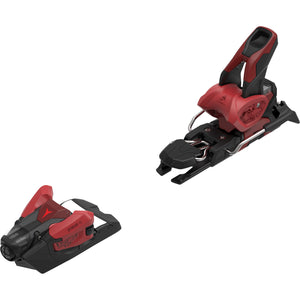
- Toe Piece: LDN Toe places the binding closer to the ski for better response.
- Heel Piece: 3 Part Heel Light features a low profile design with lighter construction.
- Chassis: Low Profile Chassis improves your feel for the terrain and power transmission.
- Adjustment: Automatic Wing Adjustment adapts to boot width and keeps release values constant.
The Atomic Strive 12 GW bindings are engineered for skiers who demand exceptional snow feel and direct response in powder conditions. Featuring the innovative LDN toe piece, these bindings maintain a remarkably low center of gravity, placing you closer to the ski to enhance overall maneuverability. The automatic wing adaptation accommodates both worn out boots and varying sole standards effortlessly.
In deep snow, power transmission is crucial, and the low profile chassis ensures every ounce of energy is driven directly into your skis. The lighter construction of the heel piece keeps the swing weight down, allowing for nimble turns through tight trees and pillows. They are a highly reliable choice for dedicated freeride enthusiasts.
- Pros: Low center of gravity, lightweight heel, automatic toe adaptation.
- Cons: Lower DIN range might not suit highly aggressive heavy skiers.
2. Look Pivot 2.0 15 GW
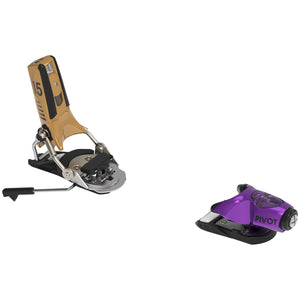
- Toe Piece: Aluminum Race Toe Piece features 45mm of elastic travel.
- Heel Piece: Turntable Heel provides 28mm of vertical elasticity for shock absorption.
- Release: 180-degree Multi-Directional Release functions independently from the heel.
- Mounting: Smaller Mounting Zone provides less swing weight and consistent ski flex.
The Look Pivot 2.0 15 GW stands out as a top-tier choice for aggressive powder skiers requiring maximum retention and durability. The legendary turntable heel piece rotates directly under the tibia, significantly reducing the risk of injury while providing an industry-leading 28mm of vertical elasticity. This ensures incredible shock absorption on massive powder landings.
Its all-metal aluminum race toe piece offers superior precision and lateral energy transmission. By utilizing a highly compact mounting zone, the Pivot allows the ski to flex naturally, creating a deep and consistent bend that is ideal for surfing deep snow. This binding offers unparalleled performance and reliability for hard-charging freeriders navigating steep and deep terrain.
- Pros: Unmatched elastic travel, superior shock absorption, durable metal construction.
- Cons: Heavier than non-metal alternatives, challenging step-in in deep snow.
3. Salomon Strive 12 GW
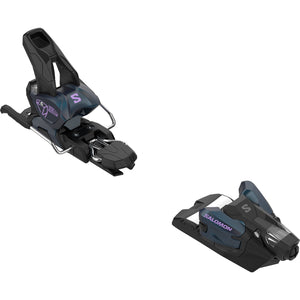
- Toe Piece: LDN Toe offers a low center of gravity for incredible snow feel.
- Heel Piece: 3 Part Heel Light delivers a low profile design with minimal weight.
- Adjustment: Automatic Wing Adjustment seamlessly adapts to boot height and width.
- Chassis: Low Profile Chassis enhances power transmission to the ski.
Salomon has delivered an exceptional freeride binding with the Strive 12 GW, offering a highly responsive ride perfect for powder days. The low, direct, and neutral toe design brings your boot remarkably close to the ski. This reduced stand height amplifies your terrain feel, making it easier to read the snow and react in deep, variable conditions.
The lightweight three-part heel piece dramatically reduces overall weight, minimizing fatigue during long days traversing powder bowls. Additionally, the automatic wing adjustment provides a seamless and secure fit regardless of your boot sole condition. It is an outstanding combination of lightweight agility and dependable power transmission for resort and sidecountry powder missions.
- Pros: Excellent snow feel, lightweight design, hassle-free boot adaptation.
- Cons: Maximum DIN of 12 may be insufficient for professional-level athletes.
4. Look Pivot 2.0 11 GW
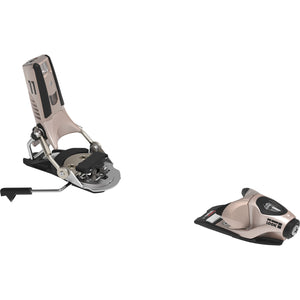
- Toe Piece: Full Action Toe delivers 45mm of elastic travel and increased coupling strength.
- Heel Piece: Turntable Heel yields a reduction in unwanted pre-releasing with 28mm elasticity.
- Contact Points: 7 Points of Contact drives more power to the edge of the ski.
- Compatibility: Dual Standard Concept works with both ISO 5355 Alpine and GripWalk soles.
The Look Pivot 2.0 11 GW brings the iconic turntable performance to lighter or less aggressive skiers who still crave powder perfection. It features the same brilliant heel rotation system as its heavier siblings, protecting your knees while delivering a massive 28mm of elastic travel. This drastically cuts down on unwanted pre-releases when blasting through chopped-up powder.
Paired with the Full Action toe piece, this binding guarantees outstanding coupling strength and multi-directional release capabilities. The smaller mounting footprint ensures your wide powder skis maintain their natural flex pattern, allowing for smoother, rounder turns in deep snow. It is the perfect blend of high-end safety technology and accessible DIN settings.
- Pros: Industry-leading elasticity, allows natural ski flex, fantastic knee protection.
- Cons: Heel mechanism can be tricky to click into on steep powder faces.
5. Look Pivot 2.0 13 GW
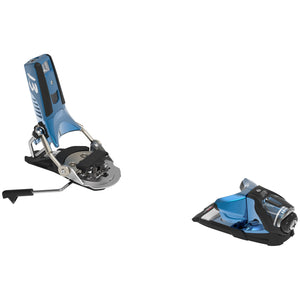
- Toe Piece: Full Action Toe featuring 45mm of elastic travel.
- Heel Piece: Turntable Heel rotates directly under the tibia for reduced risk of injury.
- Release: 180-degree Multi-Directional Release for effective protection in a fall.
- Mounting: Smaller Mounting Zone provides a deeper, rounder, consistent ski flex.
Sitting perfectly in the sweet spot of the Pivot lineup, the Look Pivot 2.0 13 GW offers tremendous reliability for dedicated powder hounds. The binding boasts seven points of contact between the boot and the binding, maximizing lateral energy transmission to drive wide skis effortlessly through deep accumulations. The multi-directional release adds a critical layer of safety during spectacular yard sales.
With 28mm of vertical elasticity in the turntable heel and 45mm in the toe, the shock absorption is virtually unmatched. This long elastic travel keeps you securely locked in when landing cliffs or navigating heavy crud. The short mounting zone further enhances your ski natural flex, keeping you afloat.
- Pros: Exceptional retention, maximizes ski flex, fantastic energy transmission.
- Cons: Turntable heel takes getting used to, heavier than minimalist bindings.
6. Marker Squire 11
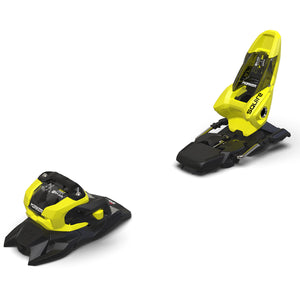
- Toe Piece: Triple Pivot Light 2 Toe fits alpine and GripWalk soles.
- Heel Piece: Hollow Linkage 2 Heel requires 30 percent less step-in force.
- Features: Anti Ice Rail allows you to scratch off ice and snow below your boot sole.
- Gliding Plate: Stainless Steel AFD supports a precise release unhindered by dirt or ice.
The Marker Squire 11 is an incredibly lightweight and agile binding that serves as a fantastic entry point for lighter freeriders hitting the powder. The newly updated Hollow Linkage 2 Heel requires significantly less step-in force, which is a massive advantage when trying to click back in after losing a ski in chest-deep snow.
The Triple Pivot Light 2 toe comes equipped with a highly practical Anti Ice Rail, allowing you to easily scrape snow and ice off your boot soles before stepping in. Its stainless steel gliding plate ensures precise release mechanics regardless of snow buildup. It delivers remarkable performance and safety in an exceptionally featherweight package.
- Pros: Very lightweight, easy step-in force, convenient ice scraper on toe.
- Cons: High percentage of plastic components, not suitable for heavy aggressive skiers.
7. Look SPX 11 GW
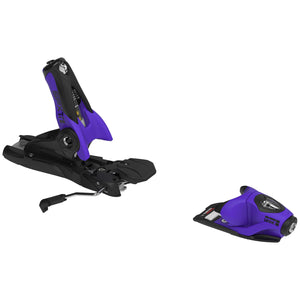
- Toe Piece: Full Action Toe delivers best-in-class retention and release.
- Heel Piece: SPX Heel Piece offers 27mm of elastic travel for confident retention.
- Pivot: Oversize heel pivot increases coupling strength for efficient power transmission.
- Release: 180-degree Multi-Directional Release functions independently from the heel.
The Look SPX 11 GW is an exceptional mid-range binding that provides remarkable elasticity and confident retention for exploring powder fields. The SPX heel piece is designed with an oversized pivot that dramatically increases the boot-to-binding coupling strength. This translates to highly efficient power transmission, allowing you to steer wide powder boards with minimal effort.
Offering an impressive 27mm of vertical elastic travel in the heel and 45mm laterally in the toe, this binding absorbs massive amounts of shock before releasing. This long elasticity ensures you remain locked in during rough landings in mixed snow conditions. The dual-standard compatibility makes it wonderfully versatile for various modern ski boot soles.
- Pros: Great shock absorption, efficient power transmission, reliable multi-directional release.
- Cons: Slightly bulkier heel piece, lower DIN ceiling limits aggressive use.
8. Salomon Strive 14
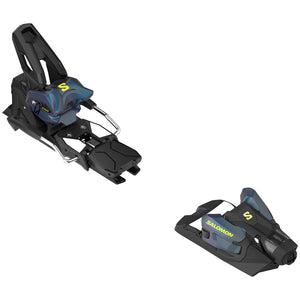
- Toe Piece: LDN Toe preserves the natural flex and arc of the ski.
- Pedal: Extra Wide Toe Pedal ensures the best lateral power transmission from skier to ski.
- Heel Piece: Locking Brakes feature a clip-in system that locks skis together for hauling.
- Profile: Low Center of Gravity with a 19.6mm height provides better next-to-snow feel.
For the hard-charging expert who spends their days hunting deep lines, the Salomon Strive 14 offers unparalleled power and precision. The standout feature is its revolutionary LDN toe piece combined with an extra-wide toe pedal exceeding 60mm. This super-wide platform guarantees phenomenal lateral power transmission, giving you total command over the widest powder skis.
The incredibly low 19.6mm stand height preserves the natural arc of the ski and keeps your center of gravity perfectly balanced. Furthermore, the binding features a clever clip-in locking brake system, making hiking for fresh tracks much easier when skis are thrown over your shoulder. It is an absolute powerhouse for deep snow domination.
- Pros: Extra wide pedal for wide skis, low stand height, high retention for aggressive skiing.
- Cons: Overkill for casual or lightweight skiers, requires higher step-in force.
How to Choose the Best Ski Bindings for Powder
Selecting the ideal ski binding for powder is an entirely different endeavor compared to picking bindings for groomed runs or the terrain park. When you are skiing deep snow, you are dealing with wider skis, variable snow textures, unseen obstacles beneath the surface, and a much higher likelihood of dramatic falls. A powder binding needs to transmit power effectively to wide waist dimensions while offering enough elasticity to prevent premature release during choppy terrain navigation. This comprehensive guide will walk you through everything you need to know to make the best purchase for your deep winter setups.
Understanding Binding Release Values (DIN)
The most critical safety feature of any ski binding is its release value, commonly referred to as the DIN setting. This number dictates how much force is required for the binding to release your boot during a crash. Choosing the correct DIN range is a matter of safety and performance, especially in powder where snow acts as a thick resistance against your skis.
When selecting a binding, you never want your personal DIN setting to be at the absolute maximum or absolute minimum of the binding’s range. Bindings function most consistently when your setting falls somewhere in the middle of their capable range. For example, if your calculated DIN is an 8, a binding with a DIN range of 4 to 12 is perfect. If you require a DIN of 12, you should look for a binding that goes up to 14 or 15.
Typical DIN Ranges by Skier Profile
| Skier Level / Weight | Recommended Binding DIN Range | Common Application |
|---|---|---|
| Beginner / Lightweight | 3.0 to 10.0 | Learning the basics, lightweight freeriders |
| Intermediate / Average Weight | 4.0 to 11.0 / 12.0 | All-mountain skiing, moderate powder days |
| Advanced / Aggressive | 5.0 to 13.0 / 14.0 | Steeps, deep powder, high-speed freeriding |
| Expert / Professional | 8.0 to 15.0+ | Cliff drops, big mountain competitions |
The Importance of Brake Width
Powder skis are inherently wider than standard carving skis to provide the necessary flotation in deep snow. Because of this, the brakes on your bindings must be wide enough to clear the edges of the ski without catching, but not so wide that they drag in the snow when you put the ski on edge.
The golden rule for ski compatibility is to select a brake width that is equal to, or at most 15 millimeters wider than, the waist width of your ski. If you mount a binding with brakes that are too narrow, the brakes will not deploy properly when the ski releases, turning your ski into a dangerous unguided missile down the mountain. If the brakes are excessively wide, they can catch on the snow when you carve on hardpack, potentially causing a crash.
- Ski Waist 95mm to 105mm: Choose a brake width between 100mm and 110mm.
- Ski Waist 105mm to 115mm: Choose a brake width between 110mm and 120mm.
- Ski Waist 115mm+: Choose a brake width of 115mm to 130mm depending on availability.
Elasticity and Shock Absorption
In powder skiing, elasticity is your best friend. Elastic travel refers to how far the binding can move to absorb a shock before it decides to release the boot. When skiing untouched powder, you often encounter hidden crud, ice chunks, or sudden transitions that violently jolt your skis. A binding with poor elastic travel will immediately release upon impact, causing you to double eject in deep snow.
Bindings like the Look Pivot series are famous for their massive elastic travel. By allowing the boot to shift up to 45 millimeters laterally in the toe and 28 millimeters vertically in the heel, the binding absorbs the energy of the impact and recenters the boot rather than releasing it. This high elasticity reduces pre-releases, allowing you to ski aggressively through chopped-up powder with complete confidence.
Stand Height and Center of Gravity
Stand height is the distance between the bottom of your ski boot and the top surface of the ski. In the past, racers preferred a high stand height to gain leverage for extreme carving angles on ice. However, in powder skiing, a high stand height can actually make the ski feel unstable and disconnected from the snow.
Modern powder bindings emphasize a low profile chassis and a low center of gravity. By putting the boot as close to the ski as possible, the skier gains a better next-to-snow feel. This low stance preserves the natural flex of the ski and makes it significantly easier to pivot and slarve turns in deep snow. Bindings that feature low, direct, and neutral designs are highly sought after by freeriders who want to feel the terrain beneath them.
Mounting Zones and Ski Flex
The footprint of the binding determines how much of the ski is bolted down and unable to flex. Powder skis are designed with complex rocker profiles and specific flex patterns to surf over the snow. If you install a binding with a massive, elongated mounting track, you create a large dead zone in the middle of the ski that refuses to bend.
To get the most out of your powder skis, look for bindings with a compact mounting footprint. A smaller mounting zone allows the ski to bend naturally into a rounder arc, providing better floatation and smoother turning dynamics in deep snow. Turntable heel pieces often feature the shortest mounting zones on the market, making them highly favorable for wide freeride skis.
Boot Sole Compatibility
The ski industry has seen a massive shift in boot sole standards over the past decade. It is no longer safe to assume that any alpine boot will fit into any alpine binding. When choosing your powder bindings, you must ensure they are compatible with the soles on your ski boots.
- ISO 5355 Alpine: The traditional flat plastic sole found on standard downhill boots. Almost all alpine bindings accommodate this standard.
- GripWalk (GW): A rockered rubber sole designed to make walking much easier and safer. Bindings with a GW designation feature a specialized toe pedal to accommodate the rockered profile.
- WTR (Walk To Ride): An older rockered sole standard. Many modern GW bindings still accept WTR, but you must check the manufacturer specifications.
- Touring ISO 9523: Full rubber lugged soles found on backcountry boots. Most standard alpine bindings will not safely accept these unless they are designated as Multi-Norm Certified.
Always verify the compatibility stamp on the toe piece of the binding against the stamp found on the heel or toe lug of your ski boot. Riding an incompatible system dramatically compromises the release mechanics and can lead to severe injury.
Weight Considerations
While sheer holding power is vital, the weight of your binding should also factor into your decision. Heavy, all-metal bindings are virtually indestructible and provide incredible dampening, making them perfect for skiing high speeds through choppy terrain. However, they add substantial swing weight to the ski, which can cause fatigue if you spend your days hiking sidecountry gates or performing aerial maneuvers.
Lighter bindings utilize advanced plastics and hollow linkages to shed weight without sacrificing safety. If you prefer nimble tree skiing, popping off natural features, or carrying your skis on your shoulder to reach the upper bowls, a lighter binding will conserve your energy and make the ski feel much more playful.
Final Thoughts on Powder Bindings
Investing in the correct ski bindings for powder is just as important as selecting the right skis. Take the time to honestly assess your weight, ability level, and skiing style. A highly elastic, low-profile binding with the proper brake width will keep you safe, enhance your power transmission, and ultimately allow you to enjoy those deep winter days to the fullest extent possible.