Best Ski Wax Irons of 2026
When it comes to keeping your skis in top shape, a good ski wax iron makes all the difference. Waxing your skis helps them glide smoothly, protects the base, and gives you more control on the slopes. Unlike regular household irons, ski wax irons are made with steady temperature settings to melt wax evenly without burning. Choosing the right one can make waxing easier, faster, and more effective. In this guide, we’ll look at the best ski wax irons to keep your skis performing well.
1. Swix North Waxing Iron

- Base Plate: Forged construction
- Temperature: Adjustable dial
- Power: 110V
- Compatibility: Alpine, snowboard, cross-country
The Swix North Waxing Iron is built around a forged base plate that holds heat steadily, which helps you apply wax evenly without hot and cold spots. The adjustable dial covers the range needed for universal and temperature-specific waxes, so you can switch between formulas easily. It plugs into standard North American outlets without adapters.
Part of the Swix North freeride and snowboard accessories line, it works on alpine, snowboard, and cross-country bases, making it a flexible option for a household with mixed gear. It suits skiers and riders who want dependable heat control from a well-known brand, though travelers abroad will need a converter because it is 110V only.
- Pros: Steady heat from the forged plate, adjustable dial, works on many base types
- Cons: 110V only, no dual-voltage option
See the Swix North Waxing Iron
2. Swix Economy
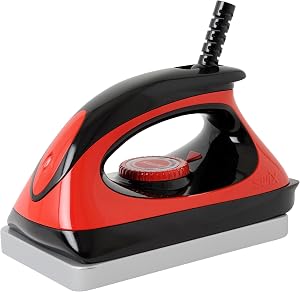
- Base Plate: Large surface area
- Temperature: Adjustable dial
- Power: 110V
- Finish: Classic Swix red
The Swix Economy iron focuses on a large base plate, giving you a wider surface that covers more of the base with each pass. That is especially handy for wide skis, where efficient wax application saves time. An adjustable temperature dial handles universal and temperature-specific waxes, and the 110V plug fits standard North American outlets without adapters.
It comes in the classic Swix red finish that matches the brand’s professional tuning tools, and it works on alpine, snowboard, and cross-country base materials. This makes it a practical, budget-minded pick for everyday tuning at home. Buyers outside North America should note the voltage limitation before ordering.
- Pros: Wide base plate, adjustable dial, trusted brand
- Cons: 110V only, few extra features
3. RaceWax Waxing Iron

- Temperature: 80 to 170 C (176 to 338 F)
- Baseplate: 5/8″ thick, 4.1″ x 5.7″, grooved
- Power: 120V, 60 Hz
- Warranty: One year
The RaceWax Waxing Iron is a professional-style tool that heats quickly and delivers temperatures from 80 to 170 C (176 to 338 F). Its thick 5/8 inch baseplate measures 4.1 by 5.7 inches and is grooved, which helps distribute wax well across the base. The cord has a swivel in the handle, so the iron can stand on end when you set it down.
This is the North American model with a standard 120 volt, 60 Hz plug, and it comes with instructions plus a one year warranty. The classic RaceWax colors and logo add a familiar look. It is a dependable choice for skiers who want a wide heat range and a solid, well-supported iron.
- Pros: Wide heat range, grooved thick baseplate, one year warranty
- Cons: North American voltage only
4. Dakine Adjustable Tuning Iron

- Materials: 55% aluminum, 40% plastic, 3% steel, 2% copper
- Temperature: Adjustable control
- Edges: Beveled for smooth movement
- Wax Use: All Dakine hot waxes
The Dakine Adjustable Tuning Iron gives you adjustable temperature control, so you can match the heat to the wax you are using. Beveled edges help the iron glide smoothly across the base without catching, which makes the process feel easier for newer tuners. It is designed for use with all Dakine hot waxes, keeping the setup simple if you already buy from the brand.
The construction is listed as 55 percent aluminum, 40 percent plastic, 3 percent steel, and 2 percent copper, and the product is imported. The aluminum content suggests decent heat transfer. Detailed heat range and power figures are not listed, so check before buying if you need them.
- Pros: Adjustable temperature, smooth beveled edges, simple to use
- Cons: Heat range and power details not listed
See the Dakine Adjustable Tuning Iron
5. Demon United
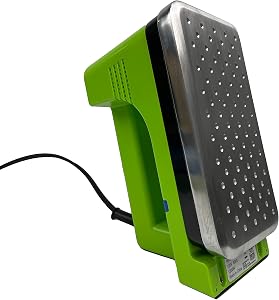
- Power: 120V, 60Hz, 1200W
- Weight: 2.5 lbs
- Soleplate Size: 186.5 x 108 mm
- Soleplate Thickness: 17.4 mm
The Demon United is billed as a commercial grade digital XL waxing iron for skis and snowboards, aimed at tuners who want to take their setup to the next level. It runs on 120V at 60Hz and 1200W, which points to strong heating power, and it weighs 2.5 pounds, so it stays manageable during longer sessions.
The soleplate measures 186.5 by 108 millimeters and is 17.4 millimeters thick, giving it generous coverage and good heat retention for larger skis and boards. Its digital control and heavier plate make it a fit for serious home tuners, though the size may feel bulky for beginners. Note that it is built for North American power.
- Pros: High 1200W output, large thick soleplate, digital control
- Cons: Bulky for beginners, 120V only
6. XCMAN Ski Waxing Iron

- Power: 120V, 800W
- Temperature: 100 to 180 C
- Soleplate: 6.3 x 3.54 x 0.59 inches, dimpled cast aluminum
- Cord: 2.4 meters
The XCMAN Ski Waxing Iron is a 120V, 800W model for alpine, Nordic, and snowboard tuning. Its temperature can be adjusted from 100 to 180 C, covering cold, warm, and universal waxes. The thick cast aluminum base retains heat and limits temperature swings, while the dimpled surface lets the iron glide over the base, much like a golf ball.
The soleplate measures 6.3 by 3.54 by 0.59 inches, and the ergonomic body comes with a 2.4 meter power cord. It is ETL certified and includes instructions. One tip: an infrared thermometer will read far lower than the real temperature because the polished soleplate reflects infrared, so do not rely on it.
- Pros: Wide temperature range, dimpled base, long cord, ETL certified
- Cons: Infrared thermometers read inaccurately, 120V only
7. TOKO T8
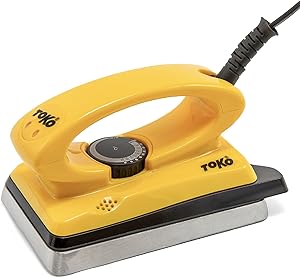
- Temperature: 212 to 320 F
- Plate: Pressure cast aluminum, rhomboid structure
- Cord: 8 feet
- Power: 110V
The TOKO T8 simplifies waxing for alpine, Nordic, and snowboard gear with an adjustable temperature range from 212 to 320 F. Its extra-strong pressure cast aluminum plate features a curved rhomboid structure designed for efficient wax distribution and compression, which helps spread wax evenly across the base.
It is reliable, durable, and offers strong value for the money. The 8 foot power cord gives you room to move around the bench, and the 110V supply suits use in the USA. For anyone wanting a proven, no-fuss iron from a respected wax brand, the T8 is an easy recommendation, though it is not intended for travel abroad.
- Pros: Good value, long 8 foot cord, effective plate structure
- Cons: 110V only, no digital display
8. WAVECUER Ski Wax Iron

- Temperature: 60 to 180 C
- Voltage: Switchable 100-125V or 220-240V
- Base Plate: 16mm thick, grooved
- Cord: 1.8 meters
The WAVECUER Ski Wax Iron offers a wide temperature range of 60 to 180 C through an adjustable dial, letting you set heat for cold, warm, or universal waxes. Its 16mm thick base plate has grooves that help spread heat evenly, melt wax quickly, and hold a steady temperature, which makes the process faster and smoother.
A voltage switch selects 100-125V or 220-240V, so it suits travel, competitions, or home use. The iron stands upright, has a comfortable handle, and includes a 1.8 meter power cord. It works for snowboards, alpine, and Nordic skis, making it a good match for beginners and pros alike.
- Pros: Dual-voltage switch, wide temperature range, thick grooved plate
- Cons: Cord is shorter than some rivals
9. WSD Ski Wax Iron
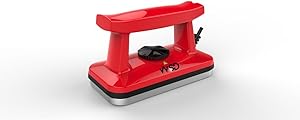
- Soleplate: 12 mm (about 0.47 inch) solid plate
- Temperature: Fully adjustable dial
- Cord: 1.9 meters, coils around handle
- Compatibility: Alpine, Nordic, snowboard
The WSD Ski Wax Iron is designed for alpine, Nordic, and snowboard tuning, with a solid 12 millimeter soleplate, about 0.47 inch, that retains heat longer for higher efficiency. Full temperature adjustability lets you dial in the right heat for each type of wax. Just keep the iron moving from tip to tail so you do not burn the base.
The ergonomic handle suits left and right handed users and lets the iron sit upright. A notch at the rear of the handle keeps the 1.9 meter cord out of the way, and the cord coils around the body for tidy storage. The compact design is great for traveling. Simple and practical.
- Pros: Thick heat-retaining plate, tidy cord storage, compact for travel
- Cons: Voltage details not listed
10. TIANDAO Ski Iron

- Power: 800W
- Temperature: Adjustable to 180 C (356 F)
- Voltage: Dual 100-127V / 220-240V
- Plate: Thick aluminum
The TIANDAO Ski Iron is an 800W model that heats quickly, and its thick aluminum plate holds a stable temperature for smooth, even wax coverage. Adjustable heat up to 180 C (356 F) lets you fine-tune the temperature for different wax types and snow conditions, from powder to ice.
Dual voltage support for 100-127V and 220-240V means it works with US and European outlets without a converter, a real plus for home use or travel. It is suitable for alpine skis, Nordic skis, and snowboards, and the compact body with an ergonomic grip makes it easy to carry and handle. It is a versatile pick for riders who travel often.
- Pros: Dual voltage, fast even heating, portable design
- Cons: Lower 180 C ceiling, minimal extra features
How to Choose the Right Ski Wax Iron: A Comprehensive Guide
Maintaining ski and snowboard bases is an essential part of winter sports care. Whether you are a casual weekend cruiser on groomers, a backcountry explorer, or a competitive racer chasing fractions of a second, waxing your gear regularly ensures optimal glide, protects base materials from abrasion, and prolongs the lifespan of your equipment. While applying wax can be done in various ways, hot waxing with a dedicated ski wax iron remains the gold standard across the snowsports industry.
Many beginners make the mistake of reaching for a standard household laundry iron. While household irons hot-melt wax, they pose serious risks to ski equipment. Standard clothes irons feature inconsistent heat distribution, automatic shut-offs that trigger without warning, high temperature spikes, steam holes that trap wax, and thin heat plates that fluctuate wildly in temperature. Investing in a purpose-built ski wax iron is essential for protecting your gear and achieving a smooth, fast glide. This guide covers everything you need to know to select the right ski wax iron for your needs, budget, and performance goals.
Why a Specialized Ski Wax Iron Matters
To understand why choosing the right wax iron is so important, one must first understand how ski bases and waxes interact. Modern ski and snowboard bases are made of Ultra-High-Molecular-Weight Polyethylene (UHMWPE), commonly referred to by brand names like Extruded or Sintered P-Tex. Sintered bases, found on mid-to-high-end skis, are porous structures that absorb wax when heated.
When you apply a heated iron to a ski base, the goal is to liquefy the wax so it penetrates deep into the microscopic pores of the P-Tex without overheating the base material itself. Excessive heat can delaminate the top sheet, melt the internal core adhesives, or permanently seal the base pores—a condition known as “base burning.” Conversely, if an iron is too cold, the wax will not liquefy properly, leading to poor absorption and uneven application. A dedicated ski wax iron provides precise, consistent heat management to protect your investment.
Key Considerations When Selecting a Ski Wax Iron
Ski wax irons may look simple, but subtle design features separate a basic budget model from a high-end tuning tool. Evaluating these key characteristics will help you choose the best model for your tuning station.
1. Base Plate Thickness
The thickness of the metal soleplate is one of the most critical factors in a ski wax iron’s performance. The plate is responsible for storing and transferring heat to the ski base.
- Thin Plates (8mm to 12mm): Common in entry-level and travel irons. They heat up quickly, but lose heat rapidly when they touch a cold ski base. This thermal drop forces the internal heating element to switch back on, causing rapid temperature swings.
- Medium Plates (12mm to 16mm): Found on mid-range irons suitable for most recreational skiers and snowboarders. They balance heat retention with portability and offer reliable performance for standard hydrocarbon and low-fluorinated waxes.
- Thick Plates (18mm to 25mm+): Preferred by professional technicians, tuners, and racers. The heavy mass of aluminum acts as a thermal reservoir. When the iron contacts a cold ski base, the plate retains heat, maintaining a steady, consistent temperature across the entire surface. This is critical when working with temperature-sensitive high-performance waxes.
2. Temperature Accuracy and Control Mechanisms
Different wax formulations—ranging from soft cold-weather liquids to ultra-hard cold-weather paraffin blocks—require precise melting temperatures. A hard cold-powder wax may require 150 degrees Celsius (302 degrees Fahrenheit) to melt, while a soft warm-weather wax melts at 115 degrees Celsius (239 degrees Fahrenheit). Operating outside these recommended ranges leads to poor wax performance or base damage.
Ski wax irons manage temperature control using two primary systems:
- Analog Thermostats: Utilize a bimetallic strip or basic dial mechanism to cycle the heating element on and off. As the iron cools down, the thermostat clicks on; as it reaches the maximum threshold, it shuts off. This creates a temperature wave, where the plate temperature oscillates above and below your set target. While sufficient for basic waxes, analog irons require careful monitoring.
- Digital Microprocessor Controls: Utilize electronic sensors and microprocessors to monitor plate temperature constantly. When a temperature drop is detected, the heating element receives micro-pulses of power to maintain heat without overshoot. Digital controls typically feature an LED or LCD screen showing exact real-time temperature settings.
3. Power and Wattage
An iron’s wattage dictates how fast it reaches target temperatures and how efficiently it recovers lost heat during application. Most standard ski wax irons range between 800W and 1000W, while heavy-duty professional models offer 1200W to 1500W or higher.
Higher wattage allows an iron to maintain target temperatures when moving across cold bases, especially in unheated garages, workshops, or cold race pits. If you frequently wax gear outdoors or in cold environments, opt for higher wattage models.
4. Base Plate Surface Design
The texture and shape of the iron’s soleplate impact how smoothly wax melts and spreads across the base:
- Smooth Plates: Provide uniform contact across the base. They work well for standard paraffin waxes, but can create a suction effect if pushed against liquid wax on smooth bases.
- Grooved or Dimpled Plates: Feature engineered channels or dimples cut into the aluminum bottom. These grooves break surface tension and allow liquid wax to float evenly under the iron. This creates a smooth fluid layer, facilitating even distribution and preventing direct, dry plate contact with the base.
- Beveled or Curved Edges: Irons with rounded or beveled edges roll smoothly along the ski without catching on edges, sidesteps, or tail protectors.
Digital vs. Analog Wax Irons: Making the Choice
Choosing between a digital and an analog ski wax iron comes down to your budget, experience level, and the types of wax you intend to use.
| Feature | Analog Ski Wax Irons | Digital Ski Wax Irons |
|---|---|---|
| Temperature Precision | Moderate variance (+/- 10°C to 15°C) | High precision (+/- 1°C to 2°C) |
| Plate Thickness | Typically 8mm – 12mm | Typically 15mm – 25mm |
| Price Range | Budget-friendly ($40 – $80) | Premium ($120 – $350+) |
| Best For | Casual skiers, beginners, general maintenance | Racers, frequent skiers, advanced waxes |
| Ease of Use | Simple dial indicator | Digital display with precise readout |
| Risk of Base Damage | Higher (requires active monitoring) | Lower (steady temperature prevention) |
Portability, Dual Voltage, and Travel Factors
For skiers and snowboarders traveling across regions or internationally, portability and electrical compatibility are key considerations.
- Dual-Voltage Capability: North America operates on a 110V/120V electrical standard, whereas Europe and Japan use 220V/240V systems. A dual-voltage wax iron features a switch allowing it to transition safely between power grids, requiring only a plug adapter rather than a heavy voltage converter.
- Weight and Ergonomics: Heavier irons offer excellent heat retention, but add weight to travel bags. If you travel frequently for ski trips, seek a compact iron with a medium-thick plate (around 12mm) that balances thermal efficiency with low weight.
- Cord Design: A long, flexible power cord (at least 2.5 meters) with a reinforced strain relief neck prevents clutter and allows full movement around tuning benches.
Matching the Iron to Your Needs
To simplify your buying decision, consider which category best describes your wax and tuning routine:
The Casual Recreational Skier
If you ski 5 to 10 days per season and want to keep your skis gliding without spending a fortune, prioritize affordability and simplicity.
- Recommended Specs: 800W–1000W power, 8mm–12mm plate thickness, analog dial.
- Key Benefit: Inexpensive entry point that easily outperforms standard household irons.
The Enthusiast and Family Tuner
If you manage multiple pairs of skis or snowboards for your family and hit the slopes regularly, reliability, thermal stability, and efficiency are key.
- Recommended Specs: 1000W–1200W power, 12mm–15mm grooved plate, digital or high-precision analog thermostat.
- Key Benefit: Faster wax cycles, improved heat recovery, and safer operation across various base types.
The Alpine / Nordic Racer and Professional Tech
For competitive skiers where speed is critical, temperature precision is essential. Powder, fluoro, and hard cold-temperature race waxes demand exact heating parameters.
- Recommended Specs: 1200W–1500W+ power, 20mm–25mm heavy plate, microprocessor-controlled digital readout.
- Key Benefit: Absolute temperature accuracy with zero heat dips, eliminating base damage risks and maximizing wax efficiency.
Maintenance and Best Practices for Your Wax Iron
Proper care ensures your ski wax iron provides consistent heat and lasts for years. Follow these practical maintenance tips:
- Keep the Soleplate Clean: Always wipe the soleplate with a clean lint-free paper towel or cotton rag while the iron is warm after completing a waxing session. This prevents old burnt wax from building up and contaminating future applications.
- Never Leave the Iron Resting Flat: Always set the iron vertically on its heel or on a heat-resistant stand when turned on. Leaving a hot iron resting flat on a surface damages the tool and creates a serious fire hazard.
- Avoid Excessive Temperatures: Never heat your iron beyond the melting temperature recommended on your wax packaging. If your wax starts smoking, the iron is too hot. Smoking wax releases harmful fumes and risks burning your ski base.
- Clean Burnt Residue Safely: If wax becomes scorched on the plate, allow the iron to cool completely. Apply a small amount of citrus base cleaner to a soft cloth and rub the plate gently. Avoid abrasive pads, wire brushes, or metal scrapers, which scratch aluminum soleplates and disrupt smooth heat delivery.
- Store Safely: Once cool, wrap the cord loosely around the body. Avoid wrapping the cord tightly around a hot iron to prevent insulation melting and short circuits. Store the iron in a dry, clean place to prevent corrosion.
Final Thoughts
Choosing the right ski wax iron is an investment in the longevity and performance of your snowsports equipment. While household irons may be tempting, their unpredictable temperatures and lack of thermal mass risk damaging expensive ski bases. By assessing plate thickness, temperature accuracy, wattage, surface design, and your specific skiing habits, you can select an iron that makes tuning easy, efficient, and safe. A quality wax iron pays for itself in fast glides, durable bases, and fewer trips to the ski shop.