
Best Snowboard Boot Bags of 2026
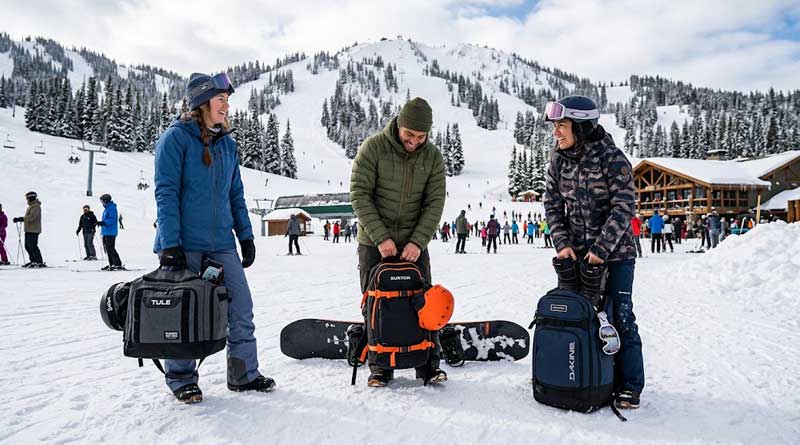
If you ride a snowboard, you know that carrying boots, helmet, goggles, and gear can be a hassle. A good snowboard boot bag makes life easier. It keeps your boots safe, separates wet items from dry ones, and lets you carry everything in one trip. Whether you drive to the mountain or fly, the right bag saves time and keeps your gear organized. Here are the best snowboard boot bags to make your days on the hill simpler and more fun.
1. REI Co-op Powderbound

- Capacity: 55 L / 3,356 cu in
- Material: 600D recycled polyester shell, tarpaulin-lined boot bay
- Dimensions: 20 x 13 x 12 in
- Weight: 1 lb. 13 oz.
There are boot bags that simply carry boots, and then there is the REI Co-op Powderbound—a pack that seems to have been designed by someone who has actually wrestled with frozen buckles in a slushy parking lot. The tarpaulin-lined boot compartment drains, the back panel unzips into a standing mat, and the top-wrap zipper opens wide enough to grab dry layers without unpacking the whole kit. It swallows a pair of men’s U.S. 13 boots plus helmet and goggles, while mesh pockets keep wet gloves away from everything else.
Carrying it is genuinely pleasant for a bag this size. The padded back panel, lightly padded shoulder straps, and front haul handle make airport concourses and muddy lots feel less like a chore. The 600D recycled polyester is the same tough stuff REI uses in its duffels, and a PFAS-free DWR shrugs off snowmelt. If you want a season-long companion that is durable, eco-minded, and quietly smart, the Powderbound delivers without shouting about it.
- Pros: Durable recycled materials, smart boot access, drainable boot bay, comfortable carry.
- Cons: Single-boot-pair capacity, pockets are functional but not highly modular.
2. Unigear Ski Boot Bag

- Capacity: 50 L
- Material: Tarpaulin + 1050D nylon, tarpaulin-lined bottom
- Dimensions: 11.8 x 12.6 x 19.7 in
- Boot fit: Fits up to US men’s 12.5
Unigear’s Ski Boot Bag is the kind of pack that quietly overdelivers. Three separate compartments and a spread of pockets let you quarantine boots from helmet, clothing, and soggy accessories, while the flip-down back panel becomes a standing mat so your socks stay dry on wet asphalt. Exterior webbing lets you lash skis or a board to the bag for hands-free hauling, which is a small thing until you actually try it.
The materials are reassuringly overbuilt for the price: 1050D nylon paired with tarpaulin, plus a fully lined bottom that laughs at slush and subzero temps. EVA-padded mesh on the back panel and adjustable padded straps keep the load stable whether you are crossing a parking lot or navigating a terminal. It may not have the polished finish of premium brands, but for a budget-friendly pack with genuinely thoughtful details, Unigear is a smart pick.
- Pros: Great value, multiple compartments, waterproof-lined bottom, standing mat feature.
- Cons: Less premium finish than top brands; lighter warranty/support.
3. evo 50L Boot Pack
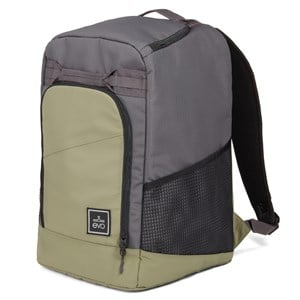
- Capacity: 50 L
- Material: 600D recycled PET ripstop with PU face out
- Dimensions: 19 x 13 x 13 in
- Pockets: Top helmet, front accessories, back boot pocket
The evo 50L Boot Pack manages that rare trick of feeling responsibly made without feeling like a compromise. Bluesign® approved fabrics and a PFC-free DWR sit alongside a tarpaulin-lined boot area and coated mesh external pockets that keep wet gear isolated. The ergonomic shoulder harness with sternum strap makes single-trip hauling realistic, and YKK zippers plus heavy-duty haul handles suggest this bag is built for many seasons, not one.
On the hill, the layout is refreshingly straightforward: helmet pocket up top, a protected goggle zone, and generous internal space for extra layers. The recycled materials and build quality give it a premium feel without the premium markup, and evo’s 2% community giving is a nice bonus for the impact-conscious. For resort days and travel alike, this is a reliable, responsibly-made pack that earns its place.
- Pros: Thoughtful organization, sustainable materials, durable zippers and trims.
- Cons: Not the largest capacity for extended trips; Proposition 65 note for CA buyers.
4. Dakine 50L Boot Pack
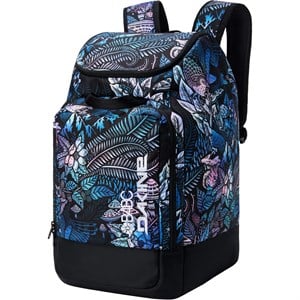
- Capacity: 50 L / 3,051 cu in
- Material: Nylon/Polyester (color dependent)
- Dimensions: 19 x 14 x 13 in
- Access: Rear-entry zipper for boot access
Dakine’s 50L Boot Pack is built around a simple promise: get you out of the parking lot faster. The rear-entry access panel is the star—unzip it, pull your boots, and you are already walking toward the lift while others are still untangling zippers. Dedicated helmet and goggle pockets keep fragile gear protected, and a zippered front cargo pocket holds the small stuff. Materials and stitching are consistent with Dakine’s reputation for sturdy, dependable construction.
The shape is roomy enough for boots, helmet, and layers, while exterior stash areas handle wet gloves or a water bottle. Weight is reasonable for the size, and the organization is deliberately simple: fast, intuitive access rather than a modular puzzle. If you want a no-surprises boot pack for resort days and short trips—one that does the basics exceptionally well—this Dakine is a solid choice.
- Pros: Easy rear-entry boot access, dedicated helmet/goggle pockets, solid materials.
- Cons: Simpler feature set than premium expedition packs; color-dependent fabric choices.
5. Osprey Mountain Bound

- Gear Capacity: 45 liters (2,746 cu. in.)
- Material: 420D recycled ocean-sourced nylon
- Dimensions: 22 x 13.8 x 8.7 inches
- Weight: 2 lbs. 14.24 oz.
Osprey’s Mountain Bound is what happens when a company known for backpacking comfort turns its attention to snowboard boots. The AirScape back panel keeps the load close and stable, so long walks from a distant lot feel far less punishing. A built-in padded changing mat means you can step out of your boots without soaking your socks, and the whole package is designed specifically to haul snowboard boots alongside the rest of your winter kit.
The 420D recycled ocean-sourced nylon is a genuine sustainability highlight, and it does not sacrifice toughness. Load support is excellent, the materials feel long-lasting, and the overall design is clean and purposeful. It is not the lightest empty bag on this list, and exterior organization is modest, but as an indispensable companion for organized, hassle-free alpine travel, the Mountain Bound is hard to beat.
- Pros: Comfortable back panel suspension, convenient built-in changing mat.
- Cons: Limited exterior organizational pockets, slightly heavy when fully empty.
6. Thule RoundTrip

- Capacity: 60 L / 3,661 cu in
- Material: 600D polyester (bluesign approved)
- Dimensions: 22.8 x 14.8 x 14.4 in
- Extras: Standing mat, ventilation zippers, luggage pass-through
The Thule RoundTrip feels like a boot bag that has spent time in airports and learned what travelers actually need. A dedicated boot bay fits up to men’s US 13, the included standing mat keeps you dry on wet surfaces, and ventilation zippers let damp gloves breathe instead of festering. Padded compartments for goggles and helmet protect the delicate stuff, and the luggage pass-through lets the whole bag ride on a rolling suitcase—a small feature that makes long transfers far less awkward.
Construction is premium, and the bluesign® approved 600D polyester nods toward lower-impact manufacturing. The roomy front compartment swallows extra layers, side pockets keep gloves and base layers organized, and the whole package feels polished without being fussy. It is slightly heavier than minimalist packs and sits in a higher price bracket, but for a travel-oriented boot pack with smart integrations, the RoundTrip covers almost every base.
- Pros: Travel-friendly features, robust materials, good ventilation, organized pockets.
- Cons: Slightly heavier than minimalist packs; premium price bracket.
7. SEMSTY Ski Boot Bag

- Capacity: 55 L
- Material: 840D nylon exterior, tarpaulin-lined bottom
- Dimensions: 12.5 x 13.3 x 20.8 in
- Comfort: EVA-padded mesh back panel and adjustable straps
SEMSTY’s 55L Ski Boot Bag occupies a sensible middle ground: not minimalist, not overbuilt, just a practical mid-size hauler that focuses on comfort and durability. The 840D nylon shell resists tears and abrasion, the padded tarpaulin-lined bottom contains snowmelt, and a flip-down back panel gives you a standing mat for boot changes. Non-slip feet at the base keep the bag steady on icy surfaces, which is a small detail that makes a real difference.
Organization is straightforward: an individual boot compartment, a roomy main area for layers and helmet, and multiple accessory pockets. The padded straps and ergonomic back panel make longer walks across lots genuinely comfortable. If you want a balanced, well-built bag without designer pricing, SEMSTY delivers reliable performance for season after season—no drama, just function.
- Pros: Good value, comfortable carry, solid waterproof lining, stable base.
- Cons: Brand support and long-term warranty may be limited compared with legacy brands.
8. Maelstrom 55L Bag

- Capacity: 55 L
- Material: 1680D twisted nylon, water-resistant
- Dimensions: 21.66 x 13 x 11.4 in
- Travel: Airline-friendly size, TSA-friendly features
The Maelstrom 55L Bag is aimed squarely at travelers who want a boot pack that can survive baggage handlers and still look organized at the other end. The 1680D twisted nylon is seriously abrasion-resistant, and the reinforced non-slip bottom gives confidence when you set it down on ice or wet concrete. Multiple compartments and an EVA-padded mesh back panel keep the load comfortable and sorted, whether you are navigating a terminal or a resort base area.
Comfortable straps and a chest strap make the carry from terminal to shuttle genuinely easy, and the airline-friendly sizing reduces the temptation to check an extra bag. It is heavier than some competitors because of that burly fabric, and the brand does not have the recognition of legacy makers, but if your priority is a rugged bag that transitions cleanly between airport and parking lot while keeping kit organized, Maelstrom is a solid, practical option.
- Pros: Very durable fabric, comfortable ergonomics, airline-minded sizing, good compartmentation.
- Cons: Heavier fabric adds weight; brand recognition is lower than long-established makers.
9. Geestock 50L Backpack

- Capacity: 50 L
- Material: 1200D Oxford with ripstop + tarpaulin-lined bottom
- Comfort: EVA-padded mesh back and thick shoulder straps
- Extras: Air vents, external straps, USB port, ID slot
Geestock’s 50L Backpack is a feature-rich, travel-minded boot pack that seems determined to anticipate every small need. The 1200D Oxford with ripstop and tarpaulin lining provides excellent waterproof protection, while multiple vents and external straps let you customize airflow and lash on skis or a board. A flip-down back panel doubles as a standing mat, and the padded back keeps boot hardware from digging into your spine during the walk from car to lift.
What sets it apart are the travel-focused touches: an ID slot for easy identification, external straps for ski/board attachment, and convenience items like a USB charging port. The USB port requires an external power bank, so it is not truly self-contained, but for skiers and snowboarders who want a weatherproof bag that doubles as a travel carry piece, this hits a sweet spot between utility and commuter-friendly design.
- Pros: Extremely durable construction, travel extras, comfortable carry system.
- Cons: Added features may be unnecessary for minimalists; USB port requires external power bank.
10. Athletico Ski Boot Bag
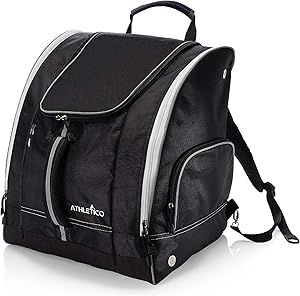
- Material: Water-resistant polyester
- Access: Side-entry zippered boot openings
- Carry: Hidden straps, padded lumbar support, top/front handles
- Safety: Reflective piping for low-light visibility
Athletico’s Ski Boot Bag is a straightforward workhorse for skiers who want practical storage and easy hauling without a lot of ceremony. Side-entry boot pockets keep boots separated from dry gear, while a large main compartment swallows helmets, jackets, and layers. Padded lumbar support and hidden backpack straps make the walk between lot and lodge comfortable, and reflective piping adds visibility on foggy or dusk-filled afternoons—a small safety touch that is easy to appreciate.
Construction is durable enough for frequent use, and the simple layout is ideal for skiers who want quick access without fuss. There are fewer premium materials and extras than you will find on higher-end models, and sizing details are limited, but as a dependable bag that performs day in and day out without premium branding, Athletico offers solid functionality at a friendly price point.
- Pros: Affordable and durable, comfortable carry options, reflective detail for safety.
- Cons: Fewer premium materials and extras than higher-end models; limited sizing detail.
See the Athletico Ski Boot Bag
How to Choose the Perfect Snowboard Boot Bag
When preparing for a day on the slopes or a week-long backcountry trip, having the right gear is essential. While snowboards, bindings, and boots often get the most attention, the bag you use to carry and protect your investment plays a crucial role in your overall mountain experience. A proper snowboard boot bag does far more than just store your footwear. It protects your expensive boots from damage, isolates wet gear from clean clothing, provides organized storage for essential accessories, and makes traveling through airports or parking lots significantly easier.
With dozens of options on the market ranging from simple carry totes to massive rolling luggage, selecting the right bag can feel overwhelming. This guide breaks down everything you need to know to choose the ideal snowboard boot bag for your specific travel needs, storage requirements, and budget.
1. Understand the Primary Types of Snowboard Boot Bags
Before diving into specific features, it is helpful to categorize snowboard boot bags by their primary design and carrying style. Your choice depends largely on how you travel to the mountain.
Basic Boot Totes and Duffle Bags
These are simple, single-compartment or dual-compartment bags featuring traditional carry handles or a single shoulder strap. They are designed primarily for short trips, such as throwing your gear into the trunk of a car for a local day trip. While affordable and lightweight, they offer minimal padding and limited space for additional gear.
Backpack-Style Boot Bags
Backpack boot bags are the most popular option among snowboarders. Featuring padded shoulder straps and often a sternum strap or hip belt, these bags distribute weight evenly across your shoulders and back. They leave your hands free to carry your snowboard, manage kids’ gear, or hold a warm drink. Backpack designs usually feature dedicated boot compartments alongside additional pockets for helmets, goggles, gloves, and extra layers.
Wheeled Boot Luggage
For air travel or long-distance trips, wheeled boot bags are the ultimate convenience. Equipped with heavy-duty skate wheels and telescoping handles, these bags take the weight entirely off your back. Many wheeled models are large enough to function as all-in-one travel bags, accommodating your boots, outerwear, street clothes, and protective equipment in a single piece of checked luggage.
2. Evaluate Size and Storage Capacity
Boot bags come in various sizes, typically measured in liters. Choosing the right volume depends on how much gear you intend to pack alongside your boots.
| Bag Capacity | Best For | What It Holds |
|---|---|---|
| 30L – 45L | Minimalist / Day Trips | Snowboard boots, gloves, goggle cover, and small personal items. |
| 50L – 65L | Standard / Full-Day Trips | Boots, helmet, goggles, gloves, extra layers, and water bottle. |
| 70L+ | Multi-Day Travel / Air Travel | Boots, helmet, full outerwear kit, street clothes, and extra accessories. |
If you plan to carry your helmet inside the bag, ensure the main compartment or top loading area is specifically sized for a snow helmet. Helmets occupy a significant amount of volume, and buying a bag that is too small will force you to clip your helmet to the outside, exposing it to weather and impact during transit.
3. Boot Placement and Compartment Configuration
How the boots fit into the bag affects both comfort and storage efficiency. Manufacturers use three primary layouts for boot placement:
- Side-Loading (Trapezoidal): Boots are loaded into separate zippered pockets on either side of a central main compartment. This keeps wet boots isolated from dry gear and balances the weight when worn as a backpack.
- Rear-Loading: Boots slide in from a zippered back panel. The back panel often folds down flat to serve as a clean, dry standing mat while you change out of your street shoes into your boots on snow or wet pavement.
- Top-Loading / Open Compartment: Boots sit upright in the main cavity of the bag. While easy to load, this design requires careful packing to prevent wet soles from touching dry clothing.
4. Check Material Durability and Weatherproofing
Snowboard gear operates in cold, wet, and rugged environments. A fragile bag will quickly tear or soak through, potentially damaging your gear or the interior of your vehicle.
Exterior Fabric Density
Look for materials with a high denier rating (denoted by a “D”). Fabrics made from 600D polyester or 1680D ballistic nylon offer excellent resistance to tears, abrasions, and sharp snowboard edges. Higher denier numbers indicate thicker, more durable threads.
Waterproofing and Drainage
Your boots will inevitably be covered in snow and ice at the end of the day. A quality boot bag must prevent water from leaking out into your car or soaking into adjacent gear compartments.
- Tarpaulin or PVC Lining: Ensure the boot compartments are lined with waterproof, easy-to-wipe materials.
- Grommets and Ventilation Mesh: Look for metal grommets or breathable mesh panels at the bottom of the boot compartments. These allow melting snow to drain and promote airflow, preventing unpleasant odors and mold buildup over time.
- Water-Resistant Zippers: Coated zippers or storm flaps keep rain and melting snow from seeping through zipper teeth.
5. Look for Essential Features and Ergonomics
Small, thoughtful details can elevate a boot bag from adequate to exceptional. Consider these functional additions when comparing models:
Padded Backing and Ergonomic Straps
Snowboard boots are heavy, and a fully loaded bag can easily weigh 15 to 25 pounds. Look for contoured, padded shoulder straps and a padded back panel to cushion your spine from the hard plastics of your boots. Air-mesh ventilation on the back panel helps prevent overheating during long walks.
Dedicated Goggle and Helmet Storage
Goggles have delicate, scratch-prone lenses. Premium boot bags feature fleece-lined or hard-molded goggle pockets near the top of the bag for safe storage. Dedicated mesh hammocks or expandable top pockets for helmets prevent your head protection from rolling around loose inside the bag.
Changing Mat Integration
Changing in a snowy or muddy parking lot is one of the most challenging parts of a riding day. Many backpack boot bags feature a back panel or front flap that unzips completely to lie flat on the ground. Standing on this clean, waterproof panel while stepping out of your shoes keeps your socks dry and clean.
6. Airline Compliance and Travel Compatibility
If you plan to fly to your snowboarding destinations, verify how airlines treat boot bags. Most major airlines allow one board bag and one boot bag to count as a single piece of checked luggage, provided they do not exceed specific weight limits (usually 50 lbs combined).
However, if you prefer to carry your boots onto the plane to ensure they don’t get lost in transit, look for a compact boot bag (typically under 45L) that meets standard carry-on dimensions. Wearing your bulky boots onto the plane is uncomfortable, but packing them into a carry-on compliant backpack ensures you won’t miss a day on the slopes even if your main luggage is delayed.
Final Thoughts
Investing in a high-quality snowboard boot bag protects your gear and streamlines your travel logic. For most riders, a 50L to 65L backpack-style boot bag with tarp-lined side compartments, a fleece-lined goggle pocket, and an integrated changing flap offers the ideal balance of capacity, comfort, and convenience. By assessing your typical trip length, travel methods, and gear requirements, you can select a bag that will serve you reliably for many seasons to come.