Best Snowboards for Women of 2026
Finding the perfect snowboard is a game-changer for any female rider. Whether you’re carving groomers, hunting powder, or hitting the park, the right board elevates your experience. Today’s women’s boards are engineered with specific flex patterns, shapes, and core materials to deliver peak performance. From soft, playful twins to stiff, aggressive all-mountain decks, we’ve curated the top models for 2026. This guide breaks down the best options to help you ride with confidence and style all season long.
1. CAPiTA Birds Of A Feather
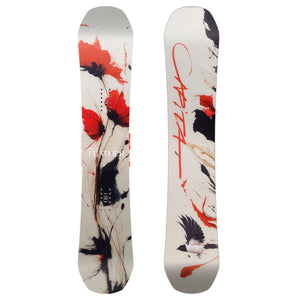
Rocker: Resort V1 + Flat Kick (Rocker/Camber/Rocker)
Flex: Twin 5.5/10 (Medium)
Shape: True Twin, Blended Radial Sidecut
Core: P2 Superlight (Paulownia+Poplar) + Carbon laminates
The CAPiTA Birds Of A Feather is a true all-mountain weapon for intermediate to advanced riders who demand precision and pop. Its Resort V1 profile combines camber underfoot for explosive energy with rockered tips for effortless float and catch-free turns. The P2 Superlight core keeps it snappy and light, while carbon laminates add torsional response without making it too stiff.
This board excels in variable terrain, from hardpack to powder. The Blended Radial sidecut offers smooth, predictable turns, and the true twin shape makes switch riding a breeze. It’s playful enough for park laps yet powerful enough for charging steeps. A versatile quiver-killer for aggressive female riders.
Pros: Excellent pop and response; lightweight yet durable; great edge hold; true twin versatility.
Cons: Not ideal for absolute beginners; medium flex may feel stiff for park-only riders.
2. Arbor Mantra
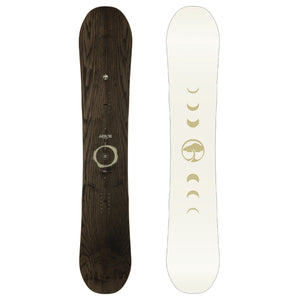
Rocker: Camber
Flex: Medium
Shape: Directional Twin
Core: Wood + Bamboo
The Arbor Mantra is a fantastic choice for beginner to intermediate riders looking for a stable, confidence-inspiring board. Its full camber profile provides excellent edge hold on groomers and a lively, responsive feel. The bamboo and wood core offer a smooth, damp ride that absorbs chatter, making it perfect for learning to carve and progress.
This board’s directional twin shape gives you the best of both worlds: a slightly longer nose for float in soft snow and a twin tail for switch riding and playfulness. It’s forgiving enough to build skills but has enough backbone to handle a variety of conditions. A sustainable, high-quality deck that grows with you.
Pros: Great for progression; solid edge hold; smooth damp ride; eco-friendly construction.
Cons: Full camber can be catchy for true beginners; not ideal for deep powder.
3. Salomon Oh Yeah
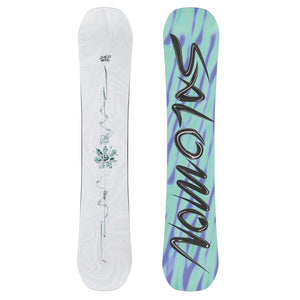
Rocker: Rock Out Camber (Rocker/Camber/Rocker)
Flex: 2/5 (Soft)
Shape: True Twin, EQ Rad Sidecut
Core: Aspen Strong + Popster
The Salomon Oh Yeah is a freestyle-focused, beginner-to-intermediate board that loves the park and side hits. Its Rock Out Camber profile offers flat stability between the feet, camber underfoot for pop, and rockered tips for a press-friendly, catch-free feel. The soft flex makes it incredibly easy to butter, spin, and manipulate.
This board is all about fun. The Aspen Strong core is durable yet lively, and the Popster technology adds snap to your ollies. The extruded EG base is low-maintenance and fast. If you’re a playful rider who spends most of the day in the terrain park or lapping groomers with a smile, the Oh Yeah is your perfect match.
Pros: Extremely playful and forgiving; great for park progression; easy to press and butter; low-maintenance base.
Cons: Soft flex limits high-speed stability; not for aggressive carving or deep powder.
4. Arbor Cadence
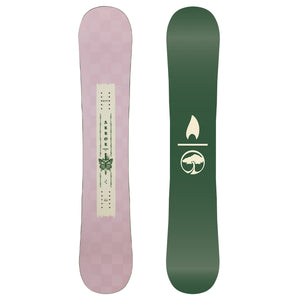
Rocker: Rocker
Flex: Soft
Shape: True Twin
Core: Wood
The Arbor Cadence is a beginner-friendly, freestyle-oriented board that makes learning fun and forgiving. Its full rocker profile provides a loose, surfy feel that’s virtually catch-free, perfect for building confidence on green and blue runs. The soft flex allows for easy turns and playful maneuvers in the park.
This true twin board is all about progression and good times. It floats well in light powder and handles moguls with ease thanks to its forgiving nature. While it may not be the speed demon on hardpack, it excels at teaching edge control and balance. A great first board for women who want to explore all-mountain terrain with a smile.
Pros: Very forgiving and catch-free; excellent for beginners; great float in powder; fun and playful feel.
Cons: Lacks edge hold on icy terrain; soft flex limits high-speed performance and pop.
5. Nitro Lectra Leaf Cam-Out
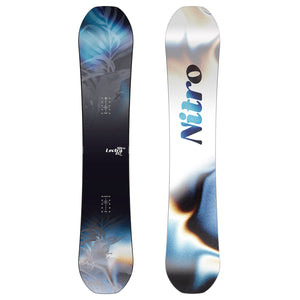
Rocker: Rocker/Camber/Rocker
Flex: Soft
Shape: Directional Twin
Core: Wood
The Nitro Lectra Leaf Cam-Out is a versatile all-mountain board for beginner to intermediate riders seeking a forgiving yet capable deck. Its Cam-Out profile combines camber underfoot for edge hold with rocker in the tip and tail for float and catch-free forgiveness. The soft flex makes it easy to turn and progress.
This directional twin shape provides a stable ride in all conditions, from groomers to light powder. It’s playful enough for small park features but stable enough for cruising. The wood core offers a lively, damp feel. A great all-around choice for riders looking to explore the entire mountain without intimidation.
Pros: Forgiving and easy to ride; good edge hold for its flex; versatile all-mountain shape; great for progression.
Cons: Soft flex limits high-speed carving; not ideal for advanced riders or deep powder.
6. Rome Ravine
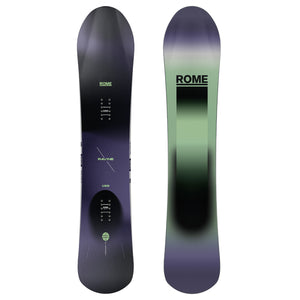
Rocker: Free-The-Ride Camber (Rocker/Camber)
Flex: 6/10 (Medium)
Shape: Directional, 7mm Taper, Diamond 3D
Core: Directional Double Carbon Hotrods
The Rome Ravine is a high-performance powder and all-mountain board for intermediate to advanced riders. Its Free-The-Ride camber features a rockered nose for effortless float and a cambered tail for power and pop. The 7mm taper and Diamond 3D shaping make it incredibly agile in deep snow and stable on groomers.
This directional board is a powder hound’s dream. The carbon Hotrods provide explosive ollie power and stability when charging through crud. The SinterStrong base is fast and durable. If you spend your days hunting fresh lines and want a board that can also rip groomers on the way back, the Ravine delivers.
Pros: Exceptional powder float; powerful and stable at speed; agile in trees and tight spots; great edge hold.
Cons: Directional shape limits switch riding; medium-stiff flex not for beginners.
7. Burton Hideaway
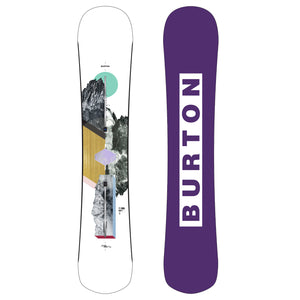
Rocker: Flat Top (Rocker/Flat/Rocker)
Flex: 0-3/10 (Soft)
Shape: Directional, 5mm Taper
Core: Wood
The Burton Hideaway is a soft, forgiving all-mountain board designed for intermediate to advanced riders who want a relaxed, surfy feel. Its Flat Top profile offers stability between the feet with rockered tips for a catch-free, loose ride. The soft flex makes it incredibly easy to turn and maneuver in trees and bumps.
This directional board features a 5mm taper for improved float in powder, making it a great choice for soft snow days. The twin flex is symmetrical, so it still rides well switch for a directional shape. It’s not a charger, but a cruiser that prioritizes fun and ease. Perfect for laid-back days exploring the whole mountain.
Pros: Extremely forgiving and easy to ride; great float in powder; surfy and playful feel; Burton’s Channel system for easy binding adjustment.
Cons: Soft flex limits stability at speed; not for aggressive carving or hardpack.
How to Choose the Perfect Snowboard for Women
Selecting the right snowboard is crucial for progression, enjoyment, and safety on the mountain. With so many options available, it can be overwhelming. This guide breaks down the key factors every female rider should consider to find their perfect match.
Understanding Your Riding Style and Terrain
Your primary riding style is the most important factor in choosing a board. Are you a park rat, a powder hound, or an all-mountain explorer? Each terrain demands specific board characteristics. For example, a true twin with a soft flex is ideal for freestyle, while a directional shape with taper excels in powder. Identify where you spend the most time to narrow down your choices.
Terrain Breakdown
| Terrain Type | Recommended Shape | Recommended Flex | Rocker Profile |
|---|---|---|---|
| All-Mountain | True Twin or Directional Twin | Medium | Camber or Rocker/Camber/Rocker |
| Freestyle / Park | True Twin | Soft to Medium | Rocker or Flat/Rocker |
| Powder / Backcountry | Directional | Medium to Stiff | Rocker/Camber or Full Rocker |
| Beginner / Progression | True Twin or Directional Twin | Soft | Rocker or Flat/Rocker |
Flex Rating – The Key to Feel
Flex rating is a measure of the board’s stiffness, typically rated on a scale of 1 (soft) to 10 (stiff). This directly impacts how the board rides. Soft flex boards (1-3) are forgiving, playful, and easy to press, making them perfect for beginners and park riders. Medium flex (4-6) offers a balance of stability and playfulness, suitable for all-mountain and progressing riders. Stiff flex (7-10) provides maximum stability at speed, powerful edge hold, and pop for aggressive carving and charging.
Shape and Profile Decoded
Understanding board shapes and rocker profiles is essential. The shape dictates how the board rides in terms of directionality. True twins are symmetrical for equal switch performance, directional twins have a longer nose for float but a twin tail, and directional boards are built for one-way riding with maximum powder performance. The profile influences lift and edge hold.
Rocker Profile Comparison
- Camber: Traditional profile with upward arc in the middle. Provides excellent edge hold, pop, and stability. Ideal for hardpack and aggressive carving.
- Rocker (Reverse Camber): Downward arc, like a banana. Offers a loose, surfy feel, effortless turn initiation, and great float in powder. Very forgiving.
- Flat: Flat between the feet with rockered tips. Provides stability and balance with catch-free forgiveness. Great for beginners and park riders.
- Rocker/Camber/Rocker (Hybrid): Combines rocker tips with camber underfoot. Offers the best of both worlds: float, forgiveness, pop, and edge hold.
Core Materials and Construction
The core of the board significantly affects its weight, feel, and durability. Wood cores, like poplar, paulownia, and bamboo, are standard, offering a balance of strength, flex, and dampness. Some cores feature carbon laminates or stringers to add pop and response without increasing weight. For women’s boards, lightweight cores are often prioritized to reduce swing weight and make the board easier to maneuver, especially for smaller-framed riders.
Ability Level – Match Your Skills
Be honest about your current ability level. Beginners should prioritize soft-flexing, rocker-dominant boards that are forgiving and easy to turn. Intermediate riders can handle medium-flex, hybrid profiles that offer versatility. Advanced riders often prefer stiffer, camber-dominant boards for high-speed performance and precision. Choosing a board that matches your skill will accelerate your progression and keep the sport fun.
Sizing – Length and Width
Correct sizing is critical. Board length is generally based on rider weight and height. As a rule of thumb, a board should stand between your chin and nose when held upright. Width is equally important – your boot should overhang the edges slightly (about 1-2 cm) for proper leverage without dragging. Most women’s boards are designed for smaller boots, but always check the waist width if you have larger feet.
Binding Compatibility
Most boards use a 2×4 insert pattern, but some (like Burton) use the Channel system. Ensure your bindings are compatible with your board’s mounting system. Many bindings are now universal, but always double-check to avoid disappointment. A good binding setup will enhance the board’s flex and response.
Final Tips for Choosing Your Board
- Demo if possible: Try before you buy to feel the difference.
- Consider your future: Buy a board that will challenge you as you progress.
- Think about your budget: Quality boards are an investment in your riding experience.
- Don’t forget about style: Choose a top sheet design that you love – it adds to the stoke!
By understanding these key factors – terrain, flex, shape, profile, core, ability, and sizing – you’ll be well-equipped to choose a snowboard that perfectly fits your needs. The right board will not only boost your confidence but also amplify the joy of every run, from first chair to last call.